Buying Guide
The Best Gooseneck Kettle for Pour Over in 2026
Three honest picks for pour over — a premium temperature-precise kettle, a value electric, and a simple digital one — chosen on published specs and how well they actually pour.
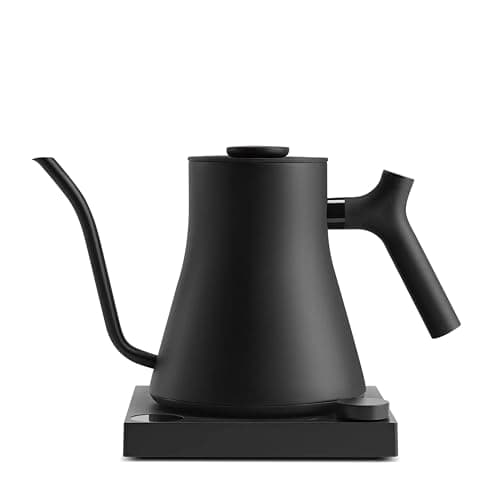
For pour over, the kettle is not a luxury — it's part of the brewer. A gooseneck spout gives you a slow, straight, steady stream you can place exactly where you want it, so you can wet the grounds evenly and keep the water where the coffee is instead of blasting a hole in the bed. Pair that with the ability to set an exact temperature, and you've controlled the two variables a pour over lives or dies on: flow and temperature.
Our overall pick is the Fellow Stagg EKG Pro: it holds temperature to the degree, pours beautifully, and has a built-in brew timer. If you don't want to pay premium money, the Cosori Gooseneck covers the essentials for far less, and the Bonavita Variableis the pick if you just want precise temperature in a plain, larger kettle. Here's how they compare.
Why a gooseneck kettle matters for pour over
A standard kettle dumps water in a wide, uncontrolled gush. A gooseneck narrows and lengthens the spout so the stream comes out thin and slow, and — because the spout is at the end of a long neck — you steer it precisely with small tilts of the wrist. That control lets you pour in slow concentric circles, keep the water off the filter walls, and pace the pour to hit your target brew time. On a V60, Kalita or Chemex, that precision is most of the technique.
Temperature is the other half.Pour over is usually brewed hotter than espresso — commonly in the 195–205°F range — and a few degrees shifts the balance between sour and bitter. A variable-temperature kettle lets you set and hold the exact number for your beans and roast, instead of guessing after a rolling boil. To close the loop, brew by weight with a coffee scale and dial in the grind with our grind size chart.
How we picked
We don't run a test lab, and we don't pretend to. Every kettle here was evaluated against its published manufacturer specifications, the design details that decide pour control and temperature accuracy, and verified owner feedback — our full approach is on the methodology page. For a pour-over kettle specifically, we weighted:
- Pour control.The shape and balance of the gooseneck spout — can you pour a slow, steady, aimable stream?
- Temperature control. To-the-degree variable setting beats fixed presets, which beat no control at all.
- Hold function. Keeping the water at temperature while you brew (and for a second cup) matters day to day.
- Capacity, build and extras— a real brew timer, jug size, and honest price-to-performance.
At a glance
The three side by side. Tap any "view" button for the live Amazon price; the number on Amazon at checkout is the one that applies.
| Kettle | Capacity | Temp control | Hold | Price |
|---|---|---|---|---|
| Fellow Stagg EKG Pro | 0.9 L | To the degree | Yes (adjustable) | $179.95Buy |
| Cosori Gooseneck | 0.8 L | 5 presets | 60 min keep-warm | $62.99Buy |
| Bonavita Variable | 1.0 L | To the degree | 60 min hold | $99.99Buy |
Prices shown are from Amazon as of October 17, 2026 and change often — the button always goes to the current listing. Some links may earn us a commission at no extra cost to you.
Best overall: Fellow Stagg EKG Pro
The Stagg EKG Pro is the kettle serious pour-over drinkers keep recommending, and the specs back it up. It sets and holds temperature to the degree with PID control, its counterbalanced gooseneck pours as precisely as anything at this size, and it adds a built-in brew stopwatch and an adjustable hold so the water stays put while you weigh, bloom and pour. It also happens to be a genuinely handsome object on a counter.
| Capacity | 0.9 L / 30 oz |
|---|---|
| Temp control | Variable, to the degree (PID) |
| Material | Stainless steel body |
| Hold | Yes, adjustable hold mode |
| Timer | Built-in brew stopwatch |
| Power | ~1200 W |
What we like: the best pour control here, exact temperature, a real timer, and an adjustable hold — it does everything a pour-over kettle should. The honest downsides: it's the most expensive, the 0.9 L jug is on the smaller side for a crowd, and you're paying partly for the design. If pour over is a daily ritual, buy it once.
Best value: Cosori Gooseneck Electric Kettle
The Cosori delivers the parts that matter — a real gooseneck spout and set temperature — for a fraction of the premium price. Instead of to-the-degree control it uses five presetsspanning the range you'll use for pour over, tea and French press, plus a keep-warm modethat holds your setting for an hour. For most home brewers, that's all the control they actually reach for.
| Capacity | 0.8 L / 27 oz |
|---|---|
| Temp control | 5 presets + keep-warm |
| Material | Stainless steel interior |
| Hold | Keep-warm up to 60 min |
| Power | 1200 W |
What we like: the best value in a gooseneck electric, quick to heat, and easy to live with. The downsides: presets rather than exact degrees, no brew timer, and the build feels closer to its price than the Stagg's. If you want 90% of the experience for much less, this is the one.
How to choose a gooseneck kettle
Strip away the styling and the decision comes down to a few questions.
Exact temperature vs presets. To-the-degree control (Stagg, Bonavita) lets you fine-tune for a specific roast and dial in taste; presets (Cosori) cover the common targets and are simpler and cheaper. If you like to experiment, pay for exact degrees; if you just want a good cup, presets are fine.
Hold function.A hold or keep-warm setting keeps the water at temperature while you weigh and bloom, and for a second pour. All three do this; the Stagg's is adjustable.
Capacity. Brewing one or two cups? Any of these works. Brewing a Chemex or for several people? The 1.0 L Bonavita saves a refill.
The rest of the setup. A great kettle only pays off with the right grind and an accurate dose. Brew by weight with a coffee scale, set your grind using the grind size chart, and match the kettle to the brewer you own from our best pour-over gear guide.
The bottom line
For a daily pour-over habit, the Fellow Stagg EKG Prois the kettle to buy once — the best pour control, exact temperature, and a built-in timer. Want most of that for far less? The Cosori Gooseneck nails the essentials with presets and keep-warm. Want precise degrees and a bigger jug without paying for design? The Bonavita Variable is the quiet workhorse. Whichever you pick, remember the kettle only shines alongside a good grind and a scale.
Frequently asked questions
Do I really need a gooseneck kettle for pour over?
For good pour over, effectively yes. The narrow gooseneck spout lets you pour a slow, steady, aimable stream so you wet the grounds evenly and control the brew time — precision a wide-spouted kettle can't match. You can start with a cheap stovetop gooseneck, but you'll give up the set-and-hold temperature and timer that make an electric variable kettle worth it.
What temperature should I use for pour over coffee?
Most pour over is brewed hotter than espresso, commonly in the 195–205°F range. Lighter roasts like the higher end of that band; darker roasts often taste better a little cooler. A variable-temperature kettle lets you set and hold the exact number, which is why it beats guessing off a rolling boil.
Is the Fellow Stagg EKG Pro worth the premium over the Cosori?
It depends on how much you brew. The Stagg adds to-the-degree PID temperature, a better counterbalanced pour, a built-in brew timer and an adjustable hold — worth it for a daily ritual or an enthusiast. If you just want good coffee without fuss, the Cosori's five presets and keep-warm cover most of the experience for much less.
Can I use a gooseneck kettle for tea and French press too?
Yes. A variable-temperature gooseneck is ideal for tea, where different leaves want different temperatures, and works fine for French press or filling any brewer. The precise pour is wasted on those, but the temperature control and hold are just as useful.
What size gooseneck kettle should I get?
For one or two cups, a 0.8–0.9 L kettle like the Cosori or Stagg is plenty and heats quickly. If you brew a Chemex or make coffee for several people, a 1.0 L kettle like the Bonavita saves you refilling mid-brew.
Sources
Keep reading
Buying your first setup?
See how we pick — compiled specs, cost-per-shot math, and honest trade-offs — then dig into the guides. No fake test lab, no rankings for hire.