Grinders
Grinders
The grinder changes what's in the cup more than the machine does. Burr types, grind range and value, sorted for espresso, pour over and French press.
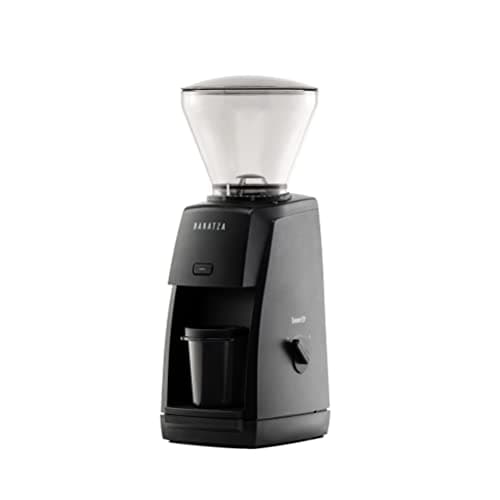
The Best Coffee Grinder for Espresso in 2026
Five espresso-capable grinders ranked — best overall value, best home upgrade, best single-dose, and the best hand grinders — with the specs that decide a shot and the grinder-first truth.
$199.95top pick on AmazonRead more →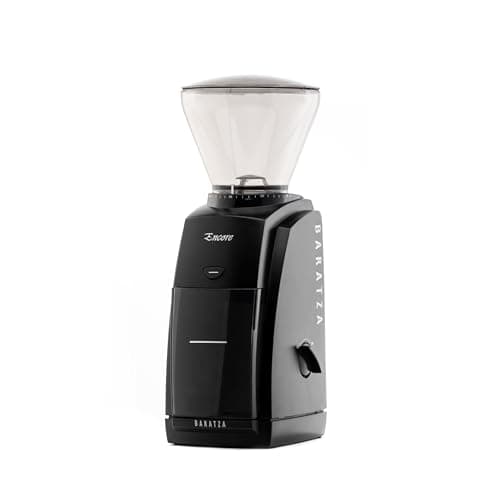
The Best Burr Coffee Grinder in 2026
Six burr grinders ranked for every brew method — best all-rounder, best for espresso, best for filter, best mid-range and best manual — with the burr and consistency specs that matter.
$149.95top pick on AmazonRead more →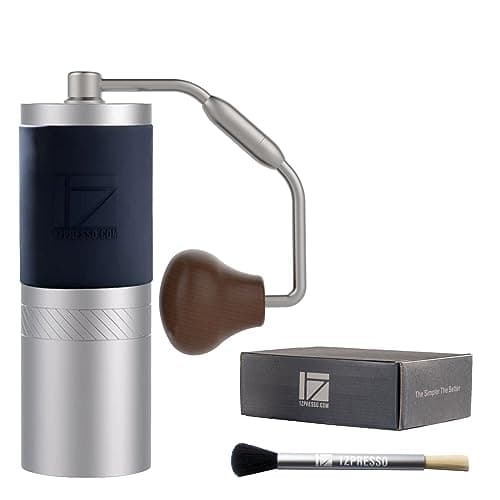
The Best Manual (Hand) Coffee Grinder in 2026
Four manual coffee grinders ranked — best budget and travel, best all-round, best value and best premium — plus why hand grinders punch far above their price on grind quality.
$139.00top pick on AmazonRead more →Burr vs Blade Grinder: Why It Matters
Burr vs blade grinders compared in plain language: why burrs grind evenly and blades make dust and boulders, what that does to espresso and filter, and the entry burr to buy.
$149.95top pick on AmazonRead more →Baratza Encore ESP Review
Our spec-driven Baratza Encore ESP review: what the numbers say, where it shines, where it frustrates, and who should buy it versus the Mignon Notte or a hand grinder.
$199.95top pick on AmazonRead more →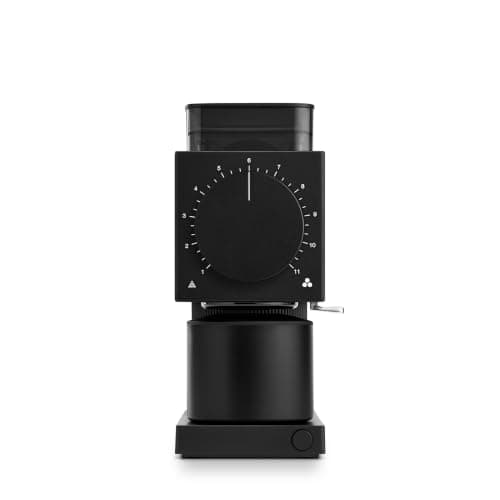
The Best Coffee Grinders for Pour Over & French Press (2026)
Five grinders ranked for pour over and French press — best overall, best all-rounder value, best upgrade, best budget hand grinder and best premium hand grinder — with the grind-uniformity specs that matter for filter coffee.
$399.95top pick on AmazonRead more →Flat vs Conical Burr Grinders: What's the Difference?
Flat vs conical burr grinders in plain language: how each geometry grinds, what it does to clarity, body, retention, heat, noise and price, and which to choose for espresso or filter.
$399.95top pick on AmazonRead more →Fellow Ode Gen 2 Review
Our spec-driven Fellow Ode Gen 2 review: what its 64mm flat burrs and single-dose design get right for filter and pour over, the one thing buyers get wrong, and who should buy it.
$399.95top pick on AmazonRead more →Baratza Encore Review
Our spec-driven Baratza Encore review: what the numbers say, where it shines for filter, the honest espresso caveat, and who should buy it versus the Encore ESP or a hand grinder.
$149.95top pick on AmazonRead more →Baratza Encore vs Encore ESP: Which Grinder?
Baratza Encore vs Encore ESP compared: identical repairable design, but the ESP adds sharper burrs and a dial recalibrated for espresso fineness. Which one to buy for filter, espresso or both.
$199.95top pick on AmazonRead more →1Zpresso J Review
Our spec-driven 1Zpresso J review: what its 48mm conical burrs and 30-click ring get right for filter and travel, where its filter-first range stops, and who should buy it.
$139.00top pick on AmazonRead more →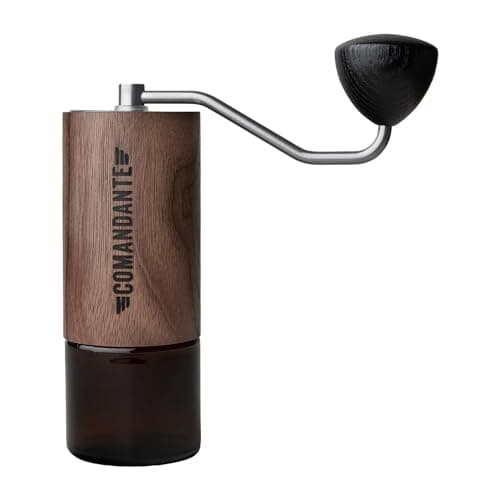
Comandante C40 MK4 Nitro Blade Review
Our spec-driven Comandante C40 MK4 review: why its high-nitrogen Nitro Blade burrs and gift-grade build make it the buy-once hand grinder, and the honest reasons it costs what it does.
$319.00top pick on AmazonRead more →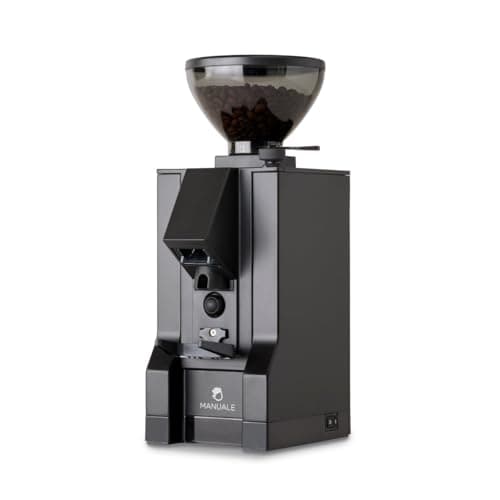
Eureka Mignon Notte Review
Our spec-driven Eureka Mignon Notte review: what its 50mm flat burrs and stepless micrometric adjustment get right for espresso, its honest limits, and who should buy it.
$299.00top pick on AmazonRead more →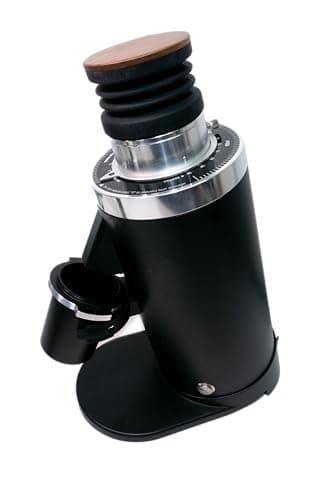
The Best Single-Dose Coffee Grinders in 2026
The best single-dose coffee grinders by category — best overall for espresso and filter, best for filter, best manual, best value for espresso and best compact espresso grinder — after we explain what single dosing actually is and why retention matters.
$389.00top pick on AmazonRead more →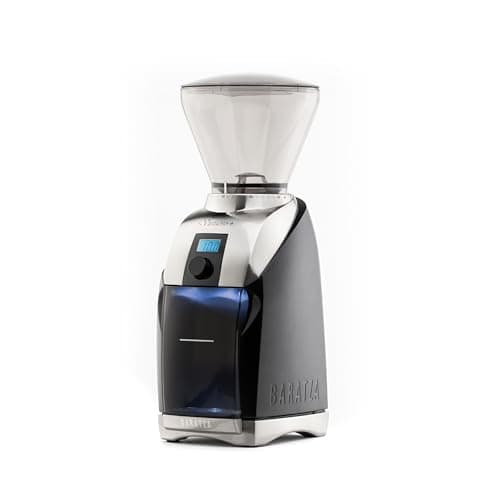
Baratza Encore vs Virtuoso+: Which to Buy?
Baratza Encore vs Virtuoso+: the same 40mm conical burr family and filter focus, so the real question is whether the Virtuoso+'s M2 burrs, digital timer, LED bin and stronger motor justify the step up over the class-standard Encore.
$249.95top pick on AmazonRead more →The Best Coffee Grinders for French Press in 2026
Grinders ranked for French press specifically — where the test isn't how fine they go, but how few fines they produce when set coarse. Four picks from a $99 hand grinder to a 64mm flat-burr brewer.
$149.95top pick on AmazonRead more →The Best Espresso Grinders Under $200 in 2026
Three espresso grinders under $200 that genuinely reach espresso fineness — the Baratza Encore ESP on the electric side, and two hand grinders that beat it on grind quality for less.
$199.95top pick on AmazonRead more →The Best Espresso Grinders Under $500 in 2026
Six espresso grinders under $500 compared on the three specs that decide a shot — burr size, adjustment resolution and retention — with the honest downsides of every pick.
$389.00top pick on AmazonRead more →The Best Grinder for a Breville Espresso Machine
Six grinders matched to Breville's 54mm machines — what the Bambino actually needs from a grinder, which models dose cleanly into a 54mm basket, and which Brevilles need no grinder at all.
$199.95top pick on AmazonRead more →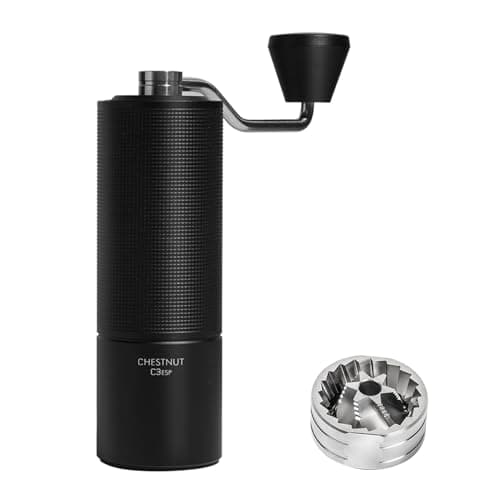
Timemore Chestnut C3 ESP Review
Our spec-driven Timemore Chestnut C3 ESP review: what the 30-click espresso dial really buys you, the internal-adjustment annoyance nobody mentions, and how to tell the C3 ESP apart from the C3, C3S, ESP Pro and C5.
$68.00$99.0031% offtop pick on AmazonRead more →The Best Grinder for a Moka Pot in 2026
Five grinders for stovetop moka coffee, ranked on how precisely each one lands in the fine-medium band — from the Baratza Encore to an all-metal hand grinder — with honest cons on all five.
$149.95top pick on AmazonRead more →Baratza Encore ESP vs Timemore Chestnut C3 ESP
Encore ESP vs Chestnut C3 ESP on burr size, published adjustment resolution, dose workflow and price — and the one question that decides it for almost everybody.
$199.95top pick on AmazonRead more →The Best Grinder for an AeroPress in 2026
Five grinders for AeroPress brewing, ranked on how much of the fine-to-coarse AeroPress range each one covers and how finely it adjusts inside it — from the Baratza Encore to a travel hand grinder — with honest cons on all five.
$149.95top pick on AmazonRead more →The Best Grinder for a Gaggia Classic Pro in 2026
Five grinders for the Gaggia Classic Pro and Evo Pro, ranked on the adjustment resolution a 58mm non-pressurized basket demands — from the cheapest electric we trust to a 64mm flat-burr single doser — with honest cons on all five.
$199.95top pick on AmazonRead more →The Best Grinder for a De'Longhi Espresso Machine in 2026
Five grinders for De'Longhi's manual machines, sorted by the thing that actually decides the answer - whether your 51mm basket is pressurized or not - from a filter-range Encore to a stepless flat-burr upgrade.
$199.95top pick on AmazonRead more →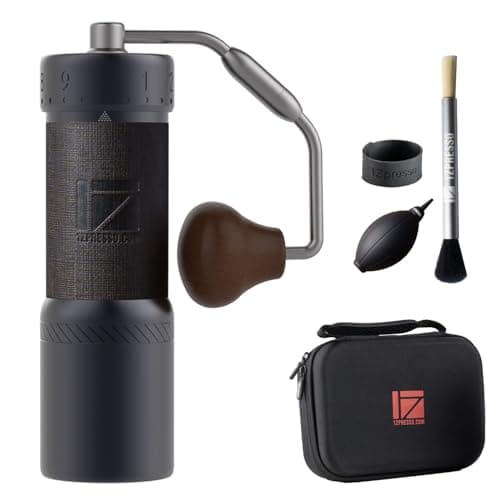
1Zpresso J-Ultra vs Comandante C40 MK4
The J-Ultra's 48mm burrs and 8-micron external clicks against the C40 MK4's Nitro Blade burrs and filter-first dial - which premium hand grinder to buy for espresso, for pour over, and for keeping forever.
$199.00top pick on AmazonRead more →The Best Espresso Grinder Under $300
Six espresso grinders under $300 ranked on the three specs that decide whether you can dial a shot in — burr size and type, how finely the adjustment moves, and how the grounds get into the basket — from a 50mm stepless Italian grinder to a hand grinder that moves 8 microns per click.
$299.00top pick on AmazonRead more →Baratza Encore ESP vs Breville Smart Grinder Pro
Two $200 grinders compared on the specs that decide an espresso shot: the Encore ESP's 20 dedicated espresso steps at roughly 20 microns each against the Smart Grinder Pro's 60-setting dial, dose timer and twin portafilter cradles.
$199.95top pick on AmazonRead more →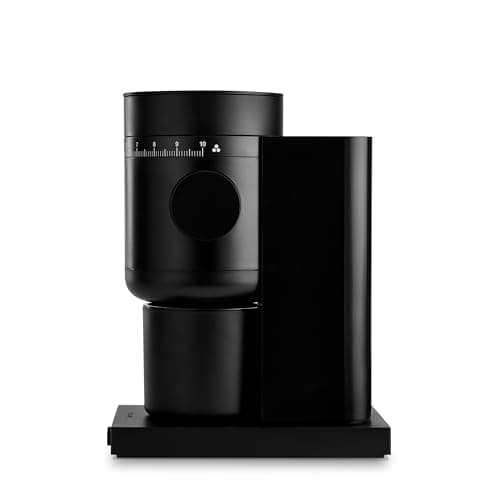
Fellow Opus 2 vs Baratza Encore ESP
Two $200 electric grinders compared where it counts: the Opus 2's stepless dial, 48mm hardened burrs and near-zero retention against the Encore ESP's 20 numbered espresso steps at roughly 20 microns each and its user-replaceable parts.
$199.95top pick on AmazonRead more →The Best Grinder for Espresso and Pour Over
Six grinders that genuinely cover espresso and pour over on one dial, ranked on published grind range, espresso step size and how much ground coffee each one holds onto when you switch beans - with the honest cons on all six.
$199.95top pick on AmazonRead more →Prices shown are the featured pick on Amazon as of October 17, 2026 and are subject to change. The price shown on Amazon at checkout applies.
Why the grinder is the most important purchase
If you take one thing from this site, take this: for espresso, the grinder matters more than the machine. Espresso lives or dies on a grind that is fine, even, and adjustable in tiny increments, because the puck's resistance is what lets the pump build pressure. An uneven grind channels water, and no machine — at any price — can fix that. A good grinder, by contrast, makes a modest machine punch far above its weight.
Burr type: conical vs flat
Real grinders use burrs, not blades. Two rotating burrs crush beans to a consistent, adjustable particle size; a blade grinder just chops randomly into dust and boulders (see burr vs blade). Among burr grinders, conical burrs (Baratza Encore, most hand grinders) are forgiving, quiet and affordable; flat burrs (Fellow Ode, DF64, Eureka) can give a more uniform grind prized for clarity, usually at a higher price and with a bit more retention.
Electric vs manual, and what decides price
Hand grinders (1Zpresso, Timemore, Comandante) put steel burrs in your hand for a fraction of an electric's price — the trade is a minute of cranking. They are the best value in coffee and ideal for travel or a single daily cup. Electric grinders buy convenience and volume. Price is driven by burr size and material, whether adjustment is stepless(infinite fine-tuning, best for espresso) or stepped, motor quality, and retention (how much old coffee lingers between doses — the reason single-dose grinders exist).
Match the grinder to how you brew
For espressoyou need a grinder that reaches a genuinely fine setting with small adjustments — start with our best grinders for espresso, and the stepless Eureka Mignon Notte is a strong entry pick. Working to a budget? We split the field into espresso grinders under $200 and espresso grinders under $500, where stepless adjustment and bigger flat burrs arrive. Buying for a specific machine? Our best grinder for a Breville guide sizes the field to the 54mm basket, best grinder for a Gaggia Classic to the 58mm one, and best grinder for a De'Longhisplits its picks by whether your basket is pressurized — and do you need a grinder for espresso answers the question first if you are not yet convinced you need one. For pour over and French press, a solid all-rounder like the Baratza Encore is plenty (see how it compares to its metal sibling in Encore vs Virtuoso+); the best burr grinder guide covers the field, best grinder for an AeroPress the one brewer that spans the whole range, best hand grinders the manual options (where J-Ultra vs Comandante C40 MK4 is the decision most people get stuck on), and best single-dose grinders the low-retention route. If one grinder has to cover espresso and filter, start with best grinder for espresso and pour over instead, and the two head-to-heads most people get stuck on at the $200 mark are Encore ESP vs Breville Smart Grinder Pro and Fellow Opus 2 vs Encore ESP. Whatever you pick, dial it in with the grind size chart. Every pick here is chosen on published burr specs, grind range and value — not a test bench we do not have.
Frequently asked questions
Why is a burr grinder better than a blade grinder?
A burr grinder crushes beans between two burrs to a consistent, adjustable particle size; a blade grinder chops randomly, producing a mix of dust and boulders that extracts unevenly. Consistent particle size is essential for good espresso and better for every other method too, which is why a burr grinder is the single best upgrade most home brewers can make.
How much should I spend on a grinder for espresso?
Enough to reach a genuinely fine, adjustable grind. Entry electric espresso grinders like the Baratza Encore ESP are a strong value; stepping up to a stepless grinder like the Eureka Mignon buys finer control and quieter operation. Excellent hand grinders (1Zpresso, Timemore) reach espresso fineness for less if you don't mind cranking.
Can I use one grinder for both espresso and pour over?
Yes, if it has a wide, easily adjustable grind range. Many grinders lean one way — the Fellow Ode is tuned for filter, while the Encore ESP is set up for espresso — so pick based on your main brew method, and know that switching back and forth means re-dialing the setting each time.