Buying Guide
The Best Manual (Hand) Coffee Grinder in 2026
Four hand grinders that outgrind electric models near their price — for travel, espresso, everyday value and a lifetime-buy premium pick. Chosen on burrs, adjustment and build.
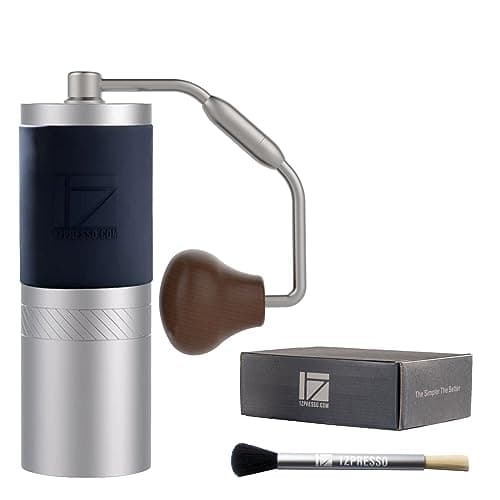
A hand grinder is the best-kept secret in home coffee: for the price of a mediocre electric grinder, a good manual one gives you steel burrs and a grind clean enough to embarrass machines that cost far more. You trade a minute of arm work for grind quality, portability and near-silent operation. The four below cover every use case — a pocketable travel grinder, an all-round workhorse, an unbeatable value pick and a premium grinder you buy once.
Our overall pick is the 1Zpresso J: its 48mm conical burrs and precise adjustment handle espresso and filter equally well, making it the hand grinder most people should own. But if you mainly want travel, value or a lifetime tool, read on — and if espresso specifically is your goal, cross-check our best grinder for espresso guide.
Why hand grinders punch above their price
The reason is simple economics. In an electric grinder, a big chunk of the cost goes into the motor, the housing and the electronics — money that does not touch the coffee. A hand grinder has none of that, so nearly the whole budget goes into the one part that actually determines grind quality: the burrs. That is why a mid-priced manual grinder often ships with steel conical burrs comparable to those in electric grinders costing two or three times as much.
Hand grinders win on more than burrs, too. With very low retention, what you weigh in is what you brew, with almost nothing stale left behind. They need no electricity, so they travel, camp and survive power cuts. And they are quiet — a soft crunch instead of a motor. The one honest cost is effort: you grind each dose by hand, which is pleasant for a cup or two a day and tedious for a household or for large, coarse French press batches.
How we picked
We do not run a test lab, and we do not pretend to. Every grinder here was evaluated against its published manufacturer specifications, the design details that decide grind quality and daily usability, and verified owner feedback — our full approach is on the methodology page. For hand grinders we weighted burr type and size, adjustment resolution (especially in the espresso range), retention, build quality and how comfortable the grinder is to actually crank.
At a glance
The field side by side. Tap any "view" button for the live Amazon price; the number on Amazon at checkout is the one that applies.
| Grinder | Burrs | Capacity | Best for | Price |
|---|---|---|---|---|
| 1Zpresso Q | Heptagonal conical | ~15-20 g | Budget / travel | $99.00Buy |
| 1Zpresso J | 48mm conical | ~30-35 g | All-round | $139.00Buy |
| Timemore Chestnut C3 ESP | 38mm conical | ~20 g | Value | $68.00Buy |
| Comandante C40 MK4 | 39mm conical | ~40-45 g | Premium | $319.00Buy |
Prices shown are from Amazon as of October 17, 2026 and change often — the button always goes to the current listing. Some links may earn us a commission at no extra cost to you.
Best budget and travel: 1Zpresso Q
The 1Zpresso Q is the one you throw in a bag. It is small and light, with heptagonal stainless steel burrs, a foldable handle and an internal adjustment dial that clicks precisely into place. Despite the tiny footprint it grinds cleanly across brew methods, which makes it a genuine travel grinder rather than a compromise you tolerate on the road.
| Type | Manual (travel) grinder |
|---|---|
| Burrs | Heptagonal conical (stainless steel) |
| Adjustment | Internal dial, 30 clicks/turn |
| Capacity | ~15-20 g per grind |
| Weight | ~465 g |
| Handle | Foldable (packs very small) |
What we like: seriously portable, well made for the price, and it grinds better than its size suggests. The downsides: the small capacity means larger doses need a refill, and the internal adjustment is a little fiddly compared with the bigger 1Zpresso models. As a first hand grinder or a dedicated travel grinder, it is excellent value.
Best all-round hand grinder: 1Zpresso J
The 1Zpresso J is the hand grinder we would hand most people. Its 48mm conical steel burrsare larger than most manual grinders carry, so it grinds faster and more evenly, and its numbered adjustment ring gives 30 clicks per rotation — roughly 25 microns per click, fine enough to dial espresso in a few clicks and wide enough for pour over, AeroPress and French press. One grinder, every brew method.
| Type | Manual (hand) grinder |
|---|---|
| Burrs | 48mm conical (steel) |
| Adjustment | Numbered, 30 clicks/turn (~25 microns/click) |
| Capacity | ~30-35 g per grind |
| Retention | Very low |
| Handle | Foldable |
What we like: large burrs, even grinding, generous capacity and true versatility from espresso to press. The downsides: espresso doses take real effort every morning, and 1Zpresso makes even finer-stepped models if you plan to pull espresso exclusively. As the one hand grinder to do everything, it is our top pick.
Best value: Timemore Chestnut C3 ESP
The Timemore Chestnut C3 ESP is the value benchmark for hand grinders. Its 38mm S2C stainless conical burrs use a spike-to-cut geometry that keeps fines down, and a fine 30-click dial covers espresso through French press. It costs less than almost anything electric worth owning, yet grinds more evenly than any of them.
| Type | Manual (hand) grinder |
|---|---|
| Burrs | 38mm S2C conical (stainless) |
| Adjustment | Stepped, 30 clicks/turn (~23 microns/click) |
| Grind range | Espresso to French press |
| Capacity | ~20 g per grind |
| Handle | Fixed, 159mm (the ESP Pro is the foldable-handle version) |
What we like: clean, even grinding at a genuinely low price, with the portability and low retention every hand grinder shares. The downsides: the smaller burrs mean more turns per dose than the 1Zpresso J, and the adjustment dial sits under the catch cup rather than outside the body. For a first burr grinder on a tight budget, it is hard to beat — our full Timemore Chestnut C3 ESP review covers the 30-click dial and which of the near-identical Chestnut models to avoid.
Best premium: Comandante C40 MK4
The Comandante C40 MK4 is the hand grinder enthusiasts save up for. Its 39mm conical Nitro Bladeburrs are made from a patented high-nitrogen, high-alloy stainless steel that holds a sharp edge, and the whole grinder — body, dial, catch jars — is built to a standard that explains why so many owners keep theirs for a decade. It grinds superbly across every method, with a smooth, satisfying feel that cheaper grinders cannot match.
| Type | Manual (premium) grinder |
|---|---|
| Burrs | 39mm conical Nitro Blade (high-nitrogen steel) |
| Adjustment | Clicked dial (~40 clicks/turn) |
| Capacity | ~40-45 g per grind |
| Build | Premium body, glass and polymer catch jars |
What we like: world-class burrs, a beautiful build and effortless, consistent grinding — a true buy-once grinder. The downsides: it is the most expensive here by a wide margin, and for espresso specifically some larger-burr grinders dial in with slightly finer steps. If you want the best hand grinder to keep for good, this is it.
If you are weighing it against the finest-adjusting hand grinder we cover, our Comandante C40 MK4 vs 1Zpresso J-Ultra comparison puts the two side by side on burrs, clicks and build.
How to choose a hand grinder
A few questions settle it.
What do you brew? If you pull espresso, prioritize fine adjustment in the espresso range (the 1Zpresso J, Timemore C3 ESP and Comandante all qualify). If you brew only filter, almost any of these will do, and capacity matters more.
How big are your doses? Larger capacity (the J and Comandante) means fewer refills for big French press batches; a compact grinder (the Q) is happiest with single cups.
Travel or countertop? The Q packs smallest; the others live comfortably on a counter and travel when needed.
The bottom line
For most people the 1Zpresso Jis the hand grinder to buy — big burrs, precise adjustment and true versatility. Traveling or on a budget? The 1Zpresso Q. Want the most grind for the least money? The Timemore Chestnut C3 ESP. Ready to buy once and keep it? The Comandante C40 MK4. Any of them will out-grind an electric model near its price — that is the quiet magic of manual grinding.
Frequently asked questions
Are hand grinders as good as electric ones?
On grind quality per dollar, usually better. Because a hand grinder has no motor or electronics to pay for, nearly its whole cost goes into the burrs, so a mid-priced manual grinder often matches electric grinders costing far more. The trade-off is effort and speed — you grind each dose by hand, which is fine for one or two cups but slow for a household or for large, coarse batches.
Can a hand grinder make espresso?
Yes, if it has fine enough adjustment in the espresso range. The 1Zpresso J, Timemore Chestnut C3 ESP and Comandante C40 MK4 all grind fine and evenly enough for real espresso. Expect to crank a bit harder and longer for a fine espresso dose than for coarser filter grinds.
How long does it take to grind by hand?
For a single filter dose, usually well under a minute. Espresso is finer, so it takes more turns and more effort — often a minute or a little more depending on the grinder and dose. Larger burrs like the 1Zpresso J's 48mm set grind faster than smaller ones, which is worth considering if you grind daily.
Which hand grinder is best for travel?
The 1Zpresso Q. It is small and light with a foldable handle, so it packs into a bag or a carry-on easily, yet its steel burrs still grind cleanly across brew methods. If you want one grinder for both home and travel, the larger 1Zpresso J travels too but takes up more space.
Sources
Keep reading
Buying your first setup?
See how we pick — compiled specs, cost-per-shot math, and honest trade-offs — then dig into the guides. No fake test lab, no rankings for hire.