Buying Guide
The Best Coffee Grinder for Espresso in 2026
Five grinders that can actually hit espresso fineness — chosen on burr type, adjustment resolution and consistency. Plus the reason a grinder outranks the machine for every espresso setup.
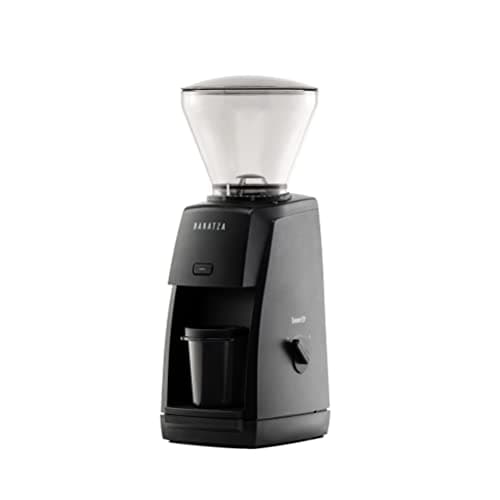
For espresso, the grinder is the piece of equipment that decides what ends up in the cup — more than the machine, the beans or the tamper. Espresso is brewed by forcing hot water through a tightly packed puck at roughly 9 bar of pressure, and that only produces a balanced shot when the grind is very fine, very even, and adjustable in tiny increments. Miss the target by a few microns and the shot either gushes and tastes sour or chokes and turns bitter. No machine can fix that; only the grinder can.
Our overall pick is the Baratza Encore ESP: it is the least expensive grinder we would trust to reach true espresso fineness and hold a repeatable setting, thanks to a burr set and adjustment scale recalibrated specifically for the espresso range. Below it are four grinders for different situations — a flat-burr home upgrade, a single-dose specialist, and two hand grinders that punch well above their price. First, though, the part that matters most.
Why the grinder decides espresso
Espresso is the most demanding thing you can ask a grinder to do. Because the shot runs in about 25–30 seconds under high pressure, the grounds have to be fine enough to create resistance and, crucially, uniformenough that water moves through the whole puck at the same rate. A grinder that produces a mix of dust and boulders lets water channel through the coarse bits while barely touching the fine ones — the result is a shot that is simultaneously over- and under-extracted, which is why it tastes harsh no matter what you do at the machine.
Two things separate an espresso grinder from a general-purpose one. First, it has to physically reach espresso fineness— many capable filter grinders bottom out too coarse. Second, it needs fine adjustment at that end of the range, either truly stepless or with small enough steps that one click makes a usable difference. A grinder with 90-micron jumps can leave you stuck between a shot that chokes and one that runs fast, with nothing in between. Everything below either grinds fine enough with small steps, or is stepless.
How we picked
We do not run a test lab, and we do not pretend to. Every grinder here was evaluated against its published manufacturer specifications, the design details that decide espresso performance, and verified owner feedback — our full approach is on the methodology page. For an espresso grinder specifically, we weighted:
- Burr type and size. Conical and flat burrs both make excellent espresso; larger burrs generally grind faster and cooler. What matters more is that the burr set is designed to reach espresso fineness cleanly.
- Adjustment resolution. Stepless, or small enough steps to dial a shot precisely. This is the single biggest reason a filter grinder frustrates people at espresso.
- Retention.How much old coffee a grinder holds onto between doses. Low retention means fresher grounds and a workflow you can weigh accurately — it matters most for single dosing.
- Consistency and honest value— and whether the grinder is a genuine espresso tool or a filter grinder pressed into service.
At a glance
The field side by side. Tap any "view" button for the live Amazon price; the number on Amazon at checkout is the one that applies.
| Grinder | Burrs | Adjustment | Best for | Price |
|---|---|---|---|---|
| Baratza Encore ESP | 40mm conical | 40 steps (fine espresso zone) | Overall / value | $199.95Buy |
| Eureka Mignon Notte | 50mm flat | Stepless | Home upgrade | $299.00Buy |
| DF64 Gen 2 | 64mm flat | Stepless, single dose | Single dosing | $389.00Buy |
| 1Zpresso J-Ultra | 48mm conical | 100 clicks/turn (8 microns) | Hand grinder | $199.00Buy |
| Timemore Chestnut C3 ESP | 38mm conical | Stepped (fine) | Budget hand | $68.00Buy |
Prices shown are from Amazon as of October 17, 2026 and change often — the button always goes to the current listing. Some links may earn us a commission at no extra cost to you.
Best overall and best value: Baratza Encore ESP
The original Baratza Encore is a beloved filter grinder that simply cannot get fine enough for good espresso. The Encore ESP fixes exactly that. It keeps the repairable, user-serviceable Baratza design but swaps in sharper 40mm M2 conical burrs and, more importantly, rewrites the adjustment scale: settings 1 through 20 are fine 20-micron micro-steps aimed at espresso, while 21 through 40 open up in larger 90-micron jumps for filter. That gives you the fine control espresso needs without giving up pour over.
| Burrs | 40mm M2 conical (steel) |
|---|---|
| Grind settings | 40 stepped (1-20 espresso micro-steps) |
| Espresso step size | ~20 microns per step |
| Adjustment | Stepped ring |
| Retention | Moderate (hopper-fed) |
| Motor | DC, ~550 RPM |
| Extras | 54mm dosing cup + 58mm adapter, replaceable burrs |
What we like: it reaches real espresso fineness with small, usable steps, the burrs and parts are user-replaceable so the grinder lasts, and it comes with a dosing cup that fits a portafilter. The downsides: it is hopper-fed with moderate retention, so single-dosing means a little grind left behind; the stepped adjustment is fine but not infinitely so; and it is not fast. For most people getting into espresso, it is the smartest money in this guide — we go deeper in our full Encore ESP review.
Best home upgrade: Eureka Mignon Notte
When you want finer control than any stepped dial can give, you move to stepless — and the Eureka Mignon Notte is the most accessible way to get there. Its 50mm flat steel burrs and truly stepless micrometric adjustment let you land on the exact grind a shot wants, in increments a clicked dial cannot match. It is built in a solid metal case and hand-assembled in Florence, and the adjustment mechanism lets you take the burrs out for cleaning without losing your setting.
| Burrs | 50mm flat (steel) |
|---|---|
| Adjustment | Stepless (micrometric knob) |
| Grind range | Espresso to pour over |
| Dosing | Manual (press portafilter to grind) |
| Hopper | ~5.5 oz bean hopper |
| Build | Metal case, hand-assembled in Italy |
What we like: flat burrs and stepless adjustment give a level of precision and grind clarity a stepped conical grinder cannot, in a properly made body. The honest downsides: it is not sound-dampened, so it runs with a sharp pitch (the quieter Mignon models cost more); it is single-purpose enough that most owners leave it parked at espresso; and it is a clear step up in price from the Encore ESP. If espresso is your daily ritual and you want to stop fighting your grinder, this is the upgrade.
Best single-dose: DF64 Gen 2
If you like to weigh in exactly the beans you are about to grind — and switch between coffees without cross-contaminating — you want a single-dose grinder, and the DF64 Gen 2 is the value benchmark. Its 64mm flat burrs and stepless adjustment cover espresso through filter, and its headline feature is near-zero retention: an anti-popcorn device, a declumping exit chute and an ionizer that kills static combine to leave almost nothing behind between doses.
| Burrs | 64mm flat (steel) |
|---|---|
| Adjustment | Stepless |
| Dosing | Single dose |
| Retention | Near zero (under 0.1 g) |
| Anti-static | Ionizer + anti-popcorn device |
| Motor | 250W (grinds a double in ~7-11 s) |
What we like: what you put in is what you get out, the big flat burrs are fast and even, and the burrs are a popular upgrade path if you ever want to chase a specific flavor profile. The downsides: single dosing means a slightly slower workflow than a hopper, stepless adjustment takes a little practice to note your settings, and it is a bigger, pricier commitment than the Encore ESP. For a workflow built around fresh, weighed doses, it is excellent.
Best hand grinder for espresso: 1Zpresso J-Ultra
A good hand grinder is the quiet secret of espresso on a budget: with no motor to pay for, the money goes into the burrs. The 1Zpresso J-Ultra puts 48mm titanium-coated conical burrs — larger than most hand grinders carry — behind an external numbered ring at 100 clicks per rotation, roughly 8 microns per click. That is espresso adjustment resolution in a hand grinder: you can chase a shot time in single clicks instead of jumping past the window, and the external ring means no disassembly to get at it.
| Type | Manual (hand) grinder |
|---|---|
| Burrs | 48mm conical, titanium-coated stainless (heptagonal) |
| Adjustment | External ring, 100 clicks/turn (8 microns/click) |
| Total range | 500 clicks across 5 rotations |
| Retention | Very low |
| Capacity | 35-40 g |
| Handle | Foldable (packs small), case included |
What we like: the finest adjustment of any grinder on this page, near-zero retention, no electricity, and a foldable handle that travels. The downsides: espresso doses take real effort by hand every morning, and it is a single-user tool — four drinks in a row for guests is where a motor wins. Note that the cheaper plain 1Zpresso J shares the burr diameter but steps about 25 microns per click, which is filter resolution rather than espresso resolution; it is the better buy only if filter is your main drink. More options in our best hand grinder guide, and a head-to-head in J-Ultra vs Comandante C40 MK4.
Best budget hand grinder: Timemore Chestnut C3 ESP
The Timemore Chestnut C3 ESP is the cheapest grinder here that we would still call espresso-capable. It uses 38mm S2C stainless conical burrs with a spike-to-cut geometry designed to reduce fines, and a superfine 30-click dialwhere each click is roughly 23 microns — small enough to dial espresso, wide enough to reach French press. For the price of a couple of bags of specialty beans, it makes an even, espresso-fine grind.
| Type | Manual (hand) grinder |
|---|---|
| Burrs | 38mm S2C conical (stainless) |
| Adjustment | Stepped, 30 clicks/turn (~23 microns/click) |
| Retention | Very low |
| Capacity | ~20 g |
| Handle | Foldable |
What we like: real espresso-fine adjustment and a clean grind at a genuinely low price, plus the low retention and portability every hand grinder shares. The downsides: the smaller 38mm burrs mean more turns per dose than the J-Ultra, the build is lighter, and grinding fine for espresso by hand takes muscle. As a first espresso grinder for someone who is not sure they will stick with it, it is hard to beat on value.
How to choose an espresso grinder
Strip away the marketing and the decision comes down to a few questions.
Stepped vs stepless.Espresso lives in a narrow band, so how finely you can adjust matters. Stepless grinders (Notte, DF64) let you land on any setting; stepped grinders are simpler as long as the steps are small in the espresso range (the Encore ESP's 20-micron steps, the hand grinders' ~23–25 micron clicks). Avoid any grinder with only coarse steps for espresso.
Conical vs flat burrs. Both make excellent espresso. Conical burrs are common, efficient and a little more forgiving; flat burrs (Notte, DF64) are often prized for clarity and a slightly brighter cup. Burr size mainly affects speed and heat, not whether a grinder can make good espresso.
Single-dose vs hopper. A hopper (Encore ESP, Notte) is convenient for one coffee you drink daily. Single dosing (DF64, hand grinders) means weighing in each dose for maximum freshness and easy bean swaps, at the cost of a slightly slower routine.
Electric vs hand.A hand grinder puts more burr quality in your hand for the money and needs no power, but you grind every dose by hand — fine once a day, tiring for a household. Learn your numbers with the grind size chart, and see how to pull a shot to put it together.
Shopping to a number? We split this field by budget too: best espresso grinders under $200 covers the hardest bracket, best espresso grinders under $300 covers the rung where stepless adjustment and 50mm flat burrs first appear, and best espresso grinders under $500 covers the one where the larger flat burrs arrive.
The bottom line
For most people, the Baratza Encore ESPis the right first espresso grinder — it reaches true fineness, adjusts in small steps, and costs less than any grinder that does the job as well. Want finer, stepless control? The Eureka Mignon Notte. Built around fresh, weighed doses? The DF64 Gen 2. Prefer no motor and no power bill? The 1Zpresso J-Ultra, or the Timemore Chestnut C3 ESP on a tighter budget. Whatever machine you own, this is where your next dollar should go.
If the machine on your counter is a Breville, our best grinder for a Breville guide narrows this same field to what suits a 54mm basket and a machine that heats in three seconds. Still weighing up whether a grinder is really necessary at all? Do you need a grinder for espressomakes the case in full. And whichever you buy, keep it clean — stale oils and packed fines undo a good grinder faster than most people expect.
Buying one grinder to cover filter coffee as well? Our best grinder for espresso and pour over guide ranks this field again on the two specs that decide a dual-purpose grinder — espresso step size and retention when you switch beans.
Frequently asked questions
What kind of grinder do I need for espresso?
A burr grinder that can reach espresso fineness with fine adjustment. Espresso needs a very fine, very even grind that you can tweak in small increments, which means either a stepless grinder or one with small steps in the espresso range. A blade grinder cannot do this, and many filter-focused burr grinders do not get fine enough. The Baratza Encore ESP is the least expensive grinder we trust to do it well.
Why does espresso need a better grinder than filter coffee?
Because espresso is fast and high-pressure, it is far less forgiving of an uneven grind. A shot runs in about 25 to 30 seconds, so if the grounds are a mix of fine dust and coarse boulders, water channels through unevenly and the shot tastes both sour and bitter at once. Filter coffee brews slowly and tolerates more variation, so a grinder that is fine for pour over can be unusable for espresso.
Are conical or flat burrs better for espresso?
Both make excellent espresso. Conical burrs are efficient, common and slightly more forgiving; flat burrs are often praised for clarity and a brighter cup. The bigger factors are whether the grinder reaches espresso fineness and how precisely you can adjust it, not the burr shape itself.
Can a hand grinder really make espresso?
Yes. Because a hand grinder has no motor to pay for, more of its cost goes into the burrs, so a good one like the 1Zpresso J-Ultra or Timemore Chestnut C3 ESP grinds fine and even enough for real espresso. The trade-off is effort: grinding a fine espresso dose by hand takes a minute of arm work, which is fine for one or two cups a day but tiring for a busy household.
Is the Baratza Encore ESP different from the regular Encore?
Yes, and the difference matters for espresso. The regular Baratza Encore is a great filter grinder but cannot get fine enough for good espresso. The Encore ESP uses sharper burrs and a recalibrated dial where the first 20 settings are fine 20-micron micro-steps for espresso, so it reaches true espresso fineness while still doing filter at the coarser end.
Sources
- Baratza — Encore ESP product specifications
- Eureka — Mignon Notte product page
- DF64 — Gen 2 single dose grinder specifications
- 1Zpresso — J-Ultra specifications (48mm titanium-coated conical burrs, external ring at 100 clicks/rotation, 8 microns per click, 500-click range, 35-40 g capacity)
- Timemore — Chestnut C3 series specifications
Keep reading
- Baratza Encore vs Encore ESP →
- Flat vs conical burr grinders →
- Best espresso machine for beginners →
- Burr vs blade grinder →
- Grind size chart →
- Baratza Encore ESP review →
- Best burr coffee grinder →
- Best espresso grinder under $300 →
- Eureka Mignon Notte review →
- Best single-dose grinders →
- Black Friday coffee gear deals 2026: buy now or wait? →
- Gifts for espresso lovers who already own a machine →
Buying your first setup?
See how we pick — compiled specs, cost-per-shot math, and honest trade-offs — then dig into the guides. No fake test lab, no rankings for hire.