Single Review
Gaggia Classic Evo Pro Review
The enthusiast's buy-once machine: a 58mm commercial portafilter, a metal body you can repair, and a mod community that never quits. Here's the honest breakdown.
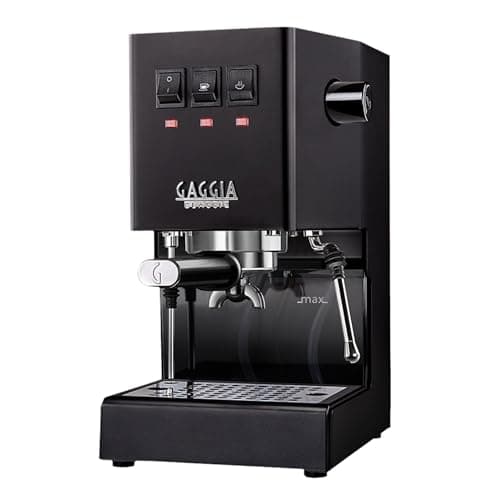
A rugged, repairable, endlessly moddable 58mm machine that rewards effort — the one to buy once and keep for a decade, as long as you pair it with a real grinder and accept the single-boiler routine.
- Best for
- Enthusiasts who want a metal, commercial-standard machine to learn on, mod, and keep
- Price context
- Entry-to-mid tier; a long-term value if you plan to keep and upgrade it
The Gaggia Classic is a legend for a simple reason: it's a metal, commercial-portafilter machine at an entry-tier price that you can learn on, repair, mod and keep for a decade. The Evo Prois the current version, with a redesigned steam wand and updates under the hood, but the recipe is unchanged — a rugged single-boiler machine that rewards the person willing to put in a little effort.
A note on honesty first: we haven't run this machine in a lab. This review compiles the published specifications, cross-checks them against verified owner feedback and the machine's long, well-documented history, and does the reasoning — the same method we use on every product, described on our methodology page.
Who the Gaggia Classic Evo Pro is for
The Evo Pro is aimed at the buyer who suspects espresso is going to become a real hobby and wants to buy once. It uses a 58mm commercial portafilter— the same size as café machines — so it plugs straight into the enormous world of standard baskets, tampers and bottomless portafilters, and it's built to be opened up and fixed rather than thrown away. If you want a machine that heats in seconds and asks nothing of you, this isn't it; the Breville Bambino is the plug-and-play alternative. If you want a machine to grow into and tinker with, the Gaggia is the classic answer.
What the specs say
The headline spec is the 58mm portafilter in a largely stainless body. That one detail is why the Gaggia is such a durable choice: the accessory ecosystem is effectively unlimited, and nothing about the machine ties you to proprietary parts. Under the hood sits a single aluminum boiler driven by a roughly 1425 W element and a 15-bar vibratory pump. Out of the box that pump pushes more pressure than espresso actually wants — the ideal is around 9 bar at the puck — which is exactly why the 9-bar mod is so popular (more on that below). The Evo Pro's redesigned, commercial-style steam wand is a real improvement for milk, and the whole thing is driven by simple rocker switches with very little to break.
What it's like to live with
Day to day, the Gaggia trades convenience for control and durability. Heat-up takes roughly five to ten minutes— many owners simply switch it on and let it warm while they grind — which feels slow if you're used to a ThermoJet Breville. Because it's a single boiler, you brew your shot first, then flip to steam and wait for the boiler to come up to steam temperature; you can't do both at once. For one or two milk drinks that's a minor rhythm to learn, not a real limitation.
What you get in return is a machine that feels solid and serviceable, with a 58mm workflow identical to a café. The manual wand is a skill worth learning, and the Evo Pro's version textures milk well for the class. This is a machine you operate, not one that operates for you — and for a lot of people, that's the entire appeal.
The mod culture (this is the point)
No home machine has a modding community like the Gaggia Classic. Because it's simple, metal and built from standard parts, it's become the enthusiast's canvas. The classic upgrades are the 9-bar OPV mod(adjusting the over-pressure valve or swapping a spring so the pump delivers espresso's ideal ~9 bar instead of 15), a PID controllerfor precise, stable brew temperature, and better baskets and a bottomless portafilter to diagnose your extraction. None are required — the machine works well stock — but the fact that they're possible, documented and reversible is why so many people keep this machine for years.
Alternatives worth considering
If fast heat-up and plug-and-play ease matter more than the 58mm ecosystem, the Breville Bambinoheats in about three seconds and is far more forgiving for a first-timer — we cover it in best espresso machine for beginners. If you want a built-in grinder and an all-in-one footprint, the Breville Barista Express folds grinding, PID and steaming into one machine. And if you're weighing the Gaggia against the rest of the field at this budget, our best espresso machines under $500guide lines them all up. The Gaggia's edge over all of them is longevity and the 58mm/mod ecosystem; its cost is convenience.
Verdict
The Gaggia Classic Evo Pro remains the machine we recommend to the buyer who wants to grow into espresso and keep the same machine while they do it. It's rugged, repairable, built on the commercial 58mm standard, and backed by a mod community that means it never really becomes obsolete. Go in understanding the deal: it heats slowly, it brews then steams, and it only sings with a real grinder and a little effort. Accept that, and you're buying a machine you won't need to replace — which is its own kind of value.
What we liked
- 58mm commercial portafilter — every café-standard basket, tamper and accessory fits
- Rugged, largely stainless body that's genuinely repairable, not disposable
- Huge mod community and parts supply — a machine you can upgrade for years
- Redesigned commercial-style steam wand steams milk well for the class
- Simple rocker-switch design with few things to go wrong
What gave us pause
- Single boiler means brew then steam, not both at once
- Slow ~5-10 minute heat-up versus a fast ThermoJet machine
- Least plug-and-play pick in its price range — rewards effort, doesn't hand you results
- Only shines with a proper burr grinder, which you must buy separately
Frequently asked questions
Is the Gaggia Classic Evo Pro good for beginners?
It can be, but it's a different kind of beginner machine than a Breville. It uses a 58mm commercial portafilter and a rugged metal build you can learn on and keep for years, but it heats slowly (about 5-10 minutes) and asks you to steam milk manually and brew then steam. Beginners who want plug-and-play ease may prefer the Breville Bambino; those who want to grow into the hobby will appreciate the Gaggia.
What is the 9-bar mod on the Gaggia Classic?
Espresso is ideally brewed at about 9 bar of pressure at the puck, but the Gaggia's pump can push up to 15 bar out of the box. The '9-bar mod' adjusts or replaces the over-pressure valve (OPV) spring so the machine delivers closer to 9 bar. It's a popular, reversible upgrade that many owners feel improves extraction — but the machine makes good espresso stock, so it's optional.
Can the Gaggia Classic Evo Pro make lattes and cappuccinos?
Yes. It has a redesigned, commercial-style manual steam wand that textures milk for lattes, cappuccinos and flat whites. Because it's a single-boiler machine, you brew your shot first and then switch to steam and wait a moment for the boiler to reach steam temperature — you can't brew and steam at the same time.
Does the Gaggia Classic Evo Pro need a separate grinder?
Yes. It has no built-in grinder, and espresso quality depends heavily on a fine, even, adjustable grind — especially with the Gaggia's non-pressurized commercial basket. Pair it with a dedicated burr grinder to get the best from it; a good grinder matters more to the cup than the machine does.
Sources
Keep reading
Buying your first setup?
See how we pick — compiled specs, cost-per-shot math, and honest trade-offs — then dig into the guides. No fake test lab, no rankings for hire.