Buying Guide
The Best Espresso Machine Cleaners in 2026
Espresso machines need two different cleaners for two different problems: coffee oil in the group, and limescale in the boiler. Here is which product does which job, and which one your machine actually needs first.
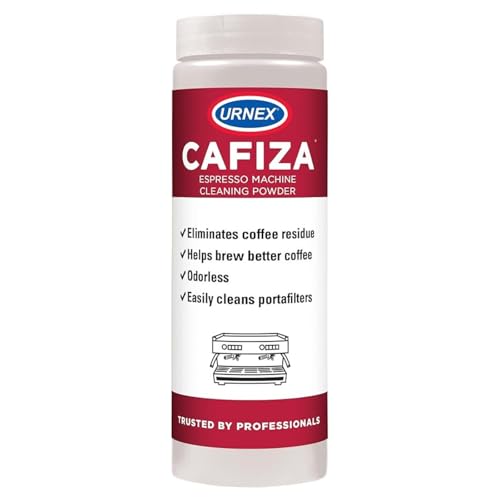
The verdict first. If you buy one cleaner, buy Urnex Cafiza— the espresso-machine detergent you backflush with to strip coffee oil out of the group head, and the job most home owners skip entirely. If your machine is tasting fine but running slow or throwing a descale light, you need a descaler instead, and Urnex Dezcal is the one many machine manuals name by name. The budget pick is the Breville-compatible descaling solution: the cheapest product here that does a real job, pre-portioned for Breville's automated cycle.
Almost every confused search about espresso machine cleaning comes down to one misunderstanding. "Cleaner" and "descaler" are not interchangeable words for the same bottle. They attack different deposits, in different parts of the machine, on different schedules, and using one when you needed the other leaves the actual problem exactly where it was.
Two different jobs, two different products
Coffee oil, in the group head. Every shot leaves soluble oils and fine grounds behind on the shower screen, inside the group and in the portafilter basket. They oxidise, go rancid, and the taste reaches the cup as a stale, bitter edge that no amount of dialling in will fix. The fix is a backflush detergent— an alkaline powder like Cafiza — run through a blind basket on machines with a three-way solenoid valve, or used to soak the portafilter and basket on machines without one. A descaler does nothing for this.
Limescale, in the boiler and lines. Hard water deposits calcium and magnesium carbonate on every hot surface inside the machine. Scale narrows water paths, insulates the heating element so temperature control drifts, and eventually kills the machine. The fix is a descaler— an acid, usually citric or lactic, buffered so it dissolves scale without attacking the metals and seals. A backflush detergent does nothing for this. Our how to descale an espresso machine guide walks through the cycle, and what water to use explains how to slow the problem down at source.
How we chose these
Three products, assessed on their published formulation, what manufacturers say about compatibility, and whether a home owner can use them without guesswork — our full approach is on the methodology page. We weighted:
- The right chemistry for the deposit. Alkaline detergent for coffee oil, a buffered acid for scale. A product that claims to do both well usually does neither.
- Material safety. Plenty of home machines have aluminum boiler components that harsher acids will pit. A formulation stated as safe across aluminum and stainless is a hard requirement, not a nice-to-have.
- Dosing you cannot get wrong.Pre-portioned sachets or a solution matched to a machine's own cycle beat a tub you have to measure, because the common failure mode is an over-concentrated mix.
- Manufacturer endorsement where it exists. If a machine manual names a product, that is worth more than any marketing claim.
At a glance
The three side by side, by the job each one does. Tap any button for the live Amazon price; the number shown at checkout is the one that applies.
| Product | Job | Chemistry | Use on | Price |
|---|---|---|---|---|
| Urnex Cafiza | Coffee oil | Alkaline detergent powder | Group head, portafilter, baskets | $19.99Buy |
| Urnex Dezcal (2-pack) | Limescale | Citric acid powder | Boiler and water lines | $16.99Buy |
| Breville-compatible descaling solution | Limescale | Pre-portioned descaling solution | Breville descale cycle | $12.99Buy |
Prices shown are from Amazon as of November 7, 2026 and change often — the button always goes to the current listing. Some links may earn us a commission at no extra cost to you.
Best overall: Urnex Cafiza
Who it is for:anyone pulling shots regularly on a semi-automatic machine — and especially anyone whose coffee has started tasting stale without the beans changing.
Cafiza is the espresso-machine detergent cafes use, and it is on this page as the overall pick because coffee oil is the deposit home owners actually neglect. Scale gets attention because machines nag about it with a warning light; nothing lights up to tell you the group head is rancid. Cafiza is an alkaline powder that dissolves those oils instead of smearing them around, used either as a backflush through a blind basket or as a soak for the portafilter, basket and shower screen on machines that cannot backflush.
| Type | Alkaline espresso machine detergent (powder) |
|---|---|
| Removes | Coffee oils and residue |
| Used for | Backflushing; soaking portafilters, baskets, screens |
| Requires | Three-way solenoid valve to backflush; otherwise soak only |
| Does not remove | Limescale - you still need a descaler |
Honest cons: it does nothing about scale, so on hard water it is half the job; and it must be rinsed thoroughly, because residual detergent tastes worse than the oils did. Follow the dose on the pack rather than eyeballing it. Our how to clean an espresso machine guide covers the full routine, including the parts a detergent cannot reach.
Best descaler: Urnex Dezcal
Who it is for:anyone on hard water, anyone whose machine is throwing a descale warning, and anyone whose kettle furs up quickly — that kettle is a free hardness test you already own.
Dezcal is the default descaling recommendation and the one many machine manuals name directly. It is a citric-acid powder that is safe across aluminum and stainless components, which matters because plenty of home machines have aluminum boilers that harsher acids will pit. It comes as a two-pack of pre-portioned sachets, so the concentration is decided for you — the single most common descaling mistake removed from the process.
| Type | Citric-acid descaling powder |
|---|---|
| Removes | Limescale (calcium and magnesium deposits) |
| Material safety | Stated safe for aluminum and stainless components |
| Format | Pre-portioned sachets, 2-pack |
| Does not remove | Coffee oils - you still need a detergent |
Honest cons: a descale cycle is a chore, it uses a tank or two of rinse water afterwards, and a two-pack is only two cycles — on very hard water you will be reordering. Check whether your manufacturer requires their own branded product before you use a third-party descaler under warranty.
Budget pick: Breville-compatible descaling solution
Who it is for:Breville owners running the machine's automated descale routine, and anyone who wants the cheapest product on this page that still does a real job.
Breville machines run an automated descale cycle that expects a specific volume of solution in the tank, and a product formulated and portioned for that cycle removes the dilution guesswork entirely: fill, select the routine, follow the prompts. It is the cheapest cleaner here, which is why it is named as the budget pick — not because it is a compromise. It is also the easiest to get right, which on a machine that prompts you by shot count matters more than chemistry trivia.
| Type | Pre-portioned descaling solution |
|---|---|
| Removes | Limescale |
| Designed for | Breville automated descale cycle |
| Advantage | No measuring or dilution |
| Role here | Budget pick |
Honest cons: it is a descaler, so it does nothing about coffee oil; and it is portioned for Breville's routine, so on another brand's machine you are back to reading a manual for the right volume. If your machine is not a Breville, Dezcal is the better buy.
Why not vinegar
Vinegar is the classic internet shortcut and most espresso machine manufacturers specifically advise against it, for two reasons. It is acetic acid, which is harsher on aluminum boiler components, gaskets and seals than the citric-acid formulations descalers use. And the smell and taste are extraordinarily persistent — you will be flushing it out for days and tasting it in shots after that. Using it can also void a warranty. The saving is a couple of dollars against a machine worth hundreds.
How often each job is due
Backflush or soak with detergent weekly if you pull shots daily, and rinse the group with plain water after every session. Descale on water hardness, not on a calendar: soft water might stretch to six months, hard water can want it every six to eight weeks. If your machine has a descale warning light, treat it as a reminder rather than a verdict — most count liters or shots rather than measuring scale, so descale before it lights up if your water is hard.
The cheapest cleaning product of all is better water going in. A filter jug or an in-tank filter slows scale formation before it starts; see what water to use in an espresso machine. And while you have the machine apart, the group gasket and shower screen are the two parts worth inspecting — a puck screen keeps the screen cleaner between services.
The bottom line
Buy both, in this order. Urnex Cafiza first, because coffee oil is the deposit that is already affecting the taste of your shots and nothing in the machine warns you about it. Then a descaler sized to your water: Urnex Dezcal for almost any machine, or the Breville-compatible solution if you own a Breville and want the cheapest, most foolproof option. And whatever you read elsewhere, keep the vinegar in the kitchen cupboard.
Frequently asked questions
What is the best espresso machine cleaner?
For coffee oils in the group head, Urnex Cafiza - an alkaline detergent used for backflushing or for soaking portafilters, baskets and shower screens. For limescale in the boiler, Urnex Dezcal, a citric-acid powder stated as safe for aluminum and stainless components and named directly in many machine manuals. They do different jobs and most machines need both. Breville owners can use a pre-portioned Breville-compatible descaling solution, which is the cheapest option here.
What is the difference between an espresso machine cleaner and a descaler?
A cleaner is an alkaline detergent that dissolves coffee oils and residue from the group head, shower screen, portafilter and baskets. A descaler is a buffered acid that dissolves limescale from the boiler and water lines. They attack different deposits in different parts of the machine, so one cannot substitute for the other - using a descaler on a rancid group head, or a detergent on a scaled boiler, leaves the problem untouched.
Can I use vinegar to clean my espresso machine?
Most manufacturers specifically advise against it. Vinegar is acetic acid, which is harsher on aluminum boiler components, gaskets and seals than the citric-acid formulations purpose-made descalers use, and its smell and taste are extremely persistent - you will be flushing and tasting it for days. It can also void a warranty. A sachet of proper descaler costs a few dollars against a machine worth hundreds.
How often should I clean and descale my espresso machine?
Backflush or soak with detergent about weekly if you pull shots daily, and rinse the group with water after every session. Descaling depends on your water rather than the calendar: soft water may stretch to six months, hard water can need it every six to eight weeks. A descale warning light usually counts shots or liters rather than measuring scale, so on hard water descale before it comes on.
Do I need a three-way solenoid valve to use Cafiza?
To backflush, yes. Backflushing forces detergent back through the group and out through the valve, and a machine without a three-way solenoid has nowhere for that water to go. On those machines Cafiza is still useful as a soak for the portafilter, basket and shower screen, which removes most of the accessible oil. Your manual will say which type you have.
Sources
- Urnex - Cafiza espresso machine cleaning powder product information
- Urnex - Dezcal activated descaler (citric acid formulation, material compatibility)
- Breville - descaling your espresso machine (automated descale cycle instructions)
- Amazon listing - Urnex Cafiza espresso machine cleaner
- Amazon listing - Breville-compatible descaling solution
Keep reading
Buying your first setup?
See how we pick — compiled specs, cost-per-shot math, and honest trade-offs — then dig into the guides. No fake test lab, no rankings for hire.