Maintenance Guide
What Water to Use in an Espresso Machine
Your shot is about 98% water, and the wrong water is the single most common way a good machine dies early. The published numbers, what the manufacturers actually say, and what to pour in tomorrow.
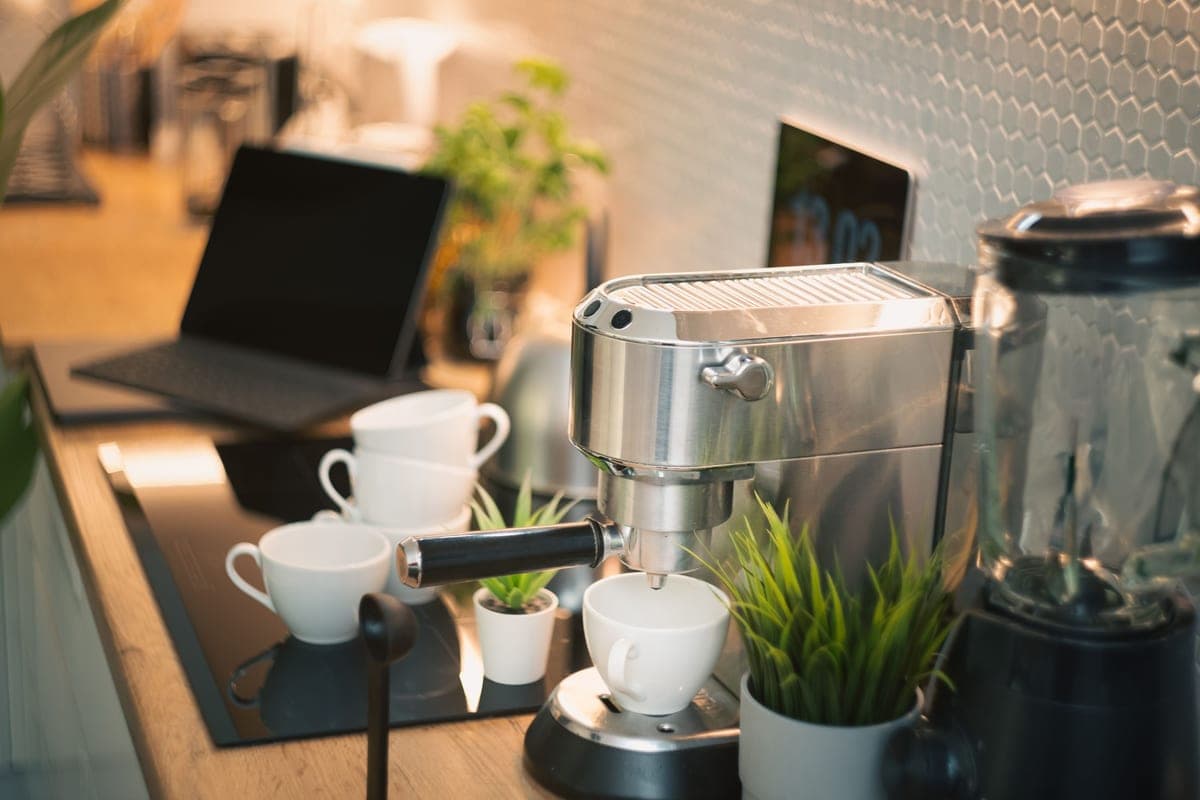
An espresso is roughly 98% water by weight. That alone would make water worth thinking about, but it is not the main reason this page exists. The main reason is that water is also what kills espresso machines— not dramatically, but slowly, as dissolved minerals come out of solution inside a hot boiler and turn into limescale.
The advice on this subject online swings between two errors: "just use tap water" and "use distilled to avoid scale forever". Both are wrong, and the second one is wrong in a way manufacturers explicitly warn about. Here is what the published standards and the machine makers themselves actually say.
Why water decides two separate things
It helps to separate the two problems, because the ideal water for each pulls in opposite directions.
- Taste.Dissolved minerals — principally magnesium and calcium — are what allow water to extract flavour compounds from coffee. Water with almost no minerals in it extracts poorly and tastes flat and hollow, which is the single most surprising thing about this topic to most people. Alkalinity separately acts as a buffer, damping the acidity in the cup.
- Scale. Those same calcium and magnesium compounds precipitate out when water is heated and deposit inside the boiler, the thermoblock and the plumbing. Scale insulates the heating element (so the machine runs cooler than it thinks), narrows the water path, and eventually seizes valves. Our descaling guide covers what that failure looks like.
So you are looking for a middle band: enough mineral content to extract properly, not so much that the machine furs up. That band has been written down.
What the SCA standard actually says
The Specialty Coffee Association's published standard Water for Brewing Specialty Coffee(Statistics & Standards Committee, revised 21 November 2009) sets out target values and acceptable ranges. These are the numbers everyone else is paraphrasing, so here they are as printed:
| Characteristic | Target | Acceptable range |
|---|---|---|
| Odor | Clean / fresh, odor free | — |
| Color | Clear color | — |
| Total chlorine | 0 mg/L | 0 mg/L |
| TDS (total dissolved solids) | 150 mg/L | 75 - 250 mg/L |
| Calcium hardness | 4 grains or 68 mg/L | 1 - 5 grains, or 17 - 85 mg/L |
| Total alkalinity | 40 mg/L | At or near 40 mg/L |
| pH | 7.0 | 6.5 to 7.5 |
| Sodium | 10 mg/L | At or near 10 mg/L |
The standard notes that the target is the most desirable point in the acceptable range, while anything falling inside the range is considered to meet the standard — the variances exist to accommodate real-world circumstances.
Why not distilled, de-mineralised or RO water
This is the advice that sounds clever and is not. If minerals cause scale, remove the minerals — no scale, ever. The problem is that machine manufacturers specifically tell you not to.
Breville states it plainly in the instruction book for the Barista Express (BES870XL): "We recommend using cold, filtered water. We do not recommend the use of de-mineralized or distilled water or any other liquid as this may affect the taste of the espresso and how the machine is designed to function."The same wording appears across Breville's espresso range.
Two things are packed into that sentence. The first is taste: water with essentially no dissolved solids sits far below the SCA's 75 mg/L acceptable floor and extracts poorly, giving a hollow, flat shot. The second is the machine itself — that phrase "how the machine is designed to function" is doing real work, because many machines rely on water conducting electricity to sense water level and control heating. Water stripped of its dissolved solids conducts poorly.
Reverse osmosis water has the same problem unless it is remineralised afterwards. RO strips nearly everything out, so straight RO is closer to distilled than to drinking water. If you are on RO at home, the answer is a remineralisation stage or a purpose-made mineral additive, not the RO tap on its own.
How to find out what your water actually is
Four ways, from most to least precise. Any of them is better than guessing.
- Your water utility's annual quality report. In the US these are published and free, and they list hardness and TDS for your supply area. It is the most accurate free number you will get.
- Cheap hardness test strips.A few dollars, results in seconds, accurate enough to tell you which band you are in. Some machines — Breville's Dual Boiler among them — ship with a test strip precisely so you can set the machine's hardness setting correctly.
- A TDS meter.Reads total dissolved solids directly, which is the number to compare against the SCA's 75-250 mg/L range. It does not separate calcium hardness from everything else, so pair it with a strip.
- The kettle test. Free, and surprisingly informative: if your kettle furs up quickly, so will your espresso machine. Look inside it now. This is also the best rough guide to how often you will need to descale.
The four practical options, ranked
| Option | Good for taste? | Good for the machine? | Verdict |
|---|---|---|---|
| Tap through a carbon filter jug | Yes — removes chlorine, keeps minerals | Yes on soft/moderate water | Best default for most homes |
| The machine's own filter cartridge | Yes | Yes — designed for it | Best if your machine takes one |
| Low-mineral bottled spring water | Yes, if you read the label | Yes | Good, but expensive and wasteful |
| Distilled / de-mineralised / straight RO | No — flat and hollow | No — manufacturers advise against it | Avoid |
Start with a carbon filter jug. It is cheap, it removes chlorine, and crucially it does notstrip the minerals you want. For most households on soft to moderately hard water, tap water through a filter jug is genuinely the right answer, and it is what Breville's "cold, filtered water" wording points at.
If your machine takes its own cartridge, use it.Breville, Philips (AquaClean) and Jura (CLARIS) all sell filters designed around their own machines — Breville notes that the provided water filter helps prevent scale build-up. This is the least-effort correct answer, because the filter is sized for the machine's flow rate and the machine often tracks it for you.
Bottled water works if you read the label.Look for a bottled spring water quoting a dry residue or TDS figure in the SCA range — roughly 75 to 250 mg/L, ideally near 150. Avoid anything marketed as mineral water with a high mineral content, which will scale a machine fast. It is an expensive and wasteful way to run a machine daily, but it is a reasonable stopgap if you are on very hard water and waiting for a filter to arrive.
The one to skip is at the bottom of the table, and the reason is in the section above.
The softened-water trap
If your house has a water softener, do not assume that solves it. Conventional ion-exchange softeners work by swapping calcium and magnesium for sodium. That does reduce the hardness that causes classic limescale — but it does not reduce the total dissolved solids, and it raises the sodium content of the water.
Look back at the SCA table: the sodium target is 10 mg/L, "at or near". Softened water routinely sits well above that, which is why softened water often tastes slightly flat or faintly salty in coffee even though the kettle stopped furring up.
The practical answer in a softened house is to take water from an unsoftened tap if you have one — many installations leave the kitchen cold tap unsoftened for drinking — and run it through a carbon filter. Failing that, bottled water in the right range for the machine is a defensible compromise.
Machine filters, and how often to change them
A water filter cartridge that has not been changed is not a filter; it is a piece of saturated carbon sitting in your water tank. Breville's own procedure for the Barista Express is explicit about the interval: rinse the filter and mesh, soak the filter for five minutes, place it in the holder, install it in the tank, and set the date dial two months ahead.
Two months is the manufacturer's figure, and on hard water Breville advises changing the filter more frequently than that. Put it in your calendar, because the machine will not always remind you and the cartridge gives no visible sign of being spent.
One more line from the same manual, which almost nobody follows and which costs nothing: "Always check the water level before use and replace water daily." Water left standing in a tank for a week is not what you want in a shot.
We do not currently have a water filter pick in our own product picks, so we are not going to point you at one we have not written up — buy the cartridge your machine manufacturer specifies, which is the correct answer anyway.
If your machine is already scaled
Good water from today stops scale getting worse. It does not remove what is already in there, and if your machine has been running on hard unfiltered water for a year or two, there will be some. The symptoms are a machine that takes longer to heat, brews cooler than it used to, flows more slowly, or has started making unfamiliar noises.
That is a descaling job, and it needs an acid descaler rather than a general cleaner. Our full descaling guide covers the cycle, the intervals by water hardness, and why vinegar is a false economy. These are the products it uses.
For most machines,a purpose-made descaler with published directions. Urnex Dezcal is the standard choice and comes in a two-pack, which is roughly a year's supply on moderate water.
For Breville owners,a solution formulated for Breville's own descale cycle — the one that runs when the CLEAN/DESCALE light comes on and stays on rather than flashing.
And the other half of the job.Descaling removes mineral deposits from the water path. It does nothing about coffee oils in the group head and shower screen, which is a separate cleaner and a separate cycle — a distinction the flashing-versus-solid light on a Breville is actually telling you about. Our cleaning guide covers backflushing.
| Product | Job | When | Price |
|---|---|---|---|
| Urnex Dezcal | Removes limescale from the water path | When the machine slows or the light says so | $16.94Buy |
| Breville descaling solution | Same, for Breville's descale cycle | Solid CLEAN/DESCALE light | $12.99Buy |
| Urnex Cafiza | Removes coffee oils from the group head | Backflushing, on a separate schedule | $19.99Buy |
Prices shown are from Amazon as of Sep 18, 2026 and change often — the button always goes to the current listing. Some links may earn us a commission at no extra cost to you.
Then fix the water, so you are not doing this again in six months. For a shared or office machine, where descaling reliably never gets scheduled, filtration from day one matters even more — see our office machine guide.
Frequently asked questions
What water should I use in my espresso machine?
Cold tap water through a basic carbon filter, for most homes. Breville's own instruction books say exactly that — "We recommend using cold, filtered water" — because a carbon filter removes chlorine while leaving in the dissolved minerals that extraction actually needs. If your machine takes its own cartridge (Breville's filter, Philips AquaClean, Jura CLARIS), use that instead: it is designed around the machine and helps prevent scale build-up.
Can you use distilled water in an espresso machine?
Manufacturers advise against it. Breville's instruction books state: "We do not recommend the use of de-mineralized or distilled water or any other liquid as this may affect the taste of the espresso and how the machine is designed to function." Two reasons sit behind that. Water with essentially no dissolved solids falls well below the SCA's acceptable floor of 75 mg/L TDS and extracts poorly, tasting flat. And many machines rely on water conducting electricity to sense level and control heating.
What are the SCA water standards for coffee?
The SCA's published standard sets a TDS target of 150 mg/L within an acceptable range of 75-250 mg/L; calcium hardness of 4 grains or 68 mg/L, acceptable at 1-5 grains or 17-85 mg/L; total alkalinity at or near 40 mg/L; pH of 7.0 within 6.5-7.5; sodium at or near 10 mg/L; and total chlorine at zero. Water should also be clear and odor-free. The target is the optimum, and anything inside the range meets the standard.
Is softened water OK for an espresso machine?
It is a common trap. Conventional ion-exchange softeners work by swapping calcium and magnesium for sodium, so they reduce the hardness that causes classic limescale without reducing total dissolved solids — and they raise sodium, against an SCA target of about 10 mg/L. That is why softened water often tastes flat or faintly salty in coffee. If you have an unsoftened kitchen tap, take your machine water from there and filter it.
How often should I change my espresso machine's water filter?
Breville's own procedure for the Barista Express is to set the filter's date dial two months ahead when you install it, and to change it more frequently if you live in a hard water area. Put it in a calendar, because a saturated cartridge gives no visible sign of being spent. The same manual also advises checking the water level before use and replacing the water in the tank daily.
Does better water actually make espresso taste better?
Yes, in two directions. Chlorine is detectable in a cup at very low concentrations, so removing it with a carbon filter is an immediate and obvious improvement. And dissolved minerals — principally magnesium and calcium — are what let water extract flavour compounds from the coffee, which is why very low-mineral water produces a hollow, flat shot. The SCA's 150 mg/L TDS target is the point those two effects balance.
Sources
- SCAA Standard — Water for Brewing Specialty Coffee, Statistics & Standards Committee, revised 21 November 2009 (targets and acceptable ranges for odor, color, chlorine, TDS, calcium hardness, total alkalinity, pH and sodium)
- Breville — the Barista Express (BES870XL) instruction book: "We recommend using cold, filtered water. We do not recommend the use of de-mineralized or distilled water...", water filter replacement procedure (soak 5 minutes, set date 2 months ahead), and daily water replacement
- Breville — Check and set water hardness tutorial (the Dual Boiler): supplied test strip and hardness setting
- Urnex — Dezcal descaler product information and directions for use
- Urnex — Cafiza espresso machine cleaner product information and backflushing directions
Keep reading
Buying your first setup?
See how we pick — compiled specs, cost-per-shot math, and honest trade-offs — then dig into the guides. No fake test lab, no rankings for hire.