Buying Guide
The Best Milk Frothing Pitchers in 2026
A good steaming pitcher is the cheapest thing that makes microfoam easier and latte art possible. Here's what the material, spout and size actually change — then the right pitcher for each buyer, with honest cons.
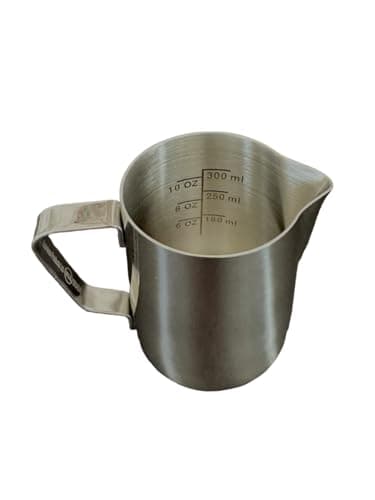
A milk frothing pitcher — also called a steaming pitcher or milk jug — is the small stainless vessel you steam and pour milk from, and it is the most underrated tool in home espresso. People spend hundreds on a machine and a grinder, then wonder why their lattes look flat and taste thin, when the culprit is a cheap, wide, round-spouted jug that can't hold a whirlpool or lay down a clean pour. Get the pitcher right and everything downstream — the microfoam, the temperature control, the latte art — gets dramatically easier. It's also the cheapest upgrade in the whole setup.
Our overall pick is the Rattleware 12oz Etched Milk Frothing Pitcher, because its sharp, tapered spout and etched fill line make it the easiest jug here to actually pour art with. But the best pitcher is the one that matches your machine, your milk volume and your ambition, so we've picked five across the range — a budget jug that ships with a latte-art pen, a brand-name mid-size, a handleless jug for advanced technique, and a large 32 oz option for a house that makes several drinks at once. First, what actually matters.
What a steaming pitcher does (and why the details matter)
When you steam milk, you're doing two things at once: injecting air to build microfoam (the paint-like, glossy foam of tiny bubbles that makes a flat white or latte silky) and spinning the milk into a whirlpool that folds that foam back into the body so the texture is uniform rather than bubbly. A good pitcher is shaped to make both easy. The full technique lives in our how to steam milkguide; here we're just concerned with the jug that makes it possible.
Material. You want stainless steel, ideally food-grade 18/8 (304) stainless. It's durable, doesn't retain flavors, and — crucially — conducts heat, so you can rest a bare hand on the outside and feelthe milk warm up. That tactile cue is how most home baristas learn to stop at the right temperature without a thermometer: when the jug gets too hot to hold comfortably, you're done. Plastic and double-walled "cool touch" jugs remove that feedback and make texturing harder to learn.
Spout shape.This is what separates a jug you can pour art with from one you can't. A sharp, tapered spout narrows the milk into a fine, controllable stream for drawing hearts, tulips and rosettas, and lets you switch from a thin stream to a wide one by changing how fast you pour. A rounded, wider spout is more forgiving and fine for a plain latte, but it fights you the moment you try to pour a pattern. Beginners learning art should lean toward a sharper spout.
Capacity versus cup count.The single most common mistake is buying a jug that's too big for the milk. You get the best whirlpool when the pitcher is roughly twice the volume of the milk you're steaming, and you fill to the base of the spout— no higher, because milk expands as it foams and will overflow. A single latte uses a small amount of milk, so a 12–20 ozpitcher is the sweet spot for one-to-two drinks. A 32 oz jug is superb for steaming several drinks in one go, but try to texture one drink's worth of milk in it and there's too little depth for the steam wand to form a proper vortex.
Handled versus handleless. A handledpitcher is what almost everyone should start with: it keeps your hand away from the heat and is easier to control while you're still learning. A handlelesspitcher — favored by many competition baristas — lets you cradle the metal directly for the most precise pour and the most immediate temperature feedback, but it demands practice and it gets hot, so it's an advanced-technique choice, not a first jug. We've included one of each so you can pick your level.
How we picked
We don't run a test lab, and we won't pretend to. Every pitcher here was evaluated against its published manufacturer specifications, the design details that decide whether it actually helps you texture and pour milk, and verified owner feedback — our full approach is on the methodology page. For milk pitchers specifically, we weighted:
- Material.Food-grade stainless steel (18/8 / 304) so you can feel the temperature through the wall and the jug lasts. No plastic, no odor-retaining coatings we couldn't verify are food-safe.
- Spout geometry.A spout shaped to pour a controlled stream — sharper for art, rounder for forgiving everyday pours — because this is what most changes the result.
- Right-sized capacity.A range of sizes matched to real cup counts, so you can buy the volume you'll actually steam rather than the biggest number.
- Build and fit-and-finish. A sturdy, well-attached handle (laser-welded rather than a flimsy spot-weld), a clean rim, and interior markings that help you fill to the right level.
- Honest fit for the buyer.A beginner jug, a serious-technique jug and a batch jug do different things. We say who each one is for — and who should skip it.
At a glance
The field side by side. Tap any "view" button for the live Amazon price — the number shown at checkout is the one that applies.
| Pitcher | Capacity | Handle | Best for | Price |
|---|---|---|---|---|
| Rattleware 12oz | 12 oz | Handled | Latte art (overall) | $16.95Buy |
| Zulay | 12 / 20 / 32 oz | Handled | Budget (pen included) | $12.99Buy |
| De'Longhi DLSC069 | ~17 oz (500 ml) | Handled | Brand-name mid-size | $29.95Buy |
| Normcore Handleless | ~20 oz (600 ml) | Handleless | Advanced technique | $35.99Buy |
| CAMKYDE 32oz | 32 oz | Handled | Multiple drinks | $15.88Buy |
Prices shown are from Amazon as of October 17, 2026 and change often — the button always goes to the current listing. Some links may earn us a commission at no extra cost to you.
Best overall / latte art: Rattleware 12oz Etched Milk Frothing Pitcher
The Rattleware 12ozis the jug we'd put in most people's hands, because it's built around the two things that make pouring art possible: a sharp, tapered pouring spout that draws milk into a fine, controllable stream, and an etched interior fill lineso you pour the same amount of milk every time and learn faster. It's stainless steel, a 12 oz size that's ideal for one to two drinks, and a long-time favorite in specialty cafes for exactly these reasons. If you care about your milk looking as good as it tastes, start here.
| Capacity | 12 oz |
|---|---|
| Material | Stainless steel |
| Interior | Etched fill line |
| Spout | Sharp, tapered (built for latte art) |
| Handle | Handled |
| Best for | One-to-two drinks; learning latte art |
What we like: the spout is the star — it pours the thin-to-thick stream art needs — and the etched line takes the guesswork out of dosing your milk. The honest cons: at 12 oz it's sized for one or two drinks, so it's too small if you routinely make three at once; and it's a bare single-wall jug with no measurement markings beyond the single etched line, so it gets hot to the touch (which is also how you judge temperature) and doesn't double as a measuring cup. For its job — better milk and real latte art — it's the pick.
Best budget (includes latte-art pen): Zulay Milk Frothing Pitcher
The Zulay Milk Frothing Pitcher is the easiest first buy: an inexpensive, well-made stainless steel jug with a laser-welded handle that stays put, interior measurement markingsso you fill to the right level every time, and — the nice touch — a latte-art decorating pen in the box for drawing on top of your foam while you practice free-pour. It comes in 12, 20 and 32 oz sizes, so you can match the capacity to how many drinks you make. For a beginner who wants a capable jug without overthinking it, this is the value pick.
| Material | 304 stainless steel |
|---|---|
| Interior | Measurement markings |
| Handle | Laser-welded, handled |
| Included | Latte-art decorating pen |
| Sizes | 12 / 20 / 32 oz |
| Best for | First pitcher; budget; practice |
What we like: it does everything a beginner needs for very little — sturdy welded handle, helpful interior markings, and a decorating pen that makes early results look fun even before your free-pour is dialed in. The honest cons: the spout is a touch rounder and less precise than the Rattleware's, so pure free-pour art is a little harder; and the decorating pen is a novelty crutch, not a substitute for learning to pour. Pick the 12 or 20 ozfor one-to-two drinks — the 32 oz is only worth it if you batch.
Best brand-name mid-size: De'Longhi DLSC069 Milk Frothing Pitcher
The De'Longhi DLSC069 is the sensible, brand-name middle option — a stainless steel jug of about 17 oz (500 ml)that sizes perfectly for one-to-two milk drinks and pairs naturally with a De'Longhi machine, though it works with any steam wand. If you already own De'Longhi gear and want a matching, no-surprises jug from a maker you trust, this is the straightforward buy. It's the kind of pitcher you don't have to think about: right material, right size, from a known name.
| Capacity | ~17 oz (500 ml) |
|---|---|
| Material | Stainless steel |
| Handle | Handled |
| Fits | Any steam wand (pairs with De'Longhi machines) |
| Best for | One-to-two drinks; brand-matched setups |
What we like: a trusted brand, a genuinely useful 500 ml size, and a clean stainless build that matches a De'Longhi or Breville setup. The honest cons: you often pay a small brand premiumover a generic jug of the same size and material, and De'Longhi publishes fewer spout and finish details than the specialist makers — it's a solid, plain, do-the-job pitcher rather than a dedicated latte-art tool. If art is your goal, the Rattleware's spout has the edge.
Best handleless (advanced technique): Normcore Handleless Milk Pitcher
The Normcore Handleless Milk Pitcheris for baristas who've outgrown a handled jug and want the control competition pourers chase. Going handlelesslets you cradle the base of the pitcher in your palm, so you feel the milk's temperature directly and get a more precise, connected pour. It's a roughly 20 oz (600 ml) jug in 18/8 stainless steel with a round spout and a non-stick black coatingthat looks striking and wipes clean. This is a deliberate step up in technique, not a beginner's first pitcher.
| Capacity | ~20 oz (600 ml) |
|---|---|
| Material | 18/8 stainless steel |
| Finish | Non-stick black coating |
| Spout | Round |
| Handle | Handleless |
| Best for | Advanced technique; direct temperature feel |
What we like: the handleless design gives the most immediate temperature feedback and the most controlled pour once you're comfortable, the 600 ml size suits one-to-two larger drinks, and the coated finish is genuinely good-looking. The honest cons: it needs practice — and because you're holding bare metal, it gets hot, so beginners can find it awkward or intimidating; and the non-stick coating asks for care (hand wash, no abrasive scrubbers) to avoid wearing it. Buy it as an upgrade, not as your first jug.
Best large / for multiple drinks: CAMKYDE 32oz Milk Frothing Pitcher
If you regularly make milk drinks for more than one person, the CAMKYDE 32oz is the batch jug. At a full 32 oz of stainless steel, it holds enough milk to steam three or four drinks' worth in a single go, which saves real time on a busy weekend morning. It also ships with a decorating penfor practicing patterns. This is the "make coffee for the household" pitcher — deliberately oversized so you can steam once and pour several cups.
| Capacity | 32 oz |
|---|---|
| Material | Stainless steel |
| Included | Latte-art decorating pen |
| Handle | Handled |
| Best for | Multiple drinks; batching milk |
What we like: it steams enough milk for a table in one pass, the stainless build lets you feel the temperature, and the decorating pen is a fun extra. The honest cons: it's overkill for a single drink— put one latte's worth of milk in a 32 oz jug and there's too little depth for the wand to build a proper whirlpool, so texture and art actually get harder; and a big, full jug is heavier to control. If you mostly make one or two drinks, get a 12–20 oz pitcher instead and keep this for when you're serving a crowd.
How to choose a milk frothing pitcher
Strip away the brand names and it comes down to four questions.
How many drinks at once? This decides the size, and size matters more than anything. For one or two drinks, a 12–20 ozjug (the Rattleware, a small Zulay, or the De'Longhi) gives the right milk depth for a clean whirlpool. For three or four, step up to the 32 oz CAMKYDE. Remember the rule: the pitcher should be about twice your milk volume, and you fill only to the base of the spout.
How serious are you about latte art? If pouring hearts and rosettas is the goal, prioritize a sharp, tapered spout— that's the Rattleware. If you just want smooth, well-textured milk in a flat white and don't care about patterns yet, a rounder spout like the Zulay's or De'Longhi's is more forgiving and perfectly good.
Handled or handleless? Start handled. It keeps your hand off the heat and is easier to control while you learn. Move to a handlelessjug like the Normcore only once your technique is solid and you want the extra control and temperature feel — and accept that bare metal gets hot.
Do you even need a steam wand?A pitcher only earns its keep if you're texturing milk with a steam wand. If you don't have one — or don't want one — you may be better served by a standalone frother; see our best milk frother guide, and our sibling how to froth milk without a frother walkthrough for the no-gear methods. If you're shopping for the machine itself, the best latte machine guide covers the wands that feed these pitchers.
The bottom line
For most people, the Rattleware 12ozis the smartest milk-pitcher buy — a sharp, tapered spout and an etched fill line make it the easiest jug here to texture and pour art with, at a sensible one-to-two-drink size. On a budget, the Zulay is the value pick and throws in a latte-art pen; for a brand-matched mid-size, the De'Longhi DLSC069 is the no-surprises 500 ml choice. Once your technique is solid, the Normcore Handlelessgives you the control competition baristas want, and if you're steaming for a crowd, the CAMKYDE 32oz lets you batch several drinks at once.
Whatever you choose, keep the fundamentals in view: food-grade stainless so you can feel the temperature, a spout shaped for the pour you want, and a size about twice your milk volume filled to the base of the spout. Get those right and the pitcher does its job — then the microfoam and the latte art are down to practice. Pair it with the technique in our how to steam milkguide and you're set.
Frequently asked questions
What size milk frothing pitcher should I buy?
Match it to how many drinks you make at once, not the biggest number. A pitcher works best when it's about twice the volume of the milk you're steaming, and you fill only to the base of the spout so the foam has room to expand. For one to two drinks, a 12-20 oz pitcher is ideal; for three or four at once, step up to a 32 oz. Too big for the milk and you can't build a whirlpool; too small and it overflows.
What material is best for a milk pitcher?
Food-grade stainless steel, ideally 18/8 (also called 304). It's durable, doesn't retain flavors, and conducts heat, so you can rest a bare hand on the outside and feel the milk warm up — which is how most home baristas judge when to stop steaming without a thermometer. Avoid plastic and double-walled 'cool touch' jugs while you're learning, because they remove that temperature feedback and make texturing harder.
Do I need a handleless pitcher for latte art?
No. A handled pitcher is easier to control and is what almost everyone should start with — it keeps your hand off the heat. Handleless pitchers, favored by many competition baristas, let you cradle the base for the most precise pour and the most direct temperature feel, but they get hot and take practice. Buy handleless as an upgrade once your technique is solid, not as your first jug. What matters most for art is a sharp, tapered spout.
Why does the spout shape matter?
The spout controls how the milk flows out, which is everything for latte art. A sharp, tapered spout narrows the milk into a fine, controllable stream and lets you switch from a thin pour to a wide one by changing your pace — that's what draws hearts, tulips and rosettas. A rounder, wider spout is more forgiving for a plain latte but fights you the moment you try to pour a pattern. If art is your goal, prioritize a sharper spout.
Can I use a milk frothing pitcher without an espresso machine?
A steaming pitcher is designed to be used with a steam wand, so on its own it won't texture milk. If you don't have a wand, you're better served by a standalone milk frother, or by the no-gear methods in our 'how to froth milk without a frother' guide — a French press or a jar can create foam, though not the same silky microfoam a steam wand and pitcher produce together. See our best milk frother guide for the alternatives.
Sources
- SCA (Specialty Coffee Association) — coffee & milk standards reference
- De'Longhi — DLSC069 milk frothing jug (specifications)
- Zulay Kitchen — milk frothing pitcher product page
- Normcore — handleless milk pitcher product page
- Rattleware — 12 oz etched latte-art pitcher (Amazon product listing)
- CAMKYDE — 32 oz milk frothing pitcher (Amazon product listing)
Keep reading
Buying your first setup?
See how we pick — compiled specs, cost-per-shot math, and honest trade-offs — then dig into the guides. No fake test lab, no rankings for hire.