Buying Guide
The Best Espresso Machines for Lattes & Milk Drinks (2026)
For a latte, the machine matters less than how it steams milk. Six picks across automatic steam wands, one-touch milk systems and manual wands — chosen on published specs and honest trade-offs.
A latte is mostly milk. Once the espresso is decent — and almost every machine here makes decent espresso — what actually separates a flat, bubbly disappointment from a glossy, café-style cup is how the machine steams the milk. So this guide is organized around the part that matters: not raw shot quality, but the milk system, because for milk drinks that's the fork that decides your daily experience.
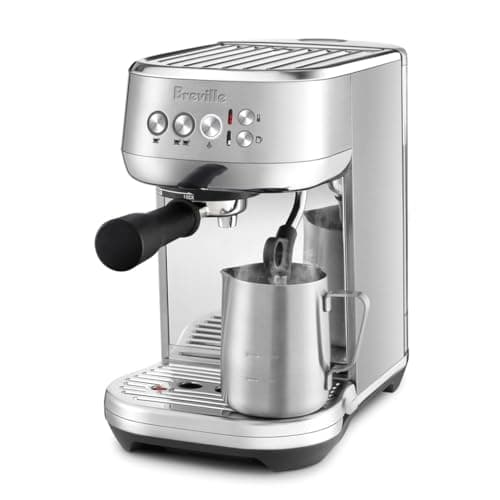
Our overall pick is the Breville Bambino Plus, because its automatic steam wand gives you real microfoam at a set temperature and texture without learning to steam by hand. But "best" depends entirely on how involved you want to be: some of these machines steam for you, some pour milk one-touch, and one is just a frother you bolt onto a brewer that has no wand at all. Read the milk primer first — it tells you which category you're really shopping in.
Start here: for a latte, it's the milk system, not the machine
Every espresso drink — latte, flat white, cappuccino, cortado — is espresso plus steamed milk. The espresso part is the easy part to buy; the milk part is where machines diverge wildly. What you're chasing is microfoam: milk that's been heated and stretched into a fine, glossy, paint-like texture with bubbles so small you can't see them. Microfoam is what pours latte art, folds smoothly into the espresso, and gives a latte its silky body. The opposite is stiff, dry, big-bubble foam that sits on top like dish suds — fine on a traditional cappuccino, wrong for a latte or flat white.
There are three ways a machine gets you there, and they define the picks below:
- Automatic steam wand.A real steam wand that texturizes the milk for you to a temperature and texture you set (Bambino Plus, Barista Touch Impress, Vertuo Creatista). This is the sweet spot for milk quality without the skill — genuine microfoam, hands-off.
- One-touch milk. A bean-to-cup machine pulls milk from a carafe or reservoir and froths it straight into the cup at a button press (Philips LatteGo). Maximum convenience; texture is usually a notch below a good wand, but you touch nothing.
- Manual wand (or a separate frother).You steam the milk yourself with a wand (Magnifica Evo's adjustable frother), or, if your brewer has no wand at all, you foam milk in a standalone jug (Milk Cafe) and pour it in.
One rule cuts through the noise: if a machine already has a good steam wand, you do not need a separate milk frother— the wand makes better microfoam than any countertop jug, and buying both is wasted money. A standalone frother only earns its space next to a machine with no wand. If you want to master the wand you already have, our how to steam milk guide walks through purge, angle, stretch and spin step by step.
How we picked
We don't run a test lab, and we don't pretend to. Every machine here was evaluated against its published manufacturer specifications, the design details that decide how it steams and pours milk, and verified owner feedback — our full approach is on the methodology page. Because this is a milk-drink guide, we weighted the milk system above almost everything else:
- How it steams milk.Automatic wand, one-touch carafe, or manual wand — the single biggest decision for a latte drinker, and the axis we ranked on first.
- Microfoam quality vs convenience. A real steam wand makes the best texture; a one-touch system trades a little of that for touching nothing. We say honestly where each lands.
- Cleaning the milk path.The milk system is the part you fight with daily — tube-free carafes and rinse-in-seconds designs beat fiddly tubes that sour if you skip a rinse.
- The espresso underneath, and honest value— because a great milk drink still needs a decent shot under the foam, and none of this should cost more than the drinks justify.
At a glance
The field side by side, sorted by how each one handles milk. Tap any "view" button for the live Amazon price; the number shown at checkout is the one that applies.
| Machine | Type | Milk system | Best for | Price |
|---|---|---|---|---|
| Breville Bambino Plus | Semi-automatic | Automatic steam wand | Automatic wand (overall) | $499.95Buy |
| Barista Touch Impress | Guided semi-auto | Automatic steam wand | One-touch + grinder | $1,449.99Buy |
| Nespresso Vertuo Creatista | Pods | Automatic steam wand | Pod + real wand | $699.95Buy |
| Philips 3200 LatteGo | Bean-to-cup | One-touch (LatteGo) | Hands-off milk | $550.57Buy |
| De'Longhi Magnifica Evo | Bean-to-cup | Manual frother wand | Value bean-to-cup | $875.00Buy |
| Breville Milk Cafe | Frother add-on | Standalone jug | Wand-less brewers | $199.95Buy |
Prices shown are from Amazon as of October 17, 2026 and change often — the button always goes to the current listing. Some links may earn us a commission at no extra cost to you.
Best automatic steam wand: Breville Bambino Plus (BES500)
For most people who want lattes at home, the Bambino Plus is the answer — because its automatic steam wandtexturizes milk to a temperature and texture you set, then stops on its own. That is the single hardest beginner skill, done for you, and it produces genuine microfoam rather than the dry, bubbly foam a whisk frother makes. Under the milk, it's a real espresso machine: a 54mm portafilter, ThermoJet heating that's ready in about three seconds, and low-pressure pre-infusion. We cover the brewing side in our Breville Bambino review.
| Portafilter | 54mm |
|---|---|
| Boiler | ThermoJet (~3s heat-up) |
| Pump pressure | 15 bar (9 bar at the puck) |
| Milk | Automatic + manual steam modes |
| Milk temp/texture | Adjustable, automatic |
| Water tank | 64 oz / 1.9 L |
| Footprint | ~7.7 in wide |
What we like: the auto-steam genuinely works, it makes latte-grade microfoam without practice, and you can switch to manual mode later when you want to learn control. It also has a real wand — so you never need a separate frother. The honest downsides: the single thermocoil means you brew then steam rather than at once, and, like any machine at this level, it needs a real grinder to shine. For milk drinks specifically, it's the smartest buy here.
Best one-touch latte with a grinder: Breville Barista Touch Impress (BES881)
If you want the entirelatte handled — beans to microfoam — in one machine, the Barista Touch Impress is it. A built-in conical grinder feeds the Impress Puck System, which doses and assists your tamp, and an automatic steam wand textures the milk while a color touchscreen coaches you through each step. You still use a real 54mm portafilter, so it feels like making the drink — the machine just removes the parts that go wrong. If a built-in grinder is a priority, compare it against our best espresso machines with a grinder guide.
| Type | Guided semi-automatic (portafilter) |
|---|---|
| Grinder | Integrated conical burr |
| Dosing/tamping | Impress Puck System (assisted) |
| Portafilter | 54mm |
| Milk | Automatic steam wand + manual mode |
| Boiler | ThermoJet (fast heat-up) |
| Interface | Color touchscreen (guided) |
What we like: it's the most complete latte machine here — grind, dose, tamp, brew and an automatic steam wand for microfoam, all in one guided workflow, with saved drink settings for the household. The downsides: it's the priciest all-in-one on this list, it takes up real counter space, and it's more machine than someone who only wants a fast morning latte needs. Buy it if you want the full barista experience with training wheels.
Best pod machine with a real steam wand: Nespresso Vertuo Creatista
Most pod machines can't make a proper latte because they froth milk with a weak built-in spinner — or not at all. The Vertuo Creatista is the exception: it pairs capsule espresso with a genuine automatic steam wand, the same kind of tool that makes microfoam on a real machine. So you get the no-grinding, no-mess simplicity of pods and still pour a latte with actual textured milk. The Vertuo system reads a barcode on each capsule to auto-adjust the brew across cup sizes.
| Type | Capsule (Nespresso Vertuo) |
|---|---|
| Grinder | None (uses pods) |
| Milk | Automatic steam wand (latte art) |
| Cup sizes | Multiple, via Vertuo capsules |
| Extraction | Centrifusion (barcode-read) |
| Made by | Breville (US market) |
What we like: the fastest, simplest route to a latte with real microfoam, a genuine steam wand (so, again, no separate frother needed), and dead-consistent shots. The downsides — and they're the point: it uses pods, not fresh beans, you're locked into proprietary Vertuo capsules, and the per-pod cost adds up over time. It's the milk-drink pick for someone who values convenience over grinding fresh.
Best hands-off milk: Philips 3200 Series LatteGo
If your idea of a latte is pressing one button and walking away, a super-automatic is the category you actually want — and the Philips 3200 LatteGo is the one we recommend most. It grinds fresh beans, brews, and pours one-touch milk drinks straight into the cup. The trick is the LatteGo carafe: a two-part, tube-free milk system that snaps apart and rinses in seconds, which solves the single biggest daily annoyance of one-touch machines. For the wider field, see our best super-automatic machines guide.
| Type | Bean-to-cup super-automatic |
|---|---|
| Grinder | Ceramic burr (12 grind settings) |
| Milk | LatteGo automatic (tube-free, 2-part) |
| Drinks | One-touch espresso, coffee, cappuccino, latte macchiato, americano |
| Brew group | Removable (rinse under the tap) |
| Filter | AquaClean compatible |
| Water tank | ~61 oz / 1.8 L |
What we like: true one-touch lattes and cappuccinos, the easiest milk cleaning in the category, and a removable brew group you can maintain yourself. The downsides: a one-touch carafe froths milk to a good-not-great texture — it won't match a well-steamed wand for pourable microfoam — and the drink menu is shorter than pricier super-autos. For hands-off milk with minimal cleanup, it's the right balance.
Best value bean-to-cup: De'Longhi Magnifica Evo
The Magnifica Evo is the cheapest sensible way into freshly ground bean-to-cup, and a smart pick if you want a latte from real beans without paying for a one-touch carafe. It grinds with a steel conical burr, pours one-touch black coffees, and froths milk with an adjustable manual frother wand— you hold the pitcher and swirl, so the milk step is hands-on rather than automatic. It sits a rung below the Philips on milk convenience, and well below it in price. It's also in our best super-automatic roundup.
| Type | Bean-to-cup super-automatic |
|---|---|
| Grinder | Steel conical burr (13 grind settings) |
| Milk | Manual frother wand (adjustable) |
| Drinks | One-touch espresso, coffee, long, doppio+ |
| Brew group | Removable |
| Pump pressure | 15 bar |
What we like: the lowest-cost route to freshly ground bean-to-cup, a removable brew group for easy upkeep, and an adjustable frother that makes solid cappuccino-style foam. The downsides: the milk wand is manual, so lattes aren't fully one-touch, and its froth is a step behind an automatic steam wand's microfoam. A great value if you'll trade a little milk convenience for fresh beans and a lower price.
Best standalone frother for a wand-less brewer: Breville Milk Cafe
This one is for a specific buyer: someone whose coffee doesn't come with steam — a pod machine without a wand, a moka pot, a French press or plain drip — who still wants a milk drink. The Milk Cafe is a full induction jug frother with a variable temperature dial, a cold-froth setting for iced lattes, and two swappable discs (one for dense cappuccino foam, one for looser latte foam). It foams enough milk for several drinks at once. See the wider field in our best milk frother guide.
| Type | Standalone induction jug frother |
|---|---|
| Capacity | Large (up to ~3 cups of froth) |
| Temperature | Adjustable dial (variable) |
| Cold froth | Yes |
| Discs | Latte + cappuccino frothing discs |
| Jug | Removable, dishwasher-safe |
What we like: it turns any wand-less brewer into a milk-drink setup, the temperature control is a real upgrade, and it foams enough for a table. The important caveat: this is only for machines withouta steam wand — if you own any of the five above, their wands make better microfoam and a separate frother is wasted money. And no jug frother reliably makes pourable latte-art texture; that's still a steam wand's job. Buy it to dress up pod, moka or drip coffee, not to supplement a real machine.
Manual vs automatic vs one-touch milk
Three approaches, three trade-offs. Getting this choice right matters more for your daily latte than any spec on the box.
Manual steam wand.You control everything — how far you stretch the milk, how long you texture it, when to stop. It makes the best possible microfoam and is the skill worth learning, but it has a genuine learning curve and every drink is hands-on. The Magnifica Evo's adjustable frother and the manual mode on the Breville machines fall here. If this is your path, the how to steam milk guide is the fastest way up the curve, and our best coffee beans for a latteguide covers the other half of the drink — the roast levels and tasting notes that still read through steamed milk.
Automatic steam wand.A real wand that textures the milk for you to a set temperature and texture, then stops. You get microfoam close to a good manual pour with almost none of the skill — the best balance for most latte drinkers, and why the Bambino Plus, Barista Touch Impress and Vertuo Creatista sit at the top of this list.
One-touch milk.A bean-to-cup machine pulls milk from a carafe or reservoir and froths it straight into the cup at a button press (the Philips LatteGo). You touch nothing and the drink lands in seconds. The trade is texture: a one-touch system makes good, consistent foam, but not the glossy pourable microfoam a wand can. If convenience beats latte art for you, that's a fine trade.
And the frother-only case. If your brewer has no wand at all, a standalone jug like the Milk Cafe adds milk to the equation. But to be clear one more time: a frother is a substitute for a wand, never a supplement to one. If your machine already steams milk, use the wand.
How to choose
Strip away the marketing and the decision comes down to a few questions.
How involved do you want to be? Want to press one button and walk away? A one-touch super-auto (Philips) or a pod-with-wand (Creatista). Happy to hold a pitcher for fifteen seconds? An automatic wand (Bambino Plus). Want the full ritual with coaching? The Barista Touch Impress.
Fresh beans or not? Grinding fresh is a real quality and cost win over time, but it adds a step. The Magnifica, Philips and Barista Touch grind for you; the Bambino Plus needs a separate grinder; the Creatista skips beans entirely for pods.
How much do you care about latte art?If pourable microfoam and rosettas are the goal, choose a steam wand (automatic or manual) and skip the one-touch carafes and standalone frothers — they make foam, not art.
Do you even need a new machine?If you already own an espresso machine with a steam wand, you have everything you need for lattes — learn the wand rather than buying a frother. A standalone frother is only for brewers with no wand at all.
The bottom line
For most latte drinkers, the Breville Bambino Plusis the smartest buy — an automatic steam wand makes real microfoam with no skill, in a tiny footprint. Want the whole drink handled with a built-in grinder? The Barista Touch Impress. Prefer pods but still want a real wand? The Nespresso Vertuo Creatista. Want one-touch lattes with the easiest cleanup? The Philips 3200 LatteGo. On a budget and happy to froth by hand? The De'Longhi Magnifica Evo. And if your brewer has no wand at all, the Breville Milk Cafeadds the milk — but if you already own a wand, use it and save the money.
The machine is only half the drink. Our how to make a latte at home guide covers the ratio and the milk texture, and best coffee beans for a latte covers the beans whose sweetness survives six ounces of milk.
Frequently asked questions
What is the best espresso machine for lattes?
For most people, the Breville Bambino Plus. Its automatic steam wand textures milk into real microfoam at a set temperature with no skill required, and under the milk it's a genuine 54mm espresso machine that heats in about three seconds. If you want a built-in grinder and the whole drink guided, step up to the Barista Touch Impress; if you'd rather press one button and walk away, the one-touch Philips 3200 LatteGo is the hands-off pick.
What is microfoam, and why does it matter for a latte?
Microfoam is milk that's been heated and stretched with steam into a fine, glossy texture with bubbles so small you can't see them. It's what pours latte art, folds smoothly into the espresso, and gives a latte its silky body. The opposite — stiff, dry, big-bubble foam — sits on top like suds and is wrong for a latte. Steam wands make microfoam; one-touch carafes and standalone whisk frothers make good foam but rarely the same pourable texture.
Should I get an automatic or a manual steam wand?
An automatic steam wand (like the Bambino Plus) textures milk to a set temperature and stops on its own, giving you microfoam close to a good manual pour with almost none of the learning curve — the best balance for most latte drinkers. A manual wand gives full control and the best possible texture but takes practice. Both make far better milk than a one-touch carafe or a whisk frother.
Do I need a milk frother if my espresso machine has a steam wand?
No. A steam wand makes better microfoam than any standalone jug frother, so buying both is wasted money. A separate frother only earns its space next to a brewer with no wand at all — a pod machine without one, a moka pot, a French press or drip coffee. If your machine steams milk, learn the wand and skip the frother.
Are super-automatic (bean-to-cup) machines good for lattes?
For convenience, yes. A one-touch super-auto like the Philips 3200 LatteGo grinds, brews and froths milk straight into the cup at a button press, which is ideal if you want a latte with zero technique and minimal cleanup. The trade-off is texture: a one-touch carafe makes good, consistent foam but not the glossy, pourable microfoam a real steam wand can. If latte art matters, choose a machine with an automatic or manual wand instead.
Sources
Keep reading
Buying your first setup?
See how we pick — compiled specs, cost-per-shot math, and honest trade-offs — then dig into the guides. No fake test lab, no rankings for hire.