Buying Guide
The Best Coffee Beans for a Latte
Milk is not a neutral ingredient. It mutes acidity, blankets delicate florals and amplifies anything chocolatey, nutty or caramelized — so the bean that wins a tasting as black espresso is often the wrong bean for a latte. Five picks, chosen on published roast level and tasting notes rather than on hype.
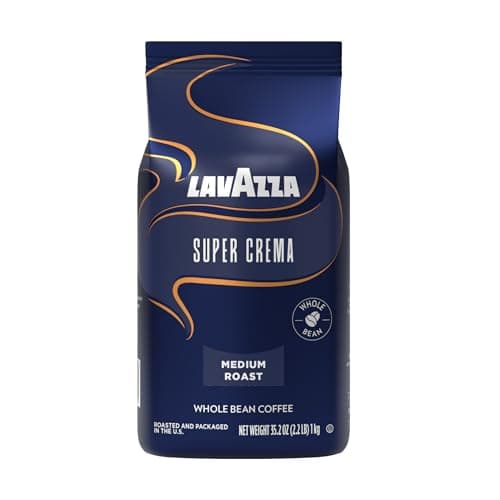
For most latte drinkers the answer is Lavazza Super Crema, and the reason is structural rather than romantic. It is a 60% Arabica / 40% Robusta medium roast blended from coffee grown in 15 countries, published with hazelnut and brown sugar aromatic notes, and Lavazza describes it as ideal for espresso and milk-based drinks— which almost no roaster says out loud. The Robusta share is the part that matters: it brings body and a thicker, longer-lasting crema, and body is what keeps a shot from vanishing into eight ounces of steamed milk.
If you want the flavor milk flatters most, take La Colombe Nizza, published with notes of milk chocolate, nuts and brownie. If your latte is a 16 oz cup, go darker with Peet's Espresso Forte. And if you are making a flat white or a cortado rather than a latte, the rules change — which is the whole reason Intelligentsia Black Cat is on this page with a caveat attached.
This guide is deliberately separate from our best coffee beans for espresso roundup. That page ranks beans for the shot itself. This one ranks them for the shot plus eight ounces of milk, and the two answers genuinely differ — a bean chosen for delicate jasmine and bergamot disappears the moment milk hits it.
What milk actually does to coffee flavor
Three things, and understanding them turns bean shopping from guesswork into a short checklist.
Milk mutes acidity.Steamed milk is sweet, fatty and slightly alkaline against coffee's acids, and it rounds off the bright, fruit-forward top notes that light roasts are prized for. A washed Ethiopian that tastes like peach and bergamot as black espresso often reads as faintly sour and vaguely fruity in a latte — the character is not gone, it is buried. That is also the mechanism behind a sour-tasting shot becoming more obvious, not less, when the milk ratio climbs.
Milk amplifies anything caramelized.Chocolate, nut, toffee, caramel and brown-sugar notes come from the Maillard reaction and caramelization during roasting, and they are chemically close to what milk sugars taste like when steamed. Put them together and they reinforce each other. This is why nearly every roaster's “espresso blend” leans chocolatey and nutty: the blends evolved in cafes where most orders contain milk.
Milk dilutes body.A double shot is roughly 2 oz of liquid; a 12 oz latte adds about 8–10 oz of milk on top. If the shot is thin to begin with, the result is milk with a coffee rumor in it. Body comes from soluble solids and oils in the cup, which is why Robusta-containing blends, darker roasts and a correctly pulled ratio all help here. Our grams in a double shot guide covers the dose side of that.
How we chose these
On published roast levels, published tasting notes and published blend composition from each roaster or its retail listing — not on a cupping session we did not run. Our methodology page states the standard: we compile what makers publish, cite it, and do the reasoning. Specifically we weighted:
- Published notes in the milk-friendly family. Chocolate, nut, caramel, toffee, brown sugar. These are the flavors that survive and strengthen under steamed milk.
- Roast level, read honestly. Medium to medium-dark is the sweet spot for a 12 oz latte; dark earns its place as the cup gets larger; light roast is a specialist choice for small milk drinks.
- Body and crema. Blend composition where the roaster publishes it, because a Robusta percentage or an explicit crema claim is a real signal about how the shot holds up under dilution.
- Whole bean, and a bag size you can finish. Ground coffee staling is the single most common reason a latte tastes flat, so every pick here is whole bean and we note where a bag is bigger than a household should buy.
We do not rank on roaster prestige, awards we cannot verify, or a flavor claim we could not find published. Where a bag's retail listing and the roaster's own copy describe a coffee differently, we say so.
At a glance
| Coffee | Roast | Published notes | Why it works in milk | Price |
|---|---|---|---|---|
| Lavazza Super Crema | Medium espresso roast | Hazelnut, brown sugar | 60/40 Arabica-Robusta: body and thick crema that survive dilution | $26.99Buy |
| La Colombe Nizza | Medium | Milk chocolate, nuts, brownie | The exact flavor family steamed milk reinforces | $14.79Buy |
| Peet's Espresso Forte | Dark | Chocolate truffle, hazelnut, lemon curd | Stout body and published crema - cuts through a 16 oz cup | $32.39Buy |
| Illy Classico | Medium (100% Arabica) | Caramel, orange blossom | Caramel sweetness plus unusual bag-to-bag consistency | $14.99Buy |
| Intelligentsia Black Cat | Between bright and traditional | Cherry, cola, orange; syrupy sweet | Best in a small milk drink - a flat white or cortado, not a 16 oz latte | $14.99Buy |
Prices shown are from Amazon as of October 17, 2026 and change often — the button always goes to the current listing. Some links may earn us a commission at no extra cost to you.
Best overall for lattes: Lavazza Super Crema
Who it is for: the daily latte drinker who wants one bag that works every morning, forgives an imperfect grinder, and does not cost specialty money.
Super Crema is the most widely bought espresso bean in American kitchens for a reason, and the reason shows up in the blend sheet rather than the marketing. Lavazza publishes it as 60% Arabica and 40% Robusta, sourced from 15 coffee-growing countries, in a medium espresso roast with hazelnut and brown sugar aromatic notes and a full-bodied, creamy finish. Lavazza also says explicitly that it is ideal for espresso and milk-based drinks— a claim most roasters leave implied.
The 40% Robusta is the engineering. Robusta carries more soluble solids and produces a thicker, more persistent crema than Arabica alone, which translates directly into a shot that still tastes like coffee after eight ounces of milk. The hazelnut and brown sugar notes then land in exactly the family milk reinforces.
| Roast | Medium espresso roast |
|---|---|
| Blend | 60% Arabica / 40% Robusta, 15 origin countries |
| Published notes | Hazelnut, brown sugar; full-bodied, creamy finish |
| Format | Whole bean, 2.2 lb bag |
| Maker's recommended use | Espresso and milk-based drinks |
What we like: it is built for this job, the body genuinely survives milk, the crema is thick enough to see, and it is forgiving enough that an entry grinder and a pressurized basketstill produce something good. The honest cons: Robusta brings a woody, slightly rubbery edge that specialty drinkers notice and dislike — if you have been drinking single-origin filter coffee, this will taste blunt. It is a 2.2 lb bag, which is more coffee than a one-latte-a-day household should open at once; our how to store coffee beans guide covers splitting and freezing it properly. And no roast date is printed on the bag in the way a specialty roaster prints one, so bag-to-bag freshness varies with how fast your retailer turns stock.
Best for milk-chocolate sweetness: La Colombe Nizza
Who it is for: the drinker who wants a latte that tastes like a dessert without any syrup in it, from a specialty roaster, in a bag small enough to stay fresh.
Nizza is a medium roast blend published with notes of milk chocolate, nuts and brownie, which is close to a specification sheet for a latte bean. La Colombe describes it as a blend that hits at the heart of sweet, with a honey-sweet roasted nuttiness, drawn from Brazil, Colombia, Nicaragua and Congo. Put that against steamed milk and the two sweetnesses stack instead of competing.
The practical advantage over the Italian supermarket blends is the 12 oz bag. A household making one or two lattes a day gets through 12 oz inside the window where coffee still tastes like it did when it was roasted; a 2.2 lb bag does not. That is a bigger flavor variable than most bean choices.
| Roast | Medium |
|---|---|
| Published notes | Milk chocolate, nuts, brownie; honey-sweet roasted nuttiness |
| Origins | Brazil, Colombia, Nicaragua, Congo (published blend origins) |
| Format | Whole bean, 12 oz bag (also sold in 24 oz and 5 lb) |
| Best use here | Latte, cappuccino, cortado |
What we like: the published note list is the milk-friendly family almost exactly, it is 100% Arabica so it avoids the woody edge of a Robusta blend, and the small bag means you drink it fresh. The honest cons: a medium roast 100% Arabica blend has less raw body than Super Crema, so in a 16 oz latte it fades where the darker picks do not — this is a 8 to 12 oz drink bean. Specialty pricing per ounce is noticeably higher than the Italian blends. And it is a blend that is rotated and adjusted over time by the roaster, so the cup is less rigidly identical year to year than Illy's.
Best for a 16 oz latte: Peet's Espresso Forte
Who it is for:anyone whose “latte” is a large cup, anyone using oat or almond milk, and anyone who wants the coffee to be unmistakably present.
Peet's publishes Espresso Forte as a dark roast crafted specifically for espresso, with chocolate truffle, lemon curd and hazelnut notes, built from earthy Indo-Pacific coffee and livelier beans from the Americas, and described as having stout body, luscious crema and a tangy coffee core. Those are the words you want when the milk is going to outnumber the espresso six to one.
Dark roasting increases solubility and strips acidity, which is precisely the trade a large milk drink wants: less brightness to be buried, more of the heavy chocolate-and-toast character that pushes through. It is also the right pick for plant milks, which are sweeter and thicker than dairy and flatten a subtle coffee entirely.
| Roast | Dark |
|---|---|
| Published notes | Chocolate truffle, lemon curd, hazelnut; opening hazelnut into caramel and citrus zest |
| Published character | Stout body, luscious crema, tangy coffee core |
| Blend | Indo-Pacific depth plus beans from the Americas |
| Format | Whole bean, 32 oz bag |
| Maker's intent | Crafted specifically for espresso |
What we like: it does not get lost, the crema claim is published rather than inferred, it is widely stocked, and it is the most reliable pick on this page for plant milk. The honest cons: dark roast is a one-way door — if you ever drink the shot black you will find it flat and smoky compared with the medium picks. Dark-roasted beans are more porous and stale faster once the bag is open, and this is a 32 oz bag, so storage discipline matters. Dark roasts also run oilier, which gums up a grinder's burrs faster; our how to clean a coffee grinder guide covers the routine. And the published lemon curd note is one you will not find in a latte.
If you are still deciding how dark to go, light roast vs dark roast espresso works through the whole spectrum with milk in mind.
Best for consistency bag to bag: Illy Classico
Who it is for: the drinker who has dialed in a recipe and does not want to re-dial it every time a new bag arrives.
Illy's entire proposition is sameness. Classico is a 100% Arabica medium roast blended from multiple origins and published with caramel and orange blossom notes, pressure-packed so that the bag you open next month tastes like the one you opened today. For a latte, the caramel half of that note list is the operative part.
Consistency is an underrated latte virtue. Grind setting, dose and shot time all shift when a bean's density changes, so a coffee that does not change is a coffee you stop fighting. If you share a machine with someone who will not re-dial it, this is the bag to buy. Our how to pull an espresso shot guide covers what you would otherwise be re-adjusting.
| Roast | Medium (Classico) |
|---|---|
| Blend | 100% Arabica, multi-origin |
| Published notes | Caramel, orange blossom |
| Format | Whole bean, 8.8 oz pressure-packed bag |
| Why it is here | Bag-to-bag consistency; caramel sweetness reads well in milk |
What we like: genuinely repeatable, 100% Arabica so no Robusta edge, a small bag that stays fresh, and caramel sweetness that milk flatters. The honest cons: it is the lightest-bodied pick here, so in a large latte it is the first to fade — keep the cup to 8 oz or pull it as a double. Price per ounce is high because the bags are small and pressure-packed. The orange blossom note that makes it lovely as black espresso is invisible under milk, so you are paying for some character you will not taste. And illy sells Classico, Intenso and Forte roasts in near-identical packaging, so check the roast name before you buy — Intenso is the dark one.
Best for a flat white or cortado: Intelligentsia Black Cat
Who it is for:the specialty drinker whose milk drink is small — a flat white, a cortado, a 6 oz cappuccino — and who wants the coffee to lead.
Black Cat Classic Espresso has been Intelligentsia's hallmark blend since 1995, and the roaster publishes it as syrupy sweet with vivid fruit acidity, with notes of cherry, cola and orange, from Brazil (Carmo de Minas, semi-washed) and Colombia (Cauca, washed). Intelligentsia positions it for purists who want balance of sweetness and acidity in the shot, and publishes a recipe: 18 g in, 45 g out, or a finished espresso weighing about 2.5 times the dose.
We are including it with the caveat rather than pretending the caveat away. That vivid fruit acidity is the point of the coffee and it is also the thing a large volume of milk neutralizes first. In a cortado, where milk is roughly equal to espresso, the cherry-cola sweetness is wonderful and clearly present. In a 16 oz latte it reads as thin and slightly sharp, and you have spent specialty money on character you cannot taste. Our latte vs flat white and macchiato vs cortado explainers cover where those ratio lines fall.
| Roast | Published between bright and traditional on Intelligentsia's own scale |
|---|---|
| Published notes | Cherry, cola, orange; syrupy sweet with vivid fruit acidity |
| Origins | Brazil (Carmo de Minas, semi-washed) and Colombia (Cauca, washed) |
| Published recipe | 18 g dose yields 45 g espresso (about 1:2.5) |
| Format | Whole bean, 12 oz bag |
| Best use here | Flat white, cortado, small cappuccino |
What we like: a published brew recipe you can start from rather than guess at, real specialty sourcing transparency, syrupy sweetness that holds in a small milk drink, and a 12 oz bag you can drink fresh. The honest cons: it is the wrong bean for a big latte, and we would rather say that than sell you a bag you are disappointed by. Vivid acidity also punishes an imprecise grinder — under-extract this blend and it tastes genuinely sour, as our why is my espresso sour guide explains. It is the most expensive pick here per ounce. And lighter-roasted espresso blends demand a finer, more precisely adjustable grind than the Italian blends do, so it asks more of your grinder.
Roast level, decided properly
Roast level is the one decision that moves the cup more than the specific bag you buy, and for milk drinks it is mostly a function of how much milk is going in.
- Cortado or flat white (4–6 oz): medium to light-medium. There is little enough milk that acidity and fruit survive, and the coffee gets to be interesting.
- Latte or cappuccino (8–12 oz): medium to medium-dark with chocolate, nut or caramel notes. This is the band every pick above except Black Cat is aimed at.
- Large latte (16 oz and up), or oat / almond milk: dark. You need solubility and heavy roast character to push through the volume, and plant milks add their own sweetness that swallows subtlety.
Note that “espresso roast” on a bag is a style description, not a brewing instruction — any bean can be brewed as espresso, and the term usually just signals a darker, more caramelized profile. Our coffee beans vs espresso beans explainer covers that labeling properly, and light roast vs dark roast espresso goes deeper on what roasting actually changes.
Freshness beats the bean
If your latte tastes flat, the bean is usually not the problem. Three things matter more than which bag you picked.
Whole bean, ground at brew time.Ground coffee loses its aromatics within minutes and goes genuinely stale within a couple of weeks; the National Coffee Association puts opened coffee at roughly 1–3 weeks as whole beans against 1–2 weeks ground. For espresso the effect is worse than for filter because the extraction is so short. If you do not yet have a grinder, that is the next purchase — see best espresso grinders under $300 and do I need a grinder for espresso.
A bag you can finish.A 2.2 lb or 32 oz bag at one latte a day is six to ten weeks of coffee, and the last third will not taste like the first. Decant into a sealed opaque container and freeze the rest in portions — how to store coffee beans covers the method, and best coffee canister covers what to keep the working portion in.
Rest after roasting, then use it. Freshly roasted coffee releases carbon dioxide for several days, which makes espresso gush and taste thin; most roasters suggest a few days to about two weeks after the roast date as the window for espresso. Supermarket blends are usually well past that, which is a reason they are forgiving and also a reason they rarely taste exciting.
How to choose
- One bag, every morning, forgiving? Lavazza Super Crema— body and crema that survive milk, at supermarket money.
- Want it to taste like chocolate without syrup? La Colombe Nizza, in the 12 oz bag.
- Big cup, or oat milk? Peet's Espresso Forte.
- Dialed in and want it to stay that way? Illy Classico.
- Flat white or cortado, and you want the coffee to lead? Intelligentsia Black Cat— and keep the cup small.
One last point that is worth more than any bean on this list: milk texture does as much for a latte as the coffee does. Dense, glossy microfoam tastes sweeter than bubbly foam made from the same milk, because the bubbles are small enough to read as texture rather than air. Our how to steam milk guide covers the technique, and best espresso machines for lattes covers the hardware that makes it achievable.
Frequently asked questions
What are the best coffee beans for a latte?
Lavazza Super Crema for most people. It is a 60% Arabica / 40% Robusta medium espresso roast published with hazelnut and brown sugar notes, and the Robusta share gives it the body and thick crema that survive being diluted by eight ounces of steamed milk - Lavazza even names milk-based drinks as an intended use. If you want a specialty alternative, La Colombe Nizza is published with notes of milk chocolate, nuts and brownie, which is the flavor family steamed milk reinforces most.
Should I use light or dark roast for a latte?
Match the roast to how much milk is in the cup. For a cortado or flat white at 4 to 6 oz, a medium or light-medium roast keeps its fruit and acidity. For a standard 8 to 12 oz latte, medium to medium-dark with chocolate, nut or caramel notes is the sweet spot. For a 16 oz latte, or any latte made with oat or almond milk, go dark - you need the solubility and heavy roast character to push through the volume.
Do I need espresso beans for a latte?
No. Espresso is a brewing method, not a type of bean, so any whole bean coffee can be pulled as espresso for a latte. What the words espresso roast on a bag usually signal is a darker, more caramelized profile that was developed for the method - which happens to be the profile that works well under milk. Buy on roast level and published tasting notes rather than on the word espresso.
Why does my latte taste weak or watery?
Usually dilution rather than the bean. A double shot is about 2 oz of liquid and a 12 oz latte adds 8 to 10 oz of milk, so a thin shot disappears. Fix it in this order: use a bean with real body (a Robusta-containing blend or a dark roast), check your dose and ratio, grind fresh, and consider making a smaller drink. A 6 oz flat white made with the same shot tastes dramatically stronger than a 16 oz latte does.
Is Robusta bad for a latte?
No - a Robusta share is often an advantage in a milk drink. Robusta carries more soluble solids than Arabica and produces a thicker, longer-lasting crema, which is exactly what keeps a shot present under steamed milk. It is also why Italian espresso blends sold for cafes commonly include it. The trade-off is a woody or rubbery edge that specialty drinkers notice, which matters much more if you also drink the shot black.
How long do coffee beans stay good for lattes?
The National Coffee Association puts opened coffee at roughly one to three weeks as whole beans and one to two weeks once ground, stored airtight and away from heat and light. For espresso the window is tighter than for filter because extraction is so short, and very freshly roasted coffee needs a few days to release carbon dioxide before it pulls properly. Buy a bag you can finish in a few weeks, or split a large bag and freeze the rest in portions.
What coffee do coffee shops use for lattes?
Almost always a medium to medium-dark blend built around chocolate, nut and caramel notes, often with a Robusta component in Italian-style blends, because cafe menus are dominated by milk drinks and those flavors are the ones that survive milk. That is the reasoning behind every pick on this page: cafe espresso blends evolved in an environment where most orders contained milk, which is why nearly all of them taste chocolatey rather than floral.
Sources
- Lavazza - Super Crema whole bean product information (medium espresso roast, 60% Arabica / 40% Robusta from 15 countries, hazelnut and brown sugar aromatic notes, full-bodied creamy finish, ideal for espresso and milk-based drinks)
- La Colombe - Nizza medium roast product information (published notes of milk chocolate, nuts and brownie; honey-sweet roasted nuttiness; blend origins Brazil, Colombia, Nicaragua, Congo)
- Peet's Coffee - Espresso Forte product page (dark roast crafted specifically for espresso; chocolate truffle, lemon curd and hazelnut notes; Indo-Pacific depth with beans from the Americas; stout body, luscious crema)
- illycaffe - Classico whole bean product information (100% Arabica medium roast, notes of caramel and orange blossom, pressure-packed)
- Intelligentsia Coffee - Black Cat Classic Espresso product page (hallmark espresso blend since 1995; cherry, cola and orange notes; syrupy sweet with vivid fruit acidity; Brazil Carmo de Minas semi-washed and Colombia Cauca washed; published 18 g in / 45 g out recipe)
- National Coffee Association - coffee storage and freshness guidance (air, moisture, heat and light; 1-3 weeks whole bean and 1-2 weeks ground once opened)
- Amazon product listings for each pick - format, bag size, published notes, current availability and live price capture
Keep reading
Buying your first setup?
See how we pick — compiled specs, cost-per-shot math, and honest trade-offs — then dig into the guides. No fake test lab, no rankings for hire.