Guide
Light Roast vs Dark Roast Espresso: Which Should You Buy?
Roast level changes more about an espresso shot than the bean's origin does — grind setting, extraction difficulty, crema, body and even how long the bag stays good. Here is what each roast actually does, and which to buy for your setup.
If you are new to espresso or your machine has a pressurized basket, buy a dark or medium-dark roast. If you have a non-pressurized basket, a grinder with fine adjustment and the patience to dial a bag in, a light roast will reward you with flavours a dark roast cannot produce. That is the whole decision in two sentences, and almost everything else on this page is the reasoning behind it. Dark roasts are soluble— they give up their flavour easily, which makes them forgiving. Light roasts are dense and hard to extract, which makes them demanding equipment and demanding of you.
One thing stated plainly up front: of the espresso beans we recommend on this site, none is a true Nordic-style light roast. The field is medium to dark, because that is where the reliably available, reliably good espresso blends sit. If light-roast espresso is your goal, the section below on what to look for matters more to you than the picks do.
The short answer
- Pressurized basket(De'Longhi Stilosa, CASABREWS, most machines under $200): dark or medium-dark. The basket caps your extraction, and a soluble roast is the only way to get flavour out through a restrictor.
- Milk drinks — latte, cappuccino, flat white: medium-dark to dark. Milk flattens delicate flavours, so you want bittersweet body that survives it.
- Straight shots on an open basket with a stepless grinder: try light to medium-light. This is where fruit, florals and acidity live.
- Beginner on any machine: medium. It is the most forgiving place to learn, and the one roast level where almost any mistake still tastes like coffee.
- Chasing crema: a developed medium roast with some Robusta, not a light roast. Light roasts produce thinner crema and there is no technique that fixes it.
What roasting actually changes
Roasting drives water out of the bean, breaks down its cell structure and caramelises its sugars. The longer and hotter that goes on, the more three things happen at once:
- The bean gets less dense and more brittle. A dark-roasted bean has had more of its structure broken down, so it shatters more easily in a grinder and gives up its soluble compounds faster in the basket.
- Acidity falls and bitterness rises. The bright, fruity, tea-like acids that survive a light roast are progressively cooked off. What replaces them is caramelised sweetness, then roast bitterness, then ash.
- Oils migrate to the surface. Very dark beans look shiny because the oils have come out. Those oils contribute body in the cup, and they also go rancid faster and clog grinders more.
For espresso specifically, the first point is the one that matters. Espresso forces water through a compressed bed of grounds in 25–30 seconds, which is a very short time to extract anything. A dark roast is easy to extract in that window. A light roast is not, which is why light-roast espresso has a reputation for tasting sour — the sourness is usually under-extraction, not the bean.
Light vs dark, side by side
| Light roast | Medium roast | Dark roast | |
|---|---|---|---|
| Flavour direction | Fruit, florals, tea-like, high acidity | Caramel, chocolate, balanced | Bittersweet, smoky, pronounced bitterness |
| Bean density | Dense and hard | Medium | Brittle, less dense |
| Ease of extraction | Hardest - needs a finer grind and more precision | Forgiving | Easiest - extracts fast |
| Grind setting | Finest of the three for the same shot | Middle | Coarsest of the three for the same shot |
| Crema | Thinner, pales quickly | Good, especially with some Robusta | Thick but can taste bitter |
| Body in the cup | Lighter, more tea-like | Medium | Heavy, syrupy |
| In milk | Often lost | Holds up well | Holds up best |
| Equipment needed | Open basket and fine grind adjustment | Anything | Anything, including pressurized baskets |
| Surface oils | None - matte beans | Non-oily surface | Shiny, oily surface |
| Caffeine | Slightly higher (per the NCA) | Between | Slightly lower (per the NCA) |
Two rows deserve a caveat. "Grind setting" is relative, not absolute — a light roast needs a finer grind than a dark roast of the same bean on the same machine, because the denser particles resist water more and you have to increase surface area to compensate. And "crema" is partly a Robusta story rather than purely a roast story: blends containing Robusta build thicker crema at any roast level, which is why Italian espresso blends so often include it.
Roast changes your grind setting, every time
This is the single most useful practical consequence, and it is the thing that catches people out when they switch bags. Go darker and you must grind coarser. Go lighter and you must grind finer.A dark roast's brittle, broken-down structure means it both shatters into more fines in the grinder and lets water through faster in the basket, so the same dial setting that gave you a 28-second shot on a light roast will give you a fast, thin, bitter one on a dark roast.
How much adjustment that takes is exactly why grinder resolution matters here. On a stepped grinder with coarse steps you may find the right setting for a light roast sits between two clicks; on a stepless grinder you simply move the dial a hair. Our grind size chart gives you the starting territory, and best grinders for espressoranks the field on exactly this specification. If light roasts are your ambition, the grinder is the purchase that makes them possible — not the machine.
Your basket decides more than your taste does
Here is the part most roast comparisons leave out. If your machine has a pressurized basket— the kind with a single small restrictor hole underneath, standard on nearly every machine under $200 — then light-roast espresso is effectively off the table, and no amount of technique changes that.
A pressurized basket generates crema mechanically rather than through the puck's resistance. It is forgiving of coarse or uneven grounds, which is its purpose, but the same mechanism caps extraction: you cannot grind fine enough and extract hard enough to get what a light roast is holding. What comes out is sour and thin. A dark or medium-dark roast, which gives up its flavour easily, is the right match for that hardware. Our pressurized vs non-pressurized portafilter guide shows you how to tell which you have in about thirty seconds.
On an open, non-pressurized basket the puck itself supplies the resistance, which means grind fineness translates directly into extraction pressure — and that is the condition a light roast needs. If you own a Gaggia Classic Pro, a Breville Bambino Plus or anything with a single-wall basket, light roasts are genuinely available to you.
Caffeine: the myth, in both directions
You will see two confident claims: that dark roasts have more caffeine because they taste stronger, and that light roasts have more caffeine because roasting burns caffeine off. Both are overstated.
The National Coffee Association's own roast guide settles it in two lines: light roasts have a slightly higher amount of caffeine, and dark roast coffee is notstronger in caffeine terms — the rich, heavy flavour people read as strength is not associated with caffeine levels at all. So the direction of the effect is toward light roasts, and the size of it is small.
The bigger variable is how you measure. A dark-roasted bean has lost more water and mass, so a scoop measured by volume holds fewer beans than the same scoop of light roast. Measured by weight— which is how espresso is actually dosed — that confound disappears.
In other words: if you weigh your dose, roast level is not a caffeine decision worth agonising over. If you scoop by volume, you are introducing a bigger variable than roast level anyway, which is one more reason to use a scale. Our how much caffeine is in espresso guide has the numbers, and how many grams for a double shot covers dosing by weight.
Roast level and how long the bag lasts
Dark roasts have a shorter useful life, and the reason is visible on the beans. Roasting drives oils to the surface; those oils oxidise. A very dark, shiny bean is already partway through going stale on the day you open the bag, and it will taste flat sooner than a light roast will.
Both roast levels also need degassing time. Freshly roasted coffee releases carbon dioxide, and too much CO2 in the basket makes espresso gush and taste thin. A few days to a week off roast is the usual window before espresso settles down, with darker roasts generally degassing faster because they are more porous.
Two practical rules follow. Buy whole bean with a printed roast date, not a "best by" date. And buy in quantities you will finish in a few weeks — our how to store coffee beans guide covers the storage that actually helps, and best coffee canisters covers the containers worth owning. Dark roasts in particular are a case for smaller bags.
Which beans to buy
These are the espresso beans we recommend, sorted by where they sit on the roast scale. They are all whole bean, and all four are picks from our best coffee beans for espresso guide, where each gets a longer treatment.
| Bean | Roast | Composition | Best for | Price |
|---|---|---|---|---|
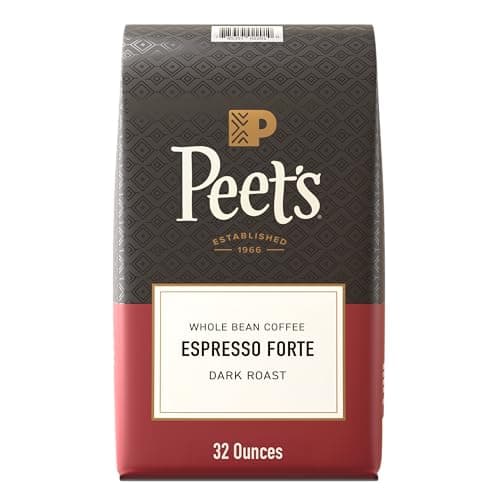
| Peet's Espresso Forte | Dark | Blend | Pressurized baskets, milk drinks | $43.90Buy |
| Lavazza Super Crema | Medium | Arabica & Robusta | Crema, all-round espresso | $26.99Buy |
| Stumptown Hair Bender | Medium | Multi-region specialty | Brightness and complexity | $18.95Buy |
| Intelligentsia Black Cat | Medium | Specialty espresso blend | Lattes and flat whites | $14.99Buy |
Prices shown are from Amazon as of October 10, 2026 and change often — the button always goes to the current listing. Some links may earn us a commission at no extra cost to you.
If you specifically want a light roast, none of these is it, and we would rather say so than stretch a description. Look for a specialty roaster that prints a roast date, states a roast level of light or medium-light, and sells in 10–12 oz bags you will finish quickly. Then budget for the grinder: a light roast on a stepped filter grinder is a frustrating experience, and that is the equipment talking rather than the bean.
Best dark roast: Peet's Espresso Forte
Who it is for: anyone with a pressurized basket, anyone making mostly milk drinks, and anyone who grew up on traditional Italian-style espresso.
| Roast | Dark |
|---|---|
| Composition | Blend |
| Form | Whole bean |
| Flavour direction | Bold, bittersweet, heavy-bodied |
| Best for | Dark-roast fans, milk-based drinks |
What we like: a genuinely bold dark roast with enough body to survive steamed milk, from a roaster that built its name on deep roasting, and the most forgiving thing you can put in a pressurized basket. The honest cons: dark roasts are inherently more bitter, so if you dislike roast bitterness this is the wrong end of the scale for you; the surface oils mean a shorter shelf life once the bag is open; and you will need to grind coarser than you would for a medium roast.
Best medium roast for crema: Lavazza Super Crema
Who it is for: the beginner who wants a shot that looks right on the first try, and anyone chasing thick crema.
| Roast | Medium |
|---|---|
| Composition | Arabica & Robusta blend |
| Form | Whole bean |
| Flavour direction | Creamy, nutty, mild |
| Best for | All-around espresso, big crema |
What we like: the Robusta in the blend builds crema at a level pure Arabica struggles to match, the medium roast sits in the most forgiving part of the scale, and it is consistent bag to bag. The honest cons: Robusta brings an earthy note that specialty drinkers often dislike, and "mild" is a fair description — this is not the bag to buy if you want to taste origin character.
Best lighter-leaning pick: Stumptown Hair Bender
Who it is for: the drinker with an open basket and a decent grinder who wants brightness and complexity without jumping straight to a Nordic light roast.
| Roast | Medium |
|---|---|
| Composition | Multi-region specialty blend |
| Form | Whole bean |
| Flavour direction | Complex, bright, chocolatey |
| Best for | Enthusiasts who want nuance and versatility |
What we like: real depth and complexity, a roaster that emphasises freshness, and the closest thing on this page to the brightness a light roast is sought for. The honest cons: specialty coffee costs more; the brightness that makes it interesting also makes it less forgiving than the Lavazza when your grind is off; and it is the pick most likely to disappoint through a pressurized basket.
Best for milk drinks: Intelligentsia Black Cat Espresso
Who it is for: the latte and flat white drinker who does not want to go dark to get body.
| Roast | Medium |
|---|---|
| Composition | Specialty espresso blend |
| Form | Whole bean |
| Flavour direction | Sweet, syrupy, chocolate & dark fruit |
| Best for | Lattes, cappuccinos, flat whites |
What we like: it is built as an espresso blend rather than a filter coffee pressed into service, the syrupy sweetness carries through milk without needing dark-roast bitterness to do it, and it comes from a respected specialty roaster. The honest cons: like all specialty coffee it costs more, and a blend tuned for milk is not the most interesting thing to drink as a straight shot.
For the milk half of that drink, our how to steam milk guide covers texture, and cappuccino vs latte and latte vs flat white sort out what you are actually making.
Frequently asked questions
Is light roast or dark roast better for espresso?
Neither is better in the abstract - they suit different equipment and different drinks. Dark roasts extract easily, so they work on any machine including the pressurized baskets found on most machines under $200, and they hold up in milk. Light roasts carry fruit, floral and acidic flavours a dark roast cannot, but they are dense and hard to extract, so they need an open non-pressurized basket and a grinder with fine adjustment. For a beginner, a medium roast is the most forgiving starting point.
Why does my light roast espresso taste sour?
Almost always under-extraction. A light roast's cell structure has not been broken down by roasting, so it gives up its soluble compounds slowly - and espresso only has 25 to 30 seconds to extract them. Grind finer, raise the brew temperature if your machine allows it, and consider a slightly longer ratio. If your machine has a pressurized basket, the basket itself caps extraction and no technique will fully fix it.
Do I need to change my grind when I switch roast levels?
Yes, every time. Go darker and grind coarser; go lighter and grind finer. A dark roast is more brittle and more porous, so it both produces more fines in the grinder and lets water through the puck faster - the setting that gave you a 28-second shot on a light roast will run fast and thin on a dark one. This is the main reason grind adjustment resolution matters on an espresso grinder.
Does dark roast espresso have more caffeine than light roast?
No - if anything it is the other way around, and the difference is small. The National Coffee Association's roast guide states that light roasts have a slightly higher amount of caffeine, and that dark roast coffee is not stronger in caffeine terms: the rich, heavy flavour people read as strength is not associated with caffeine levels. The bigger confound is measurement, because dark-roasted beans have lost more mass, so a scoop by volume holds fewer beans than the same scoop of light roast. Dose by weight and the question mostly goes away.
Which roast gives the best crema?
A developed medium to medium-dark roast, and often one containing some Robusta. Light roasts produce thinner crema that pales quickly, and very dark roasts produce thick crema that can taste bitter. Robusta builds crema at any roast level, which is why Italian espresso blends like Lavazza Super Crema include it - the name is not accidental.
Can I use light roast coffee on a De'Longhi Stilosa or other pressurized-basket machine?
You can, but it will disappoint. A pressurized basket makes crema mechanically through a restrictor hole rather than relying on the puck's resistance, which caps how hard you can extract - and a light roast needs hard extraction to give up its flavour. The result is usually sour and thin. On that hardware, a medium or dark roast is the right match.
How long should I rest espresso beans after roasting?
Usually a few days to a week off roast. Freshly roasted coffee releases carbon dioxide, and too much CO2 in the basket makes espresso gush and taste thin. Darker roasts are more porous and tend to degas faster than light roasts. Buy whole bean with a printed roast date rather than a best-by date so you know where in that window you are.
Sources
- National Coffee Association - Coffee roast guide (roast levels, how roasting changes acidity, body and surface oils)
- National Coffee Association - Storage and shelf life (oxidation, roast date, air and moisture)
- Specialty Coffee Association - brewing and extraction standards
- Lavazza - Super Crema product information (medium roast, Arabica and Robusta blend)
- Peet's Coffee - Espresso Forte product information (dark roast blend)
- Stumptown Coffee Roasters - Hair Bender product information (multi-region blend)
- Intelligentsia Coffee - Black Cat Classic Espresso product information
Keep reading
Buying your first setup?
See how we pick — compiled specs, cost-per-shot math, and honest trade-offs — then dig into the guides. No fake test lab, no rankings for hire.