Explainer
Pressurized vs Non-Pressurized Portafilter: What's the Difference?
Your machine almost certainly came with both, and nobody explained which one was in it. One makes espresso possible without skill; the other makes good espresso possible at all.
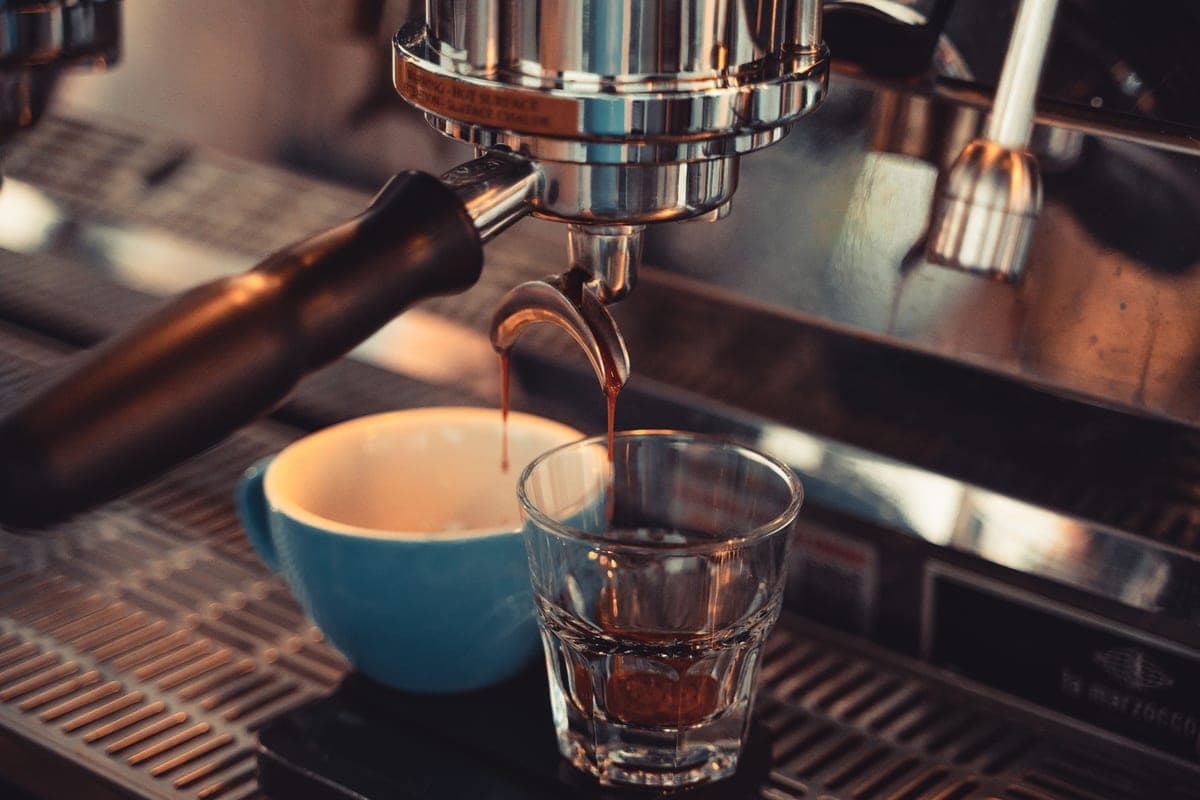
Nearly every home espresso machine sold under about $700 ships with two sets of baskets in the box, and the manual mentions them in a single line. One is pressurized— also called dual-wall, or "for pre-ground coffee". The other is non-pressurized, also called single-wall. The machine comes with the pressurized one fitted, and a great many owners never find out there is an alternative.
The difference is not a small refinement. It determines what your machine is capable of, what equipment you need to own, and whether the foam on top of your shot is real.
The quick answer
If you use pre-ground coffee, stay pressurized. If you own a burr grinder that reaches espresso fineness, the single-wall basket is where your machine actually starts to perform — and it is free, because it is already in the box.
How a pressurized basket works
A pressurized basket is built as two layers. The upper layer looks like a normal perforated basket and holds the coffee. Underneath sits a second wall with, typically, a single small hole. Everything brewed has to squeeze out through that one restricted orifice.
That restriction is the whole trick. Espresso needs the water to meet resistance — roughly 9 bar of it — and in a normal basket that resistance comes from the coffee. A pressurized basket supplies it mechanically instead. The consequence is that the grind almost stops mattering: coarse, stale, supermarket pre-ground will still build pressure, still take a plausible amount of time, and still produce a small dark drink with foam on top.
This is not a con. It is a deliberate, sensible piece of engineering for someone who has just bought their first machine, has no grinder yet, and would otherwise get nothing but gushing water. It is the reason a Stilosa or a Bambino makes a drinkable cappuccino on day one.
The cost is the ceiling. Because the restrictor provides the pressure, improving your coffee does almost nothing: a better grinder, a level tamp, fresher beans, correct distribution — none of it changes much, because none of it is what is generating resistance. You have effectively disconnected your technique from the result.
How a non-pressurized (single-wall) basket works
A single-wall basket is exactly what it sounds like: one layer of metal with many fine holes across the bottom. There is no restriction. The only thing standing between pressurised water and the cup is the puck of coffee.
That means the coffee bed has to build the pressure itself, which happens only when four things are right:
- The grind is fine enough.Too coarse and the water runs straight through in seconds — a "gusher". Too fine and it chokes.
- The dose fits the basket. Under-dose and there is headspace for water to pool and channel; over-dose and the puck hits the shower screen.
- The grounds are evenly distributed. Clumps and voids give water an easy route, and it will take it.
- The tamp is level and complete. An unpressed ring around the edge is a channel waiting to happen.
Get all four right and the result is genuinely different coffee: sweeter, more complex, and with real body. Get one wrong and the shot is visibly bad. That is the trade — the basket has handed control back to you, along with the ability to get it wrong.
The crema question, honestly
A pressurized basket produces a thick, pale, generous-looking foam. It is usually more foam than a well-pulled shot from a single-wall basket produces, which leads a lot of people to conclude the training-wheel basket is doing a better job.
It is doing a different job. Real crema forms when pressurised water emulsifies coffee oils and dissolved carbon dioxide as they leave the puck — it depends on fresh coffee, because stale coffee has already lost the gas. The foam from a pressurized basket is largely produced by liquid being forced through a small jet and aerating on the way out. That happens regardless of whether the coffee is fresh, which is exactly why it looks so reliable.
The practical tell is how it behaves. Aerated foam is coarse-bubbled and collapses quickly. Real crema is finer, holds for a couple of minutes, and will hold a sprinkle of sugar briefly before it sinks. If your "crema" is gone before you have finished stirring, you are almost certainly on a dual-wall basket.
Which one is in your machine right now?
Two checks, thirty seconds.
- Turn the basket over. A pressurized basket has a solid-looking underside with one small hole (sometimes a small valve). A single-wall basket has a field of fine holes right across the base.
- Look at the puck after a shot. A single-wall basket leaves a firm, dry-ish puck you can knock out in one piece. A pressurized basket usually leaves a wetter, sloppier mess, because the restrictor holds liquid above the bed.
If you cannot find the second set of baskets, check the box the machine came in and the accessory tray. Machines that ship with both include Breville's Bambino and Bambino Plus (54mm, dual and single wall included), the Barista Express family, and De'Longhi's Dedica Maestro Plus (EC950M) (51mm, pressurized and non-pressurized included). Several manual lever presses, including the Flair 49 Pro, ship with both as well.
Some machines ship with only a pressurized basket, and that is worth knowing before you go looking. The De'Longhi Stilosa is the clearest example on this site: there is no non-pressurized basket in the box to switch to, which is exactly why we describe it as a machine with a real and relatively low ceiling. On a machine like that, the upgrade path is a separate basket or portafilter rather than a swap. Not sure which diameter you need if you are buying one? Our portafilter size guide covers 51mm, 54mm and 58mm and how to measure yours.
When to switch, and when not to
| Your situation | Which basket | Why |
|---|---|---|
| Pre-ground supermarket coffee | Pressurized | Nothing else will build pressure |
| No grinder yet | Pressurized | Switch when the grinder arrives, not before |
| Blade grinder | Pressurized | Boulders and dust cannot form an even puck |
| Burr grinder that reaches espresso fine | Non-pressurized | This is where your machine starts performing |
| Milk drinks only, convenience first | Pressurized is defensible | Milk masks much of the difference |
| Drinking espresso straight | Non-pressurized | The difference is most obvious black |
The line is the grinder, not the machine. A modest machine with a single-wall basket and a proper burr grinder will beat an expensive machine running a dual-wall basket and pre-ground coffee — which is the same point we make at length in do you need a grinder for espresso.
And there is no shame in staying pressurized. If what you want is a reliable flat white before work and you are not interested in dialing anything in, the dual-wall basket is a legitimate, permanent choice. The mistake is not knowing it is the one you are using.
What you need before you switch
Switching baskets without the supporting equipment is the fastest way to conclude that single-wall baskets are "worse". Four things, in order of how much they matter.
1. A burr grinder you can adjust finely. Non-negotiable, and it comes before any accessory. Our entry bracket is where to start, or the Breville-specific pairings if that is your machine.
2. A bottomless portafilter in your size.Not strictly required — but it is the thing that turns a bad shot into a diagnosis. With a spouted portafilter you see a poor result; with a naked one you see where the water escaped, which tells you whether the problem was distribution, tamp or dose.
3. A WDT tool. Grinders produce clumps, and clumps are voids in the bed once you tamp over them. Stirring the grounds with fine needles before tamping is the single cheapest improvement available to anyone moving to a single-wall basket, and it fixes the exact failure a naked portafilter will show you.
4. A tamper that actually fits the basket. The plastic tamper in the box is usually undersized, which leaves an unpressed ring of coffee around the edge for water to escape through. Note the sizing convention: a 58.5mm tamper is the correct one for a 58mm basket.
| What | Why it matters after switching | Price |
|---|---|---|
| 54mm bottomless portafilter | Shows you where the water escaped | $39.99Buy |
| 58mm bottomless portafilter | Same, with its own single-wall basket | $31.99Buy |
| WDT tool | Removes the clumps that cause channeling | $32.69Buy |
| 58.5mm tamper | No unpressed ring at the basket edge | $42.99Buy |
Prices shown are from Amazon as of Sep 18, 2026 and change often — the button always goes to the current listing. Some links may earn us a commission at no extra cost to you.
A scale belongs on this list too, because once the puck is providing the resistance, your dose weight is a variable rather than a habit — see the best coffee scales.
Your first shots after switching, and what will go wrong
Expect the first few to be bad. That is not a sign the basket was a mistake; it is the basket doing its job, which is reporting honestly on what you did.
- The shot gushes in ten seconds. Your grind is too coarse for a single-wall basket. Go finer, one step at a time. The setting that worked in the pressurized basket will be much too coarse now.
- The shot chokes and barely drips. Too fine, or too much coffee. Back off the grind a step.
- A jet sprays sideways out of the naked portafilter.Channeling. Water found a weak spot — usually a clump or an uneven tamp. This is what the WDT tool is for.
- It tastes sour and thin. Under-extraction, most often from channeling or too coarse a grind. Our bitter and sour troubleshooting guide works through the causes in order.
Give it a bag of beans. The skill involved is real but small, and the reason this basket exists is that once you have it, everything else you own starts to matter — the grinder, the beans, the technique. Work through how to pull an espresso shot for a target recipe to aim at, and the grind size chart for where espresso sits relative to everything else.
Frequently asked questions
What is the difference between a pressurized and non-pressurized portafilter?
A pressurized (dual-wall) basket has a second layer underneath with a single small restrictor hole, so the machine creates the back-pressure mechanically rather than relying on the coffee. That makes it work with almost any grind, including pre-ground. A non-pressurized (single-wall) basket is a simple perforated basket with no restriction, so the coffee bed itself has to build the pressure — which means grind, dose, distribution and tamp all have to be right.
Is the crema from a pressurized basket real?
Not in the same sense. Real crema forms when pressurised water emulsifies coffee oils and dissolved carbon dioxide leaving the puck, which requires fresh coffee. The thick foam from a pressurized basket is largely produced by liquid being forced through a small jet and aerating on the way out, which happens whether the coffee is fresh or not. The tell is behaviour: aerated foam is coarse-bubbled and collapses quickly, while real crema is finer and holds for a couple of minutes.
Should I switch to a non-pressurized basket?
Only once you own a burr grinder that reaches espresso fineness. Without one, a single-wall basket will simply gush, because nothing is building resistance. With one, switching is where your machine starts to perform — and the basket is usually already in the box, so it costs nothing. If you use pre-ground coffee or a blade grinder, stay pressurized.
How do I know if my portafilter basket is pressurized?
Turn the basket over. A pressurized basket has a solid-looking underside with one small hole, sometimes with a small valve; a single-wall basket has fine holes across the whole base. The other tell is the puck after a shot: single-wall baskets leave a firm puck you can knock out in one piece, while pressurized baskets usually leave a wet, sloppy bed.
Do I need a bottomless portafilter to use a non-pressurized basket?
No — a standard spouted portafilter takes single-wall baskets fine. But a bottomless one is worth the modest cost when you switch, because it shows you where the water escaped rather than just that the shot was bad. Seeing a jet spray sideways tells you immediately that you have channeling, which points at distribution or your tamp rather than the grind.
Which machines come with both baskets?
Many entry and mid-range machines do. Breville's Bambino and Bambino Plus include dual-wall and single-wall 54mm baskets, as do the Barista Express family; De'Longhi's Dedica Maestro Plus (EC950M) ships with pressurized and non-pressurized 51mm baskets; and several manual lever presses, including the Flair 49 Pro, include both. Not all do, though — the De'Longhi Stilosa ships with a pressurized basket only, with no single-wall basket in the box to switch to. Check the accessory tray and the original box before assuming.
Sources
- Breville — the Bambino (BES450) instruction book: 54mm portafilter with dual wall and single wall filter baskets included
- Breville — the Barista Express (BES870) instruction book: single and dual wall filter baskets and their intended use
- De'Longhi — Dedica Maestro Plus (EC950M) product page: 51mm portafilter shipped with both pressurized and non-pressurized baskets; Stilosa (EC260) product page: pressurized basket only
- Flair Espresso — Flair 49 Pro product page: bottomless and pressurized baskets included
- Specialty Coffee Association — espresso brewing standards and extraction fundamentals
Keep reading
Buying your first setup?
See how we pick — compiled specs, cost-per-shot math, and honest trade-offs — then dig into the guides. No fake test lab, no rankings for hire.