Buying Guide
The Best Espresso Grinders Under $200 in 2026
This is the hardest price bracket in coffee. Most grinders sold as 'espresso grinders' under $200 cannot actually grind fine enough — here are the three that can.
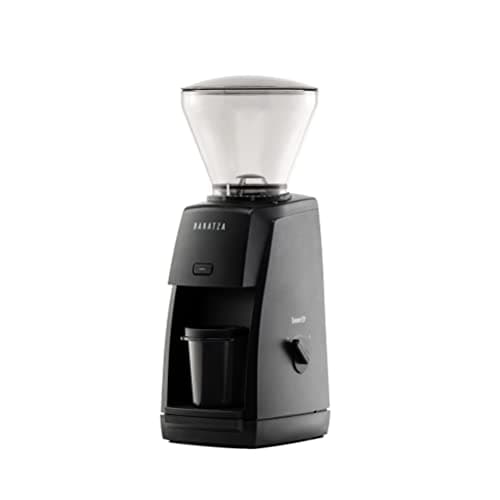
Under $200 is the single hardest bracket in coffee gear, and it is worth being blunt about why. Espresso needs a grind fine enough to resist roughly nine bars of pressure, adjusted in steps small enough that you can actually dial a shot in — and most grinders sold at this price were designed for drip coffee, then had "espresso" added to the marketing.
The practical result is that plenty of grinders in this range cannot physically grind fine enough, and several that can move in steps so coarse that you jump straight from a 20-second gusher to a choked machine with nothing usable in between. There are only a handful of genuine options. Here are three of them, and an honest explanation of why two are hand grinders.
Why $200 is the hard bracket
Espresso is uniquely demanding of a grinder for one reason: the adjustment resolution matters as much as the grind quality. For pour over, a change of fifty microns is a nudge. For espresso, it is the difference between a sour 18-second shot and a bitter 40-second one.
Building a grinder that adjusts in genuinely small increments, holds that setting under load, and does it with burrs aligned tightly enough to produce a narrow particle distribution costs money. Above $300 you have real choice. Below $200 the electric options collapse to essentially one recommendation — while hand grinders, which spend their entire budget on burrs and an adjustment mechanism rather than on a motor, housing and hopper, punch far above their price.
That is the honest trade this page is really about: at this budget you are choosing between convenience (an electric that is genuinely good enough) and grind quality (a hand grinder that is better, if you will turn the handle every morning).
What actually makes a grinder espresso-capable
Four things, in order of how often they are the dealbreaker.
- It reaches espresso fineness at all. Sounds obvious; it is the most common failure. Many budget burr grinders bottom out at a fineness that is still too coarse for a 9-bar shot, so you can never build enough resistance no matter how you dose.
- Adjustment step size.How much the grind changes per click. Espresso needs small steps — roughly 20 microns is excellent at this price. A grinder with big steps can hit fine enough and still be impossible to dial in.
- Burr type and alignment.Conical steel burrs are standard here. What matters is that they are aligned well enough to produce a consistent particle size rather than a wide spread of boulders and dust — the spread is what makes a shot taste bitter and sour simultaneously.
- Retention.Grounds trapped inside the grinder between doses mean today's shot contains some of yesterday's coffee, and your dose weight drifts. Hand grinders are naturally excellent here; hopper-fed electrics are naturally worse.
Notice what is not on that list: motor power, hopper size, and a built-in timer. Those affect convenience, not what is in the cup. Our burr vs blade guide covers the underlying principle, and flat vs conical burr covers the geometry question in more depth.
At a glance
| Grinder | Type | Burrs | Best for | Price |
|---|---|---|---|---|
| Baratza Encore ESP | Electric | 40mm M2 conical | Best electric | $199.95Buy |
| 1Zpresso J | Hand | 48mm conical | Best grind quality | $139.00Buy |
| Timemore Chestnut C3 ESP | Hand | 38mm S2C conical | Best value | $68.00Buy |
Prices shown are from Amazon as of October 17, 2026 and change often — the button always goes to the current listing. Some links may earn us a commission at no extra cost to you.
Best electric under $200: Baratza Encore ESP
If you want to press a button, this is the pick, and it is close to the only one. The Encore ESP is Baratza's espresso-capable rework of the long-running Encore, and the changes are exactly the ones that matter: 40mm M2 conical burrs and a recalibrated adjustment range that puts fine 20-micron micro-steps across settings 1–20 for espresso, with coarser ~90-micron steps from 21–40 for filter.
That split is the whole design. The original Encore is a fine filter grinder that cannot reach espresso; the ESP can, and it keeps a usable filter range on top, so it is genuinely one grinder for two brewing styles. It also ships with a 54mm dosing cup and a 58mm portafilter adapter, so you can grind straight into a portafilter rather than into a bin and back out again.
| Burrs | 40mm M2 conical (steel, user-replaceable) |
|---|---|
| Grind settings | 40 stepped (1-20 espresso, 21-40 filter) |
| Espresso step size | ~20 microns per step |
| Filter step size | ~90 microns per step |
| Motor | DC, ~550 RPM, ~70W |
| Bean hopper | 8 oz / 230 g |
| Included | 54mm dosing cup + 58mm portafilter adapter |
What we like: it genuinely reaches espresso fineness with small enough steps to dial a shot in, it covers filter brewing too, and Baratza builds grinders to be repaired rather than replaced — burrs and parts are user-serviceable, which matters at a price where most rivals are disposable. The honest downsides: it is hopper-fed with moderate retention, so it is not built for true single dosing; the adjustment is stepped rather than stepless, so you occasionally want a setting between two clicks; and it sits right at the top of this budget.
Full detail in our Baratza Encore ESP review, and if you are weighing it against the standard Encore, Encore vs Encore ESP covers exactly what the ESP changes.
Best grind quality under $200: 1Zpresso J
This is the pick if you care more about the shot than about pressing a button. The 1Zpresso J runs 48mm conical burrs— larger than the Encore ESP's — with a precise 30-click adjustment ring and near-zero retention, for meaningfully less money.
The reason it can do that is structural, not magical: with no motor, no housing and no hopper to pay for, essentially the entire budget goes into the burr set and the adjustment mechanism. That is why a $139 hand grinder out-grinds a $199 electric, and why serious home baristas on a budget so often own one.
It also covers the whole range, espresso through French press, which makes it a genuinely complete answer for someone with one grinder and several brewers.
What we like: the best grind quality here by a clear margin, an adjustment ring precise enough for real espresso dial-in, almost no retention so your dose is your dose, and no power required. The honest downsides: you grind by hand, and espresso-fine grinding takes real effort — expect the better part of a minute of cranking per double shot, every single time. That is a genuine daily cost, and it is the reason some people go back to electric.
More in our 1Zpresso J review and best hand grinders.
Best value: Timemore Chestnut C3 ESP
The cheapest grinder here that makes real espresso genuinely possible. The Chestnut C3 ESP pairs 38mm S2C stainless conical burrswith a fine adjustment dial, and the "ESP" in the name is the important part — it is the espresso-oriented variant of the C3, tuned for the fine end of the range rather than the filter end.
At this price the value is remarkable. It grinds evenly enough that the shot quality is limited by your puck prep rather than by the grinder, which is not something you can say about any electric anywhere near this money.
What we like: espresso-capable grinding for well under a hundred dollars, even and consistent for the price, compact, and the obvious first grinder for someone pairing it with an entry-level machine like the Stilosa or a moka pot. The honest downsides: smaller burrs than the J mean more cranking and slightly less consistency at the extremes, the adjustment is less precise than the J's 30-click ring, and it is still a hand grinder with all the daily effort that implies. Our full Timemore Chestnut C3 ESP review has the dial figures and the espresso click range.
What to avoid at this price
Three categories will waste your money, and all three are heavily marketed at exactly this budget.
- Cheap burr grinders labeled "espresso" that don't reach fine enough. Check the actual adjustment range, not the marketing. If reviewers report that setting 1 still runs fast on an espresso machine, it cannot do the job.
- Grinders with too-large step sizes. A grinder can reach espresso fineness and still be undialable if each click moves 80 microns. You will bounce over the correct setting forever.
- Second-hand commercial grinders in this bracket. Tempting, and occasionally brilliant, but worn burrs are invisible in a photo and replacements often cost more than you paid. Only worth it if you can verify burr condition.
How to choose
One question decides it: will you actually turn a handle every morning?
Be honest rather than aspirational. Espresso-fine grinding is the hardest work a hand grinder does — noticeably harder than grinding for filter — and it is roughly a minute of effort before you have even started making coffee. Plenty of people enjoy that ritual. Plenty of others buy a hand grinder, use it for three weeks, and quietly go back to pre-ground.
If the answer is yes, buy the 1Zpresso J for the best grind quality here, or the Timemore Chestnut C3 ESPif the budget is tighter — both will out-grind any electric at this price. If the answer is no, or if more than one person in the house makes coffee, or if you make several drinks a morning, buy the Baratza Encore ESP and do not feel bad about it; a grinder you use is better than a grinder you resent.
And if you can stretch the budget, this is the one place in a coffee setup where stretching pays off most — our best espresso grinders under $300 guide covers the very next rung, where stepless adjustment and 50mm flat burrs first appear, and best espresso grinders under $500 covers the bracket above that, where 55mm and 64mm flat burrs arrive. See also best grinders for espresso for what another hundred or two buys, and best single dose grinders if low retention is your priority.
Frequently asked questions
What is the best espresso grinder under $200?
The Baratza Encore ESP if you want an electric — it's the one grinder at this price with 40mm conical burrs and 20-micron micro-steps across the espresso range, so you can actually dial a shot in. If you'll grind by hand, the 1Zpresso J gives better grind quality for less money, because a hand grinder spends its whole budget on burrs rather than a motor and housing.
Can you make good espresso with a cheap grinder?
Only if it genuinely reaches espresso fineness with small enough adjustment steps — and most grinders under $200 don't. Many budget burr grinders bottom out too coarse to build 9 bar of resistance, and others reach fine enough but move in steps so large you jump from a gusher to a choked machine. Check the actual adjustment range rather than the word 'espresso' on the box.
Are hand grinders good enough for espresso?
At this budget they're better than the electrics, not just adequate. With no motor, housing or hopper to pay for, a hand grinder puts nearly its whole cost into the burr set and adjustment mechanism — which is why a $139 1Zpresso J out-grinds a $199 electric. The real cost is effort: espresso-fine grinding takes close to a minute of cranking per double shot, every time.
Why can't I use a blade grinder for espresso?
A blade grinder smashes beans rather than grinding them, producing boulders and dust in the same batch with no size control. Espresso needs an even bed of uniformly fine grounds to build resistance against 9 bar of pressure — with a chaotic mix, water channels through the loose areas and over-extracts them while barely touching the rest. No tamping technique fixes it.
What's the difference between the Baratza Encore and the Encore ESP?
The ESP is the espresso-capable version. The original Encore is an excellent filter grinder that physically cannot reach espresso fineness. The ESP has 40mm M2 burrs and a recalibrated range that puts fine ~20-micron steps across settings 1-20 for espresso, with coarser ~90-micron steps from 21-40 for filter — so it covers both styles in one grinder.
How much should I spend on an espresso grinder?
More than you're planning to, honestly — the grinder affects the cup more than the machine does at every budget. Under $200 you have three real options and each involves a compromise. If you can stretch to $300 or beyond, the choice widens considerably and you gain stepless adjustment and lower retention. If you can't, buy from this page rather than a cheaper grinder that can't reach espresso at all.
Sources
Keep reading
Buying your first setup?
See how we pick — compiled specs, cost-per-shot math, and honest trade-offs — then dig into the guides. No fake test lab, no rankings for hire.