Buying Guide
The Best Espresso Grinders Under $500 in 2026
This is the bracket where espresso grinding stops being a compromise. Stepless adjustment, 55mm and 64mm flat burrs and genuinely low retention all arrive under $500 — here are the six worth your money and the honest cons of each.
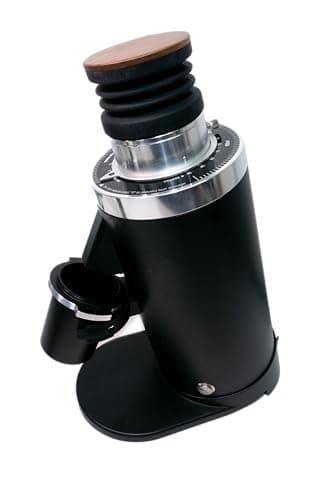
Under $200, espresso grinding is an exercise in damage control — there are only a handful of grinders that physically reach espresso fineness, and every one of them asks you to give something up. Under $500, that changes completely. This is the bracket where stepless adjustment, 55mm and 64mm flat burrs and retention low enough to stop thinking about all become available, and where the grinder stops being the weak link in a home espresso setup.
It is also the bracket where the wrong choice costs the most, because almost everything here is genuinely good. The six grinders below are separated less by quality than by workflow— single dose or hopper, electric or hand, fast or quiet — and picking the one that matches how you actually make coffee matters more than chasing the biggest burr set. Every pick is a real product, currently listed, with its honest downsides written out.
What another few hundred dollars actually buys
Three specific things, and it is worth being precise about them because none of them is "better coffee" in the abstract.
- Stepless adjustment.Below $200 you get clicks. Every grinder there moves in fixed increments, and sometimes the setting you want sits between two of them. Stepless grinders — the Eurekas and the DF64 here — let you land anywhere on a continuous dial, which is the difference between dialing a shot in and dialing it close.
- Bigger burrs, and flat ones. A 64mm flat burr set has far more cutting surface than a 40mm conical, so beans pass through faster and get cut more uniformly. Bigger burrs also run cooler for a given dose. Our flat vs conical burr guide covers the flavor argument in full; the short version is that flat burrs tend toward clarity and separation, conicals toward body and forgiveness.
- Retention you can ignore.Under $200, some of yesterday's coffee ends up in today's shot and your dose weight drifts. A single-dose grinder with a plasma ionizer and a bellows gives back essentially what you put in — which is what makes weighing your dose meaningful in the first place.
What it does not buy is a fix for bad technique. Any grinder in this bracket, pointed at stale supermarket beans and an unleveled puck, will make a worse shot than a grinder from the bracket below used carefully. The rung in between is worth a look too: best espresso grinders under $300 is where stepless adjustment and 50mm flat burrs first become available. If your puck prep is still developing, a WDT tool and a decent scale will move your cup further than the last hundred dollars of grinder will.
How we judged this bracket
We rank on published specifications and manufacturer documentation, not on lab tests we did not run — units we claim to have tested: zero. That is a real limit, and it is why we weight the specs that are objectively verifiable and that demonstrably decide a shot. In order of how much they matter here:
- Adjustment resolution. How finely you can move the grind. Stepless is best; a click grinder is fine if the click is small enough. Espresso lives inside a very narrow band, and a grinder that cannot land inside it is unusable regardless of burr quality.
- Burr size and geometry. Published diameter and type, plus what the manufacturer states the burr is made of and coated with. Larger burrs are not automatically better, but they are faster and cooler for the same dose.
- Retention, as published.Manufacturers who quote a number ("under 0.1 g") get credit for it; grinders that stay quiet on retention are assumed to have some, because hopper-fed designs always do.
- Workflow fit. Does it grind into a portafilter hands-free? Does it need a bellows and a dosing cup? Is it quiet enough for a shared kitchen at 6am? These decide whether you enjoy owning it.
- Parts and repairability.A grinder is a wear item. Burrs dull, and a brand with a US parts channel is worth real money over five years — a point we factor into the running-cost side of what home espresso actually costs.
We do not rank on brand reputation, on marketing claims we cannot source, or on a star rating we invented. Where a manufacturer publishes two different figures for the same spec, we say so rather than picking the flattering one.
At a glance
| Grinder | Type | Burrs | Adjustment | Price |
|---|---|---|---|---|
| DF64 Gen 2 | Electric, single dose | 64mm flat | Stepless | $389.00Buy |
| Eureka Mignon Facile | Electric, hopper | 50mm flat | Stepless micrometric | $399.00Buy |
| Eureka Mignon Notte | Electric, hopper | 50mm flat | Stepless micrometric | $299.00Buy |
| Baratza Sette 270 | Electric, hopper | 40mm conical | 270 macro/micro settings | $399.95Buy |
| 1Zpresso J-Ultra | Hand | 48mm conical | 8 microns per click | $199.00Buy |
| Baratza Encore ESP | Electric, hopper | 40mm conical | 40 stepped (~20 microns) | $199.95Buy |
Prices shown are from Amazon as of October 17, 2026 and change often — the button always goes to the current listing. Some links may earn us a commission at no extra cost to you.
Best overall under $500: DF64 Gen 2
The DF64 Gen 2 is the most grinder you can buy in this bracket, and the gap is mostly the burrs. 64mm flat stainless burrs are the largest set here by a wide margin, spun by a 250W motor at around 1400 RPM, with stepless adjustment and a plasma generator in the exit chute that kills the static flat burrs are otherwise notorious for.
It is a true single-dose grinder: you weigh beans into the 50 g bellows hopper, grind, and what comes out is what you put in. The manufacturer quotes under 0.1 g of retention even without using the bellows, which is the number that makes dose weighing worth doing at all. The burrs are also the most common aftermarket upgrade path in home espresso, so this is a grinder you can keep changing the character of years from now.
| Burrs | 64mm flat (stainless steel) |
|---|---|
| Adjustment | Stepless |
| Motor | 250W, ~1400 RPM |
| Dosing | Single dose (50 g bellows hopper) |
| Retention | Under 0.1 g (manufacturer figure) |
| Static control | Plasma generator (ionizer) |
| Size / weight | 10" D x 5.2" W x 12" H, ~15 lb |
What we like: the biggest burrs in the bracket, stepless control fine enough that dialing in becomes pleasant rather than a fight, retention low enough to stop being a variable, and a burr upgrade path if you ever want to chase a specific flavor profile.
The honest cons: single dosing is a slower morning routine than a hopper — you weigh, you pour, you puff the bellows — and it is the heaviest and tallest grinder here at roughly 15 lb, so it needs real counter space under a cabinet. Stepless adjustment also means there is no number to return to, so keep a note of your setting when you change beans. And the DF64 is sold under several brand names by different distributors, which makes warranty and support quality vary by seller in a way a Baratza or Eureka does not.
If the single-dose workflow is the part that appeals, our best single-dose grinders guide covers the wider field, including the filter-focused alternatives.
Best quiet hopper-fed grinder: Eureka Mignon Facile
If you want to walk up to the machine, lock in a portafilter and grind without waking the house, this is the pick. The Mignon Facile runs 50mm flat hardened-steel burrs driven by a 260W motor at 1350 RPM, with Eureka's stepless micrometric adjustment— a continuous dial rather than clicks — fed from a 300 g hopper built to be loaded and left rather than dosed bean by bean.
The noise is the other half of the pitch. Eureka builds the Facile with its Silent System, which Whole Latte Love lists at about 73 dBA, and adds its ACE system to cut static and clumping in the grounds. A quiet grinder is a genuinely different object to live with when the first shot of the day happens before anyone else is awake. (This slot previously went to the Eureka Mignon Silenzio 55, which is no longer available on Amazon.)
| Burrs | 50mm flat (hardened steel) |
|---|---|
| Adjustment | Stepless micrometric |
| Motor | 260W, 1350 RPM |
| Hopper | 300 g / 10.58 oz |
| Dosing | Manual (press the portafilter against the switch) |
| Noise | Silent System, about 73 dBA (published) |
| Size / build | 13.75 x 4.33 x 6.69 in (H x W x D), aluminum housing |
What we like: a truly stepless dial on flat burrs, a hopper big enough for several days of doubles, sound dampening that the Notte below does not have, and a narrow body — about 4.3 inches wide — which matters more than people expect next to an espresso machine.
The honest cons: dosing is manual — you hold the portafilter against the switch and watch the grounds, so there is no timer and no hands-free dosing. It is hopper-fed, so retention is real and switching beans means purging through the old ones; Eureka does not publish a retention figure, and we will not invent one. Its burrs are the same 50mm size as the cheaper Notte, so the extra money buys quieter grinding, a bigger hopper and the anti-clumping system rather than bigger burrs. And it sits near the top of this budget, which for some buyers is better spent on the machine.
Best value: Eureka Mignon Notte
The Notte is the same idea as the Facile for less money. You get 50mm flat steel burrs and the same stepless micrometric adjustment in a hand-assembled Italian metal chassis, fed from a compact 150 g bean hopper. It is the cheapest grinder we would call a genuinely stepless flat-burr espresso grinder, which makes it the value pick of this whole page.
The trade against the Facile is straightforward: a smaller hopper and no sound dampening. Burr size, the stepless dial and the press-the-portafilter dosing action are the same, and neither of those trade-offs changes what the burrs do to a bean.
| Burrs | 50mm flat (steel) |
|---|---|
| Adjustment | Stepless (micrometric knob) |
| Hopper | 150 g / ~5.5 oz |
| Dosing | Manual (press portafilter to grind) |
| Grind range | Espresso through pour over, tuned for espresso |
| Build | Metal case, hand-assembled in Italy |
What we like: stepless flat-burr espresso at the lowest price on this page, a properly built metal body, burrs that come out for cleaning without losing your setting, and a footprint small enough to live beside a compact machine.
The honest cons: manual dosing means you hold the portafilter and watch the grounds, which is fine but not hands-free. It is louder than the Facile, which adds Eureka's Silent System. The small hopper needs refilling often if you drink several doubles a day, and like every hopper grinder it holds grounds between doses. It is also a dedicated espresso-leaning grinder — capable of coarser work, but not the one to buy if French press is your main brew.
We go deeper on this one in our Eureka Mignon Notte review.
Best for speed and servicing: Baratza Sette 270
The Sette 270 is the odd one out here and the most interesting. It uses 40mm conical burrs in a design where the beans fall straight through the burrs into the portafilterrather than turning a corner into a chute — which is why Baratza can quote roughly half a gram of retention from a hopper-fed grinder, and why it grinds at 3.5–5.5 g per second depending on setting. Do the arithmetic on an 18 g double and that is roughly three to five seconds of grinding, which is fast by any home grinder standard.
Adjustment is a hybrid: 30 macro steps combined with 9 micro positionsfor 270 total, across a published grind range of roughly 230–950 microns. It is not stepless, but 270 positions inside that range is fine enough for espresso in practice. Three programmable timed doses cover a single, a double and whatever else you drink.
| Burrs | 40mm conical (stainless steel) |
|---|---|
| Adjustment | 270 settings (30 macro x 9 micro) |
| Grind range | 230-950 microns |
| Grind speed | 3.5-5.5 g per second |
| Motor | 290W (110-120V US) |
| Hopper | 9.7 oz beans / 5.6 oz grounds container |
| Retention | About half a gram (straight-through path) |
| Warranty | 1-year limited |
What we like: the published grind speed is the quickest figure any manufacturer on this page puts in writing, retention is genuinely low for a hopper design, repeatable programmed dosing, a convertible holder that takes different portafilters, and Baratza's US parts and service network — the strongest repairability story of any grinder on this page.
The honest cons: it is loud, and not in a way you get used to — this is the least apartment-friendly grinder here. The 40mm conical burrs are the smallest of the electrics, so it is chosen for workflow rather than for maximum grind uniformity. It is stepped rather than stepless, and it carries only a 1-year limited warranty against the all-metal Italian builds it sits beside. It is also the most mechanically complex grinder here, with more moving parts than a simple burr-and-motor design — which is exactly why we weight the parts network as heavily as we do.
Best hand grinder under $500: 1Zpresso J-Ultra
The finest numbered adjustment on this page belongs to the cheapest grinder on it. The J-Ultra uses a 48mm titanium-coated stainless conical burr with a heptagonal cutting geometry and an external adjustment ring giving 100 clicks per rotation at 8 microns per click, across five rotations for 500 clicks of total range.
Eight microns is finer resolution than any electric here offers in a discrete step, and because the ring is on the outside you adjust without disassembling anything and can return to a number exactly. For a grinder that costs a fraction of the Facile, that is a remarkable specification — and it is the structural advantage hand grinders always have: with no motor, housing or hopper to fund, nearly the whole budget goes into burrs and the adjustment mechanism.
| Type | Manual (hand) grinder |
|---|---|
| Burrs | 48mm conical, titanium-coated stainless (heptagonal) |
| Adjustment | External ring, 100 clicks/rotation, 8 microns per click |
| Total range | 500 clicks across 5 rotations |
| Capacity | 35-40 g |
| Weight | 670 g (1.5 lb) |
| Included | Cleaning brush, blower, case for the foldable handle |
What we like: the best adjustment resolution here, near-zero retention by design, a foldable handle and case that make it the only travel-capable pick, no power required, and a price that leaves most of a $500 budget for the machine.
The honest cons: you grind by hand, and espresso-fine grinding is the hardest work a hand grinder does — budget the better part of a minute of cranking per double, every single morning. That is a real daily cost and the reason plenty of people migrate back to electric. It is also a single-user proposition: if two people in the house make coffee at the same time, or you pull several drinks in a row, an electric wins on the day-to-day.
Our best hand grinders guide compares it against the rest of the manual field, including the cheaper J and the all-round K-Ultra.
Best entry point: Baratza Encore ESP
Included here deliberately, because a page about a $500 budget should say when you do not need to spend it. The Encore ESP sits at the floor of this bracket with 40mm M2 conical burrs and a recalibrated range that puts fine ~20-micron micro-steps across settings 1–20for espresso, with coarser ~90-micron steps from 21–40 for filter. It ships with a 54mm dosing cup and a 58mm portafilter adapter.
If you are pairing a grinder with a first machine — a Bambino, a Stilosa, a Gaggia — this is very often the correct answer, and the money you save is better spent on fresh beans and a scale than on burr diameter you are not yet extracting the value from.
| Burrs | 40mm M2 conical (steel, user-replaceable) |
|---|---|
| Grind settings | 40 stepped (1-20 espresso, 21-40 filter) |
| Espresso step size | ~20 microns per step |
| Filter step size | ~90 microns per step |
| Motor | DC, ~550 RPM, ~70W |
| Hopper | 8 oz / 230 g |
| Included | 54mm dosing cup + 58mm portafilter adapter |
What we like: it reaches espresso fineness with steps small enough to dial in, it covers filter brewing on the same grinder, and Baratza builds it to be repaired rather than replaced.
The honest cons: it is the least capable grinder on this page and it should be — stepped rather than stepless, hopper-fed with moderate retention, and the smallest burrs of the electrics. If you are already drinking well-extracted espresso and can taste what you are missing, this is the one pick here you will outgrow.
Single dose or hopper? The decision that actually matters
Nearly everyone shopping this bracket agonizes over burr size and then buys the wrong workflow. The question to settle first is how you will feed the grinder.
There is no correct answer, only a correct answer for you. What is not a real trade-off is grind quality: both workflows exist at every quality level in this bracket.
If you are still deciding what to grind for, our grind size chart shows where espresso sits relative to every other method, and how to pull an espresso shot covers what you are actually adjusting toward.
How to choose
Work through it in this order and the field narrows fast.
- Will you grind by hand? If yes, buy the 1Zpresso J-Ultraand stop reading — it has the finest adjustment here and leaves the rest of your budget for the machine. Be honest rather than aspirational about the daily minute of cranking.
- Do you rotate beans often, or weigh every dose? Then single dose, and that means the DF64 Gen 2. It is also simply the most capable grinder in the bracket.
- Do you want to press a button and have coffee? Then hopper-fed. Take the Mignon Facile if quiet grinding and a large 300 g hopper matter; the Notte if the same 50mm burrs and stepless dial for less money matter more than noise and hopper size.
- Is speed or long-term serviceability the priority? The Sette 270, with the caveat that it is the loudest thing on this page.
- Is this your first espresso setup? The Encore ESP, and put the difference toward the machine or the beans.
One last piece of budgeting advice that this site will keep repeating: if you are choosing between a better machine and a better grinder, the grinder changes the cup more. A modest machine fed a well-dialed grind beats an expensive machine fed an inconsistent one, every time. Our best espresso machines under $500 guide is written on the same assumption, and best coffee grinder for espresso covers the wider field across every price.
Frequently asked questions
What is the best espresso grinder under $500?
The DF64 Gen 2 for most people — 64mm flat burrs, stepless adjustment and under 0.1 g of retention make it the most capable grinder in the bracket, and its single-dose workflow means what you weigh in is what you get out. If you would rather load a hopper and press a button, the Eureka Mignon Facile gives you 50mm hardened-steel flat burrs, Eureka's stepless micrometric dial, a 300 g hopper and Eureka's Silent System noise reduction.
Is a $500 grinder worth it over a $200 one?
Yes, if your technique is already solid. The jump buys three concrete things: stepless adjustment instead of fixed clicks, substantially larger burrs (50mm and 64mm flat versus 40mm conical), and retention low enough to ignore. If you are still learning puck prep, a WDT tool, a scale and fresher beans will improve your shots more than the last few hundred dollars of grinder will.
Do I need a single-dose grinder for espresso?
No — you need one if you rotate between roasts, buy small bags, or want your dose weight to be exact. Single-dose grinders like the DF64 Gen 2 give back almost exactly what you weigh in, with no old grounds carried over. Hopper-fed grinders are faster every morning and perfectly capable of great espresso; they just hold some coffee between doses and need purging when you switch beans.
Are flat burrs better than conical burrs for espresso?
Neither is universally better. Flat burrs tend to produce a more uniform particle distribution, which many people taste as clarity and separation; conical burrs are generally more forgiving and give a fuller body. Size matters as much as shape — a 64mm flat set has far more cutting surface than a 40mm conical, so it grinds faster and runs cooler for a given dose. Our flat vs conical burr guide works through the trade in detail.
How fine does a grinder need to adjust for espresso?
Fine enough that one step does not overshoot the target. Espresso lives in a very narrow band, so the useful measure is microns per adjustment step, not the number of settings. Roughly 20 microns per step is workable — that is what the Baratza Encore ESP offers across its espresso range. Stepless grinders remove the question entirely, and the 1Zpresso J-Ultra moves just 8 microns per click, the finest discrete step of any grinder on this page.
Can one grinder do espresso and pour over well?
In this bracket, yes — the DF64 Gen 2, the Sette 270 and the 1Zpresso J-Ultra all cover espresso through filter with a real range. The catch is re-dialing: switching between espresso and pour over means moving the grind a long way and moving it back, and with a stepless grinder there is no number to return to. Keep a written note of your espresso setting, or expect to waste a couple of doses re-finding it.
Sources
- DF64 Coffee — DF64 Gen 2 single dose grinder specifications (64mm burrs, 250W, plasma generator, retention)
- Whole Latte Love — Eureka Mignon Facile published specifications (50mm hardened-steel burrs, 260W, 1350 RPM, 10.58 oz hopper, Silent System ~73 dBA, ACE system, dimensions)
- Whole Latte Love — Baratza Sette 270 published specifications (270 settings, 230-950 microns, 3.5-5.5 g/sec, 290W)
- 1Zpresso — J-Ultra specifications (48mm coated conical burr, 100 clicks/rotation at 8 microns, 35-40 g capacity)
- Baratza — Encore ESP specifications (40mm M2 burrs, espresso and filter step sizes)
- Eureka — Mignon Notte product page (50mm flat burrs, stepless micrometric adjustment)
- Specialty Coffee Association — grind, extraction and particle distribution fundamentals
Keep reading
Buying your first setup?
See how we pick — compiled specs, cost-per-shot math, and honest trade-offs — then dig into the guides. No fake test lab, no rankings for hire.