Buying Guide
The Best Espresso Grinder Under $300
Three hundred dollars is the first budget where a grinder stops being a compromise and starts being a real espresso tool — stepless adjustment, 50mm burrs, a dosing cup that fits your portafilter. Six picks, ranked on published specs, with the trade-off each one asks you to accept.
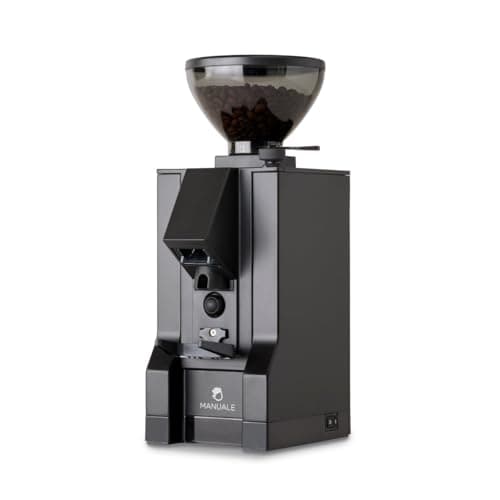
Under $300 the best espresso grinder is the Eureka Mignon Notte, because it is the only one in the bracket with no steps to fall between. Its 50mm flat steel burrs are the largest here and its adjustment is stepless— a micrometric knob rather than a clicked dial — so when a shot runs two seconds fast you can move a fraction of a step instead of choosing between two settings that are both wrong. If you want the forgiving version of that with parts you can replace yourself, take the Baratza Encore ESP. If you want the finest adjustment in the bracket and do not mind cranking, the 1Zpresso J-Ultra moves 8 microns per click.
This page sits between two others on this site deliberately. Our best espresso grinder under $200 guide covers the entry bracket, where the question is whether a grinder can reach espresso fineness at all. Our best espresso grinder under $500 guide covers the bracket where 64mm flat burrs and true single dosing arrive. Three hundred dollars is the hinge between them: every grinder below can genuinely dial in a shot, so the ranking is about how each one gets you there rather than whether it can.
What $300 actually buys in an espresso grinder
Three things change as you cross out of the entry bracket, and all three are about control rather than speed.
Adjustment gets finer, or stepless.Espresso is the only brew method where a 20-micron change in grind size visibly moves the shot. Below $200 you are usually choosing between stepped settings; around $300 you start getting either very small steps (the Encore ESP's roughly 20 microns across its espresso range) or no steps at all (the Notte and the Opus 2 both use stepless dials). Our grind size chartshows how narrow the espresso band is compared with every other method — that narrowness is the whole reason resolution matters more here than anywhere else.
Burrs get bigger, and sometimes flat.A 50mm flat burr set has more cutting edge passing more coffee than a 40mm conical, which generally means a tighter particle distribution and a faster grind. It is not a straight hierarchy — our flat vs conical burrexplainer covers what each geometry actually does to the cup — but burr diameter is a real published spec rather than marketing, and at this price it climbs.
The grounds start going straight into the basket.This sounds like a convenience feature and is actually a dose-accuracy feature. Every transfer from grinder bin to basket loses grounds and adds static mess, so a grinder that doses into a 54mm or 58mm portafilter — which four of the six picks below do, either with a cradle or a dosing cup — makes an 18 g dose repeatable in a way a chute-and-bin grinder does not.
How we ranked these
On published specifications and manufacturer documentation, not on lab tests we did not run — units we claim to have tested: zero, which is also what our methodology page says. For an espresso grinder under $300, in this order:
- Adjustment resolution at the fine end. Stepless beats small steps, small steps beat big ones. A grinder whose smallest move takes you from a choked shot to a gusher cannot be dialed in no matter what its burrs cost.
- Burr size, type and material. Published diameter, flat or conical, steel or coated. Bigger burrs cut more evenly per rotation and run cooler at the same throughput.
- How the dose reaches the basket. A 54mm or 58mm dosing cup or portafilter cradle, versus a bin you then tip. Retention matters here too: grounds held inside the grinder are grounds missing from this dose and stale grounds added to the next.
- Serviceability. Whether burrs and parts can be replaced, because a grinder you can re-burr is a cheaper decade than one you replace.
We do not rank on brand reputation, on star ratings we invented, or on a number we could not source. Where a manufacturer publishes one figure and a retailer publishes another, we print both rather than the flattering one.
At a glance
| Grinder | Type | Burrs | Adjustment | Doses into | Price |
|---|---|---|---|---|---|
| Eureka Mignon Notte | Electric, hopper | 50mm flat steel | Stepless (micrometric knob) | Portafilter (press to grind) | $299.00Buy |
| Baratza Encore ESP | Electric, hopper | 40mm M2 conical | 40 stepped (~20 microns, espresso range) | 54mm cup + 58mm adapter | $199.95Buy |
| Fellow Opus 2 | Electric, single dose | 48mm hardened stainless | Stepless dial | 30 g cup (54mm / 58mm) | $199.95Buy |
| Breville Smart Grinder Pro | Electric, hopper | Stainless conical | 60 stepped + 0.2s dose timer | 50-54mm and 58mm cradles | $199.95Buy |
| 1Zpresso J-Ultra | Hand | 48mm titanium-coated conical | External ring, 8 microns per click | Catch cup | $199.00Buy |
| Timemore Chestnut C3 ESP | Hand | 38mm S2C660 conical | Internal dial, 0.0233mm per click | Catch cup | $99.00Buy |
Prices shown are from Amazon as of October 17, 2026 and change often — the button always goes to the current listing. Some links may earn us a commission at no extra cost to you.
Best overall under $300: Eureka Mignon Notte
Who it is for: anyone with a semi-automatic machine who wants to stop fighting the grinder and start adjusting the shot.
The Notte is the cheapest grinder Eureka sells, and what it does not spend money on is obvious the moment you look at it: there is no display, no timer preset bank, no programmable dosing. What it does spend money on is the part that makes espresso work. Fifty millimeter flat steel burrs, a stepless micrometric adjustment knob, and a metal case hand-assembled in Italy. It is a commercial design scaled down to a kitchen rather than a kitchen appliance given an espresso setting.
Stepless is the headline and it is worth being precise about why. Every other electric grinder in this bracket moves in defined clicks; when the shot you want sits between click 7 and click 8, you compensate by changing the dose instead. The Notte's knob turns continuously, so the grind itself becomes the adjustment. For a sour shot or a bitter one, that is the difference between correcting the cause and working around it.
| Burrs | 50mm flat (steel) |
|---|---|
| Adjustment | Stepless (micrometric knob) |
| Grind range | Espresso to pour over |
| Dosing | Manual - press the portafilter against the fork to grind |
| Hopper | ~5.5 oz / 150 g bean hopper |
| Build | Metal case, hand-assembled in Italy |
What we like: the largest burrs in the bracket, genuinely stepless adjustment, grinding directly into the portafilter with both hands free, and the fact that Eureka has been making this mechanism for commercial bars for decades. The honest cons: it sits at the very top of this budget and leaves nothing in it, so a $300 ceiling means this grinder and nothing else. Stepless cuts both ways — there are no numbers to write down, so returning to a setting after changing beans is a feel exercise rather than a lookup. It is hopper-fed with the retention that implies, so it is not a single-dose grinder. And there is no timer or display at this trim level: you grind while you hold the button, which means a scale is not optional. Our best coffee scale guide covers that, and do I need a scale for espresso explains why it matters more with this grinder than the others here.
Our full Eureka Mignon Notte review goes deeper on the stepless mechanism and what the higher Mignon trims add.
Best first espresso grinder: Baratza Encore ESP
Who it is for: the buyer whose first espresso machine arrives this week, who wants to be dialing in on day one rather than learning a mechanism.
The Encore ESP is Baratza's espresso rework of the long-running Encore, and the changes are exactly the ones that matter. 40mm M2 conical burrs, and a recalibrated dial that spends settings 1–20 on espresso at roughly 20 microns per step and settings 21–40 on filter at roughly 90 microns per step. Half the dial is dedicated to the band where espresso actually lives, which is the opposite of how most dual-purpose grinders are laid out.
It also ships with a 54mm dosing cup and a 58mm portafilter adapter, so the grounds go where they are going without a detour, and Baratza's whole engineering premise is repair: burrs, gearbox parts and the ring are user-replaceable through their US channel.
| Burrs | 40mm M2 conical (steel, user-replaceable) |
|---|---|
| Grind settings | 40 stepped (1-20 espresso, 21-40 filter) |
| Espresso step size | ~20 microns per step |
| Filter step size | ~90 microns per step |
| Motor | DC, ~550 RPM, ~70W |
| Bean hopper | 8 oz / 230 g |
| Included | 54mm dosing cup + 58mm portafilter adapter |
What we like: numbered settings you can write down and return to, small enough espresso steps to dial a shot in, a genuine filter range on top so one grinder covers two brewing styles, and a repair path rather than a landfill date. The honest cons: 40mm conical burrs are the smallest electric set here, so it grinds more slowly than the Notte and with a wider particle spread. It is stepped, so you will occasionally want a setting between two clicks. It is hopper-fed with moderate retention, which means purging when you switch beans. And it is a dual-purpose grinder at heart — good at espresso, not specialized for it.
Our Baratza Encore ESP review has the full detail, Encore vs Encore ESP covers what the ESP changes, and Encore ESP vs Chestnut C3 ESP is the electric-versus-hand version of the same budget question.
Best single-dose electric: Fellow Opus 2
Who it is for: the drinker who buys small bags of good coffee, changes them often, and wants the grinder to give back exactly what was weighed in.
The Opus 2 is Fellow's second pass at an all-purpose grinder and it reads like a single-dose machine wearing a small hopper. 48mm hardened stainless burrs, a stepless adjustment dial, and what Fellow describes as near-zero retention technology — which is the specification that matters if you rotate between a light roast for filter and a darker one for espresso. In the box are a 100 g catch cup and a 30 g dosing cup that fits 54mm and 58mm portafilters, so it doses into a basket as readily as into a brewer.
| Burrs | 48mm hardened stainless steel |
|---|---|
| Adjustment | Stepless dial |
| Retention | Near-zero (per Fellow) |
| Capacity | 100 g bean hopper; grinds up to 100 g at a time |
| Included | 100 g catch cup + 30 g dosing cup (fits 54mm and 58mm) |
| Power | 300 W |
| Dimensions | 206 x 130 x 267 mm (8.1 x 5.1 x 10.5 in) |
| Weight | 2.3 kg (5.1 lb) |
What we like: stepless adjustment at a price where stepped is normal, near-zero retention so one bean does not contaminate the next, a dosing cup that fits both common basket sizes, and a footprint narrow enough to sit beside a compact machine. The honest cons: Fellow positions this as an all-purpose grinder rather than a dedicated espresso grinder, and 48mm conical burrs at the fine end are working harder than a 50mm flat set does — it will dial a shot in, but it is not the grinder for someone chasing the last five percent. Stepless again means no numbers to return to. The 100 g capacity is a feature if you single dose and a nuisance if you want to fill a hopper and forget it. And it is a current-generation product with a shorter track record than the Baratza and Eureka mechanisms here.
If single dosing is the whole reason you are shopping, our best single dose grinder guide ranks the wider field, including the step up to 64mm flat burrs.
Best for grinding into the portafilter: Breville Smart Grinder Pro
Who it is for: a Breville machine owner, or anyone who wants a timed dose delivered straight into the basket with no cup, no funnel and no tipping.
The Smart Grinder Pro is the most convenient grinder in this bracket by a clear margin, and convenience here is mostly about dosing. Breville publishes 60 grind settings from espresso to French press, stainless steel conical burrs, an LCD that shows setting, time and shot count, and a dose timer adjustable in 0.2-second increments. Crucially it ships with cradles for both small 50–54mm and large 58mm portafilters, plus an airtight container and a filter-basket adapter, so the same machine doses espresso into a basket and filter coffee into a paper cone without an accessory purchase.
| Burrs | Stainless steel conical |
|---|---|
| Grind settings | 60 (espresso to French press) |
| Dose control | Precision digital timer, 0.2-second increments |
| Display | LCD - grind setting, grind time, shot/cup count |
| Doses into | 50-54mm and 58mm portafilter cradles, airtight container, gold-tone or paper filter |
| Hopper | 450 g (per retailer specification sheets) |
| Dimensions | 8.5 x 6.3 x 15.3 in |
| Housing | Stainless steel |
What we like: the dose timer is genuinely repeatable once set, both portafilter cradles are in the box, the LCD removes the guesswork of counting seconds, and it is the easiest grinder here to live with if your mornings are rushed. The honest cons: it is stepped, and 60 settings across espresso and French pressmeans the espresso portion of the dial has far fewer usable positions than the Encore ESP's dedicated twenty — this is the grinder most likely to leave you between two settings. Breville does not publish a burr diameter, which is a gap we note rather than fill in. A timed dose is a volumetric dose, so it drifts as beans age and the hopper empties — weigh, do not trust the timer. And it is hopper-fed with real retention, so it is a poor fit for rotating single doses. On a Breville machine it pairs naturally; our best grinder for Breville guide covers that fitment question in full.
Best hand grinder under $300: 1Zpresso J-Ultra
Who it is for: one or two shots a day, a buyer who wants the finest adjustment money can buy at this price, and no objection to a minute of cranking.
The J-Ultra has the finest numbered adjustment on this page, and it is not close. A 48mm titanium-coated stainless conical burr with heptagonal cutting geometry, and an external adjustment ring giving 100 clicks per rotation at 8 microns per click, across five rotations for 500 clicks of total range. Because the ring is external you adjust without taking anything apart, and because the clicks are numbered you can return to a setting exactly — the one thing the stepless electrics here cannot do.
Hand grinders punch above their price for a structural reason: with no motor, housing or hopper to fund, nearly the whole budget goes into the burrs and the adjustment mechanism. At this money that buys burrs and resolution an electric cannot match.
| Type | Manual (hand) grinder |
|---|---|
| Burrs | 48mm conical, titanium-coated stainless (heptagonal) |
| Adjustment | External ring, 100 clicks/rotation, 8 microns per click |
| Total range | 500 clicks across 5 rotations |
| Capacity | 35-40 g |
| Weight | 670 g (1.5 lb) |
| Included | Cleaning brush, blower, case for the foldable handle |
What we like: 8-micron numbered clicks, near-zero retention by design, no power required, a foldable handle that makes it the only travel-capable pick here, and a price that leaves most of a $300 budget for the machine. The honest cons: espresso-fine grinding is the hardest work a hand grinder does, so budget the better part of a minute of cranking per double, every morning — a real daily cost and the reason plenty of owners migrate back to electric. It is a single-user proposition: two people making coffee at once, or three drinks in a row, and an electric wins. And it does not dose into a portafilter without a separate funnel.
Our best hand grinder guide ranks it against the wider manual field, and J-Ultra vs Comandante C40 MK4 is the head-to-head for anyone considering spending more.
Best budget pick: Timemore Chestnut C3 ESP
Who it is for: the buyer whose $300 has to cover a grinder andsomething else — a scale, a tamper, better beans, or most of a machine.
The C3 ESP spends about a third of this budget and still clears the bar that matters. Timemore publishes its dial at 30 clicks per rotation at 0.0233mm per click — roughly 23 microns — against 12 clicks at 0.0833mm on the standard C3 dial. That single difference is what makes espresso dial-in possible here, and it is why the plain C3, the C3S and the C3S Pro are the wrong grinders for this job despite looking identical. The burrs are 38mm S2C660 conical in SUS420 stainless, in an all-metal body with a dual-bearing shaft.
| Type | Manual (hand) grinder |
|---|---|
| Burrs | 38mm S2C660 conical, SUS420 stainless, CNC-machined |
| Adjustment | Internal dial, 30 clicks per rotation, 0.0233mm per click |
| Standard C3 dial, for contrast | 12 clicks per rotation, 0.0833mm per click |
| Capacity | 20 g per Timemore's C3-series page; several retailers list 25 g |
| Body | Aluminum alloy and stainless steel, no plastic internals |
| Weight | ~430 g |
What we like: a genuinely fine published click for a third of the budget, an all-metal build where plastic is the norm, near-zero retention, and a 20 g capacity that matches a double dose in one grind. The honest cons: the dial is internal, so every adjustment while dialing in means lifting off the catch cup — tolerable once you are settled, tedious during the first week. Its 38mm burrs are the smallest here, so a double takes more turns than the J-Ultra. There are no numbers on the dial to return to. And it is still a hand grinder, with the same daily effort as the J-Ultra for less resolution.
Our Timemore Chestnut C3 ESP review includes the model decoder — worth two minutes before you buy, because the wrong Chestnut cannot do this.
What to skip at this price
Blade grinders, at any price. A blade chops rather than mills, producing dust and boulders in the same batch. For espresso that is fatal: the dust blocks the basket while the boulders give up nothing, so the shot channels and tastes bitter and weak at once. Our burr vs blade comparison covers the mechanism, and espresso channeling covers what it does to a shot.
Filter-only burr grinders.Plenty of well-reviewed grinders in this price band are explicitly not for espresso — the standard Baratza Encore and the Fellow Ode Gen 2 both say so in their own documentation. They are excellent at what they do; they physically do not reach espresso fineness with usable adjustment. Buying one for a new espresso machine is the single most common expensive mistake at this budget.
Timed-dose convenience as a substitute for a scale. Any grinder that doses by time is dosing by volume, and bean density changes with roast level and with age. Weigh the dose. Our how many grams for a double shot of espresso guide covers the target, and how to pull an espresso shot puts it in sequence.
Stretching to a grinder that leaves nothing for the rest. A grinder is one of five things a working espresso setup needs. If a $300 grinder means no scale, no tamper and no decent beans, the cup gets worse, not better. Our best home espresso setup guide costs out the whole kit.
How to choose
- You want the best shot this budget can pull and nothing else matters? The Eureka Mignon Notte. Stepless, 50mm flat burrs, straight into the portafilter.
- First espresso machine, and you want numbers you can write down? The Baratza Encore ESP. Twenty dedicated espresso steps and replaceable parts.
- You rotate between bags and hate purging? The Fellow Opus 2— stepless, near-zero retention, both dosing cups.
- You want a timed dose straight into the basket? The Breville Smart Grinder Pro, with both cradles in the box. Weigh anyway.
- One or two shots a day and you want the finest adjustment here? The 1Zpresso J-Ultra at 8 microns per click.
- The budget has to stretch further than the grinder? The Timemore Chestnut C3 ESP, and spend the rest on the machine.
One last framing. Everything on this page is a long-term purchase — grinders outlive machines, because there is less inside them to fail and the wear part is a burr set you can replace. If you are choosing between a better grinder now and a better machine now, the grinder is the one that will still be improving your coffee after the machine is replaced. Our best grinders for espresso guide covers the field without a price ceiling, and best espresso grinder under $500 shows exactly what the next $200 buys.
Frequently asked questions
What is the best espresso grinder under $300?
The Eureka Mignon Notte for most buyers. It is the only grinder in this bracket with stepless adjustment - a continuous micrometric knob rather than defined clicks - and its 50mm flat steel burrs are the largest here, so you can correct a shot by a fraction of a step instead of choosing between two settings that are both slightly wrong. If you would rather have numbered settings you can return to, the Baratza Encore ESP spends settings 1 to 20 on espresso at roughly 20 microns per step and ships with both a 54mm dosing cup and a 58mm adapter.
Is $300 enough for a good espresso grinder?
Yes. Three hundred dollars is the first budget where stepless adjustment, 48 to 50mm burrs and portafilter dosing all become available, which together are what make dialing in a shot possible rather than approximate. What you do not get at this price is 64mm flat burrs, a built-in scale, or true single-dose engineering with a bellows and a knocker - those start around the $500 mark.
Do I need a stepless grinder for espresso?
No, but you need small steps. Espresso is the only brew method where a 20-micron change visibly moves the shot, so what matters is that your smallest possible adjustment is smaller than the correction you need. A stepless grinder like the Eureka Mignon Notte or Fellow Opus 2 gives you infinite positions at the cost of having no number to return to; a finely stepped grinder like the Baratza Encore ESP gives you repeatable settings at the cost of occasionally wanting one in between.
Can a hand grinder really grind fine enough for espresso?
Yes, and at this price the hand grinders have the finest published adjustment on the page: the 1Zpresso J-Ultra moves 8 microns per click across 500 numbered clicks, and the Timemore Chestnut C3 ESP moves 0.0233mm per click. The trade is effort - espresso-fine grinding is the hardest work a hand grinder does, so budget close to a minute of cranking per double shot, every day. If you pull more than two or three shots a day, buy electric.
Should I buy a better grinder or a better espresso machine?
The grinder, if you have to choose. Grind size and consistency are the only variables that control how water moves through the puck, so a modest machine with a good grinder makes better espresso than an expensive machine with a bad one. Grinders also last longer - there is less inside them to fail, and the wear part is a burr set you can replace.
Will a Baratza Encore or Fellow Ode work for espresso?
No. Both are filter grinders and both manufacturers say so in their own documentation - the standard Encore cannot reach espresso fineness, and Fellow states the Ode Gen 2 is not suitable for espresso. The Encore ESP is the espresso version of the Encore and is a different grinder with a recalibrated dial. Buying a filter-only grinder for a new espresso machine is the most common expensive mistake at this budget.
Does grinding into the portafilter actually matter?
It matters for dose accuracy more than for mess. Every transfer from a bin into a basket loses grounds and scatters static-charged fines, so a grinder that doses directly into a 54mm or 58mm portafilter - the Notte via its fork, the Encore ESP and Opus 2 via dosing cups, the Smart Grinder Pro via two cradles - makes an 18 g dose repeatable. You should still weigh it.
Sources
- Eureka - Mignon Notte specifications (50mm flat steel burrs, stepless micrometric adjustment, ~150 g hopper, hand-assembled in Italy)
- Baratza - Encore ESP specifications (40mm M2 conical burrs, 40 stepped settings split 1-20 espresso / 21-40 filter, ~20 and ~90 micron steps, 54mm dosing cup and 58mm adapter, user-replaceable parts)
- Fellow - Opus 2 Conical Burr Grinder specifications (48mm hardened stainless burrs, stepless dial, near-zero retention, 100 g capacity, 100 g catch cup + 30 g dosing cup for 54mm and 58mm portafilters, 300 W, dimensions and weight)
- Breville - the Smart Grinder Pro (BCG820) product page: 60 grind settings, stainless steel conical burrs, precision digital timer in 0.2-second increments, LCD showing setting / time / shot count, small 50-54mm and large 58mm portafilter cradles, airtight container, dimensions 8.5 x 6.3 x 15.3 in
- Retailer specification sheets for the Breville BCG820 (450 g bean hopper capacity, 2-year manufacturer warranty)
- 1Zpresso - J-Ultra specifications (48mm titanium-coated heptagonal conical burr, external ring at 100 clicks per rotation and 8 microns per click, 500 clicks total, 35-40 g capacity, 670 g)
- Timemore - Chestnut C3 series specifications (38mm S2C660 SUS420 burrs, 30-click ESP dial at 0.0233mm per click versus the standard 12-click dial at 0.0833mm, capacity, all-metal body)
- Amazon product listings for each pick - model identity, current availability and live price capture
- Specialty Coffee Association - brewing and extraction standards
Keep reading
Buying your first setup?
See how we pick — compiled specs, cost-per-shot math, and honest trade-offs — then dig into the guides. No fake test lab, no rankings for hire.