Explainer
Do You Need a Scale for Espresso?
Short answer: yes, and it is the cheapest upgrade in espresso. Here is exactly what you cannot control without one, the one case where you can skip it, and what a usable scale costs.
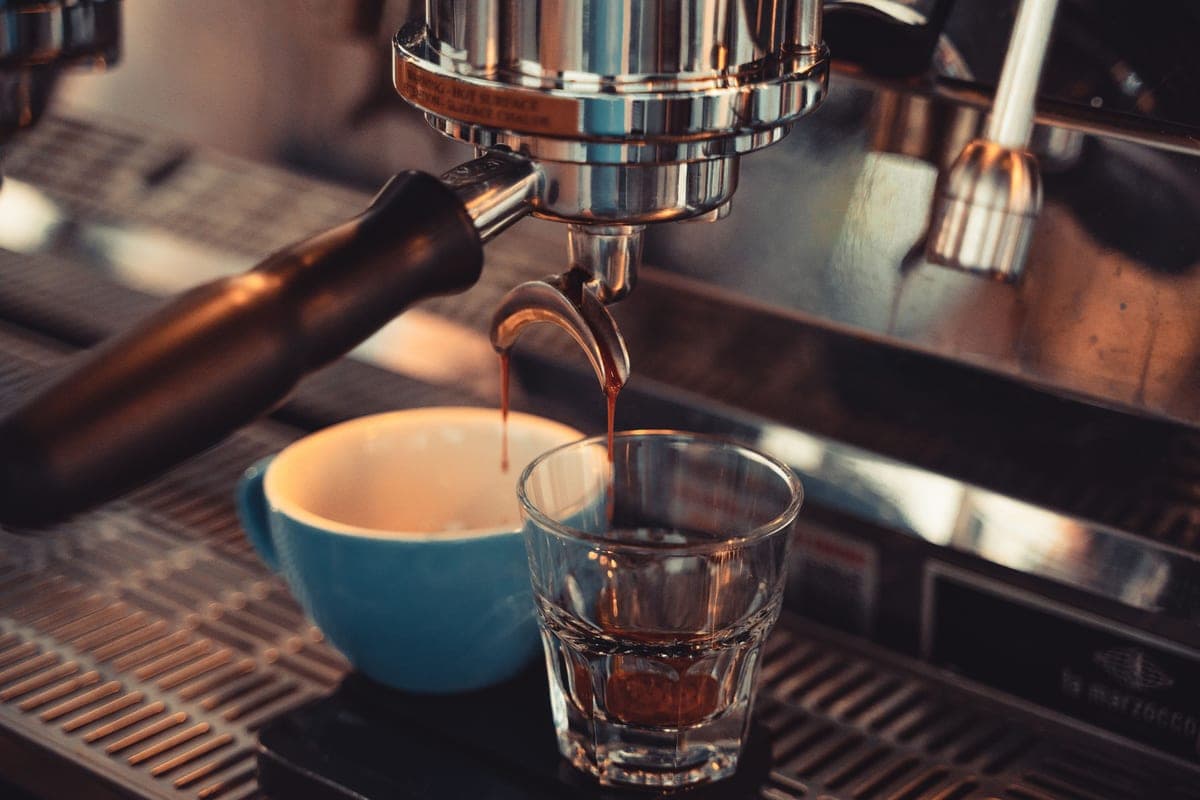
Yes — and a scale is the cheapest meaningful upgrade in home espresso, which is why it is odd that it is usually the last thing people buy. A usable one costs less than a bag of specialty beans, and the one we would point most people at is the Timemore Black Mirror Basic 3, which adds a timer and a live flow-rate readout to the 0.1 g precision that is the actual requirement. The reason is not fussiness: espresso is defined by a ratio of two weights, and without a scale you are not measuring either of them.
This is the same argument we make about grinders in do I need a grinder for espresso, and it has the same shape. Espresso has very few control variables, and a scale is what turns two of them from guesses into numbers.
The arithmetic that settles it
Espresso is measured as a dose-to-yield ratio by weight— the weight of dry grounds in the basket against the weight of liquid espresso in the cup. A modern "normale" shot is about 1:2: roughly 18 g of coffee pulling around 36 g of espresso. Tighter ratios like 1:1 taste more concentrated (ristretto); looser ones like 1:3 taste longer and thinner (lungo). Our coffee-to-water ratio guide has the numbers for every method.
Now notice what that definition requires. Both sides of the ratio are weights, and neither is something you can see. You cannot look at a basket and know whether it holds 17 g or 19 g, because grounds settle differently depending on grind size and how fresh the beans are. You cannot look at a cup and know whether you pulled 30 g or 40 g, because crema volume varies wildly with roast level and bean age — a dark, fresh, Robusta-containing blend will produce a cup that looks full at 28 g of liquid, and a two-month-old light roast will look thin at 40 g.
What you actually lose without one
Three specific things, in order of how much they matter.
- You cannot diagnose a bad shot.A sour shot and a bitter shot need opposite corrections, and the correction depends on knowing whether the ratio was right. Without weights, "grind finer" and "use more coffee" are indistinguishable guesses. Our why is my espresso sour and why is my espresso bitter guides both start with the dose for this reason.
- You cannot repeat a good shot. The whole point of dialling in is that once you find a combination that tastes right, you can get back to it tomorrow. Grind setting plus dose weight plus target yield is a recipe. Grind setting alone is a hint.
- You cannot change beans without starting over.With a recorded dose and yield, a new bag means adjusting one variable — usually grind. Without them it means rediscovering everything.
There is a cost argument too. Weighing stops you over-dosing a basket you cannot fill properly, and a few grams a day adds up over a year of shots. Our true cost of home espresso does that arithmetic.
The one case where you can skip it
If you have a pressurised basketand intend to keep it, a scale buys you much less. A pressurised basket generates crema mechanically through a restrictor rather than relying on the puck's own resistance, which is what makes machines like the De'Longhi Stilosa forgiving with supermarket coffee — and also what means dose precision stops paying off past a point. Our pressurised vs non-pressurised portafilter explainer covers the ceiling in detail.
The same applies to a super-automatic or a capsule machine: if the machine doses for you, weighing the dose is not a lever you hold. Everywhere else — any machine with an open, single-wall basket — a scale is the cheapest route to a shot you can reproduce.
What a usable espresso scale needs
Four requirements, and only the first two are non-negotiable.
- 0.1 g precision. This is the specification. Kitchen scales that read in whole grams cannot resolve the difference between a 17.4 g and an 18.2 g dose, which is roughly the width of the useful window.
- A footprint that fits under the portafilter. A scale you cannot get into the drip tray gets used for the dose and not the yield, which is half a scale. Measure the gap between your tray and the group head before buying.
- A built-in timer.Not essential — a phone works — but a timer on the scale means dose, yield and time are on one display, and shot time is the third number worth recording.
- Response speed, and ideally flow rate. Espresso pours fast. A slow scale lags behind the shot, so you overshoot the target yield. A live flow-rate readout is a genuine luxury that tells you whether the puck is choking or gushing while it happens.
What to buy
Timemore Black Mirror Basic 3 — who it is for: anyone who wants one scale to do espresso and pour over properly. It is the pick on this page: 0.1 g precision to 2 kg, auto and manual timer modes, and a real-time flow-rate display that normally costs considerably more. USB-C rechargeable and compact enough for most drip trays.
| Precision | 0.1 g |
|---|---|
| Max weight | 2 kg / 2000 g |
| Timer | Built-in (auto and manual) |
| Flow rate | Real-time display |
| Size | Compact (fits most drip trays) |
| Power | USB-C rechargeable |
The honest cons: the flow-rate display is information you will ignore for the first month, the auto-timer can trigger on a knocked cup, and USB-C means remembering to charge it.
Weightman Espresso Scale — who it is for: the reader who is not convinced yet. It is the lowest-risk way to find out whether weighing changes your coffee: 0.1 g precision, a built-in timer, genuinely small, and USB rechargeable with auto-off.
| Precision | 0.1 g |
|---|---|
| Timer | Built-in |
| Flow rate | No |
| Size | Small (fits under a portafilter) |
| Power | USB rechargeable, auto-off |
The honest cons: build quality and response speed are closer to the price than the Timemore's, there is no flow rate, and the auto-off can cut out mid-shot if you are slow.
Hario V60 Drip Scale — who it is for: the household that brews filter coffee as well as espresso and wants one scale on the counter. 0.1 g precision to 2 kg, a built-in timer, and a top large enough for a full pour-over setup.
| Precision | 0.1 g |
|---|---|
| Max weight | 2 kg / 2000 g |
| Timer | Built-in |
| Flow rate | No |
| Power | 2 x AAA batteries |
The honest cons: it runs on AAA batteries rather than USB, its larger top is the wrong shape for a tight drip tray, and there is no flow rate.
At a glance
| Scale | Precision | Timer | Flow rate | Price |
|---|---|---|---|---|
| Timemore Black Mirror Basic 3 | 0.1 g | Auto + manual | Yes, real time | $59.00Buy |
| Weightman Espresso Scale | 0.1 g | Built-in | No | $13.99Buy |
| Hario V60 Drip Scale | 0.1 g | Built-in | No | $46.11Buy |
Prices shown are from Amazon as of October 5, 2026 and change often — the button always goes to the current listing. Some links may earn us a commission at no extra cost to you.
Our best coffee scales roundup covers the wider field, including the premium options.
How to actually use it (two minutes, once)
- Weigh the dose.Put the empty basket or dosing cup on the scale, tare, and grind into it until you hit your target — 18 g is a sensible starting point for a standard double basket. Write the number down.
- Weigh the yield.Put the cup on the scale under the group head, tare, and stop the shot at roughly double the dose — about 36 g for an 18 g dose. Start the timer when you start the pump.
- Record three numbers. Dose, yield, time. That is your recipe. Taste it, then change one thing: grind finer if it ran fast and tastes sour, coarser if it ran slow and tastes bitter.
That is the whole technique, and our how to pull an espresso shot guide walks through the rest of the sequence around it.
Where a scale sits in the upgrade order
If you are deciding what to buy next, this is the order we would defend:
- A grinder that reaches espresso fineness.Nothing else matters without it — see best espresso grinders under $200.
- A 0.1 g scale. Cheapest, and it is what makes the grinder adjustable in a meaningful way.
- A WDT tool. The biggest improvement per dollar after that — best WDT tools.
- A better tamper, then everything else. How to tamp espresso covers whether you need one.
Machine upgrades come after all of those for most people. A modest machine fed a weighed dose and a dialled grind beats an expensive machine fed a guess, every time — which is the premise our best espresso setup guide is built on.
Frequently asked questions
Do you really need a scale for espresso?
Yes, on any machine with an open single-wall basket. Espresso is defined as a ratio of two weights - the dry dose in the basket against the weight of liquid espresso in the cup, typically about 1:2 - and neither weight is something you can judge by eye. Crema volume changes with roast level and bean age, so a volume-based shot silently changes ratio every time you open a new bag.
What precision does an espresso scale need?
0.1 g. Kitchen scales that read in whole grams cannot resolve the difference between a 17.4 g and an 18.2 g dose, which is roughly the width of the useful window on a standard double basket. Precision to 0.1 g is the one specification that is non-negotiable; a timer and a flow-rate display are useful extras.
Can I just use a kitchen scale?
Only if it reads to 0.1 g and physically fits under your portafilter. Most kitchen scales fail on both counts - they round to whole grams and their platform is too tall for a drip tray - so you end up weighing the dose and guessing the yield, which is half the measurement.
Is a scale necessary with a pressurised basket?
Much less so. A pressurised basket generates crema mechanically through a restrictor rather than relying on the puck's resistance, which makes the machine forgiving with imprecise doses and also caps how much dose precision can improve the shot. The same applies to super-automatic and capsule machines, which dose for you.
What dose and yield should I start with?
18 g in, about 36 g out, for a standard double basket - roughly a 1:2 ratio. Record the dose, the yield and the shot time, taste it, then change one variable: grind finer if the shot ran fast and tastes sour, coarser if it ran slow and tastes bitter. Tighter ratios around 1:1 taste more concentrated and looser ratios around 1:3 taste longer and thinner.
Do I need a scale with a built-in timer?
No, but it helps. A phone timer works perfectly well. The advantage of an on-scale timer is that dose, yield and time sit on one display, so recording a repeatable recipe takes one glance instead of two.
Sources
- Specialty Coffee Association - Golden Cup standard and brewing control chart
- National Coffee Association - How to brew coffee (measurement and ratios)
- Counter Culture Coffee - brew ratios and recipes
- Timemore - Black Mirror scale product page (0.1 g precision, 2 kg capacity, timer modes, flow-rate display, USB-C)
- Hario - V60 Drip Scale specifications (0.1 g precision, 2 kg capacity, built-in timer, AAA power)
- Weightman - espresso scale product listing (0.1 g precision, built-in timer, USB rechargeable, auto-off)
Keep reading
Buying your first setup?
See how we pick — compiled specs, cost-per-shot math, and honest trade-offs — then dig into the guides. No fake test lab, no rankings for hire.