Buyer's Guide
Espresso Machine Buying Guide
Not a ranked list — the decision framework behind one. Seven choices decide what your machine can ever do, in roughly the order they matter: machine type, the grinder split, basket size, milk, temperature control, budget reality and counter space. Work through these and the shortlist picks itself.
Almost every espresso machine disappointment we read about traces back to a decision made in the wrong order. People start by choosing a machine and then discover the constraints — that the grinder matters more than the machine, that the basket size dictates which accessories will ever fit, that one boiler cannot brew and steam at the same time. This page runs the decisions in the order that actually matters, so the machine comes last.
It is deliberately not a ranked list. If you have already made these decisions and want picks, go straight to best home espresso machine or the price tiers: under $200, under $300, under $500 and under $1000. If you are not sure what you are choosing between yet, start here.
The question before the question
Do you actually want espresso? It sounds flippant, but a large share of people shopping for an espresso machine want strong coffee, which is a different product with much cheaper answers. Espresso is a specific method: a fine grind, a compacted puck, around nine bars of pressure, a short extraction. Everything expensive about an espresso machine exists to deliver that pressure at a stable temperature.
If what you want is an intense cup rather than a syrupy 30ml shot with crema, a moka pot or an AeroPress gets you most of the way for a fraction of the money. Our coffee vs espresso explainer draws the line, and moka pot vs espresso machineis the direct comparison. If you want milk drinks — lattes, cappuccinos, flat whites — then yes, you want an espresso machine, because those drinks are built on real espresso and textured milk.
Decision 1: machine type sets your ceiling
Four types are worth your attention, and the difference between them is not quality — it is how much of the work the machine does for you, and how high you can climb later.
| Type | What it does for you | What it costs you | Our page |
|---|---|---|---|
| Semi-automatic (manual) | Pump and temperature only. You grind, dose, tamp, start and stop | A learning curve, and a separate grinder is mandatory | Head-term roundup |
| All-in-one with built-in grinder | Grinds, doses and often tamps in one footprint | The grinder is the one you get; upgrading means replacing the whole machine | Machines with grinders |
| Super-automatic (bean to cup) | Everything, at a button. Grinds, brews, often froths, self-rinses | The least control and the highest price per unit of espresso quality | Super-automatics |
| Pod / capsule | Removes every variable including the good ones | Permanent dependence on one brand's capsules | Pod machines |
| Manual lever / portable | Nothing. You supply the pressure yourself | Effort per shot, and no milk system at all on most | Manual machines |
The honest ordering for most buyers is: semi-automatic if you are willing to learn and will own a grinder; all-in-one if counter space or budget means one purchase rather than two; super-automatic if convenience genuinely outranks the cup; pod if you want espresso-shaped coffee and have decided you do not care about the rest. Our espresso machine vs Nespresso comparison is worth reading before you take the pod route, because the per-cup cost adds up faster than people expect.
Decision 2: the grinder split, decided before the machine
This is the decision with the largest effect on your coffee and the one buyers skip most often. Grind size and grind consistency are the only variables that control how water moves through the puck. A good machine fed by a bad grinder produces sour, channeled, inconsistent shots, and no feature on the machine can compensate. The argument in full is on do I need a grinder for espresso.
The practical rule: decide your total budget first, then allocate the grinder, then shop for the machine with what is left.That ordering feels backwards and is correct. If your total allows only one quality purchase, buy the grinder and a cheaper machine — not the reverse.
Two legitimate ways to satisfy this. Buy a separate grinder — start at best grinder for espresso, or the brackets at under $200 and under $500. Or buy a machine with a built-in grinder good enough for espresso, which is a shorter list than the marketing suggests. Note the trap: an espresso grinder needs fine, closely-spaced adjustment steps, and plenty of “coffee grinders” cannot step finely enough to be dialed in at all. A cheap blade grinder is not a candidate under any circumstances.
Decision 3: basket size, because it's permanent
Espresso machines come with a portafilter in one of three diameters, and you are buying into that size for the life of the machine. In round terms: 51mm on the cheapest De'Longhi machines, 54mmacross Breville's consumer range, and 58mm on commercial machines and the enthusiast tier. Our portafilter size guide maps the whole field and explains how to measure one correctly.
Why it matters at purchase time: 58mm is the commercial standard, which means precision baskets, bottomless portafilters, tampers and distribution tools are all ordinary stocked parts. 54mm is well served too, because Breville sells so many machines. 51mm is the size where accessories thin out. If you expect to tinker, 58mm is the one that keeps every door open.
Related and equally permanent: pressurized versus non-pressurized baskets. Pressurized (dual-wall) baskets create artificial back-pressure so a mediocre grind still produces crema — genuinely useful on a first machine, and a hard ceiling on how good your espresso can get. Non-pressurized baskets demand a real grinder and reward one. The mechanism is explained in pressurized vs non-pressurized portafilter. Check which one the machine ships with, and whether it accepts the other.
Decision 4: milk, and how much help you want
If you drink milk-based coffee, the milk system is half your experience. There are three grades of it.
A panarello wand injects air through a sleeve. It is forgiving, makes bubbly foam that sits well on a cappuccino, and will never produce the glossy microfoam a flat white wants. Common at the bottom of the market.
A manual steam wandis a bare tip and a valve. It can texture milk properly, and it will do nothing for you — you control the angle, the depth and the stretch by hand, and it takes practice. Our how to steam milk guide is the technique, and a decent frothing pitcher matters more here than people assume.
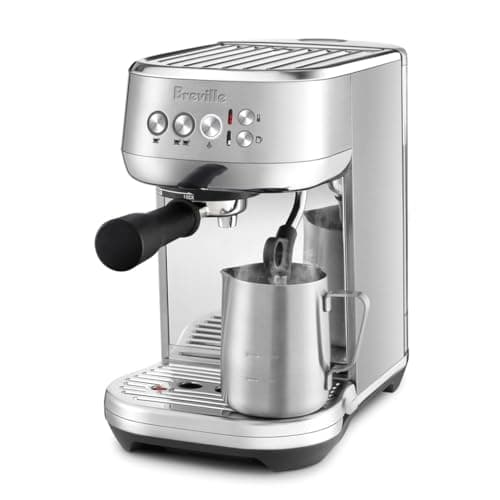
An automatic milk system textures to a set temperature and foam level and stops. The Bambino Plus is the common example. It removes the hardest skill in home espresso, at the cost of some control and a cleaning routine that must actually be followed.
The second milk question is cadence. A single-boiler machine brews and steams at different temperatures, so it does one then the other with a wait in between. That is fine for one or two drinks and tiresome for four. If you routinely make several milk drinks in a row, you are shopping for a machine with a dedicated steam boiler, a heat exchanger, or an automatic system that handles the sequence — see best latte machine and best espresso machine for an office, which is the same problem at larger scale.
Decision 5: temperature control, the spec worth paying for
Brew temperature consistency is the quiet difference between machines that look similar on paper. Three approaches, in ascending order of what they cost:
A thermostat.The element switches on and off around a setpoint, so brew temperature cycles in a sawtooth. The traditional response is “temperature surfing” — timing the shot against the heating light. The Rancilio Silvia is the best-known machine that still works this way, and its spec sheet says so plainly.
A PID.A controller that holds the setpoint instead of swinging around it. Breville's Barista Express, for example, publishes PID control on its ThermoCoil heater. This is the single feature most worth paying for if you care about repeatability, and the reason PID retrofit kits are the most popular modification in home espresso.
Heat-up speed.A separate axis, and a real quality-of-life spec. A thermoblock or thermojet heater warms water on demand — Breville publishes about three seconds for the ThermoJet in the Bambino and Barista Pro — against several minutes for a machine with a real boiler and the thermal mass that comes with it. Fast heat-up gets you drinking sooner; thermal mass holds temperature better through the shot. Neither is strictly better, but one of them matches your mornings and the other does not.
One more mechanical spec in this family: a three-way solenoid valve, which releases pressure from the group after the shot and leaves a dry, knockable puck. It is a convenience and hygiene feature rather than a taste one, and it is a reliable marker that you are looking at a machine built on commercial lines.
Decision 6: budget reality, including the parts nobody quotes
We publish live prices on product pages rather than in prose, because they move weekly. What does not move is the shape of the market, so here is the honest version in brackets rather than numbers.
Entry tier. A real pump, a plastic body, a pressurized basket and a panarello wand. This is a genuine espresso machine and a genuine ceiling. Buy here if the alternative is not buying at all; see best espresso machine under $200.
Mid tier. The sweet spot for most households: metal construction, a non-pressurized basket, usually PID or thermojet heating, sometimes an automatic milk system. A machine you can keep. See under $500.
Enthusiast tier. 58mm commercial platforms, brass and steel, serviceable parts, and the expectation that you already own a grinder and a scale. See under $1000.
Then the costs the listing price never includes: a grinder (the big one), a scale, a tamper if the included one is a token, descaling solution and filters, a canisterto keep the beans in once the bag is open, and the single largest running cost — beans, because espresso wants them fresh. Our true cost of home espresso page does the arithmetic over a year, and do I need a scale for espresso explains why the cheapest accessory on that list is the one that changes the most shots.
Decision 7: counter space, water and noise
Measure three dimensions, not one. Width is the one people check; height is the one that catches them out, because most tanks fill from the top and a wall cabinet turns a 13-inch machine into a two-handed operation. Depth matters if the machine sits under a shelf. And if you are buying a separate grinder, the real footprint is machine plus grinder side by side. Best compact espresso machines ranks specifically on published footprint.
Water is not a detail.Scale is the leading cause of death for home espresso machines, and it is entirely a function of what you put in the tank. Decide your water before the first shot, not after the first fault — what water to use in an espresso machine covers the published standards, and how to descale is the routine you are committing to either way.
Noise and routine. Vibration pumps are loud for a few seconds, grinders are louder for longer, and both happen early in the morning next to someone who may not share your enthusiasm. Worth a thought before you put a grinder on a resonant countertop.
Four specs that mislead buyers
1. Bar pressure.“20 bar” is not better than “15 bar,” and espresso is brewed at about nine. The number on the box is the pump's maximum, not the pressure at your coffee. A machine can publish 15 bar and regulate to nine at the puck. Full explanation in 9 bar vs 15 bar.
2. Wattage. Higher wattage means faster heating, not better coffee. It correlates with heater design, which is the thing you actually care about.
3. “Professional” and “barista” in the product name. These are marketing words with no definition. The specs that carry real information are basket diameter, basket type, heater type, temperature control and build material.
4. Cup counts and tank size.A large tank is convenient; it says nothing about the quality of what comes out. Equally, a built-in grinder in the spec list does not tell you whether that grinder can step finely enough for espresso — look for the number of grind settings and whether the machine is sold for espresso specifically.
The five expensive mistakes
Spending the grinder money on the machine. The most common and the most costly. Covered above, and it is the one people write to tell us they regret.
Buying for the drink you make once a month. If you drink one flat white a day, buy for that. A machine chosen around the occasional four-cappuccino Sunday will be worse at the daily cup, which is the one that matters.
Believing the ready light.On most machines the indicator reports the boiler, not the group head and portafilter. Shots pulled at the light run cold. Heat-soaking the machine and running a blank shot first costs nothing and fixes more cups than any accessory — see how to pull an espresso shot.
Ignoring the cleaning commitment. Milk systems, group screens and boilers all need routine attention, and an unloved machine makes bad coffee before it breaks. Check what the routine involves before you buy, not after: cleaning and grinder cleaning.
Buying a project by accident. Some excellent machines expect you to surf temperature or fit a PID. That is a fine thing to buy on purpose and a miserable thing to discover. If you want the machine to be finished when it arrives, read the temperature-control spec before you pay.
The shortlist, by the decision you just made
Five machines, one per common answer to the decisions above. These are a place to start reading, not a ranking — each links to its own review and to the roundup that ranks it against its direct rivals.
| If your answer was... | Start with | Why | Price |
|---|---|---|---|
| I want the least friction that's still real espresso | Breville Bambino Plus | Three-second heat-up, 54mm non-pressurized basket, automatic milk texturing | $399.95Buy |
| My budget is firm and low | De'Longhi Stilosa | A real 15 bar pump and a forgiving pressurized basket; an honest first step | $99.95Buy |
| One box, not two | Breville Barista Express | Integrated grinder and PID temperature control in one footprint | $499.95Buy |
| I want 58mm and I own a grinder | Gaggia Classic Evo Pro | 58mm commercial basket, steel body, three-way solenoid, deepest mod path | $508.01Buy |
| Not everyone here drinks espresso | Ninja Luxe Cafe Premier | Guided espresso plus drip and cold brew in one machine | $499.99Buy |
Prices shown are from Amazon as of October 10, 2026 and change often — the button always goes to the current listing. Some links may earn us a commission at no extra cost to you.
Two machines deliberately absent from that table, for the reason each is absent. A super-automaticbelongs on your list only if you have decided convenience outranks the cup — it is the right answer for some households and a waste of money for anyone who wanted to learn. And the Rancilio Silvia is a genuinely better piece of hardware than anything above it here, which is exactly why it is not a default recommendation: it has no PID, no gauge and no timer, and it assumes you already solved the grinder.
When you have a type in mind, the ranked pages take over: best home espresso machine for the field, best espresso machine for beginners if this is your first, best Breville and best De'Longhi if you have settled on a brand, and Breville vs De'Longhi if you have not.
Frequently asked questions
What should I look for when buying an espresso machine?
In order: the machine type (semi-automatic, all-in-one, super-automatic or pod), how you are funding the grinder, the portafilter size, the milk system, and the temperature control. Those five decide what the machine can ever do. Build material, tank size and bar rating are secondary, and the bar rating in particular tells you almost nothing — espresso is brewed at roughly nine bars regardless of whether the box says 15 or 20.
How much should I spend on an espresso machine?
Decide a total budget for the setup, then take the grinder out of it first. Grind consistency controls extraction, so a modest machine with a capable grinder beats an expensive machine with a poor one. Within what remains: an entry-tier machine gets you a real pump with a pressurized basket and a plastic body; a mid-tier machine gets metal construction, a non-pressurized basket and usually PID or fast thermojet heating; the enthusiast tier gets a 58mm commercial platform and serviceable parts. Live prices move weekly, which is why we publish them on the product rows rather than in prose.
Do I need a separate grinder, or is a built-in one fine?
Either can work, but the built-in grinder has to be genuinely espresso-capable, which not all are. An espresso grinder needs fine, closely-spaced adjustment steps; a grinder that steps too coarsely cannot be dialed in at all, and a blade grinder is never a candidate. The advantage of a separate grinder is that you can upgrade it without replacing the machine. The advantage of a built-in one is a single footprint and a single purchase.
Is 54mm or 58mm better?
58mm is the commercial standard, so baskets, bottomless portafilters, tampers and distribution tools are all stocked, off-the-shelf parts — the better choice if you expect to tinker or upgrade. 54mm is Breville's consumer size and is well supported because of the volume Breville sells. 51mm, found on the cheapest machines, has the thinnest accessory market. The size is fixed for the life of the machine, so it is worth a deliberate decision rather than an accident.
Does a higher bar rating make better espresso?
No. Espresso is extracted at around nine bars at the puck. A 15-bar or 20-bar figure on the box is the pump's maximum capability, not the pressure your coffee sees, and several manufacturers publish exactly that distinction in their own literature. Treat a high bar number as a marketing line and judge the machine on basket type, heater type and temperature control instead.
What's the difference between a PID and a thermostat?
A thermostat switches the heating element on and off around a setpoint, so brew temperature cycles up and down; a PID controller holds the setpoint much more closely. In practice a PID machine gives you repeatable shots without technique tricks, while a thermostat machine asks you to time your shot against the heating cycle or to fit a PID kit later. If repeatability matters to you, PID is the single feature on this page most worth paying for.
What else do I need to buy with an espresso machine?
A grinder, unless the machine has a capable one built in. A scale, because both sides of an espresso ratio are weights that cannot be judged by eye. A milk pitcher if you make milk drinks. Descaling solution and, depending on your water, a filter. A tamper if the one in the box is a token. And fresh beans, which over a year is the largest running cost of the whole setup.
Sources
- Specifications on this page are carried from the manufacturer-sourced spec tables on our own product reviews, each of which cites its own source: Breville Bambino and Barista Pro (ThermoJet, ~3 seconds), Breville Barista Express (ThermoCoil with PID), Gaggia Classic Evo Pro (58mm, three-way solenoid), De'Longhi Stilosa (15 bar, pressurized basket), Rancilio Silvia (brass group, thermostat).
- Rancilio Group — Model Silvia technical specifications (thermostat temperature control, no pressure gauge, no power-on timer)
- Amazon product listings for all five shortlist machines — condition and availability verified via the Amazon Creators API immediately before publication; displayed prices come from the same API and carry an as-of timestamp.
Keep reading
Buying your first setup?
See how we pick — compiled specs, cost-per-shot math, and honest trade-offs — then dig into the guides. No fake test lab, no rankings for hire.