Buying Guide
The Best Espresso Machines Without a Grinder in 2026
A machine with no grinder in it is not a machine with something missing. It is a machine that spent none of your money on a grinder you would eventually replace. Six of them, ranked on what they do at the brew head.
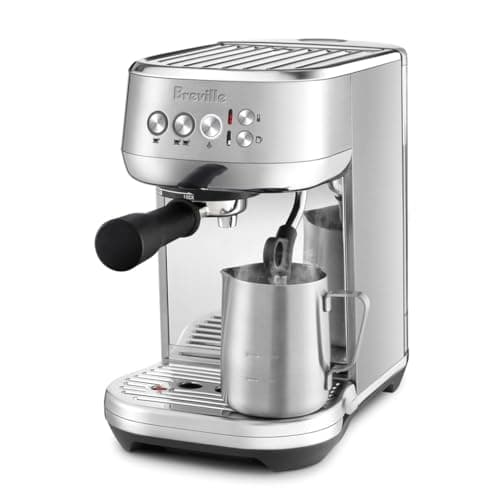
The verdict first. The best espresso machine without a built-in grinder is the Breville Bambino Plus— it is for the drinker whose morning is a latte or a cappuccino and who does not want to learn to steam milk first. If you would rather learn the wand and keep the money, the Breville Bambino brews identically for less. If you want a machine you will still own in ten years, the Gaggia Classic Evo Pro is the 58mm, repairable, moddable answer. And the budget pick is the CASABREWS 3700 Essential, the cheapest machine on this page that genuinely does the job.
Every price here comes from the live price layer, with the as-of date printed under the comparison table. Nothing on this page has a grinder inside it — that is the entire point of the page, not an omission.
Why buy a machine with no grinder
Because the grinder in an all-in-one is the part you outgrow first. A combined machine has to pay for burrs, a motor, a hopper and a gearbox out of the same budget as the pump, the boiler and the steam system. Split the purchase and every dollar of the machine budget goes into the brew side, while the grinder becomes an independent decision you can upgrade later without replacing the machine. Our best espresso machines with a grinder page makes the opposite case honestly, and both cases are real.
Because a built-in grinder cannot be upgraded on its own.This is the structural argument. If the grinder in an all-in-one is the weak link — and on most machines under $700 it is — your only fix is a second grinder sitting next to a machine you already paid a grinder premium for. Nothing on this page has that trap in it.
Because the grinder changes the cup more than the machine does. That is the single most repeated finding in home espresso, and it is why we spend a whole hub on choosing a grinder. A $150 machine fed by a good grinder beats a $700 all-in-one fed by a mediocre one, which is the whole reason the machine-plus-grinder route exists.
What you give up. Counter space, for one: two devices take more room than one, and the Dedica on this page exists precisely because of that. You also give up the grind-straight-into- the-portafilter convenience of a built-in grinder, and you take on one more purchase decision before you can pull a shot. If that sounds like a chore rather than a choice, buy an all-in-one and do not feel bad about it.
How we picked
Every machine here has a live retail listing we can price, has no grinder built into it, and is judged against its published specifications — portafilter size and basket type, heating system and heat-up time, pump pressure, milk system, water tank and build materials. Our full approach is on the methodology page; we do not run a test lab and we do not pretend to.
For this page we weighted four things, in order. First, what the brew head actually is — a non-pressurized basket on a standard portafilter size has a far higher ceiling than a pressurized one, and standard sizes (54mm and 58mm) have an accessory ecosystem that odd sizes do not. Second, temperature behaviour: how fast it is ready and how steady it stays. Third, the milk system, since most people buying a machine without a grinder are buying it to make milk drinks. Fourth, whether the thing can be serviced rather than binned.
One hard filter: the machine must take a real portafilter. Capsule machines are excluded by definition — they have no grinder either, but they also have no grind, so they answer a different question. They are covered on our best Nespresso machines page.
At a glance
The six, lined up on the specifications that decide this purchase. Tap any button for the live Amazon price; the number at checkout is the one that applies.
| Machine | Portafilter | Heating | Milk | Best for | Price |
|---|---|---|---|---|---|
| Breville Bambino Plus | 54mm, dual + single wall | ThermoJet, ~3s | Automatic + manual steam | Best overall | $499.95Buy |
| Breville Bambino | 54mm, dual + single wall | ThermoJet, ~3s | Manual steam wand | Best value | $299.95Buy |
| Gaggia Classic Evo Pro | 58mm commercial | Single aluminum boiler, ~5-10 min | Manual, commercial-style wand | Buy once | $501.89Buy |
| De'Longhi Dedica Deluxe | 51mm, pressurized stock | Thermoblock, ~30s | Adjustable manual frother | Narrow counters | $348.00Buy |
| De'Longhi Stilosa | Pressurized basket | 15 bar pump, basic | Panarello wand | First machine | $134.95Buy |
| CASABREWS 3700 | Pressurized basket | Thermoblock, no PID | Manual steam wand | Budget pick | $93.49Buy |
Prices shown are from Amazon as of November 22, 2026 and change often — the button always goes to the current listing. Some links may earn us a commission at no extra cost to you.
Best overall: Breville Bambino Plus (BES500)
Who it is for: the drinker whose main reason for owning a machine is a reliable latte or cappuccino every morning, with no milk-steaming skill required.
The Bambino Plus wins this page because it removes the two things that go wrong for new owners of a grinderless machine: waiting, and milk. Its ThermoJet heater reaches brew temperature in about three seconds, so there is no window in which you lose interest. Its automatic steam wand textures milk to three temperatures and three textures hands-free, and it keeps a full manual mode so you can learn by hand whenever you want. The brew side is a real 54mm portafilter with both dual-wall and single-wall baskets, low-pressure pre-infusion, and a 3-way solenoid valve that drops a drier puck and stops the portafilter sneezing when you unlock it.
| Portafilter | 54mm (dual + single wall filters) |
|---|---|
| Boiler | ThermoJet (~3s heat-up) |
| Pump pressure | 15 bar (9 bar at the puck) |
| Pre-infusion | Yes (low-pressure) |
| Milk | Automatic + manual steam (3 temps, 3 textures) |
| 3-way solenoid | Yes (drier puck, no portafilter sneeze) |
| Water tank | 64 oz / 1.9 L |
| Grinder | None - buy separately |
The honest cons.The single thermocoil means you brew, then steam — never both at once. The automatic wand gives up the moment-to-moment control a practiced manual hand keeps. It costs meaningfully more than the base Bambino, whose espresso is identical. And it needs a real burr grinder to reach its potential, which on this page is a feature rather than a flaw. Our full Breville Bambino Plus review goes through the whole specification.
Best value: Breville Bambino (BES450)
Who it is for: beginners and small kitchens who want real espresso without a big machine, and who are willing to learn the steam wand.
The Bambino is the Bambino Plus with the automatic milk system removed, and the espresso it makes is the same. Same ThermoJet heater, ready in about three seconds; same 54mm portafilter with pressurized and non-pressurized baskets in the box; same low- pressure pre-infusion and set-shot volumes. The body is about 7.7 inches wide and the whole machine weighs around 11 pounds, which is why it fits counters nothing else on this page will.
The honest cons.The manual steam wand has a learning curve — that is the trade you are making, so know it going in. The single thermocoil means brew-then-steam. The water tank is smaller than the Plus at 47 oz, and the drip tray fills quickly. And like every machine here, it only shines with a proper burr grinder. Full detail in our Breville Bambino review, and the two are compared directly in Bambino vs Bambino Plus.
Best to keep for a decade: Gaggia Classic Evo Pro
Who it is for: the enthusiast who wants a metal, commercial-standard machine to learn on, mod, and keep.
The Gaggia is the only machine here with a 58mm commercial portafilter, which means every cafe-standard basket, tamper, puck screen and bottomless portafilter fits it — the accessory ecosystem we cover across precision baskets and bottomless portafilters is built for this size first. The body is largely stainless, the controls are rocker switches, and the machine is genuinely repairable with a deep parts supply and a large mod community behind it. The redesigned commercial-style steam wand steams milk well for the class.
| Portafilter | 58mm (commercial standard) |
|---|---|
| Boiler | Single aluminum boiler |
| Heating element | ~1425 W |
| Pump | 15-bar vibratory pump (commonly modded toward 9 bar) |
| Milk | Manual steam wand (redesigned, commercial-style) |
| Build | Largely stainless steel; repairable and moddable |
| Heat-up | ~5-10 min to temperature |
| Grinder | None - buy separately |
The honest cons.It is the slowest machine here to get going — five to ten minutes to temperature, against three seconds for a Bambino. The single boiler means brew then steam. It is the least plug-and-play pick in its price range: it rewards effort rather than handing you results. And it needs a proper grinder more than anything else on this page, because nothing about it hides a bad grind. See our Gaggia Classic Pro review and the grinders that suit it.
Best for a narrow counter: De'Longhi Dedica Deluxe (EC685)
Who it is for:small kitchens, apartments, offices and dorms — anyone who wants a genuine portafilter machine and has a narrow strip of counter rather than a corner.
The Dedica is the best answer on the market to one specific question: how do you pull real espresso on a counter with no room for an espresso machine. It is about six inches wide— De'Longhi calls it the slimmest pump coffee maker around — in stainless, with a 15-bar pump, a thermoblock that retailer spec sheets put at ready to brew in about 30 seconds, programmable 1-cup and 2-cup volumes via Automatic Flow Stop, and an adjustable manual frother.
| Model | EC685 range (Dedica Deluxe; .M/.BK/.W/.R trims) |
|---|---|
| Pump pressure | 15 bar |
| Heating | Thermoblock - retailer spec sheets cite ready to brew in about 30 seconds |
| Power | 1,300 W (US/EU spec sheets; some EU trims list 1,350 W) |
| Portafilter | 51mm filter holder, 1-cup and 2-cup filters, E.S.E. pod capable |
| Stock baskets | Pressurized (dual-wall) |
| Milk | Adjustable manual frother (De'Longhi's manual cappuccino system) |
| Width | About 6 in / 149 mm |
| Shot control | Automatic Flow Stop - programmable 1-cup and 2-cup volumes |
| Grinder | None - buy separately |
The honest cons. Its ceiling is set by the stock 51mm pressurized baskets: they make it forgiving with a cheap grinder and they cap how good the shot can get, and the 51mm aftermarket is thin compared with 54mm and 58mm. Published figures disagree in places — the water tank is 35 oz on the US listing against 1.1 L on De'Longhi's EU sheet — which is worth knowing rather than trusting. Full detail in our De'Longhi Dedica review, and our portafilter size guide explains why 51mm matters here.
Best first machine: De'Longhi Stilosa (EC260)
Who it is for: first-time buyers who want the lowest-risk, lowest-cost way to find out whether home espresso is for them.
The Stilosa is the cheapest honest entry into home espresso: a genuine 15-bar pump and a pressurized basket that forces crema from almost any grind, which makes it unusually forgiving to learn on. A panarello steam/frothing wand froths milk for cappuccinos without a separate frother, the tank is about 34 oz, and the body is plastic with stainless accents.
The honest cons. The pressurized basket masks grind quality and caps how good the shot can get. The panarello froths but does not give the microfoam control a bare wand does. The build feels its price, and there is no PID and no pre-infusion, so temperature stability is basic. It is a genuine entry point, not a machine you grow into far. Our De'Longhi Stilosa review has the detail, and pressurized vs non-pressurized baskets explains what that basket is doing.
Budget pick: CASABREWS 3700 Essential
Who it is for: budget buyers who want a stainless machine that looks the part for the least money, and are happy to add a grinder.
This is the cheapest machine on the page and it is the budget pick for a simple reason: it does the job. A stainless steel body, a 20-bar pump driving a pressurized basket, a manual steam wand and a pressure gauge— the gauge in particular is unusual at this price — with a removable ~34 oz tank. It is the most machine-per-dollar of the budget entry machines.
The honest cons.The pressurized dual-wall basket hides grind quality and caps the ceiling. Thermoblock temperature stability is basic with no PID. The steam wand is capable but not commercial-grade, and quality control can vary unit to unit. The 20-bar figure is marketing — 9 bar at the puck is what matters— and it still needs a real grinder to shine. Full detail in our CASABREWS 3700 review.
Which grinder to pair with it
Buying a machine without a grinder only works if you actually buy the grinder. The requirement is not "a burr grinder" in general — it is a grinder that adjusts finely enough inside the espresso range to find the setting a shot wants. Most inexpensive filter grinders cannot, which is the single most expensive mistake in this bracket.
Practical starting points: the cheapest electric we trust to dial in a shot is covered on best espresso grinders under $200; if you want to spend less, under $100explains why the best grinder at that budget has a handle rather than a plug. For the Gaggia's 58mm workflow, see grinders for the Gaggia Classic; for the Breville pair, grinders for Breville machines. If you are not sure the grinder matters this much, do I need a grinder for espresso answers it directly.
The bottom line
Buy the Bambino Plus if milk drinks are the reason you want a machine and you want them right rather than earned. Buy the Bambino if you would rather learn the wand and put the difference into the grinder. Buy the Gaggia Classic Evo Pro if you want 58mm, metal and a decade. Buy the Dedica Deluxe if the counter is the constraint, the Stilosa if you are testing whether you like this at all, and the CASABREWS 3700 if the budget is the constraint and you still want a steam wand.
Then spend the grinder money. If you would rather have one box, the honest counter-argument is on best espresso machines with a grinder, and our espresso machine buying guide lays out the whole decision.
Frequently asked questions
What is the best espresso machine without a grinder?
The Breville Bambino Plus. Its ThermoJet heater is at brew temperature in about three seconds, its automatic steam wand textures milk to three temperatures and three textures hands-free, and the brew side is a real 54mm portafilter with a 3-way solenoid. If you want the same espresso for less and will learn the steam wand, the base Bambino is the value pick. Prices come from the live price layer with the as-of date shown on the page.
Is it better to buy an espresso machine without a built-in grinder?
Usually, yes - for two reasons. Every dollar goes into the brew side rather than being split with a grinder, and a separate grinder can be upgraded later without replacing the machine. A built-in grinder is locked to the machine, so if it turns out to be the weak link your only fix is buying a second grinder anyway. The trade-off is counter space and one more purchase decision.
Do I have to buy a grinder if the machine does not have one?
Yes, if you want good espresso. Pre-ground coffee is ground for drip, not espresso, and it stales quickly once the bag is open. The requirement is specifically a grinder that adjusts finely inside the espresso range - many cheap burr grinders do not, which is the most common and most expensive mistake in this bracket. Our best espresso grinders under $200 page is the practical starting point.
What is the cheapest espresso machine without a grinder worth buying?
The CASABREWS 3700 Essential is the budget pick on this page: a stainless body, a 20-bar pump on a pressurized basket, a manual steam wand and a pressure gauge for very little money. The De'Longhi Stilosa is the other honest entry point. Both use pressurized dual-wall baskets, which makes them forgiving with a cheap grinder but caps how good the shot can get.
Does a machine without a grinder make worse espresso?
No - the machine is not what is missing. What decides the cup is the grind, and a separate grinder is usually better than a built-in one at the same total price. A machine with no grinder fed by a proper burr grinder will normally beat an all-in-one at a similar price, because the all-in-one had to pay for both halves out of one budget.
Which portafilter size should I look for?
58mm if you want the widest accessory choice - it is the commercial standard, and the Gaggia Classic Evo Pro is the 58mm machine on this page. 54mm, as on both Bambinos, has a large and well-supported Breville ecosystem. 51mm, as on the Dedica, works but has a noticeably thinner aftermarket. Our portafilter size guide covers which baskets, tampers and screens fit what.
Sources
- Breville - Bambino (BES450) and Bambino Plus (BES500) specifications: 54mm portafilter, ThermoJet heat-up, 15 bar pump, automatic steam settings, 3-way solenoid, tank volumes
- Gaggia - Classic Evo Pro product page: 58mm commercial portafilter, single aluminum boiler, ~1425 W element, 15-bar vibratory pump, redesigned commercial-style steam wand
- De'Longhi - Dedica (EC685) and Stilosa (EC260) specifications: 15 bar pump, 51mm filter holder, thermoblock heat-up, Automatic Flow Stop, panarello wand, published tank volumes
- CASABREWS 3700 Essential retailer specification: stainless body, 20-bar pump, pressurized basket, manual steam wand, pressure gauge, ~34 oz removable tank
- Amazon listings (Creators API) - live availability, current prices and brand/model title verification for every ASIN on this page before publication
Keep reading
Buying your first setup?
See how we pick — compiled specs, cost-per-shot math, and honest trade-offs — then dig into the guides. No fake test lab, no rankings for hire.