Buyer's Guide
Coffee Grinder Buying Guide
Not a ranked list - the decision framework behind one. Seven choices decide what a grinder can ever do, in roughly the order they matter: burrs over blades, espresso or filter, adjustment resolution, burr size, manual or electric, retention and workflow, then dosing and footprint. Work through them and the shortlist picks itself.
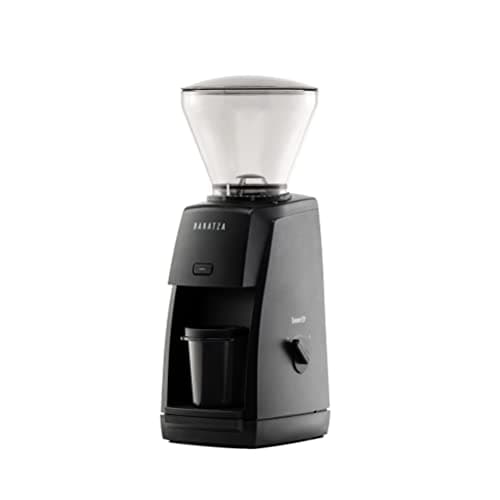
Almost every grinder regret we read traces back to one of two things: buying a grinder that cannot reach the grind the brewer needs, or buying one that can reach it but cannot be adjusted finely enough to land on it. Both are decided before you ever look at a model name. This page runs the decisions in the order that actually matters, so the grinder comes last.
It is deliberately not a ranked list. If you have already made these decisions and want picks, go straight to best burr grinder, best grinders for espresso or the price tiers: under $200, under $300, under $500 and under $1000. If you are not yet sure what you are choosing between, start here. This is the grinder-side companion to our espresso machine buying guide, and the two are meant to be read together, because they share a budget.
We do not run a lab and we have not ground comparison doses for this page. Every figure below comes from the manufacturer or a verified retail listing, and every grinder in the shortlist was checked as live and purchasable immediately before publication — the method described on our methodology page. Where a maker does not publish a number, we say so rather than filling the gap.
The question before the question
What are you brewing, and will that change in the next two years? That single answer eliminates most of the market before you compare anything else, because grinders are not general-purpose tools pretending to specialize — they are specialists pretending to be general-purpose.
A French press wants coarse, roughly 800–1200 microns. A pour over wants medium, around 600–800. Espressowants fine, roughly 200–300 microns, and — this is the part that costs money — it wants to be adjustable in steps small enough that you can move the shot by a few seconds without overshooting. Our grind size chart has the full range with the brewers mapped onto it.
The practical consequence is blunt. A grinder built for filter coffee usually cannot reach espresso at all, and if it just barely can, it cannot be adjusted precisely enough there to be usable. A grinder built for espresso can almost always grind coarse for filter, though it may produce a less even coarse grind than a filter-focused machine. So if espresso is on the menu at any point, buy an espresso-capable grinder now. It is the most expensive mistake in this category to get wrong, because the fix is buying a second grinder.
Decision 1: Burrs, never blades
This is the only decision on this page with a single correct answer. A blade grinder is a propeller in a cup: it chops whatever happens to be in its path, so the longer you run it the more dust you make without ever removing the boulders. You cannot set a size, only a duration, and the output is a mixture of both extremes at once.
A burr grinder passes beans through a calibrated gap between two abrasive surfaces. Nothing exits until it is small enough to fit the gap, which is what makes the output both uniform and repeatable. Uniformity matters because fines over-extract into bitterness while boulders under-extract into sourness, so a grind containing plenty of both gives you a cup carrying both faults at once — the mechanism behind both bitter and sour shots. The long version is in burr vs blade.
If your budget genuinely cannot stretch to a burr grinder, buy a hand grinder rather than an electric blade grinder. The sub-$100 manual bracket contains real burr grinders; the same money in electric buys a blade.
Decision 2: Espresso or filter - and what separates them
Manufacturers rarely say “this is not an espresso grinder” in the headline, so you have to read the range. Two numbers tell you: the finest grind it reaches and the step size at that end.
Baratza is unusually honest about this, and the clearest illustration in the market. The Baratza Encore covers roughly 250–1200 micronsacross 40 stepped settings — pour over through French press, and explicitly not fine enough for true espresso. The Encore ESPuses the same 40mm conical burr family in the same body, but re-geared so settings 1–20 are an espresso range stepped at about 20 microns and 21–40 a filter range stepped at about 90 microns. Same brand, same burr family, same price bracket — two different tools, and the difference is entirely in where the range sits and how finely it divides. The full comparison is in Encore vs Encore ESP.
The same split runs through the filter-only end of the market. The Fellow Ode Gen 2has 64mm flat burrs — bigger than most espresso grinders near its price — and still will not grind espresso, because Fellow deliberately bottoms the range out around 250–300 microns and says so. Burr size does not make a grinder espresso-capable. Range and resolution do.
Decision 3: Adjustment resolution - stepped, stepless, microns
This is the decision that most separates a grinder you enjoy from one you fight, and it is the least discussed on spec sheets.
Stepped adjustment moves in defined clicks or numbered positions. The advantage is enormous and underrated: the setting has a number, so you can write it down, change beans, and come back to it exactly. The disadvantage is that the correct setting may fall between two steps, and for espresso that gap can be the difference between a 22-second shot and a 38-second one.
Steplessadjustment turns continuously, so no setting is ever out of reach. For espresso this is the genuine upgrade — the Eureka Mignon Notte's micrometric knob is most of why it is recommended as a first serious espresso grinder. The cost is that there is no number to record, so a knocked dial means dialing in again from scratch.
What actually matters is microns per increment, and only some makers publish it. Where they do, the figures are instructive: the Encore ESP moves about 20 microns per step in its espresso range, and Timemore publishes 0.0233mm — about 23 microns — per click for the Chestnut C3 ESP, against 0.0833mm, about 83 microns, for the standard C3. That is the whole difference between those two models, and it is why the ESP version is the one worth buying for shots. Anything in the 20–30 micron range per increment is workable for espresso; 80 microns and up is a filter grinder whatever the marketing says.
Decision 4: Burr size and geometry
Two shapes exist and they are not ranked, they are different. Conicalburrs — a cone inside a ring — are forgiving, quieter, cheaper to make, and retain less coffee. Flatburrs — two facing rings — tend to produce a narrower particle distribution, which is the technical basis for the clarity that filter drinkers chase, usually at a higher price, with more noise and more retention. The long version, including who should actually care, is in flat vs conical burrs.
Size matters within a geometry, not across it. Home grinders cluster at 38–40mm conical (hand grinders and the entry electrics), 48mm conical (better hand grinders such as the 1Zpresso J), 50mm flat (the Mignon Notte), and 64mm flat(the DF64 and the Ode). Bigger burrs grind faster, run cooler, and generally grind more evenly at a given setting — but a well-geared 40mm conical with a 20-micron step beats a 64mm flat that cannot reach espresso, for espresso. Resolution first, size second.
One build spec is worth more than any of this: are the burrs replaceable? Burrs dull. Baratza publishes burrs and parts as user-replaceable items for the Encore family, which is why a decade-old Encore is still a working grinder. Most brands do not document a repair path at all. On a purchase you expect to keep for years, that is a real difference in cost of ownership.
Decision 5: Manual or electric
A hand grinderis the best value in coffee, full stop. Steel burrs, a numbered adjustment and no motor to pay for means the sub-$100 manual bracket contains genuinely espresso-capable grinders — the Timemore Chestnut C3 ESP being the clearest example — while the same money in electric buys a blade grinder. The trade is labor: 30–60 seconds of cranking per dose, and espresso-fine is harder work than filter-coarse.
The honest decision rule is doses per day. One or two, or you travel, or you want the best grind per dollar: buy manual, and see best hand grinders. Three or more, or anyone else in the house will use it, or you are making milk drinks back to back: buy electric, because a grinder you resent is a grinder you stop using. Hand grinders are also single-dose by nature, which is a workflow advantage covered in the next decision.
Decision 6: Retention and workflow
Retentionis how much ground coffee stays inside the grinder after a dose. It matters for two reasons: what you weigh in is not what you get out, and today's dose arrives mixed with a little of whatever you ground last.
If you drink one bean for months and grind the same dose daily, retention is close to irrelevant — the grinder reaches a steady state and the leftover is the same coffee anyway. If you keep two or three bags open, rotate between a filter bean and an espresso bean, or buy small bags of specialty coffee, retention is the spec that will annoy you most.
That is the entire argument for single dosing: feed one brew's worth of beans, grind it, get almost all of it back. Purpose-built single-dosers such as the DF64 Gen 2 and the Fellow Ode Gen 2 have no standing hopper and use anti-static and low-retention engineering; hand grinders are single-dose by construction. Hopper grinders can be run single-dose and many people do, but they hold back a modest amount, and the honest version of that trade-off is in best single-dose grinders.
The opposite workflow is equally valid. A hopper — the Breville Smart Grinder Pro's holds 450g per retailer specification sheets — means filling it once a week and never weighing beans again. If you drink one bean, that is less work, not more. Just know that coffee sitting in a clear plastic hopper in daylight is staling; our bean storage guide covers how fast.
Decision 7: Dosing, counter space, noise
The last decision is about living with the thing, and it is where spec sheets go quiet.
How does it hand you the coffee? For espresso this is a real quality-of-life issue. A grinder that doses straight into a portafilter cradle(the Smart Grinder Pro has cradles for 50–54mm and 58mm) or ships a dosing cupand adapter (the Encore ESP includes a 54mm cup and a 58mm adapter) saves a transfer step and the grounds that transfer spills. If it doses only into a bin, you will be spooning coffee into a basket twice a day. Check which basket size you own first — our portafilter size guide covers 51mm, 54mm and 58mm.
Height.An electric grinder with a hopper is tall — the Smart Grinder Pro is about 389mm — and kitchen wall cabinets usually sit around 450mm above the counter. Measure before you buy, not after.
Noise. Nobody publishes a decibel figure for home grinders, so treat any specific number you see quoted as unverified. The reliable generalizations: flat burrs are louder than conical, bigger motors are louder than small ones, and hand grinders are nearly silent. If you grind at 6am in an apartment, that last point may outrank everything else on this page.
Clean-out.Every grinder needs its burrs brushing out periodically, and the ones that come apart without tools are the ones you will actually maintain — how to clean a coffee grinder walks the job.
Four specs that mislead buyers
1. The number of grind settings.“60 settings” sounds like twice as much control as “40 settings,” but the only thing that matters is how many of those settings land in the range you brew in, and how far apart they are there. Forty settings with twenty of them inside the espresso range at 20 microns apart — the Encore ESP — is more useful for shots than sixty spread evenly from espresso to French press.
2. Motor wattage. Watts measure electricity consumed, not grind quality. A low-wattage, geared-down DC motor turning slowly produces less heat and less static than a high-wattage one spinning fast; the Encore family runs at roughly 550 RPM and about 70W on purpose. Low RPM is usually the more desirable spec, and it is the one less often advertised.
3. Ceramic burrs as a selling point. Ceramic stays sharp longer and does not corrode, but it is brittle, and a stone in a bag of beans can chip it where steel would shrug. On home grinders at these prices, hardened or stainless steel is the safer default, and the grade and geometry matter more than the material name on the box.
4. “Espresso to French press” in the marketing copy. That phrase describes an aspiration, not a verified range. Check the finest grind and the step size at that end, as above. If neither number is published anywhere, assume the grinder is a filter grinder until proven otherwise.
The five expensive mistakes
Buying a filter grinder for espresso. The most common and the most costly, because the remedy is a second grinder. If there is any chance of a machine arriving later, buy espresso-capable now.
Spending the budget on the machine instead. A capable grinder plus a modest machine beats the reverse, which is why matching the grinder to the machine you own is a question worth asking before upgrading the machine at all.
Buying a blade grinder to “start cheap.” It does not start anything. A hand grinder at the same price is a real burr grinder you will still own in five years.
Ignoring the repair path. Burrs dull and motors fail. A grinder with documented replaceable burrs has a second decade in it; one without is disposable at roughly the same purchase price.
Buying more grinder than your brewer can use. If you brew French press and nothing else, a 64mm flat single-doser is a lot of money for a grind that a good conical at a third of the price delivers perfectly well. Match the tool to the brewer.
The shortlist
Work the decisions above and you land on one of six grinders. This is not a ranking — each is the answer to a different set of answers, and the fuller case for each sits on its own page.
| Grinder | Burrs | Adjustment | Best when | Price |
|---|---|---|---|---|
| Baratza Encore ESP | 40mm M2 conical | 40 stepped (~20 micron espresso steps) | First espresso grinder, electric | $199.95Buy |
| Timemore Chestnut C3 ESP | 38mm S2C conical | 30 clicks/rotation (~23 microns) | Espresso on the tightest budget | $99.00Buy |
| Baratza Encore | 40mm conical | 40 stepped (~250-1200 microns) | Filter only, repairable | $149.95Buy |
| Eureka Mignon Notte | 50mm flat | Stepless micrometric | First stepless espresso grinder | $299.00Buy |
| DF64 Gen 2 | 64mm flat | Stepless | Espresso and filter, single dose | $389.00Buy |
| Breville Smart Grinder Pro | Stainless conical | 60 stepped + timed dosing | Hopper convenience, cradle dosing | $199.95Buy |
Prices shown are from Amazon as of November 7, 2026 and change often — the button always goes to the current listing. Some links may earn us a commission at no extra cost to you.
Buy the Encore ESP if you pull shots, want an electric grinder, and want the cheapest one that dials in without a fight. Honest cons: 40mm conical burrs are the smallest in this table, it is stepped rather than stepless, and the plastic body feels its price. Full detail in our Encore ESP review, and the head-to-head most people get stuck on is Encore ESP vs Smart Grinder Pro.
Buy the Chestnut C3 ESP if espresso is the goal and the budget is firm and low. Honest cons: you crank it, capacity is one dose at a time (Timemore states 20g; several retailers list 25g), and the adjustment dial sits beneath the burrs, so changing setting is slower than turning a knob.
Buy the Encore if you brew pour over, drip or French press and genuinely never intend to pull a shot. Honest cons: it is not an espresso grinder and Baratza does not pretend otherwise, its filter steps are coarse at roughly 90 microns apart, and it is the same plastic body as the ESP. See the Encore review and Encore vs Virtuoso+ for the step up inside the family.
Buy the Mignon Notte if you want stepless espresso adjustment and a metal body in a small footprint. Honest cons: a roughly 5.5oz hopper is small, dosing is manual (you press the portafilter against a lever rather than setting a time), and Eureka publishes no micron-per-turn figure, so its resolution cannot be compared on paper. Our Mignon Notte review has the detail.
Buy the DF64 Gen 2 if one grinder must do espresso and filter properly and you rotate beans. Honest cons: it is the most expensive grinder here, 64mm flat burrs are louder and throw more static than conicals, and single dosing means weighing beans for every brew. It leads our single-dose roundup.
Buy the Smart Grinder Pro if you want a hopper, a timer and a stainless body, and you dose into a portafilter. Honest cons:its stepped dial runs out of resolution at the espresso end sooner than the Encore ESP's does, it is tall at about 389mm, and Breville does not publish a burr diameter. Our Smart Grinder Pro review is honest about where that dial stops being enough.
Still choosing between brew methods rather than grinders? Start with coffee brewing methods, compared— the brewer decides the grinder, not the other way round. If you are assembling a whole setup from nothing, the complete espresso setup guide costs out three budgets with the grinder sized correctly in each. And if the beans are still undecided, our best coffee for beginners guide picks the bag to put through it first.
For a ranked shortlist in the most common budget, see best coffee grinders under $200.
Frequently asked questions
How much should I spend on a coffee grinder?
Spend to the brewer, not to a round number. For filter coffee only, the class-standard conical electrics in the low-to-mid hundreds are genuinely enough, and a hand grinder under $100 is enough if you brew one or two cups a day. For espresso the floor is higher, because you are paying for fine-end range and small adjustment steps: a sub-$100 hand grinder with a dedicated espresso dial clears it, and in electric the entry espresso bracket starts around the $200 mark. If you are buying a machine at the same time, weight the split toward the grinder.
Can I use a filter grinder for espresso?
Usually not, and the reason is specific. Most filter grinders do not reach the roughly 200-300 micron range espresso needs, and the ones that just barely reach it move in steps of 80 microns or more at that end, which is far too coarse to dial a shot. Baratza's own line illustrates it: the Encore covers about 250-1200 microns and is explicitly not for espresso, while the Encore ESP re-gears the same burr family into roughly 20-micron espresso steps.
Is stepless better than stepped adjustment?
For espresso, yes, with one real cost. Stepless means no setting is out of reach, which matters when the right grind falls between two clicks. The cost is that there is no number to write down, so knocking the dial means dialing in from scratch and changing beans is slower. For filter coffee, stepped is usually preferable precisely because it is repeatable.
Are flat burrs better than conical burrs?
They are different, not better. Flat burrs tend to produce a narrower particle distribution, which is the technical basis for the clarity filter drinkers chase, and they are the norm on larger grinders. Conical burrs are quieter, retain less coffee, cost less to make and are more forgiving. At home-grinder prices the geometry matters less than whether the grinder reaches your brew range with small enough steps.
What burr size do I need?
Size is a secondary spec. Home grinders cluster at 38-40mm conical, 48mm conical in better hand grinders, 50mm flat and 64mm flat. Bigger burrs grind faster, run cooler and generally grind more evenly at a given setting, but a 40mm conical geared to 20-micron espresso steps is a better espresso grinder than a 64mm flat that cannot reach espresso at all. Resolution first, size second.
Is a hand grinder good enough for espresso?
Yes, if it has an espresso-specific adjustment. The spec to check is microns per click: Timemore publishes about 23 microns per click for the Chestnut C3 ESP against about 83 for the standard C3, and that single difference is what makes one espresso-capable and the other not. The real trade is effort - espresso-fine is harder to crank than filter-coarse, and 30 to 60 seconds per dose gets old if you make several drinks a day.
Does grinder retention actually matter?
It depends entirely on how you drink. If you grind the same bean at the same dose every day, the grinder reaches a steady state and the coffee left inside is the same coffee, so retention is close to irrelevant. If you keep two or three bags open or buy small bags of specialty coffee, retention means every dose arrives blended with the last one, and a single-dose design or a hand grinder is worth the workflow change.
Should I buy a grinder with a built-in scale?
Only if you will not otherwise weigh. Weight-based dosing is genuinely more accurate than timed dosing, because beans vary in density by roast and age, but it appears on grinders well above the entry brackets. A separate 0.1g scale costs a fraction of that upgrade and does the same job for both grinding and brewing.
How long do coffee grinder burrs last?
Hundreds of kilograms of coffee for steel burrs in home use, which for most households is many years - but they do dull, and a dulling burr produces more fines before it produces an obvious fault. The more useful question is whether the maker sells replacements: Baratza publishes burrs and parts as user-replaceable for the Encore family, while many brands document no repair path at all. On a grinder you intend to keep, that is a real difference in cost of ownership.
Sources
- Baratza - Encore ESP specification as published on the verified Amazon listing (40mm M2 conical steel burrs, 40 stepped settings with 1-20 espresso and 21-40 filter, 54mm dosing cup and 58mm portafilter adapter included)
- Baratza - Encore specification as published on the verified Amazon listing (40mm conical steel burrs, 40 grind settings, user-replaceable burrs and parts)
- Timemore - Chestnut C3 ESP specification as published by Timemore and on the verified Amazon listing (38mm S2C660 conical SUS420 stainless burrs, 30 clicks per rotation at 0.0233mm per click, 20g capacity per Timemore)
- Eureka - Mignon Notte specification as published on the verified Amazon listing (50mm flat steel burrs, stepless micrometric adjustment, metal case, assembled in Italy)
- DF64 - Gen 2 single dose grinder specification as published on the verified Amazon listing (64mm flat burrs, stepless adjustment, single-dose low-retention design)
- Breville - Smart Grinder Pro BCG820BSS specification as published on the verified Amazon listing and retailer specification sheets (60 grind settings, programmable timer in 0.2-second increments, 450g hopper, 214 x 160 x 389 mm, stainless steel housing)
- Fellow - Ode Gen 2 specification as published on the verified Amazon listing (64mm flat burrs, 31 stepped settings, single-dose design, not suitable for espresso per Fellow)
- Specialty Coffee Association - brewing and extraction fundamentals
Keep reading
Buying your first setup?
See how we pick — compiled specs, cost-per-shot math, and honest trade-offs — then dig into the guides. No fake test lab, no rankings for hire.