Buying Guide
The Best Coffee for Beginners in 2026
Nobody's first bag of coffee should cost $25 and taste like grapefruit. Six whole-bean picks that are genuinely forgiving - a supermarket dark roast, two gateway specialty bags, an Italian classic and a light roast for when you are ready - plus the four decisions that change your cup far more than the bag does.
If you are new to making coffee at home, almost every “best coffee” list is going to send you wrong. They rank bags on how interesting the coffee is, which means a light Ethiopian natural that tastes of blueberry and needs a precise grind, a scale and a kettle you do not own yet to taste like anything but sour water. Served badly, that bag is a worse cup than supermarket coffee, and the bag is not the thing that failed.
This page ranks on forgiveness instead: how good the coffee still tastes when the grind is a little off, the water is a little hot and the ratio is a guess. That is the right criterion for a first bag, and it is why the top pick here costs supermarket money rather than specialty money.
We do not run a lab and we have not cupped these coffees side by side. Every bag here was checked as live and purchasable immediately before publication and every claim about roast level, origin and blend comes from the roaster or the verified listing — the method described on our methodology page. Taste notes are the roaster's own, and we say so where we quote them, because taste is not a specification.
Start here, honestly
Four things decide how your coffee tastes, in this order: freshness, grind, ratio, and only then which bag you bought. A mediocre bag ground fresh at the right size and dosed properly beats a famous bag that has been sitting pre-ground for four months, every single time. So if you only take one thing from this page, make it this: buy whole bean and grind it yourself, even if the grinder is a cheap hand grinder.
That is not an upsell. A hand grinderin the sub-$100 bracket is a real burr grinder, and it will improve your coffee more than tripling your spend on beans. Ground coffee loses most of its aromatics within about fifteen minutes of grinding because the surface area exposed to air goes up enormously — which is the whole reason the pre-ground bag on the shelf tastes flat however good the beans inside it were. Our burr vs blade explainer covers why a $20 blade grinder is not the shortcut it looks like, and the coffee grinder buying guide runs the whole decision if you are shopping for one.
The four decisions that matter more than the bag
1. Whole bean, always. Covered above, and it is the single highest-return change available to a beginner.
2. Check the roast date, not the best-before date.A “best by” date twelve months out tells you nothing. A roast date tells you everything: coffee is at its best roughly one to four weeks after roasting, and a bag roasted three months ago is stale regardless of what the packaging promises. Specialty roasters print the roast date; supermarket brands usually do not, which is a real reason to prefer the specialty bag once you are ready for one.
3. Match the grind to the brewer, roughly. Coarse for French press, medium for pour over and drip, fine for espresso. You do not need to be precise at the start, you need to be in the right neighborhood — our grind size chart maps the whole range onto brewers.
4. Weigh something. The standard starting point is about 1 part coffee to 16 parts waterby weight for filter coffee — 60 g of coffee per liter, or about 22 g for a large mug. Guessing with a spoon is the most common reason home coffee tastes weak and bitter at the same time, and the fix costs nothing but a kitchen scale. The full version is in our coffee-to-water ratio guide.
Get those four approximately right and almost any decent bag tastes good. Get them wrong and no bag saves you. Which is why the picks below are chosen for how much slack they give you while you learn.
Roast level, explained once
Roast level is the one piece of coffee vocabulary worth learning before you buy, because it predicts the cup better than origin does and it is printed on every bag.
Dark roast tastes of the roast itself: chocolate, toast, a little smoke, low acidity. The beans are more soluble, so the coffee extracts readily and a slightly wrong grind still gives you something that tastes like coffee. It is the most forgiving roast and the reason the top pick here is a dark one.
Medium roast is the sweet spot for most people and most brewers: enough roast character to be comforting, enough origin character to be interesting, and still fairly tolerant of technique. Four of our six picks are medium.
Light roasttastes of where the coffee grew — fruit, florals, bright acidity — and it is where specialty coffee gets exciting. It is also dense and less soluble, so it needs a finer grind, hotter water and more accuracy, and under-extracted light roast is aggressively sour. It is a graduation bag, not a starter bag. The espresso-specific version of this trade-off is in light roast vs dark roast espresso.
One myth to kill now: dark roast is not stronger in caffeine. Roast level barely moves caffeine content — it changes flavor and solubility. What makes a cup “strong” is the ratio of coffee to water, which is decision four above. Our caffeine guide has the actual numbers.
How we picked
Three criteria, applied in this order, and they are deliberately not the criteria a coffee competition would use.
1. Forgiveness first. How good is this coffee when brewed imperfectly? That favors medium and dark roasts, blends over single origins, and coffees whose character comes from the roast rather than from a delicate origin note that a rough grind will flatten.
2. Availability and repeatability. A first bag should be a bag you can buy again next month and have it taste the same. Rotating micro-lots are wonderful and they are the wrong tool for working out whether your technique is improving.
3. Honest price for what it is.We have put a supermarket blend at the top of this page because it deserves to be there, not because it pays better — it does not. If the cheaper bag is the right first bag, that is the recommendation.
Every pick is whole bean. Where a roaster also sells the same coffee pre-ground, we are not linking it.
At a glance
| Coffee | Roast | Type | Best for | Price |
|---|---|---|---|---|
| Peet's Major Dickason's Blend | Dark | Blend | The first bag, full stop | $13.99Buy |
| Stumptown Holler Mountain | Medium | Organic blend | First specialty bag | $14.98Buy |
| La Colombe Nizza | Medium | Blend | Lattes and cappuccinos | $14.79Buy |
| Lavazza Super Crema | Medium espresso | Arabica + robusta blend | A new espresso machine | $26.99Buy |
| Illy Classico | Medium | 100% Arabica blend | Consistency while learning | $14.44Buy |
| Intelligentsia Black Cat Espresso | Light | Espresso blend | Graduating from forgiving | $14.99Buy |
Prices shown are from Amazon as of November 7, 2026 and change often — the button always goes to the current listing. Some links may earn us a commission at no extra cost to you.
Five of the six are blends, and that is the point rather than a shortcut. A blend is built by a roaster to taste a particular way every time, drawing on whichever lots deliver that profile this season. A single origin tastes of one farm in one year, which is more interesting and much less repeatable — a quality you want later, not now.
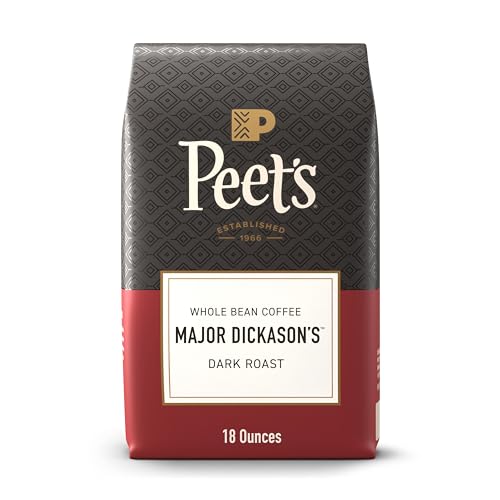
Best first bag: Peet's Major Dickason's Blend
If you want one recommendation and no reading, buy this. Major Dickason's is a dark roast blendthat has been Peet's flagship for decades, and it is the most forgiving coffee on this page. In a French press with a slightly coarse grind, in a drip machine with no measuring at all, in a moka poton the stove — it tastes like good, full-bodied, unmistakable coffee in all of them.
Two things make it work as a starter. The dark roast is highly soluble, so you extract plenty of flavor even when the grind is not quite right, and the flavor it gives you is roast-driven — chocolate and depth rather than a delicate note you can accidentally destroy. And it is sold in a large bag at supermarket prices, so the cost of your learning curve is low. The 18-ounce whole-bean bag is the one to get.
Honest cons:there is no roast date on the bag, only a best-before, so you cannot tell how fresh your particular bag is; a dark roast flattens origin character by design, so this will never be the most interesting coffee you drink; and dark roasts go oily on the surface as they age, which can gum up a grinder's chute over time. It is also a poor choice if you are chasing bright, fruity flavors — it is the opposite of that.
Best first specialty bag: Stumptown Holler Mountain
When you are ready to find out what the fuss is about, Holler Mountain is the specialty bag we would hand a beginner. It is an organic medium-roast blend, and Stumptown describes it in terms of sweetness and chocolate rather than bright fruit — which is exactly why it works here. It is noticeably better coffee than a supermarket blend without demanding that you be good at brewing yet.
The other reason to buy a specialty bag is the one nobody mentions: it has a roast date printed on it. Once you have brewed the same coffee a week after roasting and again a month later, the whole freshness argument stops being something you read and becomes something you have tasted. That is a genuinely useful lesson and it costs one bag.
Honest cons:it costs meaningfully more per ounce than the Peet's and comes in a smaller bag, so the cost per cup is higher; medium roast is less forgiving than dark, so a badly coarse grind shows up as thin, sour coffee; and because specialty roasters ship to order, what arrives depends on the seller's turnover — check the roast date when it lands.
Best for milk drinks: La Colombe Nizza
If what you actually want is a latte or a cappuccino, the bag changes. Milk is sweet, fatty and voluminous, and it buries delicate coffee completely — a subtle single origin in a 10-ounce latte is money spent on nothing. Nizza is a medium roast that La Colombe describes as having milk-chocolate character, and that is precisely the profile that still reads through steamed milk.
It is the pick whether your milk comes from a steam wand, an automatic carafe like the one on the Philips 3200 LatteGo, or a standalone milk frother. If you are still learning to texture milk, our how to steam milk guide is the companion to this bag, and how to make a latte at home puts the whole drink together.
Honest cons:it is a medium roast, so drunk black it is less bold than the Peet's and some people will find it understated; La Colombe's own tasting notes are marketing copy rather than a measurement, and we are quoting them as such; and it is a 12-ounce bag, so it is not the value play if you drink several milk drinks a day.
Best if you just bought an espresso machine: Lavazza Super Crema
A new espresso machine is a brutal place to learn, because espresso punishes every variable at once. Super Crema makes the first fortnight much less demoralizing. It is an Arabica and robusta espresso blend, and the robusta portion is the relevant part: robusta produces notably more crema and more body than Arabica alone, so your shots look and feel like espresso while your grind is still wrong.
It is also roasted for espresso rather than adapted to it, which means it is more tolerant of the grind being a click out than a light specialty bag would be. If your early shots are coming out sour or bitter, the cause is usually not the bag — see why is my espresso sour and why is my espresso bitter— but starting with a forgiving blend removes one variable while you work through the others. Our full best coffee beans for espresso roundup goes deeper on the espresso-specific choices.
Honest cons: robusta divides opinion and some drinkers find it rubbery or harsh black; it is sold in a large bag, which is good value but means a long time to get through it if you pull one shot a day and a staleness problem if you are slower than that; and it is designed for espresso, so it is an odd choice if your main brewer is a pour over.
Best for consistency: Illy Classico
Illy Classico earns its place for an unglamorous reason: it tastes the same every time. It is a medium roast 100% Arabica blend, sold in the familiar pressurized tin, and Illy's entire proposition is that the blend is held to one profile year after year.
That matters more than it sounds when you are learning. If your coffee tastes different on Tuesday, you want to know whether the variable was you, and a coffee that never changes turns your brewing into a controlled experiment. It is the reference bag — the one to go back to when you cannot tell whether you have got better or just got a different bean.
Honest cons:you pay a premium per ounce for that consistency and the packs are small; the pressurized tin keeps coffee stable for a long time but tells you nothing about roast date; and a blend engineered for sameness is, by construction, not going to surprise or delight you — it is reliable rather than exciting.
Best step up when you are ready: Intelligentsia Black Cat Espresso
This is the bag to buy third or fourth, not first, and we are including it because the point of learning on forgiving coffee is to stop needing it. Black Cat Espresso is a light roast espresso blend from one of the American roasters that defined specialty coffee, and it is where the flavors people write about actually live.
It is also demanding. A light roast is denser and less soluble, so it wants a finer grind and leaves less margin for a sloppy dose — brewed loosely it goes sour rather than disappointing-but-drinkable. Buy it when you can repeat a shot or a pour over you were happy with, which is the actual definition of being ready.
Honest cons: the least forgiving coffee on this page, by design; a light roast needs a grinder with real fine-end resolution to dial in, so it is a poor match for a blade grinder or a very coarse-stepped one; and it is the most expensive per ounce here. If your grinder cannot move in small increments, this bag will show you that before it shows you blueberries.
What to avoid at the start
Pre-ground coffee, if you can help it. The reason is physics rather than snobbery: grinding multiplies the surface area exposed to oxygen, and most of the aromatics are gone within about fifteen minutes. A cheap hand grinder changes your coffee more than any bag on this page.
Flavored coffee as a first bag. Vanilla and hazelnut coatings mask the coffee underneath, which means you cannot tell whether your brewing is getting better. Learn on plain coffee, then drink whatever you enjoy.
Light roast single origins, for now.Not because they are not excellent — because they need equipment and technique you are still acquiring, and a great bag brewed badly is a worse cup and a worse lesson than an ordinary bag brewed well.
Buying a month's worth at once. Coffee is at its best roughly one to four weeks off roast. Two bags at a time is plenty, and it means you are always drinking the fresher one.
A blade grinder.It chops rather than sizes, so you get dust and boulders at once, and the cup carries both bitterness and sourness together. If the budget is tight, a hand grinder at the same price is a real burr grinder — the Timemore Chestnut C3 ESP is the one we point beginners at most often, and it reaches espresso-fine as well as filter-coarse.
Where to go next
Once you know how you want to brew, the bean recommendation gets more specific, and we have a page per method: beans for French press, beans for espresso, beans for a moka pot, beans for lattes and beans for cold brew.
Not sure which brewer you want yet? Start with coffee brewing methods, compared— it lays out French press, pour over, AeroPress, moka pot and espresso side by side with what each one costs and what kind of coffee it makes. If espresso is where you are heading, our home espresso for beginners guide and the true cost of home espresso are the two pages to read before you spend anything.
And whatever you buy, the cheapest upgrade on this entire site is still a ratio you actually measure. It costs nothing and it fixes more cups than any bag.
Frequently asked questions
What is the best coffee for a beginner?
A medium or dark roast blend, bought whole bean. Our first-bag pick is Peet's Major Dickason's Blend, a dark roast that stays tasting like good coffee even when your grind and ratio are approximate, at supermarket money rather than specialty money. Forgiveness is the right criterion for a first bag - interesting comes later, once your technique can do it justice.
Should beginners buy whole bean or pre-ground coffee?
Whole bean, and grind it yourself. Grinding multiplies the surface area exposed to air, so most of the aromatics are gone within about fifteen minutes - which is why pre-ground coffee tastes flat however good the beans were. A hand grinder under $100 is a genuine burr grinder and will improve your coffee more than tripling what you spend on beans. If you truly cannot grind at home, buy whole bean and have the store grind one bag at a time for your brewer.
Is light or dark roast better for beginners?
Dark, or medium. Dark roast beans are more soluble, so they give up plenty of flavor even when the grind is a little wrong, and the flavor is roast-driven - chocolate and body rather than a delicate note you can accidentally destroy. Light roasts are denser and less soluble, need a finer grind and more accuracy, and go aggressively sour when under-extracted. Light roast is a graduation bag.
Does dark roast coffee have more caffeine?
No. Roast level barely changes caffeine content; what it changes is flavor and solubility. The thing that makes a cup taste strong is the ratio of coffee to water, which is entirely under your control - around 1 part coffee to 16 parts water by weight is the standard filter starting point, or about 60 g per liter.
How much should a beginner spend on coffee beans?
Less than you think, and put the difference toward a grinder. A supermarket dark roast blend in a large bag costs a fraction per cup of a specialty bag and is the better first purchase, because the grinder and the ratio will improve your coffee far more than the beans will at this stage. Once you can repeat a brew you liked, moving up to a specialty bag with a printed roast date is the next step worth paying for.
What does the roast date on a coffee bag mean?
It is the date the beans were roasted, and it is the only date worth reading. Coffee is at its best roughly one to four weeks after roasting, so a bag roasted three months ago is stale whatever the best-before date says. Specialty roasters print a roast date; most supermarket brands print only a best-before, which is a real argument for the specialty bag once you are ready for one.
Is blend or single origin better for a beginner?
A blend. A blend is built by a roaster to hit the same profile every time, which makes it repeatable and means you can tell whether your technique is improving. A single origin tastes of one farm in one season - more interesting, much less repeatable, and a moving target when you are still learning. Five of our six picks are blends for exactly this reason.
What coffee should I buy for my first espresso machine?
An espresso-specific blend with some robusta in it, such as Lavazza Super Crema. Robusta produces more crema and more body than Arabica alone, so your early shots look and feel like espresso while you are still learning to dial in the grind, and an espresso-roasted blend tolerates being a click out better than a light specialty bag does. Save the light specialty espresso for when you can repeat a shot you were happy with.
How should beginners store coffee beans?
Airtight, at room temperature, away from light and heat, and in the smallest container that holds the bag. Oxygen, light and warmth are what stale coffee, not the fridge - and the fridge is the one place not to put it, because of condensation. Buy two bags at a time rather than a month's worth so you are always drinking the fresher one.
Do I need a scale to make good coffee?
You need to measure something, and a kitchen scale is the cheapest way to do it. Guessing with a spoon is the most common reason home coffee comes out weak and bitter at the same time, because bean density varies with roast and age so a scoop is not a fixed amount of coffee. Start at about 1:16 coffee to water by weight for filter brewing and adjust from there.
Sources
- Peet's Coffee - Major Dickason's Blend whole bean, dark roast, 18 oz, as published on the verified Amazon listing
- Stumptown Coffee Roasters - Holler Mountain organic whole bean medium roast, 12 oz, as published on the verified Amazon listing
- La Colombe - Nizza medium roast whole bean, 12 oz, with the roaster's own milk-chocolate tasting note, as published on the verified Amazon listing
- Lavazza - Super Crema whole bean, medium espresso roast, Arabica and robusta blend, as published on the verified Amazon listing
- Illy - Classico whole bean, medium roast 100% Arabica blend, as published on the verified Amazon listing
- Intelligentsia - Black Cat Espresso whole bean, light roast, 12 oz, as published on the verified Amazon listing
- Timemore - Chestnut C3 ESP manual grinder specification as published on the verified Amazon listing (38mm conical stainless burrs, espresso-capable adjustment)
- Specialty Coffee Association - brewing standards and the golden-ratio brewing control chart (coffee-to-water ratio and extraction fundamentals)
- National Coffee Association - coffee storage and freshness guidance (airtight, away from light and heat)
Keep reading
Buying your first setup?
See how we pick — compiled specs, cost-per-shot math, and honest trade-offs — then dig into the guides. No fake test lab, no rankings for hire.