Buying Guide
The Best Coffee Beans for Cold Brew
A 12-to-18-hour cold steep extracts very differently from four minutes of hot water, which changes which beans are worth buying. Here are five that suit it, and the published reason each one does.
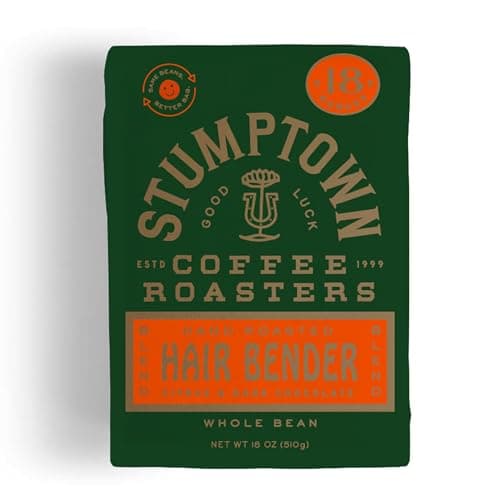
For most people making cold brew at home, buy Stumptown Hair Bender — a multi-region specialty blend with enough chocolate sweetness to survive a long steep and enough character that the result does not taste flat. If you want the heaviest, most classically cold-brew concentrate, take Peet's Espresso Forte, a dark roast Peet's publishes as stout-bodied with chocolate truffle and hazelnut, in a 32 oz bag. If you drink your cold brew with milk, take La Colombe Nizza for its published milk chocolate and brownie notes. And if cost per batch is the deciding factor, Lavazza Super Crema comes in a 2.2 lb bag.
This page is separate from our best coffee beans for espressoguide for a structural reason rather than a stylistic one. Espresso extracts in 25–30 seconds under 9 bar of pressure; cold brew extracts over 12–18 hours at room temperature or in the fridge with no pressure at all. Those two processes pull different compounds out of the same bean, which means the bean that makes a great shot is not automatically the bean that makes great cold brew.
What a cold steep does to coffee
Cold water is a much less efficient solvent than hot water, so cold brew compensates with time. The practical consequence is selective: a long cold steep pulls out sugars, chocolate and nut compounds readily and pulls out acids far less readily. That is why cold brew tastes smooth and low-acid compared with the same coffee brewed hot — the acidity is still in the bean, it just stays there.
Two buying conclusions follow directly:
- Bright, acidic coffees lose their point. A light-roast washed Ethiopian that tastes of jasmine and lemon in a V60 will produce cold brew that is pleasant and oddly muted, because the whole reason you bought it does not come out in the cup. You are paying a specialty price for the part of the bean cold water leaves behind.
- Chocolate and nut directions get amplified. A medium or dark roast published as chocolatey, nutty or caramel-sweet gives cold brew exactly what people want from it: body, sweetness and no sharp edges.
The other half of the equation is quantity. Our how to make cold brew method uses a 1:8 ratio by weight for concentrate— 100 g of coffee to 800 g of water — which is roughly five to six times as much coffee per finished drink as a pour over. Cold brew is a volume habit, and that makes price per pound a real factor rather than a rounding error.
How we chose these
On published roast level, published blend composition and the roaster's own tasting notes — not on a cupping score we invented or a taste test we did not run. Coffees we claim to have blind tasted: zero. In this order:
- Published flavor direction. Chocolate, nut, caramel and brown sugar notes are the ones a long cold steep actually delivers.
- Roast level. Medium through dark, for body and sweetness without the sharpness that cold water would not extract anyway.
- Whole bean. Cold brew needs a coarse grind, and pre-ground coffee is almost always cut for drip. Grinding is not optional here.
- Bag size and cost per batch. At 100 g per batch, a 12 oz bag is three batches. Big bags matter.
At a glance
| Coffee | Roast | Published direction | Bag | Price |
|---|---|---|---|---|
| Stumptown Hair Bender | Medium | Complex, bright, chocolatey | Whole bean | $18.95Buy |
| Peet's Espresso Forte | Dark | Chocolate truffle, hazelnut; stout body | 32 oz | $32.39Buy |
| La Colombe Nizza | Medium | Milk chocolate, nuts, brownie | 12 oz | $14.79Buy |
| Lavazza Super Crema | Medium | Hazelnut, brown sugar; creamy | 2.2 lb | $26.99Buy |
| Illy Classico | Medium | Caramel, orange blossom | 8.8 oz | $14.99Buy |
Prices shown are from Amazon as of October 17, 2026 and change often — the button always goes to the current listing. Some links may earn us a commission at no extra cost to you.
Best overall for cold brew: Stumptown Hair Bender
Who it is for: the drinker who wants cold brew that tastes like a specialty coffee rather than just like cold coffee.
Hair Bender is a multi-region specialty blend that Stumptown publishes as complex, bright and chocolatey, and that combination is unusually well matched to a cold steep. The chocolate end gives you the body and sweetness cold water extracts easily; the complexity means the result is not one-dimensional the way a purely dark blend can be. It is a blend built to work across brewing methods rather than tuned for one, which is exactly what you want from a bean doing double duty in a V60 and a cold brew jar.
| Roast | Medium |
|---|---|
| Composition | Multi-region specialty blend |
| Form | Whole bean |
| Published direction | Complex, bright, chocolatey |
| Best for here | Cold brew with character; also drinks well hot |
What we like: specialty-grade coffee that does not waste its qualities on a method that cannot extract them, a flavor direction with chocolate in it, and a blend that is equally good brewed hot if you change your mind. The honest cons: it is the most expensive coffee per ounce on this page, and at 100 g per batch that adds up quickly if cold brew is your daily drink rather than a weekend thing. A specialty blend also moves between crops, so bag-to-bag variation is real — which is a virtue to some drinkers and a nuisance to others.
Best dark roast: Peet's Espresso Forte
Who it is for: the drinker who wants the heavy, bittersweet, classically coffee-shop cold brew taste, and wants a big bag of it.
Peet's publishes Espresso Forte as a dark roast with a stout body and notes of chocolate truffle, lemon curd and hazelnut, built from Indo-Pacific depth plus beans from the Americas. Peet's crafted it for espresso, but the same properties that make a dark roast work under pressure — heavy body, low perceived acidity, bittersweet chocolate — are precisely what a long cold steep rewards. It comes in a 32 oz bag, which is nine batches at 100 g.
| Roast | Dark |
|---|---|
| Published notes | Chocolate truffle, lemon curd, hazelnut |
| Published character | Stout body, luscious crema, tangy coffee core |
| Blend | Indo-Pacific depth plus beans from the Americas |
| Format | Whole bean, 32 oz bag |
| Best for here | Heavy concentrate; cold brew with milk or over ice |
What we like: the darkest roast here and therefore the heaviest concentrate, the lowest cost per batch after the Lavazza, and a published flavor profile that maps almost perfectly onto what people order when they buy cold brew out. The honest cons: dark roasts are oilier, and oily beans are harder on a grinder — expect to clean yours more often, which our grinder cleaning guide covers. A dark roast also gives you less to discover; if you want nuance, this is not the bag. And its own citrus note mostly will not survive a cold steep, which is the point of the method rather than a flaw in the coffee.
Best for chocolate sweetness: La Colombe Nizza
Who it is for: the drinker who takes cold brew with milk, oat milk or over ice with a splash of cream.
Nizza is the clearest match on this page between a published flavor profile and what cold water actually extracts. La Colombe publishes it as a medium roast with notes of milk chocolate, nuts and brownie and a honey-sweet roasted nuttiness, blended from Brazil, Colombia, Nicaragua and Congo. Those are sugar-and-chocolate descriptors rather than acid descriptors, which means almost the whole published character comes through in a cold steep instead of half of it.
| Roast | Medium |
|---|---|
| Published notes | Milk chocolate, nuts, brownie; honey-sweet roasted nuttiness |
| Origins | Brazil, Colombia, Nicaragua, Congo (published blend origins) |
| Format | Whole bean, 12 oz bag (also sold in 24 oz and 5 lb) |
| Best for here | Cold brew with milk; iced lattes |
What we like: a published profile built almost entirely from compounds cold water extracts well, medium roast so the grinder stays cleaner than with a dark oily bean, and availability in larger bags if cold brew becomes a habit. The honest cons: the 12 oz bag is only three batches at 100 g, so the small format is poor value for this method specifically. It is also a sweeter, rounder coffee than some people want — if you like your cold brew assertive and bitter, take the Peet's instead.
Nizza also appears in our best coffee beans for a latteguide, for the same reason — chocolate sweetness reads well through milk.
Best value for big batches: Lavazza Super Crema
Who it is for: the household that keeps a jug of cold brew in the fridge all summer and refills it twice a week.
Super Crema is on this page for arithmetic as much as for flavor. Lavazza publishes it as a medium espresso roast, a 60% Arabica / 40% Robusta blend drawn from 15 origin countries, with notes of hazelnut and brown sugarand a full-bodied, creamy finish — and it comes in a 2.2 lb bag. That is roughly ten batches of concentrate at 100 g each, at the lowest cost per batch here by a clear margin.
The Robusta content is relevant rather than incidental. Robusta brings body and a higher caffeine content than Arabica, and it is less about delicate aromatics — which, again, cold water does not extract much of anyway. For this method the blend's composition is a feature.
| Roast | Medium espresso roast |
|---|---|
| Blend | 60% Arabica / 40% Robusta, 15 origin countries |
| Published notes | Hazelnut, brown sugar; full-bodied, creamy finish |
| Format | Whole bean, 2.2 lb bag |
| Best for here | High-volume cold brew; lowest cost per batch |
What we like: the cheapest cold brew per glass on this page, a published profile of hazelnut and brown sugar that suits the method, and a bag size that matches how much coffee cold brew actually consumes. The honest cons: a 2.2 lb bag will be open for weeks, so decant it into an airtight container — our coffee canister guide covers that. It is a supermarket blend rather than a specialty one, so there is no origin story and little nuance. And Robusta divides opinion; if you find it harsh brewed hot, you may find it harsh cold too.
Best for consistency: Illy Classico
Who it is for: the drinker who found a cold brew recipe they like and wants the same result every single time.
Illy Classico is the most repeatable coffee here. It is a 100% Arabica multi-origin blend, published as a medium roast with notes of caramel and orange blossom, in an 8.8 oz pressure-packedbag. Illy's entire proposition is bag-to-bag consistency, which matters more for cold brew than it sounds: because each batch takes most of a day, a bag that behaves differently from the last one costs you eighteen hours to discover.
| Roast | Medium (Classico) |
|---|---|
| Blend | 100% Arabica, multi-origin |
| Published notes | Caramel, orange blossom |
| Format | Whole bean, 8.8 oz pressure-packed bag |
| Best for here | Repeatable results; smaller batches |
What we like: the caramel sweetness comes through a cold steep well, the pressure-packed tin keeps the coffee stable until you open it, and consistency is genuinely valuable for a method with an overnight feedback loop. The honest cons: an 8.8 oz bag is barely two and a half batches at 100 g, so this is the worst value per glass on the page. The orange blossom note is largely an aromatic one and will not survive the method. And 100% Arabica means less body than the Lavazza, which some cold brew drinkers will miss.
Roast level, decided properly
The standard advice — "use a dark roast for cold brew" — is roughly right for the wrong reason. Dark roasts are not better suited to cold water; they are simply further along the path cold water travels anyway. Roasting develops sugars into caramel and chocolate compounds and burns off some of the acids, so a dark roast arrives pre-loaded with exactly the flavors a cold steep extracts and pre-stripped of the ones it does not.
That is why a medium roast with chocolate-and-nut published notes— Nizza, Hair Bender, Super Crema — is often the better buy than a very dark roast: you get the same extractable sweetness with a bit more to taste. Our light roast vs dark roast guide works through what roasting actually changes, and the coffee beans vs espresso beansexplainer covers why an "espresso roast" label is a roast-level description rather than a different kind of bean — which is why three espresso blends sit comfortably on a cold brew page.
What to avoid: expensive light-roast single origins bought for their acidity, and anything pre-ground.
Grind coarse, and do the arithmetic
Every coffee here is whole bean, and that is deliberate. Cold brew needs a coarse grind — coarser than French press— because an 18-hour steep will over-extract fine particles and because dust clogs the filter and makes silty concentrate no amount of straining fixes. Pre-ground coffee is cut for drip, which is far too fine. Our grind size chart shows where the cold brew band sits, and grinders that hold a coarse grind is the relevant shortlist, since cold brew asks for the same end of the dial.
Then the arithmetic. At the 1:8 concentrate ratio in our cold brew method, one batch is 100 g of coffee. A 12 oz bag is three batches; a 2.2 lb bag is ten. Each batch yields roughly 800 g of concentrate, which diluted 1:1 is about 1.6 L of finished cold brew. Work out how many glasses a week you drink before deciding a 12 oz specialty bag is affordable — this is the one brewing method where bag size belongs on the spec sheet. Our best cold brew makers guide covers the vessel, where capacity is the other half of the same calculation.
How to choose
- Want cold brew with real character? Stumptown Hair Bender.
- Want the heavy coffee-shop taste, in a big bag? Peet's Espresso Forte.
- Drinking it with milk? La Colombe Nizza— chocolate and brownie through milk is the best combination here.
- Refilling the jug twice a week? Lavazza Super Crema, on cost per batch.
- Want the same result every time? Illy Classico.
One last note on freshness: buy a bag you will finish in a few weeks, grind it coarse immediately before brewing, and keep the rest sealed and opaque. Cold brew forgives age better than any other method, but it does not forgive stale, and how to store coffee beans covers the difference.
Frequently asked questions
What are the best coffee beans for cold brew?
Stumptown Hair Bender for most people - a multi-region specialty blend published as complex, bright and chocolatey, which gives cold brew sweetness and body without tasting one-dimensional. For the heaviest, most classically cold-brew result, Peet's Espresso Forte, a dark roast published as stout-bodied with chocolate truffle and hazelnut in a 32 oz bag. For cold brew with milk, La Colombe Nizza, published as milk chocolate, nuts and brownie.
Should I use a light or dark roast for cold brew?
Medium to dark. A long cold steep extracts sugars, chocolate and nut compounds readily and acids much less readily, so the bright acidity you pay for in a light roast largely stays in the bean. A medium roast with published chocolate-and-nut notes is often the sweet spot: the same extractable sweetness as a dark roast, with more to taste.
Can I use espresso beans for cold brew?
Yes, and three of the five picks here are sold as espresso blends. An espresso roast is a roast-level description rather than a different kind of bean, and the properties that suit espresso - heavy body, chocolate sweetness, low perceived acidity - are the same ones a cold steep rewards. The one thing to change is the grind: cold brew needs a coarse grind, far coarser than espresso.
How much coffee does a batch of cold brew use?
At a 1:8 concentrate ratio by weight, 100 g of coffee to 800 g of water - roughly five to six times as much coffee per finished drink as a pour over. That makes bag size a genuine buying factor: a 12 oz bag is about three batches, a 2.2 lb bag about ten. Work out your weekly consumption before buying a small specialty bag.
Does cold brew need fresh beans?
Less than other methods. The delicate aromatic compounds that fade first after roasting are the ones cold water extracts least, so a bag a few weeks past roast that would make a dull pour over can still make good cold brew. That is why the larger bags here make more sense for this method than they would for espresso - but it is not a reason to brew genuinely stale coffee.
Can I use pre-ground coffee for cold brew?
Not well. Pre-ground coffee is almost always cut for drip, which is far too fine for a 12-to-18-hour steep - the fine particles over-extract and the dust blinds the filter, leaving silty concentrate that straining will not fix. Cold brew wants a coarse grind, coarser than French press, which means grinding it yourself. All five picks here are whole bean for that reason.
Sources
- National Coffee Association - cold brew and iced coffee brewing guidance
- National Coffee Association - Coffee Roasts Guide (roast level, acidity direction, surface oils)
- Stumptown Coffee Roasters - Hair Bender blend page (multi-region specialty blend, published tasting direction)
- Peet's Coffee - Espresso Forte product page (dark roast, published notes and body, Indo-Pacific and Americas blend, 32 oz format)
- La Colombe - Nizza product page (medium roast, published milk chocolate / nuts / brownie notes, blend origins, bag formats)
- Lavazza - Super Crema product page (60/40 Arabica-Robusta from 15 countries, published hazelnut and brown sugar notes, 2.2 lb format)
- illy - Classico whole bean product page (100% Arabica multi-origin, published caramel and orange blossom notes, pressure-packed format)
- Specialty Coffee Association - extraction and brewing fundamentals
Keep reading
Buying your first setup?
See how we pick — compiled specs, cost-per-shot math, and honest trade-offs — then dig into the guides. No fake test lab, no rankings for hire.