Explainer
Cold Brew vs Iced Coffee
They are not the same drink and they are not made the same way. One is brewed cold over many hours; the other is brewed hot and then chilled - and that single difference decides how both taste.
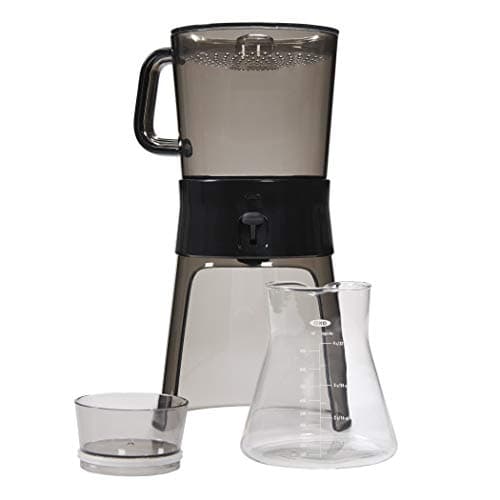
Cold brew is coffee extracted with cold water over 12 to 18 hours. Iced coffee is coffee brewed hot and then cooled. That is the entire difference, and everything else follows from it: cold brew tastes smoother and sweeter with noticeably less acidity, iced coffee keeps the brightness and aromatics of the hot brew it came from. If you want a low-acid, make-ahead drink to keep in the fridge, make cold brew. If you want a single cup in five minutes that tastes like the coffee you already like, make iced coffee — specifically the flash-chilled method below, which is far better than pouring hot coffee over ice and hoping.
One widespread claim deserves correcting up front: cold brew is not inherently higher-caffeine, and it is also not inherently lower-caffeine. The strength of either drink depends on how much coffee you used and how much you diluted it, and concentrate is usually diluted before drinking. More on that below.
The short answer
| Cold brew | Iced coffee | |
|---|---|---|
| Brew water | Cold or room temperature | Hot (around 195-205F) |
| Brew time | 12-18 hours | 2-5 minutes |
| Grind | Coarse - coarser than French press | As the hot method requires (usually medium) |
| Acidity | Noticeably lower | Same as the hot brew it came from |
| Aromatics | Muted - cold water extracts fewer | Bright and intact if chilled quickly |
| Typical output | Concentrate, diluted to taste | Ready to drink |
| Coffee used per glass | High | Normal, or slightly more for ice |
| Fridge life | Up to about 2 weeks as concentrate | Hours - drink it fresh |
What actually differs
Hot water is an efficient solvent. At around 200°F it pulls sugars, acids, oils and aromatic compounds out of ground coffee in a couple of minutes. Cold water is a much poorer solvent, so cold brew compensates with time — and crucially, it does not simply do the same thing slowly. It extracts selectively.
Cold water readily dissolves sugars and the chocolate and nut compounds that sit alongside them. It is much less effective at dissolving the acids that give hot coffee its brightness and the volatile aromaticsthat give it its smell. That is the whole explanation for cold brew's reputation: the smoothness is not added, it is the absence of what was left behind.
Iced coffee, brewed hot, extracts everything the hot method normally would. Chill it fast and you keep it. Chill it slowly — by leaving a mug on the counter, or by pouring hot coffee over ice that melts into it — and you lose aromatics to evaporation and strength to dilution, which is why badly-made iced coffee tastes thin and sour.
How they taste
Cold brew tastes rounder, sweeter and heavier, with the sharp edges filed off. The dominant notes tend to be chocolate, caramel and nut, because those are the compounds cold water actually gets out. Low acidity is the headline, and for people who find coffee harsh on the stomach that is a genuine benefit rather than a marketing line. The trade is flatness: a cold brew made from an interesting single-origin coffee often tastes much less interesting than the same bean brewed hot, because its distinguishing character lives in the acids and aromatics the method skips. That is why our best coffee beans for cold brew guide steers toward chocolate-and-nut profiles rather than bright ones.
Iced coffeetastes like the coffee it was brewed from, cold. The brightness, the fruit notes, the aromatics — all present, if you chilled it fast. If you like a particular bean hot, you will probably like it iced, which makes iced coffee the better method for drinking good coffee cold rather than for drinking cold coffee. The failure mode is dilution: ice melting into a hot brew waters it down, which is what the Japanese method below exists to solve.
Neither is objectively better. They are different drinks that happen to share a serving temperature.
Which has more caffeine
Neither method is inherently stronger. Caffeine extraction depends on how much coffee you used relative to water, how long it was in contact, and how much you diluted the result — not on the brew temperature alone.
What confuses the question is that cold brew is typically brewed as a concentrate. Our cold brew method uses a 1:8 coffee-to-water ratio, which is far more coffee per unit of water than any hot method — so undiluted cold brew concentrate is indeed much stronger than a cup of drip. But almost nobody drinks it undiluted. Cut it 1:1 with water or milk, as the method recommends, and you land in the same territory as a strong hot brew.
So the honest answer is: a glass of cold brew and a glass of iced coffee can have the same caffeine, more, or less, depending entirely on the recipe. If you want a number for espresso-based drinks instead, our how much caffeine is in espresso guide covers that separately, and the coffee-to-water ratio guideputs every method's ratio side by side.
The third option: Japanese iced coffee
The method most worth knowing, and the one most home drinkers have never tried. Japanese iced coffee is a pour over brewed hot directly onto ice, with the ice counted as part of the water weight.
The arithmetic is the whole trick. If your normal recipe is 25 g of coffee to 400 g of water, you put 200 g of ice in the carafe and brew with 200 g of hot water. The hot water extracts normally; the ice chills the coffee the instant it lands, locking in the aromatics; and the melted ice makes up the missing water, so the final strength is right rather than diluted. It takes about four minutes.
This gives you the best of both: full hot-brew flavor and clarity, served cold, with none of the overnight wait. The limitation is that it makes one or two cups at a time, so it is not the method for a jug in the fridge. Our how to make pour over coffee guide covers the base technique, and best pour over brewers covers the gear.
Time, coffee used and cost
These two methods have very different practical shapes, and for most people that decides it more than taste does.
| Cold brew | Iced coffee (flash chilled) | |
|---|---|---|
| Active time | About 10 minutes, split across two days | 4-5 minutes, start to finish |
| Waiting | 12-18 hours | None |
| Batch size | Multiple days of drinks at once | One or two cups |
| Coffee per glass | High - 1:8 concentrate before dilution | Normal single-cup dose |
| Keeps | Up to about 2 weeks as concentrate, refrigerated | Drink immediately |
| Equipment | A cold brew maker, or a jar and a filter | A dripper, a kettle, filters |
Cold brew costs more coffee per glass and almost no attention. Iced coffee costs attention per glass and less coffee. If you drink two or three cold coffees a day, cold brew is the method that scales; if you drink one, flash-chilled iced coffee wastes less. Our true cost of home espresso guide does the same arithmetic for shots if you want to compare all three.
What cold brew needs
You can make cold brew in a mason jar with a sieve and some patience. A purpose-built brewer earns its place in two ways: an ultra-fine filter that keeps silt out of the concentrate, and a design that wets the grounds evenly so the whole bed extracts rather than half of it.
| Capacity | 32 oz concentrate (borosilicate glass carafe) |
|---|---|
| Filter | Ultra-fine reusable stainless mesh (+ optional paper) |
| Saturation | Perforated Rainmaker top for even wetting |
| Brews | Concentrate (dilute to taste) |
| Storage | Silicone-sealed stopper; disassembles flat |
The OXO is our overall pick for exactly the even-saturation reason — a dry pocket in the bed is the most common cause of a weak batch, and no filter fixes it after the fact. The honest con is that it is glass and it brews 32 oz, so a heavy household will refill it often.
If you want volume and durability instead, the Takeya is the practical choice:
| Capacity | 2 quart / 64 oz |
|---|---|
| Material | BPA-free Tritan (shatter-proof) |
| Filter | Tall fine-mesh coffee filter basket |
| Lid | Patented airtight, leak-proof (stores on its side) |
| Care | Top-rack dishwasher safe |
Double the capacity, no glass to break, and it lies on its side in a packed fridge. The con is a mesh basket rather than the OXO's ultra-fine filter, so concentrate is marginally less clean.
On a tight budget, the Hario Mizudashi brews 1000 ml of ready-to-drink cold brew rather than concentrate, in heatproof borosilicate glass with a reusable mesh basket and no paper needed. Ready-to-drink means no dilution step but also no flexibility and a shorter fridge life.
Our full best cold brew makers guide ranks the whole field with the honest cons on each.
What iced coffee needs
For the Japanese method you need a dripper, filters, a kettle and a scale — and the scale is not optional here, because the entire technique depends on splitting the water weight between ice and hot water.
| Shape | 60-degree cone |
|---|---|
| Material | Ceramic |
| Capacity | 1-4 cups (size 02) |
| Drainage | Single large hole, spiral ribs |
| Filters | V60 02 cone papers |
The V60 02 is the standard choice: a single large drainage hole means you control the flow with your pour rather than the dripper controlling it, which matters when half your water is being replaced by melting ice. The honest con is that it is the least forgiving dripper shape for a beginner — a flat-bottom brewer is easier to get right. Our Hario V60 review and Chemex vs V60 cover the alternatives.
You will also want a gooseneck kettle for pour control and a 0.1 g scale with a timer — see best gooseneck kettles and best coffee scales. If you already own a French press or an AeroPress, both can be flash-chilled the same way by brewing at half the water weight over ice.
Which should you make
- You drink cold coffee most days and want it ready in the fridge: cold brew. Make a batch on Sunday, dilute as you go.
- Coffee bothers your stomach: cold brew, on the lower extracted acidity.
- You have good single-origin beans you enjoy hot: Japanese iced coffee. Cold brewing them wastes what you paid for.
- You want a cold coffee right now:Japanese iced coffee — four minutes, no planning.
- You take it with milk and want it sweet and heavy: cold brew, with a chocolate-forward bean.
- You want to use as little coffee as possible:iced coffee. Cold brew's 1:8 concentrate ratio uses several times more.
And one thing that applies to both: grind matters. Cold brew needs a coarse grind so an 18-hour steep does not over-extract the fines; iced coffee needs whatever its hot method needs. Our grind size chart has both bands, and best burr grinders covers the one piece of equipment that improves every method on this page.
Frequently asked questions
What is the difference between cold brew and iced coffee?
Cold brew is extracted with cold or room-temperature water over 12 to 18 hours. Iced coffee is brewed hot in a few minutes and then chilled. Because cold water dissolves sugars readily but acids and aromatics poorly, cold brew tastes smoother, sweeter and noticeably less acidic, while iced coffee keeps the brightness and aroma of the hot brew it came from.
Does cold brew have more caffeine than iced coffee?
Not inherently. Caffeine depends on how much coffee you used relative to water and how much you diluted the result, not on brew temperature. Cold brew is usually made as a concentrate at around a 1:8 ratio, so undiluted it is much stronger than drip - but diluted 1:1 as intended, it lands in the same territory as a strong hot brew.
Is cold brew less acidic than iced coffee?
Yes, measurably so in taste. Cold water is poor at dissolving the acids that give hot coffee its brightness, so they largely stay in the grounds. That is why cold brew is the usual recommendation for people who find coffee harsh - the smoothness comes from what the method leaves behind rather than from anything added.
Can I just pour hot coffee over ice?
You can, but it is the worst version of iced coffee: the melting ice dilutes the brew and the slow cooling loses aromatics, so it tastes thin and sour. The fix is Japanese iced coffee - brew hot directly onto ice, counting the ice as part of your water weight. If your recipe is 25 g of coffee to 400 g of water, use 200 g of ice in the carafe and 200 g of hot water.
How long does cold brew last in the fridge?
As concentrate, up to about two weeks refrigerated in a sealed container - one of the main practical advantages of the method. Ready-to-drink cold brew, brewed at a drinking strength rather than as a concentrate, has a shorter useful life. Iced coffee should be drunk the same day; it is not a make-ahead drink.
Which beans should I use for cold brew versus iced coffee?
For cold brew, medium-to-dark roasts with published chocolate, nut or caramel notes, because those are the compounds cold water extracts. For iced coffee, whatever you enjoy hot - including bright light roasts, since the hot brew extracts their acidity and aromatics and flash chilling preserves them. Spending specialty money on a light roast for cold brew generally wastes what makes it special.
Sources
- National Coffee Association - cold brew and iced coffee brewing guidance
- Specialty Coffee Association - extraction and brewing fundamentals
- OXO - Good Grips Cold Brew Coffee Maker specifications and instructions
- Takeya - Patented Deluxe Cold Brew Coffee Maker specifications
- Hario - Mizudashi Cold Brew Coffee Pot specifications (1000 ml, borosilicate glass, reusable mesh filter)
- Hario - V60 Ceramic Dripper 02 specifications (60-degree cone, single drainage hole, spiral ribs, V60 02 papers)
Keep reading
Buying your first setup?
See how we pick — compiled specs, cost-per-shot math, and honest trade-offs — then dig into the guides. No fake test lab, no rankings for hire.