Buying Guide
Coffee Brewing Methods, Compared
There are only four ways to get flavor out of a coffee bean. Once you see which family a brewer belongs to, you can predict how it will taste before you spend a cent.
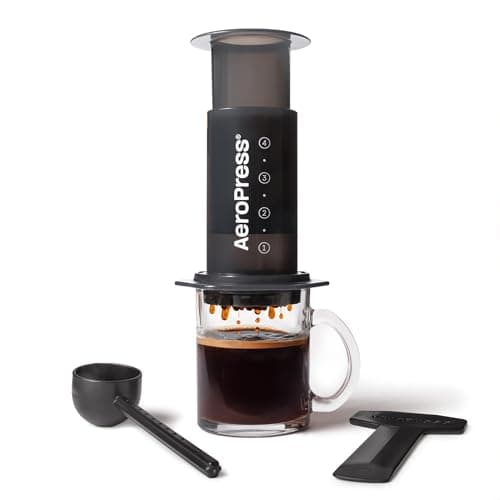
Walk into the coffee aisle and it looks like there are fifty ways to make coffee. There aren't. There are four, and every brewer you have ever seen is a variation on one of them. Once you know which family a device belongs to, you can predict roughly what it will taste like, how much work it will be, and whether it suits you — before you buy anything.
The four families are immersion (coffee soaks in water), drip (water passes through coffee under gravity), pressure (water is forced through coffee), and cold (a long, cold extraction). This page explains what each one does to the cup, which brewers belong to it, and where to start.
The four families, and why they taste different
Brewing coffee is a single physical process: hot water dissolves flavor compounds out of ground coffee, and then you separate the liquid from the grounds. Everything that distinguishes one method from another comes down to three choices — how long the water and coffee are in contact, how hard the water is pushed through, and what filters the result.
That last one does more work than people expect. A paper filter traps oils and fine particles, giving a clean, light-bodied, transparent cup. A metal meshlets both through, giving a heavy, textured, opaque one. Two brewers using the same coffee, grind and ratio will taste noticeably different purely because of the filter — which is why "which method" is really a question about what kind of cup you want, not which is objectively best.
Every method at a glance
| Method | Family | Filter | Tastes like | Effort |
|---|---|---|---|---|
| French press | Immersion | Metal mesh | Heavy, rich, textured | Low |
| AeroPress | Immersion + pressure | Paper (or metal) | Clean, smooth, low bitterness | Low |
| Pour over (V60) | Drip | Paper | Bright, clean, complex | High |
| Chemex | Drip | Thick paper | Very clean, light-bodied, tea-like | High |
| Drip machine | Drip | Paper | Familiar, consistent, mild | Very low |
| Moka pot | Pressure (steam) | Metal | Small, intense, dark, syrupy | Medium |
| Espresso machine | Pressure (~9 bar) | Metal | Concentrated, crema, intense | High |
| Cold brew | Cold immersion | Mesh or paper | Smooth, sweet, low acid | Low, but slow |
"Effort" here means attention per cup, not difficulty. A pour over is not hard, but it asks for three focused minutes every single time. A drip machine asks for nothing. Be honest about which you actually want on a Tuesday morning — the best brewer is the one you will still be using in six months.
Immersion: the coffee soaks
In immersion brewing, ground coffee sits fully submerged in water for a set time, then gets separated out. It is the most forgiving family, because time does the work rather than technique — there is no pour to control and no stream to aim.
The French press is the archetype: coarse grounds, four minutes, then push a metal mesh screen down. Because mesh lets oils and fine particles through, the cup is heavy, rich and textured, with real weight in the mouth. It is also the easiest method for brewing several cups at once and the only one here with no ongoing filter cost. The trade-off is sediment in the last inch of the mug, which is either character or annoyance depending on your temperament.
If that appeals, our best French press roundup covers the field, and how to make French press coffeehas the full method — including the two steps that fix most bitter, silty cups.
Drip: water passes through under gravity
Drip brewing pours water over a bed of coffee and lets gravity pull it through a filter. It is the family most people already own, in the form of the machine on the counter, and the family that rewards attention the most, in the form of pour over.
Pour over— the V60, the Chemex, the Kalita Wave — is drip brewing done by hand. Because a paper filter traps oils and fines, the cup is clean, bright and transparent: this is the method that shows off what an interesting bean is actually doing. It is also the method with the most variables in your hands, which means the most control and the most ways to get it wrong. Expect to need a gooseneck kettle and a scale to do it properly.
An automatic drip machineis the same physics with the pouring automated. You trade the ceiling for the convenience — the cup is milder and more uniform, but it happens while you are getting dressed. Nothing wrong with that.
Start with best pour over for the gear, how to make pour over coffee for the recipe, and Chemex vs V60 if you are choosing between the two classic cones.
Pressure: water is forced through
Pressure brewing pushes water through a compacted bed of fine coffee rather than letting it trickle. More pressure extracts more, faster, from a finer grind — which is why this family produces small, intense drinks rather than mugs.
There is a huge range within it, and the differences are not marketing. A real espresso machine works at around 9 bar, which is what builds genuine crema and the concentrated, syrupy shot that milk drinks are built on. A moka pot works on steam pressure at roughly 1–2 bar— far less — so it makes something strong, dark and espresso-adjacent, but not espresso. An AeroPress applies only light hand pressure, so it is really an immersion brewer with a press at the end.
The AeroPress deserves its own mention because it is the outlier of this whole page: cheap, nearly unbreakable, fast to clean, and about as hard to get a bad cup out of as coffee gets. It steeps like an immersion brewer, then presses through a paper micro-filter for a clean, notably low-bitterness cup.
Prices shown are from Amazon as of October 17, 2026 and change often — the button always goes to the current listing. Some links may earn us a commission at no extra cost to you.
Going deeper: best AeroPress, best moka pot, moka pot sizes, and best espresso machine for beginners if you are considering the real thing.
Cold extraction: time instead of heat
Cold brew swaps heat for time: coarse grounds steep in cold or room-temperature water for 12–18 hours, then get filtered out. Because heat is what pulls many of the acidic and bitter-tasting compounds out fastest, a cold extraction leaves a lot of them behind, and the result is reliably smooth, sweet and low in perceived acidity.
Two things to know before you commit. What you make is a concentratemeant to be diluted roughly 1:1, not a drink — skipping that step is the single most common cold brew complaint. And the smoothness costs you complexity: cold brew flattens the delicate floral and fruity notes that make a light roast interesting. It is the best method here for making a week of easy iced coffee at once, and the worst for tasting what a special bean is doing.
Full method in how to make cold brew coffee, gear in best cold brew maker.
Which method should you buy first?
Pick by the honest answer to two questions: how much attention do you want to give it, and what do you want the cup to taste like?
- You want the best cup for the least risk: an AeroPress. Cheap, forgiving, fast, hard to ruin. If you buy one thing off this page, buy this.
- You want a rich, heavy cup and to brew for two or three: a French press. No filters to buy, and almost no technique.
- You want to taste what good beans actually do: pour over. Highest ceiling of the manual methods, and the one that rewards a good grinder most.
- You want strong, dark, espresso-style coffee cheaply: a moka pot. Just go in knowing it is not espresso.
- You want iced coffee all week with no morning effort: cold brew.
- You want real milk drinks — lattes, cappuccinos, flat whites: only a genuine espresso machine gets you there, and it is a bigger commitment than everything else on this page. Our true cost of home espresso does that math honestly before you spend.
The one thing every method shares
Whichever family you land in, the same variable dominates all of them: grind. Each method needs a different coarseness — espresso wants powder-fine, French press wants coarse sea salt, pour over sits in between — and, more importantly, every method needs that grind to be consistent.
This is the honest reason we push grinders so hard. A blade grinder smashes beans into a chaotic mix of boulders and dust, and in the same brew the dust over-extracts into bitterness while the boulders under-extract into sourness. No brewing method can fix that; they can only hide it to different degrees. A burr grinder crushes to a uniform size, which is what makes any recipe on this site repeatable.
If you are budgeting for your first setup, spend on the grinder before you spend on the brewer — the grinder improves every method you ever try, while the brewer only improves one. Start with burr vs blade for the why, then best burr grinder for the what, and the grind size chart for where to set it.
Two methods sit outside the families above and are worth knowing about. Turkish coffeeis the oldest of the lot and the only one where the grounds stay in the cup — it needs a grind finer than espresso and a cezve rather than a brewer. And if the method has to travel, our travel and camping coffee gear guide sorts the same field by what heat source you will actually have.
Two of the comparisons on this page get asked about far more than the rest, and each has a page of its own: French press vs pour over and cold brew vs iced coffee.
Frequently asked questions
What are the main coffee brewing methods?
They sort into four families by how extraction happens: immersion (French press, AeroPress — coffee soaks in water), drip (pour over, Chemex, drip machines — water passes through under gravity), pressure (espresso, moka pot — water is forced through), and cold extraction (cold brew — a long, cold steep). Every home brewer is a variation on one of those four.
Which coffee brewing method is best?
There isn't one, because they make genuinely different drinks. Pour over gives the cleanest, brightest cup and shows off good beans; French press gives the heaviest body; espresso gives a concentrated shot for milk drinks; cold brew gives smooth, low-acid iced coffee. Pick by what you want to drink and how much attention you want to give it — for most people starting out, an AeroPress is the best risk-adjusted first buy.
What is the difference between immersion and drip brewing?
In immersion, the coffee sits fully submerged in water for a set time and then gets separated out — time does the work, so it's forgiving. In drip, water passes through a bed of coffee once under gravity, so the flow rate and your pouring control the extraction. Immersion is easier and more consistent; drip has a higher ceiling and gives a cleaner cup through paper.
Does the filter really change how coffee tastes?
Yes, more than most people expect. A paper filter traps oils and fine particles, producing a clean, light-bodied, transparent cup. A metal mesh lets both through, producing a heavy, textured, opaque one. Two brewers using identical coffee, grind and ratio will taste clearly different purely because of the filter material.
Is a moka pot the same as espresso?
No. A moka pot brews on steam pressure at roughly 1-2 bar, while a real espresso machine works at around 9 bar. That gap is why a moka pot can't build genuine crema or the syrupy concentration espresso has. It makes excellent strong, dark coffee that works well with milk — it just isn't espresso, despite 'stovetop espresso maker' being on the box.
Which brewing method should a beginner start with?
An AeroPress, for most people. It's inexpensive, nearly unbreakable, cleans in seconds, and is the hardest brewer here to make a genuinely bad cup with — it steeps like an immersion brewer, then presses through a paper filter for a clean, low-bitterness result. Whatever you choose, put your money into a burr grinder before an expensive brewer.
Sources
Keep reading
Buying your first setup?
See how we pick — compiled specs, cost-per-shot math, and honest trade-offs — then dig into the guides. No fake test lab, no rankings for hire.