Buying Guide
The Best Travel and Camping Coffee Gear in 2026
Hotel rooms, campsites and car trips all break a normal coffee setup in different ways. Five pieces of gear that keep working away from a kitchen — and the one thing most people forget to pack.
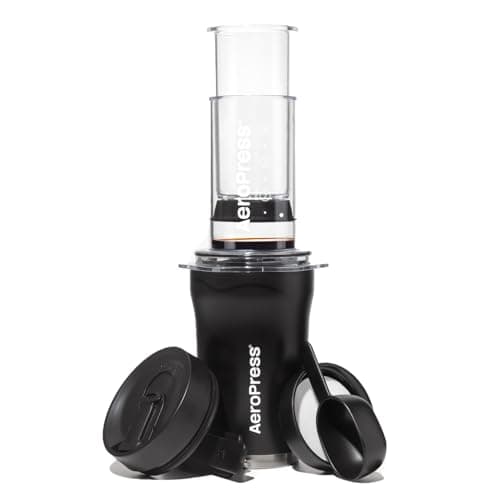
Coffee gear that works beautifully on a kitchen counter tends to fail away from one for boring, predictable reasons: it is glass, it needs an outlet, it needs a scale and a gooseneck kettle, or it takes up more of the bag than the clothes do. The gear on this page was chosen on the opposite criteria — weight, durability, and whether it still works when the only heat you have is a camp stove or a hotel kettle.
One honest warning up front: the piece of kit that most improves travel coffee is not a brewer at all. It is a hand grinder, because the coffee you buy on a trip is usually the coffee you can find, and whole beans plus a grinder beat a bag of month-old pre-ground every single time.
Start with the heat source, not the brewer
Every choice below follows from one question: what is going to heat the water? Get this right first and the rest of the kit picks itself.
| Where you are | Heat available | What actually works |
|---|---|---|
| Hotel room | Kettle, or none | AeroPress Go Plus; Flair 2GO if you want espresso |
| Airbnb / rental | Stovetop, kettle | Moka pot, French press, AeroPress |
| Car camping | Camp stove, fire | Moka pot, stainless French press |
| Backpacking | Small gas burner | AeroPress Go Plus and nothing else |
| Office / desk | Kettle or hot tap | AeroPress Go Plus |
The one pattern worth noticing: a moka pot needs a flame or a hob and cannot be used with a kettle, while an AeroPress needs hot water and no heat of its own. If you are not certain what the trip provides, the AeroPress is the safer answer, because a kettle exists almost everywhere and a stove does not.
How we picked
We rank on published specifications and manufacturer documentation rather than lab tests we did not run — our full approach is on the methodology page. For travel gear specifically, four things carried the most weight.
- Packed weight and size, as published. Not the brewing capacity, the packed dimensions. A brewer that nests inside its own mug is worth more than one that is 20% lighter but awkwardly shaped.
- What can break. Borosilicate glass is the standard material for a French press and the wrong material for a backpack. Anything that goes in a bag should survive being sat on.
- Cleanup without a sink. Campsites and hotel rooms rarely give you a proper wash-up. A brewer you can empty in one motion and rinse with a cup of water beats one that needs a mesh filter scrubbed out.
- Consumables. Paper filters run out, moka gaskets perish. We flag what you need to bring spares of.
At a glance
| Gear | Heat needed | Packed weight | Breakable? | Best for | Price |
|---|---|---|---|---|---|
| AeroPress Go Plus | Hot water only | ~1 lb 4 oz | No (Tritan) | Almost every trip | $89.95Buy |
| 1Zpresso Q | None | ~465 g | No | The grinder to pack | $99.00Buy |
| Bialetti Moka Express 3-cup | Flame or hob | Light aluminum | No | Camp stoves | $49.99Buy |
| Frieling press (36 oz) | Hot water only | Heavy (steel) | No | Car camping, groups | $139.95Buy |
| Flair 2GO | Hot water only | 4 lb (3.7 lb cased) | No | Espresso away from home | $169.00Buy |
Prices shown are from Amazon as of Sep 18, 2026 and change often — the button always goes to the current listing. Some links may earn us a commission at no extra cost to you.
Best overall travel brewer: AeroPress Go Plus
If you buy one thing on this page, buy this. The AeroPress Go Plus is the standard AeroPress brewing method packed into its own mug: a Tritan chamber and plunger with a silicone seal, brewing up to 10 oz per press, all of which stows inside a 16 oz insulated stainless tumbler at a packed size of about 7.3 x 4.2 inches and a packed weight of roughly 1 lb 4 oz (0.56 kg).
It works with any hot water — hotel kettle, camp stove, thermos — brews in one to two minutes, and cleans up by pushing the puck straight into a bin and rinsing. There is no mesh to scrub and nothing to shatter. The Tritan construction is the detail that makes the Go version, rather than the glass-free but less compact Original, the right one for a bag.
| Material | Tritan chamber & plunger (silicone seal) |
|---|---|
| Max brew | 10 oz per press |
| Tumbler | 16 oz insulated stainless steel |
| Packed size | ~7.3 x 4.2 in |
| Packed weight | ~1 lb 4 oz (0.56 kg) |
| Filter | Paper micro-filter |
| Brew time | ~1-2 minutes |
What we like: it nests into itself so nothing rattles loose, it is genuinely unbreakable in normal use, and it makes a concentrated brew you can drink neat or top with hot water.
The honest cons: it needs paper filters, so you must remember to pack them — run out and the brewer is useless until you find more. Ten ounces per press means a second round for two people. And it makes a concentrated coffee, not espresso, whatever the marketing on AeroPress recipes suggests.
Our best AeroPress guide compares every model in the range, and how to use an AeroPress has the method.
Best travel grinder: 1Zpresso Q
This is the pick that changes the coffee rather than the logistics. The 1Zpresso Q pairs heptagonal stainless conical burrs with an internal adjustment dial at 30 clicks per turn, holds 15-20 g per grind, weighs about 465 g, and has a foldable handle so it packs flat rather than snagging on everything in the bag.
| Type | Manual (travel) grinder |
|---|---|
| Burrs | Heptagonal conical (stainless steel) |
| Adjustment | Internal dial, 30 clicks/turn |
| Capacity | ~15-20 g per grind |
| Weight | ~465 g |
| Handle | Foldable (packs very small) |
What we like: it is light enough to justify packing, holds a full AeroPress dose, and covers the filter range every brewer on this page needs. There is no power requirement and nothing to fail.
The honest cons: the adjustment is internal, so changing grind means partially disassembling it — fine when you set it once for a trip, annoying if you switch methods daily. The 15-20 g capacity means two grinds for two large cups. And it is the entry point of 1Zpresso's range, so the burrs are smaller and slower than the J series.
Our best hand grinders guide covers the wider field if you want one grinder for home and travel both.
Best for a camp stove: Bialetti Moka Express (3-cup)
On a camp stove, a moka pot is close to unbeatable. It needs a flame and nothing else, it has no electronics, and the only parts that wear — the gasket and the filter plate — are consumables you can buy for pennies and carry as spares. The 3-cup size pours about 130 ml, a little over half a mug, which is the right amount for one person and the right size to pack.
Be honest about what it makes. A moka pot brews at roughly 1-2 bar, against the roughly 9 barof real espresso, so it produces a strong, espresso-adjacent coffee without true crema — excellent black, excellent cut with hot water, and very good in milk.
The honest cons: aluminum pots are not induction-safe, which matters in a rented flat with an induction hob — the stainless Bialetti Venus or Cuisinox Roma are the induction answers. The handle gets hot. And it is the one brewer here that is genuinely useless without a flame.
More in our best moka pots roundup and how to use a moka pot.
Best for car camping and groups: Frieling Double-Wall French Press
When weight stops mattering — a car, a cabin, a base camp — the calculus changes and a big insulated press wins. The Frieling is 18/10 double-wall vacuum stainless steel at 36 oz, which means it is essentially unbreakable, it keeps the coffee hot long after plunging, and it brews enough for several people in one go.
| Material | 18/10 stainless steel |
|---|---|
| Capacity | 36 oz |
| Filter type | Dual-screen mesh |
| Insulated | Yes (double-wall vacuum) |
| Care | Dishwasher-safe |
The heat retention is the underrated part outdoors: a glass press goes cold in minutes in cool air, and this one does not, so the second cup is still worth drinking.
The honest cons: it is heavy and bulky, so it belongs in a car and not on your back. You cannot see the brew through the walls, so you time it rather than watch it. The mesh screen passes a little sediment. And disposing of a press full of wet grounds at a campsite is messier than knocking out an AeroPress puck.
Our best French press guide covers the glass alternatives, and how to make French press coffee has the ratios.
Best real espresso on the road: Flair 2GO
If giving up espresso for a week is the actual problem, this is the one thing here that solves it. The 2GO is the Flair lever mechanism engineered to fold to 3.5 x 7 x 3.25 inches and drop into a 9.5-inch case, gauge and tamper included, using the same 40mm bottomless 2-in-1 portafilteras the Flair Classic. It needs no electricity — only hot water and your arm.
| Type | Folding manual lever press (no electricity) |
|---|---|
| Portafilter | 40mm bottomless 2-in-1 |
| Dose | 12-18 g (yield ~45 ml) |
| Brew pressure | 6-9 bar, gauge included |
| Water capacity | 60 ml |
| Folded size | 3.5 x 7 x 3.25 in (case 9.5 x 5.25 x 4 in) |
| Weight | 4 lb (3.7 lb in case) |
| Warranty | 1-year limited |
The honest cons: at 4 lb packedit is dramatically heavier than anything else here, so it travels by car or checked bag, not on your back. Assembly and teardown add a step at both ends of a trip. The 1-year warranty is the shortest in the Flair range. And it demands an espresso-capable grind, which the 1Zpresso Q above is not really built for — pairing it properly means packing a bigger grinder.
Our best manual espresso machines guide ranks the whole lever and hand-pump field, including the lighter options.
Packing the kit
The gear is the easy part. These are the things people forget, in rough order of how much they ruin a morning.
- Filters. An AeroPress without paper filters is a plastic tube. Count the days, then double it.
- Whole beans, not ground.Ground coffee stales fast and cannot be adjusted. If you are packing a grinder, pack beans — see our bean picks for what travels well.
- A way to measure. A small scale is ideal, but the scoop that comes with an AeroPress plus a ratio you have memorised is genuinely enough on a trip.
- A moka gasket. They perish, and they perish at the least convenient moment. They weigh nothing.
- Something to carry wet grounds in. At a campsite you cannot always dump them where you are standing.
How to choose
- One kit for every kind of trip? The AeroPress Go Plus and the 1Zpresso Q. That pair fits in a daypack, needs only hot water, and makes better coffee than most hotels.
- Camping with a stove? Add the Bialetti Moka Express 3-cup— and check whether the hob is induction before you rely on it.
- Driving, with people? The Frieling press. Weight stops mattering and one brew serves the group.
- Cannot do without espresso? The Flair 2GO, accepting the 4 lb and the grinder it really wants.
And the honest summary: if you only change one thing about how you make coffee away from home, grind it yourself. Every brewer on this page performs better with fresh grounds than the next brewer up performs with stale ones — which is the same argument we make about grinders at home.
Frequently asked questions
What is the best coffee maker for camping?
It depends on your heat source. With a camp stove or fire, a Bialetti Moka Express in the 3-cup size is hard to beat — it needs only a flame, has nothing electronic, and its only wear parts are a cheap gasket and filter plate. If you are boiling water rather than cooking on a flame, the AeroPress Go Plus is better: it needs only hot water, packs inside its own 16 oz insulated tumbler at about 1 lb 4 oz, and cleans up in one push.
What is the best travel coffee maker for a hotel room?
The AeroPress Go Plus. Hotel rooms almost always have a kettle and almost never have a stove, and the AeroPress needs only hot water. Its Tritan chamber will not break in a bag, it brews in one to two minutes, and the whole thing stows inside its own tumbler. Pack paper filters — without them it does not work.
Do I really need a grinder for travel coffee?
It is the single biggest upgrade you can make. Pre-ground coffee stales quickly and gives you no way to adjust when a brew comes out weak or bitter, and the coffee you find on a trip is whatever the local shop happens to stock. A 1Zpresso Q weighs about 465 g, folds flat, and holds 15-20 g — enough for a full AeroPress dose.
Can you make real espresso while travelling?
Yes, with a lever press. The Flair 2GO folds to 3.5 x 7 x 3.25 inches, includes a pressure gauge and a 40mm bottomless portafilter, and pulls at 6-9 bar using only hot water and your arm. The trade-offs are honest: it weighs about 4 lb packed, needs assembly at both ends of a trip, and requires an espresso-capable grind, which most compact travel grinders are not built for.
Is a French press good for camping?
A stainless, double-wall one is; a glass one is not. The Frieling 36 oz press is 18/10 double-wall vacuum steel, so it survives being knocked about and keeps the coffee hot in cool air, and it brews enough for a group in one go. Glass presses are the standard at home and the wrong material outdoors. The trade is weight and bulk, so it belongs in a car rather than a backpack.
Will a moka pot work on a camp stove?
Yes — a flame is exactly what a moka pot is designed for, and it needs no power at all. The one thing to check is the cooktop in any accommodation you are heading to: standard aluminum Bialetti pots are not induction-safe, so an induction hob needs a stainless pot such as the Bialetti Venus or Cuisinox Roma instead.
Sources
- AeroPress — Go Plus specifications: Tritan chamber, 10 oz brew, 16 oz insulated tumbler, packed size and weight
- 1Zpresso — Q series specifications: heptagonal conical burrs, internal adjustment, capacity and weight
- Bialetti — Moka Express product range and brewed-volume figures by cup size
- Frieling — double-wall insulated French press specifications (18/10 stainless, 36 oz, dual-screen filter)
- Flair Espresso — Flair 2GO product page and specifications (folded size, case, dose, pressure, weight, warranty)
- Specialty Coffee Association — brewing fundamentals and extraction guidance
Keep reading
Buying your first setup?
See how we pick — compiled specs, cost-per-shot math, and honest trade-offs — then dig into the guides. No fake test lab, no rankings for hire.