Head to Head
French Press vs Pour Over
One steeps the coffee in the water; the other pours the water through it. That mechanical difference decides the body, the clarity, the gear you need and how much attention each brew costs you.
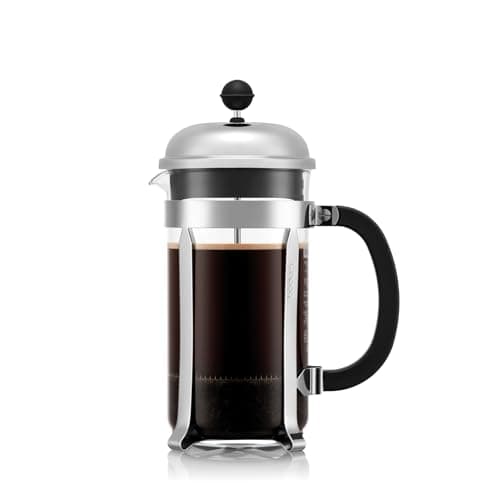
Buy a French press if you want a full-bodied cup with no technique and no extra equipment. Buy a pour over if you want a cleaner, brighter cup and are willing to buy a gooseneck kettle and learn a pour. The best first brewer for most households is the Bodum Chambord: it is the most forgiving brewer here, it needs nothing but a kettle of any kind, and it makes 34 oz at once. If you already care about origin character and want to taste it, start with the Hario V60 02instead — but budget for the kettle.
The difference between the two is mechanical, not a matter of taste preference dressed up as a method. A French press is full immersion: coffee sits in the water for four minutes, then a metal mesh separates them. A pour over is percolation: water passes through a bed of coffee and a paper filter once and keeps going. Everything people say about how these two taste follows from that single difference, and from the filter.
The short answer
| French press | Pour over | |
|---|---|---|
| Method | Full immersion, then filtered by mesh | Percolation through paper |
| Body | Heavy, textured - oils pass the mesh | Light, clean - paper traps oils |
| Clarity | Lower; some fine sediment is normal | High; sediment-free |
| Grind | Coarse | Medium |
| Brew time | About 4 minutes, unattended | About 3 minutes, attended |
| Gear needed | The press, any kettle | Dripper, papers, gooseneck kettle, scale |
| Forgiveness | High - timing is the only variable | Lower - pour rate changes the cup |
| Batch size | Easy at 34 oz and up | One or two cups, unless you buy a Chemex |
| Cleanup | Rinse and knock out wet grounds | Lift the paper out and bin it |
Immersion vs percolation
In a French pressevery coffee particle sits in the same water for the same four minutes. Extraction is therefore even by default, which is the method's great strength: you cannot accidentally under-extract one part of the bed and over-extract another, because there is no bed and no water path. What you control is the time and the grind, and that is roughly all.
In a pour overthe water moves. It passes through the coffee bed, dissolving as it goes, and leaves. That makes the brew sensitive to how evenly you wet the grounds, how fast you pour, and how the bed settles — which is why pour over is the method with technique attached and why our how to make pour over coffee guide spends most of its length on the pour itself.
The second difference is the filter, and it matters as much as the mechanism. A French press separates with a metal mesh, which lets coffee oils and the finest particles through. Pour over uses paper, which traps both. Oils carry body and texture; fines carry a slightly muddy weight. So a press cup is heavier and rounder, and a paper-filtered cup is thinner and more transparent — the same coffee, filtered differently.
How they taste
French press gives you a heavy, rounded, slightly rustic cup. The oils that pass the mesh coat the palate, so the coffee feels substantial and the flavors blend into each other. Chocolate and nut notes read well; delicate floral and tea-like notes get buried. There is almost always a small amount of sediment at the bottom of the cup, which is normal and which is the main complaint people have about the method.
Pour overgives you clarity. Paper strips the oils and the fines, which removes the weight and leaves individual flavors distinguishable — this is the method that lets you actually taste why a washed Ethiopian costs what it does. The cup is lighter in the mouth, brighter, and more obviously acidic. Done badly it is thin and sour; done well it is the most revealing way to brew a good bean.
A practical consequence: if you mostly drink supermarket medium or dark roasts, a French press flatters them. If you buy specialty single origins, a pour over is where the money shows up. Our light roast vs dark roast guide covers what roasting does to those flavors in the first place.
Grind and why it matters most
Both methods are far more sensitive to grind than to any piece of equipment on this page, and they want opposite ends of the dial.
A French press wants coarse— the coarsest setting most people ever use. Two reasons: fine particles over-extract during a four-minute immersion and taste bitter, and fines pass straight through the metal mesh into the cup as sediment. A press brewed with drip-ground coffee is both muddy and bitter, and it is the single most common reason people decide they dislike French press.
A pour over wants medium— roughly table salt. Too coarse and the water runs through before it has dissolved enough, giving a weak, sour cup. Too fine and the bed clogs, the brew stalls, and you get bitter over-extracted coffee instead. Our grind size chart shows both bands.
This is why a burr grinder is a bigger upgrade than a better brewer for either method: a blade grinder produces dust and boulders in the same batch, which is exactly the thing both methods punish. Our burr vs blade explainer covers why, and best grinders for French press and best grinders for pour over cover each end of the dial.
Effort and forgiveness
A French press brew is: boil water, add coarse coffee, add water, stir, wait four minutes, press, pour. Of those, only the four minutes is a real variable. You can walk away in the middle and come back, and the cup will be fine. Our how to make French press coffee guide is short for exactly that reason.
A pour over brew is: boil water to a specific temperature, rinse the paper, add medium-ground coffee, bloom with a small pour, then pour in stages over two to three minutes while keeping the bed level. You cannot walk away. Standing over it for three minutes is either a pleasant ritual or a daily irritation, and which one it is for you is the most honest way to choose between these methods.
Forgiveness also differs. Pull a French press a minute late and it is slightly stronger. Pour a V60 carelessly and the water channels down one side of the cone, leaving half the coffee barely touched — a cup that is weak and sour at once. If a reliably decent cup matters more than an occasionally excellent one, the press wins.
What each setup costs you
The brewers themselves are comparably priced. The difference is what else you have to buy.
| Item | French press | Pour over |
|---|---|---|
| Brewer | The press itself | Dripper (plus a carafe or mug) |
| Filters | None - reusable mesh | Paper filters, ongoing |
| Kettle | Any kettle, or a pan | Gooseneck strongly recommended |
| Scale | Helpful | Effectively required |
| Grinder | Burr grinder, coarse setting | Burr grinder, medium setting |
A gooseneck kettle is the purchase that catches people out. A standard kettle's wide spout dumps water, and dumping water onto a pour over bed is precisely what ruins it; a gooseneck gives you a thin, controllable stream. Variable temperature is the other half of it, because pour over is brewed in a specific range rather than at a rolling boil.
| Type | Electric gooseneck kettle |
|---|---|
| Temperature | Variable (set and hold) |
| Spout | Gooseneck - thin controllable stream |
| Why pour over needs it | Pour rate and placement change the extraction |
The honest con is simply that it is an extra appliance a French press owner does not need at all. Our best gooseneck kettles guide covers the field including cheaper stovetop options.
Best French press: Bodum Chambord
Who it is for: the household that wants good coffee with the fewest moving parts, and more than one mug at a time.
The Chambord is the reference French press and the default recommendation for a reason: borosilicate glass in a steel frame, a 3-part stainless mesh filter, and 34 oz / 1 L of capacity, which is three generous mugs. It disassembles for cleaning and is dishwasher-safe that way.
| Material | Borosilicate glass, steel frame |
|---|---|
| Capacity | 34 oz / 1 L (8 cups) |
| Filter type | 3-part stainless mesh |
| Insulated | No (single-wall glass) |
| Care | Dishwasher-safe (disassembled) |
What we like: nothing to learn, nothing consumable to buy, and a batch size that suits two or three people. The honest cons: single-wall glass loses heat quickly, so brew what you will drink promptly or decant it; glass breaks; and the standard mesh lets some fines through, so expect sediment. Our best French presses guide covers insulated steel alternatives if heat retention matters.
Cleaner press cup: Espro P3
Who it is for: the drinker who likes the body of a French press and dislikes the sediment.
The P3 is the answer to the single most common French press complaint. It uses a double micro-filter — two screens rather than one— which removes most of the fines a standard mesh passes, so the cup keeps the oils and loses the silt. It is a borosilicate glass press at 32 oz.
| Material | Borosilicate glass |
|---|---|
| Capacity | 32 oz |
| Filter type | Double micro-filter (2 screens) |
| Insulated | No (this glass model) |
What we like: it narrows the gap to a paper-filtered cup without giving up the press's body or convenience, which is the most useful thing a French press can do differently. The honest cons: two screens mean more to clean, the filter resists more so plunging takes a firmer push, and it costs more than a Chambord of similar size for a difference some drinkers will not notice.
Best pour over: Hario V60 Ceramic Dripper 02
Who it is for: the drinker who buys good beans and wants to taste what makes them good.
The V60 is the standard against which pour over brewers are measured. A 60-degree cone, one large drainage hole and spiral ribs that keep the paper off the ceramic so air can escape. The single large hole is the defining feature: the dripper does not restrict the flow, so your pour controls the brew. That is simultaneously why it has the highest ceiling and why it is the least forgiving brewer on this page.
| Shape | 60-degree cone |
|---|---|
| Material | Ceramic |
| Capacity | 1-4 cups (size 02) |
| Drainage | Single large hole, spiral ribs |
| Filters | V60 02 cone papers |
What we like: the clearest cup available at this price, a ceramic body that holds heat better than plastic, and a brewer with decades of published recipes behind it. The honest cons: it demands the gooseneck kettle and the scale, it punishes a careless pour more than any other brewer here, and ceramic is heavy and breakable. A flat-bottom brewer is the easier starting point — our best pour over brewers guide covers those, and our V60 review goes deeper on this one.
Pour over for a group: Chemex Classic 6-Cup
Who it is for: the pour over drinker who needs French press volume.
Batch size is the French press's structural advantage, and the Chemex is the pour over answer to it: a 6-cup, roughly 30 ozglass carafe with a bonded paper that is noticeably thicker than a V60 filter. That thicker paper is the trade — it strips even more oil, giving the cleanest, lightest cup of any brewer here, and it slows the brew down.
| Shape | Cone dripper over carafe |
|---|---|
| Material | Borosilicate glass, wood collar |
| Capacity | 6 cups (~30 oz) |
| Filters | Thick bonded Chemex papers |
What we like: pour over clarity at a batch size that serves three or four people, brewing straight into a carafe you can serve from. The honest cons: the proprietary thick papers cost more than V60 papers and must be bought specifically; the cup is the lightest-bodied here, which some drinkers find thin; and the one-piece glass body is awkward to clean. Our Chemex vs V60 comparison works through the choice between these two.
Prices shown are from Amazon as of October 17, 2026 and change often — the button always goes to the current listing. Some links may earn us a commission at no extra cost to you.
Which should you buy
- First brewer, no other gear, more than one mug: French press — the Bodum Chambord.
- You buy specialty single origins: pour over — the Hario V60 02, plus a gooseneck kettle.
- You like press body but hate sediment: the Espro P3.
- You want pour over clarity for a household: the Chemex Classic 6-Cup.
- You do not want to stand over the coffee: French press. Pour over requires three attended minutes, every time.
- Budget is tight: French press, because there are no filters to buy and any kettle works.
And the honest both-and answer: these two brewers cost less together than most single appliances, and they genuinely do different jobs — a press for weekday volume, a pour over for a good bag at the weekend. If you want to see where every other method sits alongside them, our coffee brewing methods guide maps the whole field, and AeroPress vs pour over and AeroPress vs French press cover the brewer that splits the difference.
Frequently asked questions
What is the difference between French press and pour over coffee?
A French press is full immersion - the coffee steeps in the water for about four minutes and is then separated by a metal mesh. A pour over is percolation - water passes through a bed of coffee and a paper filter once. The mesh lets oils and fine particles through, so a press cup is heavy and textured with some sediment; paper traps them, so a pour over cup is light, clean and more obviously bright.
Which tastes better, French press or pour over?
They taste different rather than better or worse. A French press gives body and a rounded, blended flavor that flatters medium and dark roasts. A pour over gives clarity, so individual flavors in a good single-origin bean stay distinguishable. If you drink supermarket roasts, the press flatters them; if you buy specialty coffee, the pour over is where the money shows.
Is French press stronger than pour over?
No - strength is the coffee-to-water ratio, and both methods use roughly the same one. What differs is body: the oils that pass a French press's metal mesh coat the palate, so the cup feels heavier and reads as stronger even at the same ratio. Paper filters trap those oils, which is why pour over tastes lighter.
Which is easier for a beginner?
French press, clearly. Boil water, add coarse coffee, wait four minutes, press - the only real variable is time, and you can walk away mid-brew. Pour over needs a specific water temperature, a staged pour over two to three minutes of attention, and a gooseneck kettle to control the stream, and a careless pour produces a cup that is weak and sour at once.
Do I need a gooseneck kettle for pour over?
Effectively yes. A standard kettle's wide spout dumps water, which disturbs the coffee bed and channels the brew down one side of the cone - the main cause of bad pour over at home. A gooseneck gives a thin, placeable stream, and variable temperature matters because pour over is brewed in a range rather than at a rolling boil. A French press needs no special kettle at all.
What grind do I need for each?
Coarse for a French press and medium for pour over. A press punishes fine grounds twice over - they over-extract during a four-minute immersion and pass straight through the metal mesh as sediment. A pour over clogs if the grind is too fine and runs through too fast if it is too coarse. Both methods are more sensitive to grind than to which brewer you own, which is why a burr grinder is the better upgrade.
Sources
- National Coffee Association - how to brew coffee: immersion and pour over method guidance, grind and ratio
- Specialty Coffee Association - brewing and extraction fundamentals
- Bodum - Chambord French Press specifications (borosilicate glass, steel frame, 3-part stainless filter, 34 oz / 1 L)
- Espro - P3 French Press specifications (double micro-filter, two screens, 32 oz, borosilicate glass)
- Hario - V60 Ceramic Dripper 02 specifications (60-degree cone, single drainage hole, spiral ribs, V60 02 papers)
- Chemex - Classic Series 6-cup specifications (borosilicate glass, wood collar, bonded filters, ~30 oz)
- Bonavita - Gooseneck Variable Temperature Kettle specifications
Keep reading
Buying your first setup?
See how we pick — compiled specs, cost-per-shot math, and honest trade-offs — then dig into the guides. No fake test lab, no rankings for hire.