Buying Guide
The Best Coffee Grinders for Pour Over & French Press (2026)
Five grinders that give filter coffee what it actually wants — a uniform medium-to-coarse grind with few fines. Chosen on burr type, consistency and value, from a flat-burr specialist to the hand grinders that shame their price.
Pour over and French press are the most forgiving brew methods to grind for — and the most rewarding when you get the grinder right. Unlike espresso, filter brewing does not need a superfine, stepless grind dialed to the micron. What it wants is a uniform medium-to-coarse grind with as few fines as possible: even particles let water extract at the same rate everywhere in the bed, so the cup comes out clean and sweet instead of muddy and bitter. That single requirement — consistency, not fineness — is what separates the grinders below.
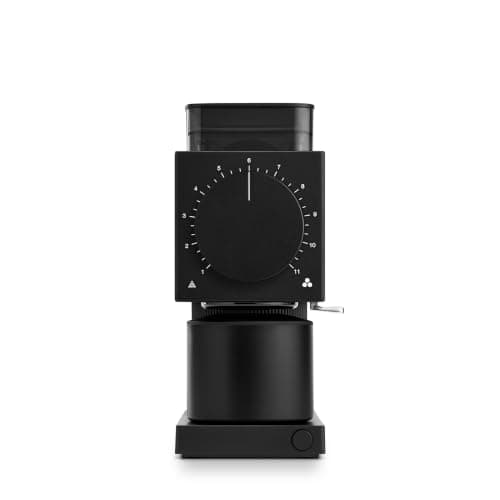
Our overall pick is the Fellow Ode Gen 2, a flat-burr grinder built for nothing but brewed coffee, because it produces the cleanest, most uniform filter grind here. But it is a specialist, and it is not the right answer for everyone. The five picks span a filter-tuned flat-burr grinder, a repairable conical all-rounder, a mid-range upgrade, and two hand grinders that punch far above their price. If espresso is also on your menu, note that these grinders are built for filter — jump to our best grinder for espresso guide for that side of the coin.
What pour over and French press want from a grinder
Filter brewing is a slow, low-pressure process: hot water sits in contact with the grounds for anywhere from a couple of minutes (pour over) to several (French press), and gravity does the work. Because there is no 9-bar pump forcing water through a tight puck, the grind can be much coarser than espresso — and the margin for error is far wider. You do not need stepless, micron-level adjustment. You need even particles.
Here is why uniformity is the whole game. Every grinder produces some very small particles called finesalongside the target grind. Fines extract fast and, in a filter bed, they migrate downward and clog the flow, slowing the drawdown and over-extracting into bitterness while the coarser particles under-extract and stay sour — in the same cup. A grinder that makes a tight, consistent particle size with few fines gives you a clean, sweet, transparent brew that shows off the coffee. That is exactly what flat burrs tuned for filter, and good conical all-rounders, are built to do.
This is the opposite of what espresso demands. Espresso needs a very fine grind and precise, near-stepless adjustment because the shot is fast and high-pressure. Filter is coarse and slow and forgiving. A grinder that is superb for espresso can be overkill (or even awkwardly limited at the coarse end) for filter, and a grinder built purely for filter — like the Ode — cannot go fine enough for espresso at all. Match the grinder to the brews you actually make.
How we picked
We do not run a test lab, and we do not pretend to. Every grinder here was evaluated against its published manufacturer specifications, the design details that decide grind quality for filter coffee, and verified owner feedback — our full approach is on the methodology page. For a pour over and French press grinder specifically, we weighted:
- Grind uniformity and fines. The single most important trait for filter. A tight particle distribution with few fines is what makes the cup clean and sweet rather than muddy.
- Range and adjustment across medium-to-coarse. The grinder has to comfortably reach both pour over (medium) and French press (coarse) settings, with enough resolution to fine-tune.
- Retention and workflow. How much coffee a grinder holds onto between doses. Low retention means fresher grounds and an easier weigh-in, and it matters most for single dosing.
- Build, repairability and honest value— and whether the grinder is a genuine long-term keeper for the brews it targets.
Grind size: pour over vs French press
The two methods want different coarseness, and any of these grinders covers both with a turn of the dial. Pour over wants a mediumgrind — think the texture of table salt or fine sea salt — so water flows through the cone in the right couple of minutes. French press wants a coarse grind, closer to coarse sea salt or breadcrumbs, because the grounds steep fully submerged for several minutes and a metal mesh (not paper) filters the cup; too fine and you get sludge and bitterness, plus a painful press.
At a glance
The field side by side. Tap any "view" button for the live Amazon price; the number on Amazon at checkout is the one that applies.
| Grinder | Burrs | Adjustment | Best for | Price |
|---|---|---|---|---|
| Fellow Ode Gen 2 | 64mm flat | 31 steps, single dose | Best overall (filter) | $399.95Buy |
| Baratza Encore | 40mm conical | 40 steps | All-rounder value | $149.95Buy |
| Baratza Virtuoso+ | 40mm M2 conical | 40 steps + timer | Upgrade | $249.95Buy |
| 1Zpresso Q | Heptagonal conical | 30 clicks/turn | Budget hand / travel | $99.00Buy |
| Comandante C40 MK4 | 39mm conical | ~40 clicks/turn | Premium hand | $319.00Buy |
Prices shown are from Amazon as of October 17, 2026 and change often — the button always goes to the current listing. Some links may earn us a commission at no extra cost to you.
Best overall: Fellow Ode Gen 2
If you brew nothing but filter coffee and want the cleanest cup a home grinder can give you, the Fellow Ode Gen 2 is built for exactly that. Its 64mm flat burrs and single-dose design deliver outstanding clarity and consistency across pour over, drip, AeroPress and French press — the big flat burrs produce a tight, uniform grind with few fines, which is precisely what filter brewing rewards. Thoughtful touches make it a pleasure to live with: a magnetic catch cup, a built-in knocker to release grounds, and anti-static technology that keeps mess and clumping down. It is a specialist, and a very good one.
| Burrs | 64mm flat (steel) |
|---|---|
| Grind settings | 31 stepped |
| Dosing | Single dose (100 g hopper) |
| Grind range | Filter methods; bottoms out ~250-300 microns |
| Espresso | Not suitable (per Fellow) |
| Extras | Anti-static, magnetic catch cup, knocker |
What we like: superb filter clarity from big flat burrs, low retention and mess, single dosing that lets you weigh in exactly what you brew, and a genuinely nice object to own. The honest downsides: it does not grind fine enough for espresso — Fellow says so plainly — and it is the priciest grinder here. If espresso is ever on your menu, choose a conical all-rounder or see our best grinder for espresso guide instead; if it is filter all the way, the Ode is the pick.
Best all-rounder value: Baratza Encore
The Baratza Encoreis the grinder we recommend to more filter drinkers than any other, because it does the everyday jobs well and refuses to die. Its 40mm conical burrs and 40 stepped settings cover the whole filter range — from a medium pour over up to a coarse French press — with an even, dependable grind, and its low-speed motor keeps heat and static down. Best of all, Baratza builds it to be repaired: burrs and parts are user-replaceable, so a well-kept Encore lasts many years. For most people, it is the no-regret default.
| Burrs | 40mm conical (steel) |
|---|---|
| Grind settings | 40 stepped |
| Grind range | ~250-1200 microns (pour over to French press) |
| Espresso | Not fine enough for true espresso |
| Retention | Low-to-moderate (hopper-fed) |
| Build | Repairable, user-replaceable burrs |
What we like: even filter grinding across the whole medium-to-coarse range, easy to live with, and genuinely repairable — the safe default for drip, pour over and press. The downsides: it cannot reach espresso fineness, the plastic body is plain, and it is not the fastest grinder here. For everything short of espresso, it is the smart, no-regret buy — and it anchors our best burr grinder guide for the same reasons.
Best upgrade: Baratza Virtuoso+
The Baratza Virtuoso+ is the natural step up from the Encore for filter drinkers who want a noticeably cleaner cup. It uses upgraded 40mm M2 conical burrs that produce a more uniform grind with fewer fines, adds a digital dosing timerand an LED-lit grounds bin, and runs a stronger direct-drive motor. For pour over especially — where clarity is the whole point — the tighter particle distribution is the upgrade you can taste, without jumping all the way to a flat-burr specialist.
| Burrs | 40mm M2 conical (Etzinger, steel) |
|---|---|
| Grind settings | 40 stepped |
| Grind range | ~200-1200+ microns |
| Motor | 180W DC, gear-reduced, ~550 RPM |
| Extras | Digital timer, LED-backlit grounds bin, replaceable burrs |
What we like: a real bump in grind uniformity over the Encore, plus the convenience of a dosing timer and the same repairable design. The downsides: it costs more than the Encore for a difference that matters most to particular palates, and while it can approach espresso it is happiest at filter. A strong mid-range all-rounder that leans right into pour over and drip.
Best budget hand grinder: 1Zpresso Q
A good hand grinder is the value play in filter coffee: with no motor to pay for, the money goes into the burrs, so a manual grinder often out-grinds electric models near its price. The 1Zpresso Q is the one you throw in a bag. It is small and light, with heptagonal stainless steel burrs, a foldable handle and an internal adjustment dial that clicks precisely into place. Despite the tiny footprint it grinds cleanly across brew methods, which makes it a genuine travel grinder and a first hand grinder rather than a compromise you tolerate.
| Type | Manual (travel) grinder |
|---|---|
| Burrs | Heptagonal conical (stainless steel) |
| Adjustment | Internal dial, 30 clicks/turn |
| Capacity | ~15-20 g per grind |
| Weight | ~465 g |
| Handle | Foldable (packs very small) |
What we like: seriously portable, well made for the price, no power needed, and it grinds better than its size suggests for pour over and single cups. The downsides: the small capacity means a larger French press dose needs a refill, and the internal adjustment is a little fiddly compared with 1Zpresso's bigger models. As a budget or travel grinder, it is excellent value — more manual options in our best hand grinder guide.
Best premium hand grinder: Comandante C40 MK4
The Comandante C40 MK4 is the hand grinder filter enthusiasts save up for. Its 39mm conical Nitro Bladeburrs are made from a patented high-nitrogen, high-alloy stainless steel that holds a sharp edge, and the whole grinder — body, dial, catch jars — is built to a standard that explains why so many owners keep theirs for a decade. It grinds superbly across every filter method, producing the kind of clean, uniform particle bed pour over and French press reward, with a smooth, satisfying feel that cheaper grinders cannot match.
| Type | Manual (premium) grinder |
|---|---|
| Burrs | 39mm conical Nitro Blade (high-nitrogen steel) |
| Adjustment | Clicked dial (~40 clicks/turn) |
| Capacity | ~40-45 g per grind |
| Build | Premium body, glass and polymer catch jars |
What we like: world-class burrs, a beautiful build, generous capacity for larger French press batches, and effortless, consistent grinding — a true buy-once grinder. The downsides: it is the most expensive here by a wide margin, and you still grind every dose by hand. If you want the best hand grinder to keep for good and filter is your daily ritual, this is it.
Electric vs hand for filter
Two of these picks plug in and two you crank — and for filter coffee both routes make an excellent cup. The question is workflow, not quality.
Electric (the Ode, Encore and Virtuoso+) is about convenience and volume. You flip a switch and grind, which matters when you brew a big French press for the household or want a hands-off morning. The Encore and Virtuoso+ are hopper-fed for one coffee you drink daily; the Ode is single-dose for weighing in fresh. All three are the easy answer when you grind for more than one person.
Hand(the 1Zpresso Q and Comandante C40 MK4) puts more burr quality in your hand for the money, needs no electricity, and is quiet and portable. The honest cost is effort: you grind each dose by hand, which is pleasant for a cup or two of pour over a day but tiring for a big, coarse French press batch or a busy household. For filter grinds, though — which are coarser and quicker to crank than espresso — the arm work is modest.
How to choose a filter grinder
Strip away the marketing and the decision comes down to a few questions.
How much do you care about the last bit of clarity? If pour over is your ritual and you want the cleanest, most transparent cup a home grinder gives, the flat-burr Fellow Ode Gen 2 is built for it. If you want excellent filter coffee without paying for a specialist, a conical all-rounder like the Encore or Virtuoso+ is plenty.
Electric or hand? Grinding for a household or want hands-off convenience? Go electric. Want the most grind quality per dollar, portability and no power bill? A hand grinder like the 1Zpresso Q or Comandante C40 MK4 wins — see the full best hand grinder guide.
Conical or flat burrs? Both make excellent filter coffee. Flat burrs (the Ode) are often prized for a more uniform grind and a brighter, more defined cup; conical burrs (everything else here) are efficient, run cool and are a touch more forgiving. We break down the trade-offs in flat vs conical burrs.
And will you ever pull espresso?If yes, none of these filter grinders is your answer — espresso needs a finer, more precisely adjustable grind. Learn your settings with the grind size chart, and if espresso is on the table, start with our best grinder for espresso guide instead.
The bottom line
For the best pour over and French press a home grinder can give you, the Fellow Ode Gen 2is the pick — flat burrs tuned purely for filter clarity. Want an even, repairable all-rounder that lasts for years and costs far less? The Baratza Encore. Ready to taste a cleaner grind with a dosing timer? The Baratza Virtuoso+. Prefer no motor, maximum value or a grinder that travels? The 1Zpresso Q — or the buy-once Comandante C40 MK4 if you want a hand grinder to keep for good. Any of them will do exactly what filter coffee asks: a uniform grind with few fines, and a cup that finally tastes clean.
If espresso is also in your plans, buy for espresso first: our best grinder for espresso and pour over guide explains why an espresso-capable grinder covers both brewers while a filter grinder covers only one.
Frequently asked questions
What is the best coffee grinder for pour over?
For most people chasing the cleanest cup, the Fellow Ode Gen 2. Its 64mm flat burrs are tuned purely for filter and produce a very uniform grind with few fines, which is exactly what pour over rewards. If you want excellent filter coffee for less, the conical Baratza Encore is a repairable all-rounder that handles pour over and French press for years, and the Baratza Virtuoso+ is the step up for a cleaner grind with a dosing timer.
What grind size do I need for pour over versus French press?
Pour over wants a medium grind, roughly the texture of table salt or fine sea salt, so water flows through the cone in the right couple of minutes. French press wants a coarse grind, closer to coarse sea salt or breadcrumbs, because the grounds steep fully submerged and a metal mesh filters the cup — too fine and you get sludge and bitterness. Any grinder in this guide covers both with a turn of the dial; see our grind size chart for exact settings.
Do I need a flat-burr grinder for filter coffee?
No. Flat burrs like the Fellow Ode Gen 2's give a slightly more uniform grind and a brighter, more defined cup, which is why they are prized for pour over. But a good conical grinder such as the Baratza Encore or Virtuoso+ makes genuinely excellent filter coffee too, and is often more affordable and versatile. Consistency and few fines matter more than burr shape for a clean cup.
Can a hand grinder make good pour over and French press?
Yes — often better than electric grinders near its price. Because a hand grinder spends its budget on burrs instead of a motor, models like the 1Zpresso Q and Comandante C40 MK4 grind cleanly and evenly across the medium-to-coarse filter range. Filter grinds are coarser and quicker to crank than espresso, so the arm work is modest for a cup or two, though a big French press batch takes more turns.
Can I use a pour over grinder for espresso?
Usually not well. Filter-focused grinders like the Fellow Ode Gen 2 do not grind fine enough for espresso — Fellow states this plainly — and even conical all-rounders such as the Encore cannot reach true espresso fineness. Espresso needs a finer grind with more precise adjustment, so if you brew both, choose an espresso-capable grinder instead. Our best grinder for espresso guide covers those picks.
Sources
Keep reading
Buying your first setup?
See how we pick — compiled specs, cost-per-shot math, and honest trade-offs — then dig into the guides. No fake test lab, no rankings for hire.