Buying Guide
The Best Grinder for Espresso and Pour Over
Buying one grinder for two brewing styles is the most common compromise in home coffee. It is a solvable one - as long as you buy for espresso first and judge the grinder on retention, not just range.
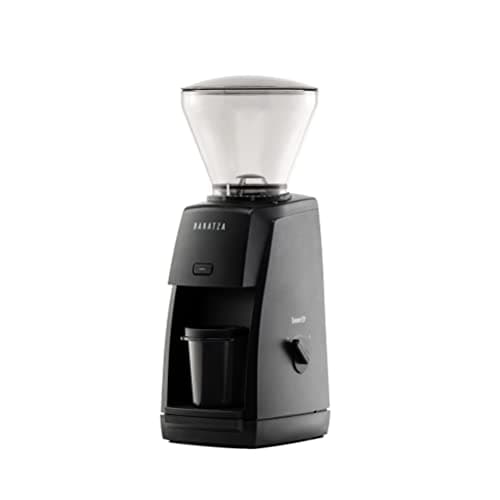
For most people buying one grinder to cover espresso and pour over, the answer is the Baratza Encore ESP — because it is the only grinder in this bracket whose dial was deliberately divided between the two. Baratza puts settings 1–20 on espresso at roughly 20 microns per step and settings 21–40 on filter at roughly 90 microns per step, which is the right shape for this job: espresso needs small corrections, filter does not. If you keep two or three bags open at once, buy the Fellow Opus 2 instead for its near-zero retention. If espresso is clearly the senior partner and money allows, take the Eureka Mignon Notte.
This page exists separately from our best grinders for espresso and best grinders for pour over guides because buying for bothchanges which specs matter. Range stops being the question — nearly every burr grinder spans both brewers on paper. What decides it is how finely the grinder adjusts at the espresso end and how much old coffee it hands you when you jump to the other end of the dial.
Why one grinder for both is hard
Espresso and pour over ask opposite things of a grinder. Espresso needs a fine grind with tight adjustment, because the puck is the restriction: a small move coarser and the shot gushes, a small move finer and it chokes. Pour over needs a medium grind with low fines, because the paper is the restriction and dust clogs it, stalling the brew and turning clarity into mud. Our grind size chart lays out where each brewer sits.
Three consequences follow, and they are the reason this is a genuine buying problem rather than a marketing one:
- Buy for espresso, not for filter.An espresso-capable grinder can always go coarser; a filter grinder frequently cannot go fine enough. The standard Baratza Encore is the textbook case — Baratza themselves say it is not an espresso grinder, which is why Encore vs Encore ESP matters so much here.
- Retention is the daily tax.Grounds left in the chute from your espresso blend come out in your pour over dose. On a high-retention grinder you purge a few grams every switch — coffee and patience, twice a day.
- Going back is as hard as going forward. On a stepless grinder, moving from filter back to the exact espresso setting is guesswork unless you count turns. Numbered settings make the round trip trivial, which is a real advantage for dual-purpose use specifically.
How we ranked these
On published specifications and manufacturer documentation, not on lab tests we did not run — units we claim to have tested: zero. For a grinder doing both jobs, in this order:
- Espresso adjustment resolution. Microns or millimeters per step where the maker publishes it, because that is the end of the dial that punishes imprecision.
- Retention and how easily you switch. Low retention is worth more on a dual-purpose grinder than on a single-purpose one, because you switch more often.
- Whether the filter range is real. A grinder that technically reaches medium but spends one or two clicks there is not a filter grinder.
- Burr size, type and serviceability. Larger and flatter generally means tighter particle distribution; replaceable burrs mean a cheaper decade.
We do not rank on brand reputation or on a star rating we invented, and where a manufacturer publishes a figure a retailer contradicts, we say so instead of picking the flattering number.
At a glance
| Grinder | Burrs | Adjustment | Retention | Price |
|---|---|---|---|---|
| Baratza Encore ESP | 40mm M2 conical | 40 stepped (20 espresso / 20 filter) | Hopper-fed | $199.95Buy |
| Fellow Opus 2 | 48mm hardened stainless | Stepless | Near-zero (per Fellow) | $199.95Buy |
| Eureka Mignon Notte | 50mm flat steel | Stepless micrometric | Hopper-fed, small hopper | $299.00Buy |
| DF64 Gen 2 | 64mm flat | Stepless | Single dose, low | $389.00Buy |
| 1Zpresso J-Ultra | 48mm titanium-coated conical | 100 clicks/rotation, 8 microns | Near-zero by design | $199.00Buy |
| Breville Smart Grinder Pro | Stainless conical | 60 stepped (espresso to press) | Hopper-fed | $199.95Buy |
Prices shown are from Amazon as of October 17, 2026 and change often — the button always goes to the current listing. Some links may earn us a commission at no extra cost to you.
Best overall for espresso and pour over: Baratza Encore ESP
Who it is for: the buyer who pulls shots most mornings and brews a V60 at the weekend, and wants one grinder that treats both as first-class.
The ESP is the only grinder on this page whose dial is explicitly partitioned for this exact use. 40mm M2 conical burrs, settings 1–20 for espresso at roughly 20 microns per step, settings 21–40 for filter at roughly 90 microns per step. The coarse half moves in bigger jumps because filter does not need precision; the fine half moves in small ones because espresso does. That asymmetry is the design, and it is why the ESP beats grinders with more settings on paper.
Because the settings are numbered, the round trip is easy in a way it is not on a stepless grinder: you learn that your espresso lives at 9 and your V60 at 26, and you move between them without re-dialing. It ships a 54mm dosing cup and a 58mm portafilter adapter, and Baratza's whole premise is repair — burrs, gearbox parts and the ring are user-replaceable through their US channel.
| Burrs | 40mm M2 conical (steel, user-replaceable) |
|---|---|
| Grind settings | 40 stepped (1-20 espresso, 21-40 filter) |
| Espresso step size | ~20 microns per step |
| Filter step size | ~90 microns per step |
| Motor | DC, ~550 RPM, ~70 W |
| Bean hopper | 8 oz / 230 g |
| Included | 54mm dosing cup + 58mm portafilter adapter |
What we like: a dial laid out for exactly this job, numbers you can record for each brewer, a real filter range rather than a token one, and a documented repair path. The honest cons: 40mm conical is the smallest electric burr set here, so it grinds slowly and with a wider particle spread than a flat set. It is hopper-fed with real retention, so switching beans still means purging a few grams. And there is no timer or display — weigh everything.
Our Encore ESP review has the ownership case, and Opus 2 vs Encore ESP is the head-to-head against the pick below.
Best for rotating beans: Fellow Opus 2
Who it is for: the drinker with a light filter roast and a darker espresso blend open at the same time, who switches between them daily.
The Opus 2 is the pick when the switching itself is the problem. 48mm hardened stainless burrs, a stepless adjustment dial, and what Fellow describes as near-zero retention technology — the one specification that directly addresses the dual-purpose tax. In the box are a 100 g catch cup and a 30 g dosing cup that fits 54mm and 58mm portafilters, so it doses into a basket as readily as into a brewer.
| Burrs | 48mm hardened stainless steel |
|---|---|
| Adjustment | Stepless dial |
| Retention | Near-zero (per Fellow) |
| Capacity | 100 g bean hopper; grinds up to 100 g at a time |
| Included | 100 g catch cup + 30 g dosing cup (fits 54mm and 58mm) |
| Power | 300 W |
| Dimensions | 206 x 130 x 267 mm (8.1 x 5.1 x 10.5 in) |
What we like: stepless adjustment at a price where stepped is normal, retention low enough that one bean does not contaminate the next, and a dosing cup covering both common basket sizes. The honest cons: Fellow positions this as all-purpose rather than a dedicated espresso grinder, and 48mm conical burrs work hard at the fine end. Stepless means no numbers, which is a genuine drawback for dual-purpose use specifically — you will be counting turns or re-dialing. And the 100 g capacity suits single dosing, not filling a hopper.
Best espresso-first pick: Eureka Mignon Notte
Who it is for: the buyer whose espresso matters more than their pour over, but who still brews filter often enough to care.
The Notte is the cheapest grinder Eureka sells and the only 50mm flat-burr machine here. Eureka publishes its range as espresso to pour over, and adjustment is a stepless micrometric knobrather than a click dial, so the grind itself becomes the correction. For espresso that is the better mechanism — see our flat vs conical guide for why the geometry matters at the fine end.
| Burrs | 50mm flat (steel) |
|---|---|
| Adjustment | Stepless (micrometric knob) |
| Grind range | Espresso to pour over |
| Dosing | Manual - press the portafilter against the fork to grind |
| Hopper | ~5.5 oz / 150 g bean hopper |
| Build | Metal case, hand-assembled in Italy |
What we like: the largest flat burrs at this money, stepless adjustment, grinding straight into the portafilter with both hands free, and a commercial mechanism scaled down rather than a kitchen appliance given an espresso setting. The honest cons: its published range stops at pour over, so it is the wrong grinder if French press is also in your rotation; there is no display, timer or programmable dosing; and stepless plus a small hopper means switching to filter and back is done by feel. It is also the pick most likely to consume the whole budget.
Our Mignon Notte review covers it in full.
Best single dose for both: DF64 Gen 2
Who it is for: the buyer who weighs each dose anyway, changes beans constantly, and wants flat burrs without a commercial price.
The DF64 Gen 2 attacks this problem from the other direction: instead of minimizing retention on a hopper grinder, it removes the hopper. You weigh a single dose in, grind it, and get nearly all of it back — which means switching from espresso to pour over costs you nothing but a turn of the dial. 64mm flat burrs and stepless adjustment put it above every other grinder here on paper at the espresso end.
| Burrs | 64mm flat |
|---|---|
| Adjustment | Stepless |
| Workflow | Single dose - no hopper |
| Retention | Low by design |
| Best suited to | Espresso-forward use with filter alongside |
The honest cons: single dosing is a workflow, not a convenience — you weigh beans before every brew, which some people enjoy and others resent at 7am. It costs meaningfully more than the Encore ESP or the Opus 2. Stepless again means no numbers. And it is a grinder from a category where distributor-specific variants exist, so check you are buying the Gen 2 and not an earlier revision.
Our single-dose grinder guide covers the whole category.
Best hand grinder for both: 1Zpresso J-Ultra
Who it is for: one or two brews a day, a buyer who wants numbered precision at both ends of the dial, and no objection to cranking.
The J-Ultra is the one grinder here that gives you fine resolution and reproducible numbers at the same time. A 48mm titanium-coated stainless conical burr with heptagonal cutting geometry, and an external ring giving 100 clicks per rotation at 8 microns per clickacross five rotations — 500 clicks of total range. For dual-purpose use that is close to ideal: your espresso setting and your V60 setting are both numbers, and the external ring means you change them without disassembly.
| Type | Manual (hand) grinder |
|---|---|
| Burrs | 48mm conical, titanium-coated stainless (heptagonal) |
| Adjustment | External ring, 100 clicks/rotation, 8 microns per click |
| Total range | 500 clicks across 5 rotations |
| Capacity | 35-40 g |
| Weight | 670 g (1.5 lb) |
| Included | Cleaning brush, blower, case for the foldable handle |
The honest cons: espresso-fine grinding is the hardest work a hand grinder does, so budget the better part of a minute of cranking per double, every morning. Filter grinding is much easier but a 35–40 g capacity caps batch size, so a two-mug V60 is two grinds. And no electric convenience of any kind.
Best for dosing into both: Breville Smart Grinder Pro
Who it is for: the buyer who wants one machine that doses into a portafilter and into a paper cone with no accessory purchase and no dosing cup to wash.
Breville publishes 60 grind settings from espresso through French press, stainless conical burrs, an LCD showing setting, time and shot count, and a dose timer adjustable in 0.2-second increments. The dual-purpose argument is in the box: cradles for 50–54mm and 58mm portafilters, an airtight container, and a filter-basket adapter, so espresso goes into a basket and filter coffee into a cone with nothing else to buy. It is also the only grinder here that comfortably reaches French press if that is a third brewer in your rotation.
| Burrs | Stainless steel conical |
|---|---|
| Grind settings | 60 (espresso to French press) |
| Dose control | Precision digital timer, 0.2-second increments |
| Display | LCD - grind setting, grind time, shot/cup count |
| Doses into | 50-54mm and 58mm portafilter cradles, airtight container, gold-tone or paper filter |
| Hopper | 450 g (per retailer specification sheets) |
The honest cons: 60 settings spread across espresso andFrench press means the espresso portion has fewer usable positions than the Encore ESP's dedicated twenty, so this is the grinder most likely to leave you between two settings on a shot. Breville does not publish a burr diameter, which we flag rather than fill in. A timed dose drifts as beans age, so weigh the output. And it is hopper-fed with real retention — the worst pick here if you rotate beans.
Our Encore ESP vs Smart Grinder Pro comparison works through that trade in detail.
What to avoid
Blade grinders. A blade chops rather than mills, producing dust and boulders in the same batch. For espresso the dust channels and the boulders under-extract; for pour over the dust blinds the paper and stalls the brew. Our burr vs blade guide has the detail.
Filter-only burr grinders bought with espresso "later" in mind.The standard Baratza Encore, the Fellow Ode Gen 2 and similar filter specialists are excellent at what they do and explicitly not espresso grinders — Baratza and Fellow both say so. If espresso is anywhere in your plans, buy espresso-capable now.
Grinders chosen on setting count alone. Sixty settings spread across every brewing method can give you fewer espresso positions than forty settings split deliberately. Read what the range covers, not how many numbers are printed on the dial.
How to choose
- Espresso daily, pour over at weekends: Baratza Encore ESP. The split dial and recordable numbers are exactly right.
- Two or three bags open at once: Fellow Opus 2 for the retention.
- Espresso is clearly the priority: Eureka Mignon Notte— 50mm flat burrs, stepless.
- You already weigh every dose: DF64 Gen 2.
- One or two brews a day, happy to crank: 1Zpresso J-Ultra.
- French press in the mix too, dosing convenience first: Breville Smart Grinder Pro.
Whichever you choose, the dose still has to be weighed — see do I need a scale for espresso— and the grinder needs cleaning more often than most owners assume. Our grinder cleaning guidefollows Baratza's published routine, which matters more on a dual-purpose grinder because oils from a dark espresso roast end up in your filter coffee.
Frequently asked questions
Can one grinder really do both espresso and pour over?
Yes, provided you buy an espresso-capable grinder rather than a filter one. An espresso grinder can always go coarser for filter; a filter grinder frequently cannot go fine enough for espresso, and makers like Baratza and Fellow say so explicitly about their filter models. The Baratza Encore ESP is the clearest example of a grinder designed for the dual job - half its dial is espresso, half is filter.
What is the best grinder for espresso and pour over?
The Baratza Encore ESP for most people. Settings 1 to 20 cover espresso at roughly 20 microns per step and settings 21 to 40 cover filter at roughly 90 microns per step, so each brewer gets adjustment sized to what it needs, and because the settings are numbered you can move between your espresso and pour over positions without re-dialing. If you keep several bags of coffee open, the Fellow Opus 2's near-zero retention matters more.
Do I have to purge the grinder when switching between espresso and pour over?
On a hopper-fed grinder, yes - run a few grams through and discard them, because the grounds retained in the chute and burr chamber are from the previous bean and the previous setting. That is the main daily cost of a dual-purpose grinder. Low-retention and single-dose designs like the Fellow Opus 2, DF64 Gen 2 and the 1Zpresso J-Ultra largely remove the need.
Is a stepless grinder better for using two brewing methods?
It is better at espresso and worse at the round trip. Stepless adjustment can land exactly on the grind a shot wants, with nothing out of reach, but there is no number to write down - so going from your filter setting back to your espresso setting means re-dialing or counting turns. For dual-purpose use specifically, numbered settings have a real practical advantage.
Will an espresso grinder make good pour over coffee?
Generally yes, with one thing to check: that it reaches coarse enough. Dedicated espresso grinders are geared toward the fine end and some run out of travel before a medium-coarse filter grind, which is why we note published range on every pick here. The Eureka Mignon Notte, for instance, publishes its range as espresso to pour over - so pour over yes, French press no.
Should I buy two cheaper grinders instead of one better one?
Rarely. Two inexpensive grinders means two mechanisms that are each mediocre at their own job, two things to clean, and twice the counter space. One espresso-capable grinder with a real filter range covers both brewers better, and the money saved on the second unit buys larger burrs or stepless adjustment on the first.
Sources
- Baratza - Encore ESP product specifications (40mm M2 conical burrs, dial split 1-20 espresso / 21-40 filter, step sizes, motor, hopper, included dosing cup and adapter)
- Fellow - Opus 2 Conical Burr Grinder specifications (48mm hardened stainless burrs, stepless dial, near-zero retention, 100 g capacity, catch and dosing cups, 300 W)
- Eureka - Mignon Notte specifications (50mm flat steel burrs, stepless micrometric adjustment, published espresso-to-pour-over range, hopper, Italian assembly)
- Breville - Smart Grinder Pro specifications (60 grind settings espresso to French press, 0.2-second dose timer, LCD, 50-54mm and 58mm cradles, container and filter adapter)
- 1Zpresso - J-Ultra specifications (48mm titanium-coated heptagonal conical burr, external ring at 100 clicks per rotation / 8 microns per click, 500-click range, capacity)
- Specialty Coffee Association - brewing and extraction standards
Keep reading
Buying your first setup?
See how we pick — compiled specs, cost-per-shot math, and honest trade-offs — then dig into the guides. No fake test lab, no rankings for hire.