Head to Head
Baratza Encore ESP vs Breville Smart Grinder Pro
These two land at the same price and get chosen against each other constantly. They are not the same kind of grinder: one spends half its dial on espresso, the other spends its engineering on getting a timed dose into your basket.
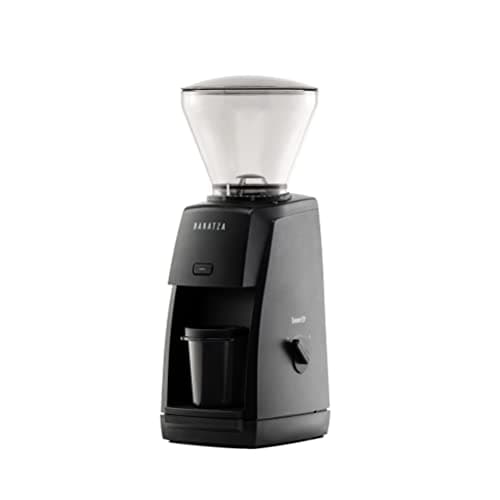
Buy the Baratza Encore ESP if you own a non-pressurized portafilter and want to pull real espresso; buy the Breville Smart Grinder Pro if dosing convenience matters more to you than grind resolution. That is the whole decision, and it comes down to one published number. Baratza reserves settings 1–20 of the ESP's dial for espresso at roughly 20 microns per step. Breville publishes 60 settings spanning espresso through French press— a wider span across the same mechanism, which necessarily means fewer usable positions inside the narrow band where espresso lives. If your shots keep landing between two settings, that is the spec that caused it.
The other half of the comparison runs the opposite way. The Smart Grinder Pro is the easier grinder to live with: a timed dose, an LCD, and cradles in the box for both 50–54mm and 58mm portafilters, so the grounds go straight into the basket. The Encore ESP ships a 54mm dosing cup and a 58mm adapter and expects you to weigh. Neither approach is wrong; they serve different mornings.
The short verdict
- Espresso is the main job? Encore ESP. Twenty dedicated espresso steps beat a dial that also has to cover French press.
- You own a Breville machine and want the path of least resistance? Smart Grinder Pro. It doses into a 54mm Breville basket without a funnel, and our best grinder for a Breville guide puts it in that context.
- You grind for espresso and filter in the same week?Encore ESP — settings 21–40 are its filter range, at roughly 90 microns per step.
- You want to stop guessing entirely? Neither. Save for a stepless grinder; the Eureka Mignon Notte is the first one worth the jump.
At a glance
| Spec | Baratza Encore ESP | Breville Smart Grinder Pro |
|---|---|---|
| Burrs | 40mm M2 conical, steel | Stainless conical (diameter not published) |
| Grind settings | 40 stepped (1-20 espresso, 21-40 filter) | 60 stepped (espresso to French press) |
| Espresso step size | ~20 microns per step | Not published |
| Dose control | Manual - weigh the output | Digital timer, 0.2-second increments |
| Doses into | 54mm dosing cup + 58mm adapter | 50-54mm and 58mm cradles, container, paper filter |
| Display | None | LCD - setting, time, shot count |
| Hopper | 8 oz / 230 g | 450 g (per retailer specification sheets) |
| User-replaceable burrs | Yes, via Baratza's US channel | Not published as a user-serviceable part |
Both grinders currently sit at the same list price, which is exactly why the question keeps coming up:
| Grinder | Built for | Price |
|---|---|---|
| Baratza Encore ESP | Espresso resolution | $199.95Buy |
| Breville Smart Grinder Pro | Dosing convenience | $199.95Buy |
| Eureka Mignon Notte | Stepless adjustment | $299.00Buy |
Prices shown are from Amazon as of October 17, 2026 and change often — the button always goes to the current listing. Some links may earn us a commission at no extra cost to you.
The dial is the whole argument
Espresso is the one brewing method where grind adjustment has to be fine-grained, because the puck is the restriction. Move the grind a little coarser and the shot runs fast and tastes thin; a little finer and it chokes. The range you are working inside is narrow, so what matters is not how many settings a grinder has in total but how many of them land in that band.
Baratza's answer is to split the dial in half. Settings 1–20 are espresso at roughly 20 microns per step; settings 21–40 are filter at roughly 90 microns per step. You get twenty espresso positions and they are numbered, so a recipe that worked is a number you can write down.
Breville's answer is to spread 60 settings across the whole span from espresso to French press. That is a genuinely wider range — the Smart Grinder Pro reaches coarser than the ESP does — and it is the more versatile dial on paper. The cost is that the espresso portion of 60 shared settings has fewer steps in it than the ESP's dedicated twenty. Breville does not publish a micron figure per step, so we are describing the structure rather than quoting a number they have not given.
Baratza Encore ESP
Who it is for: the buyer whose first espresso machine is arriving, who wants to spend the first week adjusting shots rather than fighting a mechanism.
The ESP is Baratza's espresso rework of the long-running Encore, and the changes are the ones that matter rather than cosmetic. 40mm M2 conical burrs, the recalibrated half-espresso dial described above, and a 54mm dosing cup plus a 58mm portafilter adapter in the box so the grounds reach the basket whichever size your machine uses. The motor is a gear-reduced DC unit at roughly 550 RPM and 70 W, which keeps grounds cool and the grinder quiet relative to high-speed units.
| Burrs | 40mm M2 conical (steel, user-replaceable) |
|---|---|
| Grind settings | 40 stepped (1-20 espresso, 21-40 filter) |
| Espresso step size | ~20 microns per step |
| Filter step size | ~90 microns per step |
| Motor | DC, ~550 RPM, ~70 W |
| Bean hopper | 8 oz / 230 g |
| Included | 54mm dosing cup + 58mm portafilter adapter |
| Serviceability | Burrs, gearbox parts and ring user-replaceable |
What we like: numbered settings you can return to exactly, espresso steps small enough to dial a shot rather than approximate it, a real filter range on the top half of the dial, and a repair path instead of a disposal date. The honest cons: 40mm conical burrs are the smallest electric set in this price bracket, so it grinds slowly and with a wider particle spread than a 50mm flat set. It is stepped, so the between-two-clicks problem applies. It is hopper-fed with real retention. And there is no timer, no display and no dosing automation of any kind — you weigh, every time.
Our full Encore ESP review covers the ownership case, and Encore vs Encore ESP explains why the cheaper non-ESP Encore is the wrong buy for espresso.
Breville Smart Grinder Pro
Who it is for: a Breville machine owner, or anyone who wants a repeatable timed dose delivered into the basket with no cup, no funnel and no tipping.
The Smart Grinder Pro is the more convenient grinder here by a clear margin, and the convenience is almost entirely about dosing. Breville publishes 60 grind settings from espresso to French press, stainless steel conical burrs, an LCD showing setting, grind time and shot count, and a dose timer adjustable in 0.2-second increments. It ships with cradles for both small 50–54mm and large 58mm portafilters plus an airtight container and a filter-basket adapter, so one machine doses espresso into a basket and filter coffee into a cone without buying an accessory.
| Burrs | Stainless steel conical |
|---|---|
| Grind settings | 60 (espresso to French press) |
| Dose control | Precision digital timer, 0.2-second increments |
| Display | LCD - grind setting, grind time, shot/cup count |
| Doses into | 50-54mm and 58mm portafilter cradles, airtight container, gold-tone or paper filter |
| Hopper | 450 g (per retailer specification sheets) |
| Dimensions | 8.5 x 6.3 x 15.3 in |
| Housing | Stainless steel |
What we like: the dose timer is repeatable once set, both portafilter cradles are included, the LCD removes second-counting, and it is the easier grinder to live with on a rushed morning. The honest cons: 60 settings covering espresso andFrench press means the espresso portion of the dial has fewer usable positions than the ESP's dedicated twenty, so this is the grinder more likely to leave you stranded between settings. Breville does not publish a burr diameter, which we flag rather than fill in. A timed dose is a volumetric dose, so it drifts as beans age and as the hopper empties — weigh the output, do not trust the timer. And it is hopper-fed with real retention, so it suits one bean at a time rather than rotating bags.
Dosing: timer vs scale
This is where the two grinders diverge most in daily use, and the honest answer is that the convenience is partly an illusion. A dose timer measures time, and what you need is mass. Beans get drier and less dense as they age, retention changes what comes out, and a hopper that is nearly empty feeds differently from a full one. So a timer that gave you 18 g last week may give you 17.2 g this week at the same setting.
That does not make the timer useless — it gets you close with one button and no dosing cup to wash, which is real. It does mean a scale is not optional on either grinder. Our coffee scale guide covers the 0.1 g scales that fit under a portafilter, and do I need a scale for espresso answers the question directly. The dose you are aiming for is in how many grams for a double shot.
Retention and switching beans
Both grinders are hopper-fed with meaningful retention, which matters if you keep two bags open. Grounds left in the chute and burr chamber from yesterday's bean come out in today's dose, so switching roasts means purging a few grams first. Neither of these is the grinder for someone who rotates a light filter roast and a dark espresso blend in the same week.
If that describes you, the category to look at is single dosing instead — grinders designed to give back almost exactly what you weighed in. Our single-dose grinder guide covers that field, and Fellow Opus 2 vs Encore ESP pits a near-zero-retention design against the ESP at the same money.
Repairability and the long run
Baratza's whole engineering premise is repair: burrs, gearbox parts and the adjustment ring are user-replaceable through their US channel, and a grinder you can re-burr is a cheaper decade than one you replace. Breville does not publish the Smart Grinder Pro's burrs as a user-serviceable part, which is not the same as saying it cannot be serviced — it means we will not claim a repair path the manufacturer has not documented.
Either way, burrs dull and chutes clog, and the maintenance interval is shorter than most owners expect. Our grinder cleaning guideworks through the routine on Baratza's own published schedule.
If you can stretch past both: Eureka Mignon Notte
Who it is for: the buyer who has read the paragraph about being stuck between two clicks and decided not to live with it.
The Notte is the cheapest grinder Eureka sells and it solves the single limitation both grinders above share. 50mm flat steel burrs — the largest in this bracket — and a stepless micrometric knob that turns continuously, so the grind itself becomes the adjustment instead of something you work around. It dispenses into the portafilter directly, with a metal case hand-assembled in Italy.
| Burrs | 50mm flat (steel) |
|---|---|
| Adjustment | Stepless (micrometric knob) |
| Grind range | Espresso to pour over |
| Dosing | Manual - press the portafilter against the fork to grind |
| Hopper | ~5.5 oz / 150 g bean hopper |
| Build | Metal case, hand-assembled in Italy |
The honest cons: it costs more than either grinder above, there is no display, no timer and no programmable dosing at all, and stepless means no numbers to write down — you learn the knob by feel. Our Mignon Notte review has the full case, and best espresso grinder under $300 ranks it against this bracket.
How to choose
- Espresso first, filter sometimes: Encore ESP. The dial is built for exactly that split.
- Breville machine, 54mm basket, rushed mornings: Smart Grinder Pro. It doses into your basket out of the box.
- French press or drip is your main brew and espresso is occasional:Smart Grinder Pro — its coarse end goes further.
- You want to stop compromising: Mignon Notte, and buy the machine later if you must. The best grinders for espresso guide explains why the grinder is the higher-leverage purchase.
One thing neither grinder changes: a pressurized portafilter sets its own resistance through a restrictor hole, so if your machine has one, grind precision buys you much less than it would otherwise. Check which basket you have before spending $200 on resolution you cannot use.
Frequently asked questions
Is the Baratza Encore ESP better than the Breville Smart Grinder Pro for espresso?
For espresso specifically, yes. Baratza dedicates settings 1 to 20 of the ESP's dial to espresso at roughly 20 microns per step, where Breville spreads 60 settings across everything from espresso to French press - so the ESP has more usable positions inside the narrow band where espresso actually lives. The Smart Grinder Pro wins on dosing convenience, not on grind resolution.
Does the Breville Smart Grinder Pro grind fine enough for espresso?
Yes - Breville publishes the range as espresso through French press, and it doses into 50-54mm and 58mm portafilters out of the box. The limitation is resolution rather than fineness: because those 60 settings also have to cover coarse brewing, there are fewer steps inside the espresso band, so you are more likely to find the shot you want sitting between two settings.
Which one should I buy for a Breville Bambino or Barista Express?
Either works, and both include what you need for a 54mm basket. The Smart Grinder Pro doses straight into the basket with a timer and a matching cradle, which suits a Barista-line owner who wants fewer steps in the morning. The Encore ESP gives finer espresso adjustment and ships a 54mm dosing cup. Note that the Barista Express already has a grinder built in - our best grinder for a Breville guide covers which machines actually need one.
Can the Encore ESP grind for pour over and French press too?
Yes. Settings 21 to 40 are its filter range at roughly 90 microns per step, which covers pour over and reaches French press territory. The Smart Grinder Pro goes coarser still, so if a press is your main brew and espresso is occasional, that is the more suitable dial.
Do I still need a scale if the Smart Grinder Pro has a dose timer?
Yes. A timer measures seconds, not grams, and the grams drift as beans age, as retention changes and as the hopper empties - so the same setting that gave you 18 g last week may give you less this week. Use the timer to get close with one button, then confirm the dose on a 0.1 g scale.
Which grinder lasts longer?
Baratza publishes burrs, gearbox parts and the adjustment ring as user-replaceable through their US channel, so the Encore ESP has a documented repair path. Breville does not publish the Smart Grinder Pro's burrs as a user-serviceable part, which is a gap in the documentation rather than a verdict on the build. Either way, clean the grinder on a four-to-six week routine.
Sources
- Baratza - Encore ESP product specifications (40mm M2 conical burrs, 40 stepped settings split 1-20 espresso / 21-40 filter, step sizes, motor, hopper, included dosing cup and adapter, user-replaceable parts)
- Breville - Smart Grinder Pro product specifications (60 grind settings, stainless conical burrs, 0.2-second dose timer, LCD, 50-54mm and 58mm portafilter cradles, airtight container, filter adapter, dimensions)
- Eureka - Mignon Notte product specifications (50mm flat steel burrs, stepless micrometric adjustment, hopper capacity, Italian assembly)
- Specialty Coffee Association - brewing and extraction standards
Keep reading
Buying your first setup?
See how we pick — compiled specs, cost-per-shot math, and honest trade-offs — then dig into the guides. No fake test lab, no rankings for hire.