Head to Head
Fellow Opus 2 vs Baratza Encore ESP
Same money, opposite philosophies. The Opus 2 is a stepless, low-retention grinder for people who change beans constantly. The Encore ESP is a numbered, repairable grinder for people who dial one shot in and keep it.
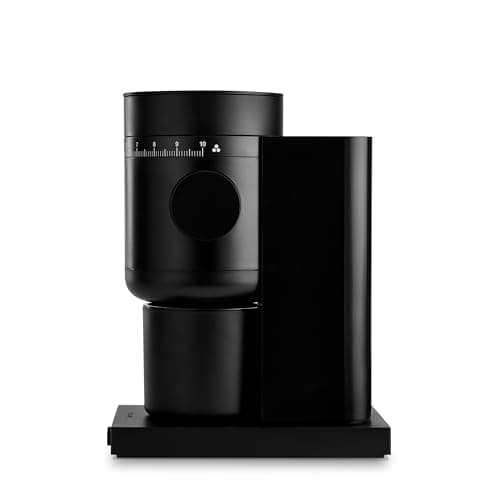
If you keep two or three bags of coffee open at once, buy the Fellow Opus 2. If you buy one bag at a time and want to dial a shot in and keep it, buy the Baratza Encore ESP. Both are electric, both sit at the same list price, and both will make espresso. The difference that actually changes your mornings is not burr size or wattage — it is that the Opus 2 is built around near-zero retention and a stepless dial, while the Encore ESP is built around twenty numbered espresso settings at roughly 20 microns per step and a documented repair path.
Those two designs solve different problems. Low retention means the grinder gives back what you put in, so a light Ethiopian for filter does not arrive contaminated with yesterday's dark espresso blend. Numbered settings mean a recipe is reproducible — you write "setting 9" on the bag and go back to it in three weeks. You can have either at this price. You cannot have both.
The short verdict
- You rotate beans weekly or brew both espresso and filter: Opus 2. Near-zero retention is the spec that matters to you, and the stepless dial lands exactly where you want.
- One bag at a time, espresso only, learning to dial in: Encore ESP. Numbers you can record beat a knob you have to re-learn.
- You expect to keep the grinder for a decade: Encore ESP. Baratza publishes burrs, gearbox parts and the ring as user-replaceable.
- You single dose from small bags of specialty coffee:Opus 2 — it ships a 100 g catch cup and a 30 g dosing cup that fits both 54mm and 58mm baskets.
At a glance
| Spec | Fellow Opus 2 | Baratza Encore ESP |
|---|---|---|
| Burrs | 48mm hardened stainless steel | 40mm M2 conical, steel |
| Adjustment | Stepless dial | 40 stepped (1-20 espresso, 21-40 filter) |
| Espresso resolution | Continuous - no step size to quote | ~20 microns per step |
| Retention | Near-zero (per Fellow) | Hopper-fed, real retention |
| Capacity | 100 g hopper; grinds up to 100 g at a time | 8 oz / 230 g hopper |
| Doses into | 100 g catch cup + 30 g cup fitting 54mm and 58mm | 54mm dosing cup + 58mm adapter |
| Power | 300 W | ~70 W, ~550 RPM |
| User-replaceable burrs | Not published as a user-serviceable part | Yes, via Baratza's US channel |
| Footprint | 206 x 130 x 267 mm (8.1 x 5.1 x 10.5 in) | Taller, hopper-topped |
| Grinder | Built around | Price |
|---|---|---|
| Fellow Opus 2 | Low retention, stepless | $199.95Buy |
| Baratza Encore ESP | Numbered espresso steps, repair | $199.95Buy |
| 1Zpresso J-Ultra | 8-micron numbered clicks, by hand | $199.00Buy |
Prices shown are from Amazon as of October 18, 2026 and change often — the button always goes to the current listing. Some links may earn us a commission at no extra cost to you.
Stepless vs numbered: the real trade
A steppedgrinder moves in defined clicks. Its advantage is memory: setting 9 is setting 9 forever, so you can record a recipe, hand the grinder to someone else, and come back to the same shot after a month on a different bean. Its limitation is granularity — when the grind you want sits between two clicks, you cannot have it, and the usual workaround is to change the dose instead.
A stepless grinder turns continuously, so the grind itself is always the adjustment. Nothing is out of reach. The cost is that there is no number to write down: you are navigating by feel and by shot time, and if you knock the dial you have lost your place.
For espresso specifically, stepless is the more capable mechanism and numbered is the moreteachable one. That is why our recommendation splits on experience as much as on habit: if you have never dialed in a shot before, numbers shorten the learning curve considerably. Our sour shot and bitter shotguides are the diagnostic half of that process, and both assume you can reproduce yesterday's grind to compare against.
Fellow Opus 2
Who it is for: the drinker who buys small bags of good coffee, changes them often, and wants the grinder to give back exactly what was weighed in.
The Opus 2 is Fellow's second pass at an all-purpose grinder and it reads like a single-dose machine wearing a small hopper. 48mm hardened stainless burrs, a stepless adjustment dial, and what Fellow describes as near-zero retention technology — the specification that matters if you rotate between a light roast for filter and a darker one for espresso. In the box are a 100 g catch cup and a 30 g dosing cup that fits 54mm and 58mm portafilters, so it doses into a basket as readily as into a brewer.
| Burrs | 48mm hardened stainless steel |
|---|---|
| Adjustment | Stepless dial |
| Retention | Near-zero (per Fellow) |
| Capacity | 100 g bean hopper; grinds up to 100 g at a time |
| Included | 100 g catch cup + 30 g dosing cup (fits 54mm and 58mm) |
| Power | 300 W |
| Dimensions | 206 x 130 x 267 mm (8.1 x 5.1 x 10.5 in) |
| Weight | 2.3 kg (5.1 lb) |
What we like: stepless adjustment at a price where stepped is normal, near-zero retention so one bean does not contaminate the next, a dosing cup that fits both common basket sizes, and a footprint narrow enough to sit beside a compact machine. The honest cons: Fellow positions this as an all-purpose grinder rather than a dedicated espresso grinder, and 48mm conical burrs at the fine end are working harder than a 50mm flat set does — it will dial a shot in, but it is not the grinder for someone chasing the last five percent. Stepless means no numbers to return to. The 100 g capacity is a feature if you single dose and a nuisance if you want to fill a hopper and forget it. And it is a current-generation product with a shorter track record than the Baratza mechanism.
Baratza Encore ESP
Who it is for: the buyer whose first espresso machine arrives this week, who wants to be dialing in on day one rather than learning a mechanism.
The Encore ESP is Baratza's espresso rework of the long-running Encore. It uses 40mm M2 conical burrs and a recalibrated dial that spends settings 1–20 on espresso at roughly 20 microns per step and settings 21–40 on filter at roughly 90 microns per step. Half the dial sits in the band where espresso actually lives, which is the opposite of how most dual-purpose grinders are laid out. It ships a 54mm dosing cup and a 58mm portafilter adapter, and Baratza's engineering premise is repair: burrs, gearbox parts and the ring are user-replaceable through their US channel.
| Burrs | 40mm M2 conical (steel, user-replaceable) |
|---|---|
| Grind settings | 40 stepped (1-20 espresso, 21-40 filter) |
| Espresso step size | ~20 microns per step |
| Filter step size | ~90 microns per step |
| Motor | DC, ~550 RPM, ~70 W |
| Bean hopper | 8 oz / 230 g |
| Included | 54mm dosing cup + 58mm portafilter adapter |
| Serviceability | Burrs, gearbox parts and ring user-replaceable |
What we like: numbered settings you can write down and return to, espresso steps small enough to dial a shot in, a genuine filter range on the upper half of the dial, and a repair path rather than a landfill date. The honest cons: 40mm conical burrs are the smallest electric set at this price, so it grinds slowly and with a wider particle spread. It is stepped, so you will occasionally want a setting between two clicks. It is hopper-fed with real retention, so switching beans means purging. And there is no timer, display or dose automation at all.
Our Encore ESP review has the long-term case, and Encore ESP vs Breville Smart Grinder Pro covers the other grinder people weigh it against at this price.
Retention, and why it decides this
Retention is how much ground coffee stays inside the grinder after a dose — in the chute, around the burrs, in the exit path. On a hopper-fed grinder it is normal and mostly harmless if you drink one coffee: today's retained grounds come out in tomorrow's dose of the same bean, so the only cost is a few grams of staleness.
It becomes a real problem the moment you keep two bags open. Switch from a dark espresso blend to a light filter roast and the first several grams out of the grinder are the previous bean. The fix on a high-retention grinder is to purge — run a few grams through and throw them away — which costs coffee and patience every single time you switch.
The Opus 2 is designed to make that unnecessary, and that single property is why it suits a different buyer than the ESP rather than simply being better or worse. If you want to understand the category the Opus 2 borrows from, our single-dose grinder guide covers grinders built entirely around this idea.
48mm hardened vs 40mm M2
Bigger burrs cut more coffee per rotation and generally produce a tighter particle distribution at the same setting, which is why burr diameter gets quoted so often. The Opus 2's 48mm hardened stainless set is physically larger than the ESP's 40mm M2 conical set, and on paper that favors the Fellow.
Two caveats keep that from being decisive. First, both are conicalburrs, and the step change in espresso grind quality comes with flat burrs of 50mm and up — our flat vs conical burr guide explains the geometry, and the Eureka Mignon Notte is the cheapest 50mm flat grinder we recommend. Second, neither maker publishes a particle-distribution figure, so the difference between these two specific burr sets is something we describe from geometry rather than claim from a test we did not run. Units tested in-house: zero.
The hand-grinder alternative: 1Zpresso J-Ultra
Who it is for: one or two shots a day, a buyer who wants the finest adjustment money can buy at this price, and no objection to a minute of cranking.
Worth naming because it resolves the trade-off above rather than splitting it. The J-Ultra has a 48mm titanium-coated stainless conical burr and an external adjustment ring giving 100 clicks per rotation at 8 microns per click, across five rotations for 500 clicks of range. That is numbered and finer than either electric here, with near-zero retention by design, because a hand grinder spends its whole budget on burrs and adjustment instead of a motor and housing.
| Type | Manual (hand) grinder |
|---|---|
| Burrs | 48mm conical, titanium-coated stainless (heptagonal) |
| Adjustment | External ring, 100 clicks/rotation, 8 microns per click |
| Total range | 500 clicks across 5 rotations |
| Capacity | 35-40 g |
| Weight | 670 g (1.5 lb) |
The honest con is the obvious one: espresso-fine grinding is the hardest work a hand grinder does, so budget the better part of a minute of cranking per double, every morning. Our best hand grinders guide covers the field, and J-Ultra vs Comandante C40 MK4 is the head-to-head at the top of it.
How to choose
- Two or more bags open at a time? Fellow Opus 2. Retention is your problem and it is the one this grinder was designed to solve.
- First espresso machine, learning to dial in? Baratza Encore ESP. Numbered settings turn dialing in from guesswork into bookkeeping.
- Want it to last ten years? Encore ESP, on the published repair path.
- Single dosing small specialty bags? Opus 2, and read our single-dose guide before you commit.
- Want the finest adjustment at this price and will crank? 1Zpresso J-Ultra.
If neither fits, the next bracket up changes the answer: a 50mm flat-burr stepless grinder removes both compromises at once. Our best espresso grinder under $300 ranks that field, and best grinders for espresso is the wider shortlist.
Frequently asked questions
Is the Fellow Opus 2 good for espresso?
Yes, with a caveat Fellow states themselves: it is positioned as an all-purpose grinder rather than a dedicated espresso grinder. The stepless dial means you can land exactly on the grind a shot needs, and 48mm hardened stainless burrs are larger than the Encore ESP's 40mm set. What it will not do is match a 50mm flat-burr espresso specialist at the fine end, so if espresso is the only thing you brew and you want the last few percent, look at a flat-burr grinder instead.
Which has better espresso resolution, the Opus 2 or the Encore ESP?
They measure resolution differently. The Opus 2 is stepless, so it can land anywhere - there is no step size to quote. The Encore ESP is stepped at roughly 20 microns per espresso setting, which is fine enough to dial a shot in and has the advantage of being a number you can record. Stepless is more capable; numbered is more reproducible.
Does the Encore ESP have high retention?
It is hopper-fed, so yes, it retains grounds in the chute and burr chamber the way most hopper grinders do. That is fine if you drink one bean, because today's retained grounds come out in tomorrow's dose of the same coffee. It is a real annoyance if you rotate beans, because you have to purge a few grams every switch - which is exactly the problem the Opus 2's near-zero retention design addresses.
Can either grinder do pour over as well as espresso?
Both can. The Encore ESP reserves settings 21 to 40 for filter at roughly 90 microns per step, so it has a defined filter range on the dial. The Opus 2 is an all-purpose grinder by design and its stepless dial covers filter comfortably, with the added advantage that low retention makes switching between an espresso bean and a filter bean practical.
Which grinder is easier to repair?
The Encore ESP. Baratza publishes burrs, gearbox parts and the adjustment ring as user-replaceable through their US channel, which is a documented repair path. Fellow does not publish the Opus 2's burrs as a user-serviceable part. That is a gap in the documentation rather than a judgment on the build.
Do I need a scale with either of these?
Yes. Neither grinder weighs anything - the Opus 2's catch and dosing cups and the Encore ESP's dosing cup hold grounds but do not measure them. A 0.1 g scale is the cheapest accuracy you can buy for espresso, and our do I need a scale for espresso guide explains why guessing the dose undoes the grinder's precision.
Sources
- Fellow - Opus 2 Conical Burr Grinder product specifications (48mm hardened stainless burrs, stepless dial, near-zero retention, 100 g capacity, included catch and dosing cups, 300 W, dimensions and weight)
- Baratza - Encore ESP product specifications (40mm M2 conical burrs, 40 stepped settings split 1-20 espresso / 21-40 filter, step sizes, motor, hopper, included dosing cup and adapter, user-replaceable parts)
- 1Zpresso - J-Ultra specifications (48mm titanium-coated heptagonal conical burr, external ring at 100 clicks per rotation / 8 microns per click, capacity, weight)
- Specialty Coffee Association - brewing and extraction standards
Keep reading
Buying your first setup?
See how we pick — compiled specs, cost-per-shot math, and honest trade-offs — then dig into the guides. No fake test lab, no rankings for hire.