Buying Guide
The Best Coffee Grinders for French Press in 2026
French press is the method least forgiving of a bad grinder, because a metal mesh screen sends every fine particle straight into your mug. Coarse and clean is the whole job.
Almost every grinder guide judges machines on how fine they can go, because espresso is the demanding case. For French press the question is inverted, and it catches people out: the test is not how fine a grinder gets, but how cleanly it grinds when you set it coarse.
That is a genuinely different capability, and it is why the best espresso grinder is not automatically the best French press grinder. A press filters through a metal mesh screen, and mesh cannot hold back small particles — so every fine your grinder produces at a coarse setting goes directly into your mug, where it over-extracts into bitterness and settles as silt. Coarse and clean is the entire job.
The test that actually matters
Any burr grinder can be set coarse. The difference between a good French press grinder and a bad one is what else comes out alongside the coarse particles.
When burrs crush a bean, they do not produce one particle size — they produce a distribution. A well-made, well-aligned burr set at a coarse setting produces a narrow distribution: mostly the size you asked for, with few strays. A cheap or poorly aligned burr set produces a wide one: your coarse particles plus a meaningful fraction of dust, generated as beans get knocked around before being cut cleanly.
For a paper-filtered method, that dust is largely trapped and you never see it. For a French press, it is in your cup. This is why the practical grinder advice for immersion brewing is different from the advice for espresso, and why a hand grinder that would struggle with espresso can be excellent here.
Why fines ruin a press (and blade grinders can't work)
Fine particles cause two separate problems in a French press, and together they explain most bad press coffee.
- They over-extract. Extraction speed depends on surface area, and a dust particle has an enormous surface area relative to its size. Over a four-minute steep, coarse grounds extract about right while the dust extracts far past the point of sweetness, contributing harsh, drying bitterness.
- They pass the screen. Mesh filters by size, so fines end up suspended in the coffee and settle as the sludge in the last inch of the mug.
The cup ends up tasting bitter and gritty at once, which people then blame on the beans or the brew time. It is usually the grinder.
At a glance
| Grinder | Type | Burrs | Best for | Price |
|---|---|---|---|---|
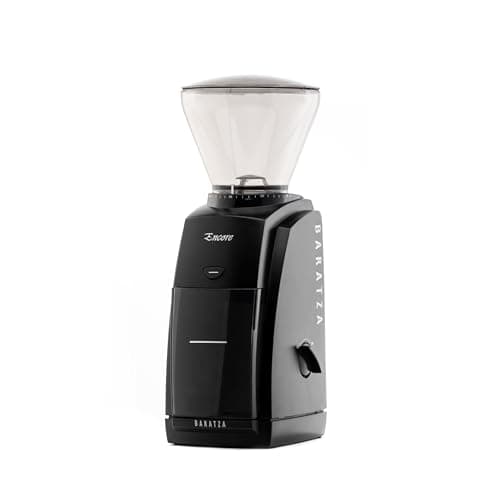
| Baratza Encore | Electric | 40mm conical | Best overall | $149.95Buy |
| Fellow Ode Gen 2 | Electric | 64mm flat | Best premium | $399.95Buy |
| Baratza Virtuoso+ | Electric | 40mm M2 conical | Best step-up | $249.95Buy |
| 1Zpresso Q | Hand | Heptagonal steel | Best budget | $99.00Buy |
Prices shown are from Amazon as of October 17, 2026 and change often — the button always goes to the current listing. Some links may earn us a commission at no extra cost to you.
Best overall for French press: Baratza Encore
The Encore is the default recommendation for immersion brewing and has been for years. It runs 40mm conical burrs across 40 grind settings, and the coarse end of that range is where it is genuinely at its best — even, clean, and consistent batch to batch.
It is also the most repairable grinder here. Baratza builds parts to be user-replaceable and sells them, which at this price is unusual and means an Encore is a grinder you keep rather than replace. For a brewer as forgiving as a French press, that longevity is arguably worth more than a marginal improvement in particle distribution.
| Burrs | 40mm conical (steel, user-replaceable) |
|---|---|
| Grind settings | 40 stepped |
| Best range | Drip, pour over and French press |
| Espresso | No — the Encore ESP is the espresso-capable version |
| Parts | User-replaceable and sold separately |
What we like: a clean coarse grind, enough settings to fine-tune a press, exceptional repairability, and a price that makes sense for a brewer this forgiving. The honest downsides: it cannot reach espresso fineness at all, so if espresso is anywhere in your future you want the Encore ESP instead; and it is hopper-fed, so there is some retention between doses.
Best premium: Fellow Ode Gen 2
If you want the cleanest coarse grind available at a sane home price, this is it. The Ode Gen 2 uses 64mm flat burrstuned purely for filter and immersion brewing — it deliberately does not attempt espresso, and that focus is exactly why it is good here.
Large flat burrs produce a notably narrow particle distribution, which in French press terms means markedly fewer fines— less silt, less over-extracted bitterness, and a cleaner cup that still keeps the body a press is meant to have. It is also built around single dosing with low retention: you weigh in what you want, and essentially all of it comes out.
What we like: the best coarse grind quality here by a clear margin, single-dose workflow, low retention, and a genuinely quiet grind. The honest downsides: it costs roughly two and a half times the Encore, it cannot do espresso at all by design, and for a brewer as forgiving as a French press the improvement is real but subject to diminishing returns — this is a grinder for someone who also brews a lot of pour over, where clarity pays off harder.
Full detail in our Fellow Ode Gen 2 review, and flat vs conical burr explains why the burr geometry matters here.
Best step-up: Baratza Virtuoso+
The middle option, and the natural upgrade for someone who likes the Encore's approach but wants a cleaner result. The Virtuoso+ uses upgraded M2 conical burrs that produce a measurably more consistent grind than the standard Encore, and it adds a digital dosing timer for repeatable batches.
For French press specifically, the win is fewer fines at the coarse settings, which is precisely the variable that matters. The timer is a genuine convenience for a brewer where you are grinding 30–60 g at a time rather than a single espresso dose.
What we like: a real step up in consistency without leaving the repairable Baratza ecosystem, and a dosing timer that suits batch brewing. The honest downsides: it costs substantially more than the Encore for an improvement most casual press drinkers will not notice, and it is still a conical-burr hopper grinder rather than a low-retention single doser.
If you are weighing the two, Encore vs Virtuoso+ covers the comparison directly.
Best budget and travel: 1Zpresso Q
The under-$100 answer, and a reminder that French press is the method where a modest grinder goes furthest. The 1Zpresso Q is a small, light hand grinder with heptagonal steel burrsand a foldable handle, and it grinds coarse cleanly — which is all a press asks for.
It is also the obvious choice for travel and camping, which is a real French press use case: a press needs no power and no paper, and pairing it with a hand grinder makes the whole setup self-contained.
What we like: excellent grind for the money, genuinely portable, no power required, and almost no retention. The honest downsides: you grind by hand, and a French press dose is large — grinding 50 g of coffee by hand takes noticeably longer than a single espresso dose. It also does not reach espresso fineness usefully, so it is a filter and immersion grinder.
What setting should you use?
Coarse — the texture of coarse sea salt or raw sugar, distinctly chunky, with visible individual particles. On a Baratza Encore or Virtuoso+, that is roughly the upper third of the range as a starting point; every grinder is calibrated differently, so treat any number as a starting point and adjust by taste.
Then let the brew tell you which way to move:
| What you taste | What it means | Adjustment |
|---|---|---|
| Bitter, harsh, drying | Over-extraction, usually too many fines | Grind coarser |
| Sour, thin, savory | Under-extraction | Grind slightly finer |
| Silt in the last inch | Fines passing the mesh | Grind coarser; skim the foam after the crust break |
| Plunger takes real force | Grind far too fine | Grind noticeably coarser |
Our grind size chart shows French press next to every other method, and how to make French press coffeecovers the rest of the recipe — including the crust break and the decanting step that fix most bitter cups without touching the grinder at all.
How to choose
French press is the most forgiving brewer in the kitchen, which means this is one of the few places where the cheap answer is genuinely a good answer.
If French press is mostly what you brew: the Baratza Encore is the sensible buy and will be for years. Repairable, clean at coarse settings, priced sanely.
If you are on a tight budget or you travel: the 1Zpresso Q does the job for under a hundred dollars and takes no counter space.
If you also brew a lot of pour over: the Fellow Ode Gen 2 is worth the money — its low-fines grind pays off more in a paper-filtered brewer than in a press, so let the pour over justify it.
If espresso is anywhere in your plans: do not buy any of these. Nothing on this page reaches espresso fineness usefully, and buying a filter grinder now means buying twice. Start with best espresso grinders under $200 or best grinders for espresso, both of which still grind coarse well enough for a press.
Frequently asked questions
What is the best grinder for French press?
The Baratza Encore for most people — 40mm conical burrs, 40 settings, a clean grind at the coarse end and famously repairable parts. If you want the cleanest coarse grind available, the Fellow Ode Gen 2's 64mm flat burrs produce noticeably fewer fines. On a tight budget, the 1Zpresso Q hand grinder does the job for under $100.
What grind size should I use for French press?
Coarse — roughly the texture of coarse sea salt or raw sugar, with visible individual particles. On a Baratza Encore or Virtuoso+, start in the upper third of the range and adjust by taste. If the cup is bitter or silty, go coarser; if it's sour and thin, go slightly finer. If the plunger takes real force, your grind is much too fine.
Why does grinder quality matter so much for French press?
Because a French press filters through a metal mesh screen, which can't hold back small particles. Every fine your grinder produces at a coarse setting goes into the mug, where it over-extracts into bitterness and settles as silt. A well-aligned burr set produces a narrow particle distribution — mostly the size you asked for — while a cheap one produces coarse particles plus a lot of dust.
Can I use a blade grinder for French press?
It's the worst possible match. A blade grinder smashes rather than grinds, producing boulders and dust at the same time. The dust passes straight through the mesh and over-extracts into bitterness while the boulders never extract properly, so you get bitter and sour in one cup with no way to fix it by technique. If you brew press coffee with a blade grinder, a burr grinder is your highest-impact upgrade.
Is the best espresso grinder also the best French press grinder?
Not automatically — the requirements are almost inverted. Espresso is judged on how fine a grinder goes and how precisely it adjusts near the fine end; French press is judged on how cleanly it grinds when set coarse. A grinder can be excellent at one and merely fine at the other. That said, most good espresso grinders do grind coarse acceptably, so if you want both, buy for espresso.
Do I need an expensive grinder for French press?
No, and French press is the method where that's most honestly true. It's the most forgiving brewer in the kitchen, so a $150 Baratza Encore or even a $99 hand grinder gets you most of the way. The premium options produce a measurably cleaner cup, but the improvement is subject to diminishing returns — they make more sense if you also brew pour over, where clarity pays off harder.
Sources
Keep reading
Buying your first setup?
See how we pick — compiled specs, cost-per-shot math, and honest trade-offs — then dig into the guides. No fake test lab, no rankings for hire.