Single Review
Fellow Ode Gen 2 Review
A flat-burr grinder built for one job and built for it well: filter coffee. 64mm flat burrs, single dosing and very low retention make the Ode Gen 2 a pour over specialist — as long as you know it is not an espresso grinder.
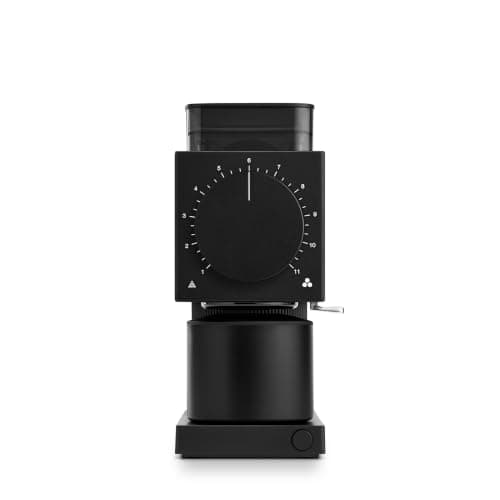
A superb filter and pour over grinder — big flat burrs, a clean single-dose workflow and very low retention — held back only by the fact that it deliberately does not grind espresso.
- Best for
- Filter drinkers who want the clearest cup a home grinder can give for pour over, drip, AeroPress and French press
- Price context
- A premium filter-only grinder; you pay for the flat burrs and design rather than versatility
The Fellow Ode Gen 2is a flat-burr grinder with a narrow, deliberate mission: make the best filter coffee a home grinder can. It is not trying to be an all-rounder. Fellow took 64mm flat burrs — the geometry serious cafes reach for when they want a clean, well-defined cup — wrapped them in a single-dose workflow with very low retention, and tuned the whole grinder for pour over, drip, AeroPress and French press. Do those things and only those things, and the Ode Gen 2 is one of the nicest home grinders you can buy. Ask it to grind espresso and it will politely refuse, and that surprises more buyers than anything else about it.
A note on honesty first: we don't run a lab. This review compiles Fellow's published specifications, cross-checks them against verified owner feedback, and does the reasoning — the same method we use on every product, described on our methodology page. We have not put a particle analyzer to the Ode; what follows is what the design and the numbers tell you, honestly framed.
Who the Ode Gen 2 is for
The Ode Gen 2 is for the filter drinker who has decided their grinder should be the best part of the setup. If your mornings are pour over, batch drip, AeroPress or French press — and espresso is not on the menu — this is a grinder that will quietly improve every cup and keep doing it for years. It suits people who single dose: those who weigh out one brew's worth of beans at a time, often switching between a couple of coffees, and want the grind to reflect exactly the beans they put in with nothing left over from yesterday. If that is you, and you have already read our best grinder for pour over guide and want the specialist rather than the value pick, the Ode is the answer that guide points to.
It is the wrong grinder for two kinds of buyer. First, anyone who pulls espresso, or thinks they might — the Ode cannot do it, and we will come back to why. Second, anyone shopping mainly on price: a conical all-rounder will brew very good filter coffee for a lot less. The Ode earns its premium on grind quality and the pleasure of using it, not on doing more jobs.
What the specs say
The headline is the burr set. The Ode Gen 2 runs 64mm flat steel burrs, which is a large flat set by home-grinder standards — bigger than the 40mm conical burrs in an everyday grinder and larger even than the 50mm flats in many espresso-leaning machines. Big flat burrs grind fast, run cool and, most importantly here, produce a very uniform particle size with fewer of the fines that muddy a filter cup. That uniformity is the whole reason to buy a grinder like this: cleaner, more separated flavors in pour over and drip.
| Burrs | 64mm flat (steel) |
|---|---|
| Grind settings | 31 stepped |
| Dosing | Single dose (~100 g bean capacity) |
| Grind range | Filter methods; bottoms out ~250-300 microns |
| Espresso | Not suitable (per Fellow) |
| Retention | Very low (single-dose design) |
| Extras | Anti-static technology, magnetic catch cup, built-in knocker |
The rest of the sheet reads like a grinder that knows its lane. There are 31 stepped settings, which sounds modest next to grinders that boast 40 or a stepless dial — but 31 steps spread across only the filter range give you plenty of resolution where you actually brew, from a fine AeroPress up to a coarse French press. It is a single-dose design: rather than a big hopper of beans sitting on top, you drop in one brew's worth at a time, which is why the retention is so low. And Fellow states plainly that the grinder is not meant for espresso — its adjustment bottoms out around the coarse-filter to fine-filter zone (roughly 250–300 microns at the finest), well above the sub-100-micron territory espresso needs.
What it's like to live with
Three things define daily life with the Ode Gen 2, and Fellow got all three right. The first is single dosing. You weigh out the exact dose you want to brew, tip it into the top, grind, and the grounds drop into a magnetic catch cup that clicks neatly into place. A built-in knocker lets you rap the last grounds loose without banging the grinder on the counter. It is a tidy, deliberate ritual rather than a hopper you scoop from, and it means every brew reflects the beans you just measured.
The second is very low retention. Because there is no hopper column and the grind path is short, almost nothing stays behind between doses. That matters most if you rotate beans: switch from a washed Ethiopian to a chocolatey Colombian and you are not tasting a ghost of the last coffee in the first cup. It also means what you weigh in is very close to what you get out, which is the entire point of single dosing. Flat-burr grinders are usually notorious for static-thrown grounds and clumping; Fellow's anti-static technology is specifically there to fight that, and it makes the Ode far cleaner to use than big flat burrs would otherwise be.
The third is that it is quiet and undemanding. It grinds fast thanks to the large burrs, it is calmer than most grinders in its class, and it looks like something you are happy to leave out. Dialing in filter is straightforward: pick a starting step from a grind size chart, taste, and nudge one or two steps coarser or finer. For the brewing this grinder is built for, that is all the control you need.
The espresso caveat — read this first
This is the single most important thing to understand before you buy, and the one buyers get wrong most often: the Fellow Ode Gen 2 is not an espresso grinder.Fellow says so plainly, and it is not a limitation you can dial around. Espresso needs a very fine grind — well under 100 microns — with fine enough adjustment to move a shot in tiny increments. The Ode's range deliberately stops well coarser than that, bottoming out in filter territory. There is no espresso setting hiding at the fine end; the grinder simply does not go there.
This is a design choice, not a defect. Fellow built the Ode's burrs and adjustment purely for brewed coffee, and constraining the range to the filter zone is part of why its 31 steps give such good resolution where it counts. But it means the Ode cannot be your only grinder if espresso is ever on the table — not for a single shot. If you have an espresso machine, or expect to buy one, cross the Ode off and look at a grinder that reaches espresso fineness instead.
Alternatives worth considering
If the Ode's filter focus is exactly what you want but its price is a stretch, the Baratza Encoreis the value alternative. Its 40mm conical burrs will not match the clarity of the Ode's big flats, but it grinds very good filter coffee across pour over, drip and French press, is famously repairable, and costs a fraction as much. For a lot of people it is the smarter buy; the Ode is the upgrade you make when the cup quality is worth the premium. Both sit in our best burr grinder roundup if you want to see them side by side.
If you actually need espresso — the thing the Ode cannot do — do not buy the Ode and hope. The Baratza Encore ESP reworks the Encore to reach true espresso fineness with fine 20-micron micro-steps, so it spans espresso through filter in one grinder; our Encore ESP reviewhas the detail. And if espresso is your main drink and you want stepless precision, a stepless flat-burr grinder like the Eureka Mignon Notte is the direction to look — the field is in our best grinder for espressoguide. The rule is simple: match the grinder's range to the brews you actually make.
Verdict
The Fellow Ode Gen 2 is a specialist that is excellent at its specialty. Big 64mm flat burrs give you the clean, well-defined filter cup that is genuinely hard to get any other way at home; the single-dose workflow, very low retention, anti-static grinding and thoughtful touches like the magnetic catch cup and knocker make it a pleasure to live with. The catch — and it is a real one — is that it is a filter grinder, full stop. It does not grind espresso, it costs more than a capable all-rounder, and it only makes sense if brewed coffee is your world. Buy it for pour over, drip, AeroPress and press and you will love it; buy it expecting espresso and you will return it. Go in clear-eyed about that trade-off and, for the right drinker, it is one of the best filter grinders you can own.
What we liked
- 64mm flat burrs deliver outstanding clarity and consistency for filter coffee
- True single dosing — weigh in a dose, grind it, get almost all of it back
- Very low retention keeps flavor changes clean when you switch beans
- Anti-static technology cuts the grounds mess flat burrs are usually known for
- Magnetic catch cup and built-in knocker make for a tidy, low-fuss workflow
- Quiet by grinder standards and a genuinely nice object to have on the counter
What gave us pause
- Not an espresso grinder — its range bottoms out too coarse for espresso, by design
- Single-purpose: no reason to pay for it if you also want espresso from one grinder
- The priciest way to grind filter coffee at home
- 31 stepped settings are plenty for filter but there is no stepless fine control
Frequently asked questions
Can the Fellow Ode Gen 2 grind espresso?
No. Fellow built the Ode Gen 2 for filter coffee, and its grind range bottoms out too coarse for espresso — around the fine-filter zone (roughly 250-300 microns), well above the sub-100-micron fineness espresso needs. There is no espresso setting at the fine end; it is a design choice, not a limitation you can adjust around. If you pull espresso, look at the Baratza Encore ESP or a dedicated espresso grinder instead.
What brew methods is the Ode Gen 2 best for?
Filter methods: pour over, batch drip, AeroPress and French press. Its 64mm flat burrs produce a very uniform grind that gives clean, well-separated flavors, and its 31 stepped settings cover the whole filter range with good resolution. It is a filter and pour over specialist, not an all-rounder.
Is the Fellow Ode Gen 2 a single-dose grinder?
Yes. Instead of a hopper of beans, you drop in one brew's worth at a time, grind, and the grounds fall into a magnetic catch cup. Because there is no hopper column, retention is very low — almost nothing stays behind between doses — so what you weigh in is very close to what you get out, and switching beans doesn't carry flavor over.
How many grind settings does the Ode Gen 2 have?
31 stepped settings. That is fewer than some grinders advertise, but because all 31 steps are spread across only the filter range rather than espresso-to-French-press, you get plenty of usable resolution where you actually brew. There is no stepless micro-adjustment, but for filter coffee the steps are fine enough.
Is the Fellow Ode Gen 2 worth the price?
If you brew only filter coffee and want the best cup a home grinder can give, yes — the flat-burr clarity, low-retention single dosing and clean, quiet workflow justify the premium. If you want one grinder that also does espresso, or you are shopping on price, a conical all-rounder like the Baratza Encore makes more sense. The Ode is worth it precisely because it is a specialist.
Sources
Keep reading
Buying your first setup?
See how we pick — compiled specs, cost-per-shot math, and honest trade-offs — then dig into the guides. No fake test lab, no rankings for hire.