Buying Guide
The Best Coffee Beans for French Press
French press is the most forgiving brewer in your kitchen and the least forgiving of a bad grind. Five whole-bean picks chosen on roast level, body and the roaster's own published notes - and an honest explanation of why the bean is the second most important decision you make.
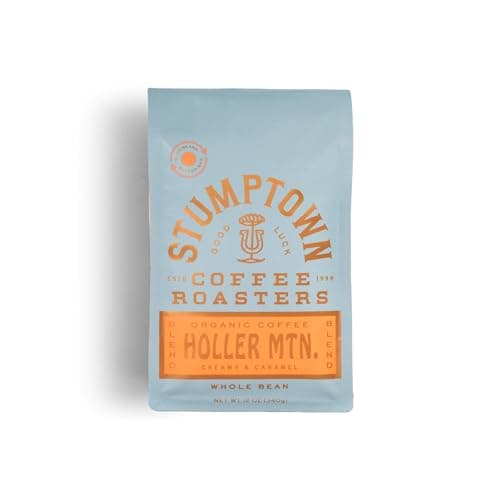
For French press, buy Stumptown Holler Mountain: a full-bodied organic medium roast built from Latin American chocolate and East African brightness. Stumptown publishes it as citrus, caramel and berry jam, and that combination is exactly what full immersion does well — the long steep pulls out body and sweetness, and the brighter African component keeps the cup from going flat. If you want the heavier, classic French press cup instead, Peet's Major Dickason's Blend is the dark roast to buy. If you want the cheapest good bag, Kicking Horse Three Sisters.
One honest thing before the picks. French press is the most forgiving brewer in your kitchen when it comes to beans — the four-minute immersion and the metal filter give almost any coffee body and sweetness. It is the least forgiving when it comes to grind. If your press produces muddy, bitter coffee with silt in the last inch, the bean is probably not the problem, and the grind section below will help more than this shopping list will. Our how to make French press coffee guide covers the full method.
What French press actually needs from a bean
Full immersion is a different extraction from pour over or espresso, and three things follow from that.
Body is the point, so roast level matters more than origin.A French press leaves the coffee sitting in the water for around four minutes and then filters it through metal rather than paper, so oils and fine colloids stay in the cup. That is why the brewer rewards medium and dark roasts: they have more soluble sugars broken down and more body to give, and the metal filter keeps all of it. A very light, acid-forward single origin can taste thin and sour in a press even when it is wonderful in a V60 — our French press vs pour over comparison covers why the same bag tastes different in each.
Whole bean is not optional. Pre-ground supermarket coffee is ground for drip, which is far too fine for a press: the fines slip through the mesh and keep extracting in your cup, which is where the bitterness and the silt come from. Every pick on this page is a whole-bean bag for that reason.
Freshness beats pedigree.A good bean two months past roast makes a duller cup than an ordinary bean two weeks past roast. Buy a bag size you will finish in three or four weeks, keep it sealed and at room temperature, and do not put it in the freezer in daily-use portions — our how to store coffee beans guide covers the specifics.
How we chose these
On roast level, body and each roaster's own published tasting notes — not on cuppings we did not run. Units we claim to have tasted in a controlled panel: zero, which is also what our methodology page says. In this order:
- Roast level suited to immersion.Medium through dark, where the brewer's long contact time becomes body and sweetness rather than sourness.
- Published tasting direction.We quote the roaster's own notes, or a named published review, and we say which. We do not invent flavor descriptors.
- Whole bean, in a sensible bag size. A bag you can finish inside a month beats a bulk bag that goes stale in the cupboard, which is why two of these picks are 10 and 12 oz.
- Actually buyable. Every pick below was checked live against its retail listing before it went on this page, and the price you see is pulled from that listing rather than typed in by us.
At a glance
| Coffee | Roast | Published notes | Bag | Price |
|---|---|---|---|---|
| Stumptown Holler Mountain | Medium | Citrus, caramel, berry jam | 12 oz organic whole bean | $14.98Buy |
| Kicking Horse Three Sisters | Medium | Stone fruit, cocoa | 10 oz organic whole bean | $14.89Buy |
| Peet's Major Dickason's Blend | Dark | Full-bodied; chocolate and pungent citrus in published reviews | 18 oz whole bean | $16.86Buy |
| La Colombe Nizza | Medium | Milk chocolate, nuts, brownie | 12 oz whole bean | $14.79Buy |
| Stumptown Hair Bender | Medium | Complex, bright, chocolatey | 18 oz whole bean | $21.98Buy |
Prices shown are from Amazon as of October 25, 2026 and change often — the button always goes to the current listing. Some links may earn us a commission at no extra cost to you.
Best overall for French press: Stumptown Holler Mountain
Who it is for: anyone who wants one bag to be the right answer, and who drinks their press coffee black or with a splash.
Holler Mountain is Stumptown's signature organic blend and it is built the way a good immersion coffee should be: chocolate textures from Latin America carrying the body, with brightness from East Africa keeping the cup lively. Stumptown publishes it as a versatile, full-bodied medium roast with notes of citrus, caramel and berry jam, and it is USDA Organic 100% Arabica.
That blend logic is why it suits a press better than a single origin at the same price. Full immersion flattens subtlety — four minutes of soaking extracts a lot of everything — so a coffee with a clear sweet base and one bright top note comes through intact, where a delicate washed Ethiopian can lose its definition. In a press, Holler Mountain reads as cocoa and caramel with a citrus edge rather than as a flavor puzzle.
| Roast | Medium (full-bodied) |
|---|---|
| Published notes | Citrus, caramel, berry jam |
| Origins | Latin America + East Africa blend |
| Certification | USDA Organic, 100% Arabica |
| Format | 12 oz whole bean (18 oz also sold) |
What we like: a 12 oz bag is the right size to finish fresh, the blend is designed for exactly this kind of brewing, and the published notes are specific rather than marketing adjectives.
The honest cons: it is specialty-priced, so it costs noticeably more per ounce than a supermarket dark roast, and a 12 oz bag goes quickly in a two-cup-a-day household. The East African brightness that makes it interesting also makes it less “bold” than people expect from a press — if you want the heavy, smoky cup, take the Major Dickason's instead. And as with any roaster-dated specialty bag, the quality depends on how long it sat in a warehouse before it reached you.
Best organic value: Kicking Horse Three Sisters
Who it is for: the daily drinker who wants certified organic and Fairtrade coffee without specialty pricing.
Three Sisters is Kicking Horse's medium roast from Central and South America, published as well-rounded and complex with notes of stone fruit and cocoa, with an aroma the roaster describes as sweet dried fruit, toasted coconut and chocolate malt. It is certified organic, Fairtrade and kosher, and the 10 oz whole-bean bag is one of the cheapest ways on this page to get a genuinely good French press cup.
The reason it works in a press is the cocoa-and-stone-fruit balance. Immersion brewing rewards a coffee with sweetness to give, and a Latin American medium roast has that without the roast bitterness a dark blend brings. It is also an easy coffee to get right: there is less to lose if you steep a minute long.
| Roast | Medium |
|---|---|
| Published notes | Stone fruit, cocoa; aroma of dried fruit, toasted coconut, chocolate malt |
| Origins | Central and South America |
| Certification | Certified organic, Fairtrade, kosher |
| Format | 10 oz whole bean (2.2 lb bag also sold) |
What we like: the price per ounce, the certifications, and a bag size small enough to stay fresh. The 2.2 lb bag exists if you are feeding a household, though you lose the freshness argument.
The honest cons: 10 oz is a small bag, so the cost per cup is better than it looks only if you buy the big one — and the big one will be past its best before most households finish it. It is also a safe, middle-of-the-road cup by design: nothing here will surprise you, which is the point and also the limitation. Kicking Horse does not publish a roast date on the retail bag, so freshness is a matter of trusting the retailer's turnover.
Best dark roast: Peet's Major Dickason's Blend
Who it is for:the drinker who wants French press to taste bold, heavy and a little smoky — and who wants to be able to buy it in a supermarket.
Major Dickason's is the bag most people are actually picturing when they think of French press coffee. Peet's publishes it as a dark roast that is flavorful, robust and full-bodied, and the published reviews bear that out: Coffee Review has described it across multiple vintages with notes of cedar, orange-ish fruit and semi-sweet chocolate in a fat-bodied cup (January 2007) and cocoa powder, condensed milk and raisin (April 2022).
In a press that heaviness is an asset. The metal filter keeps the oils that make a dark roast taste rich rather than dusty, and the long steep means you do not need the fine grind that makes dark roasts taste ashy in other brewers. It is also the most available coffee here — the 18 oz whole-bean bag is in most grocery stores, which matters more than a specialty roaster's pedigree if you are going to run out on a Sunday.
| Roast | Dark |
|---|---|
| Published character | Flavorful, robust, full-bodied (Peet's) |
| Published review notes | Cedar, orange fruit, semi-sweet chocolate; cocoa powder and raisin |
| Format | 18 oz whole bean |
What we like: real body, wide availability, a sensible bag size, and a price per ounce well below the specialty picks.
The honest cons: dark roasting costs you origin character, and published reviews of this blend have repeatedly flagged carbon and smoke alongside the chocolate — the 1997 Coffee Review write-up called out “twisty, smoky carbon” before the sweetness emerged. If you like brightness or fruit in your cup, this is the wrong bag. Dark roasts also go stale faster once opened because the oils are already at the surface, and they are harder to grind evenly — oily beans clump in a grinder chute, which matters more for a press than for anything else.
Best low-acidity pick: La Colombe Nizza
Who it is for: the drinker who finds bright coffee sour, or who adds milk and wants the coffee to survive it.
Nizza is La Colombe's medium roast, published as milk chocolate, nuts and brownie with a honey-sweet roasted nuttiness. There is no fruit note in that list and no acidity claim, which is exactly why it belongs here: it is the most forgiving bag on the page. Over-steep it by a minute and it gets heavier rather than harsher.
It is also the pick we would hand someone who takes their press coffee with milk. A nutty, chocolate-forward medium roast keeps its identity under dairy, where a brighter coffee's citrus character tends to read as sour instead. The same logic is why it appears in our best coffee beans for a latte guide.
| Roast | Medium |
|---|---|
| Published notes | Milk chocolate, nuts, brownie; honey-sweet roasted nuttiness |
| Format | 12 oz whole bean |
What we like: low perceived acidity, a sweet and legible flavor profile, a 12 oz bag, and real tolerance for an imprecise steep.
The honest cons: it is the least interesting coffee here if you like to taste origin. There is no brightness to balance the chocolate, so black and unsweetened it can read as one-dimensional next to the Holler Mountain. And a nut-and-chocolate medium roast is a crowded category — you are buying a reliable version of a common thing, not something distinctive.
Best if you also pull espresso: Stumptown Hair Bender
Who it is for: the kitchen with a press and an espresso machine that does not want to keep two bags open.
Hair Bender is Stumptown's multi-region specialty blend, published as complex, bright and chocolatey and designed to work as espresso as well as filter. It is the only coffee on this page we would genuinely recommend for both jobs, which is why it also leads our best coffee beans for espresso guide and appears in our best beans for cold brew picks.
In a press it leans brighter than the others here, which some people love and some read as thin. If you are using the same bag for shots, that brightness is the point: an espresso blend has to have acidity to survive a 25-second extraction, and in a four-minute immersion that same acidity keeps the cup from going syrupy.
| Roast | Medium |
|---|---|
| Published character | Complex, bright, chocolatey; multi-region blend |
| Also suited to | Espresso, cold brew |
| Format | 18 oz whole bean |
What we like: one bag covering two brewers properly, an 18 oz size that justifies the specialty price, and published notes that match what the blend is for.
The honest cons: it is the most expensive coffee on this page, and if you only own a press you are paying for espresso-blend design you will not use. It is also the brightest pick here, so it is the least likely to give you the heavy, bold cup most people associate with a press. And 18 oz is a lot of specialty coffee to get through before it dulls.
The grind matters more than the bean
This is the part of the page we would most like you to read. French press needs a coarse, even grind, and the word doing the work is even. The metal mesh only holds back particles bigger than its holes, so every fine particle your grinder produces goes into the cup and keeps extracting while you drink. That is the source of almost every complaint about press coffee: silt at the bottom, bitterness that arrives late, a cup that tastes muddy rather than clean.
A blade grinder cannot do this. It chops rather than cuts, so it produces coarse chunks and dust at the same time — our burr vs blade explainer has the detail. A burr grinder set coarse produces a narrow band of similar-sized particles, which is what the brewer needs. Our grind size chart shows where French press sits relative to every other method, and our best grinder for French press guide ranks the affordable options.
If you already own an espresso setup, the good news is that almost any espresso-capable burr grinder also covers the coarse end — the Breville Smart Grinder Pro reaches French press at the top of its dial, and the dual-purpose grinders in our best espresso grinder under $1000 guide are built to span both ends. You do not need a second grinder.
The other half of the equation is ratio and time. Our coffee to water ratio guide covers the arithmetic; for a press, a standard starting point is around 1:15 by weight with a four-minute steep, then pour the whole pot out rather than leaving it sitting on the grounds.
Three mistakes that ruin good beans
Buying pre-ground. Pre-ground coffee is ground for drip machines, which is far too fine for a press. The fines pass the mesh and over-extract in the cup. If you cannot grind at home yet, ask for a coarse grind at the counter and buy a smaller bag, because ground coffee stales in days rather than weeks.
Leaving the coffee on the grounds. A press does not stop brewing when you plunge. Decant the whole pot into a cup or a carafe at four minutes; what is left in the press keeps extracting and the second cup will be bitter even if the first was perfect.
Using boiling water.Water straight off a rolling boil scalds the grounds and adds harshness, especially with a dark roast like the Major Dickason's. Let the kettle sit for 30 seconds or so. If you want to be precise about it, our gooseneck kettle picks include models with temperature control.
How to choose
Want one bag that is simply right? Stumptown Holler Mountain— a full-bodied organic medium roast published as citrus, caramel and berry jam.
Want the bold, heavy, classic press cup? Peet's Major Dickason's Blend— a dark roast with the body the brewer was made for, and the easiest of these to re-buy locally.
Want organic coffee at a daily-drinker price? Kicking Horse Three Sisters.
Find bright coffee sour, or add milk? La Colombe Nizza.
Own an espresso machine too? Stumptown Hair Bender, and keep one bag open instead of two.
Still choosing the press itself? Our best French press guide ranks the brewers, and how to make French press coffee walks through the method these beans assume.
Frequently asked questions
What are the best coffee beans for a French press?
Stumptown Holler Mountain for most people - a full-bodied organic medium roast that Stumptown publishes as citrus, caramel and berry jam, built from Latin American chocolate notes and East African brightness, which is the balance full immersion handles best. For the bold, heavy, classic press cup, Peet's Major Dickason's Blend, a dark roast published as flavorful, robust and full-bodied. For certified organic coffee at a daily-drinker price, Kicking Horse Three Sisters, published as well-rounded with stone fruit and cocoa.
Should French press coffee be a light, medium or dark roast?
Medium is the safest default and dark is the classic. A French press steeps for around four minutes and filters through metal rather than paper, so oils and body stay in the cup - which rewards roasts that have body to give. Very light, acid-forward coffees can taste thin or sour in a press even when they are excellent in a pour over. If you want brightness, choose a medium roast with a clear sweet base rather than a light single origin.
Can I use pre-ground coffee in a French press?
You can, but it is the single biggest cause of bad press coffee. Pre-ground supermarket coffee is ground for drip machines, which is much finer than a press needs, and those fine particles pass straight through the metal mesh and keep extracting in your cup - that is where the silt and the late bitterness come from. Buy whole bean and grind coarse, or ask for a coarse grind at the counter and buy a small bag.
What grind size does a French press need?
Coarse, and - more importantly - even. The mesh only holds back particles larger than its holes, so consistency matters more here than in any other brewer. A burr grinder set coarse produces a narrow band of similar-sized particles; a blade grinder produces chunks and dust at the same time, which is why blade-ground press coffee tastes muddy. Almost any espresso-capable burr grinder also reaches French press coarseness at the top of its range, so you rarely need a second grinder.
How much coffee do I use in a French press?
A standard starting point is around 1:15 coffee to water by weight - roughly 33 g of coffee for 500 g of water - with a four-minute steep. Then decant the whole pot immediately: coffee left sitting on the grounds keeps extracting, so the second cup from a press you did not pour out will be noticeably more bitter than the first.
Does organic or Fairtrade coffee taste better in a press?
No - certification tells you about growing and trading practice, not about cup quality. Two of our picks here (Stumptown Holler Mountain and Kicking Horse Three Sisters) are certified organic because they also happen to be well-made coffees at their price, not because the label improves the brew. Buy on roast level, published notes and freshness; treat certification as a separate thing you may value for its own reasons.
How long do coffee beans stay good for French press?
Plan to finish a bag within three to four weeks of opening it. Dark roasts like Major Dickason's go dull faster once opened because their oils are already at the surface. Keep beans sealed at room temperature away from light, and buy a bag size that matches how much you actually drink - a fresh ordinary coffee beats a stale excellent one in any brewer, and especially in a press where body is the whole point.
Sources
- Stumptown Coffee Roasters - Holler Mountain blend page (signature organic blend, versatile full-bodied medium roast, Latin American chocolate with East African brightness, published notes of citrus, caramel and berry jam, USDA Organic 100% Arabica, 12 oz and 18 oz formats)
- Kicking Horse Coffee - Three Sisters product page (medium roast, Central and South America, published notes of stone fruit and cocoa, aroma of sweet dried fruit, toasted coconut and chocolate malt, certified organic, Fairtrade and kosher, 10 oz and 2.2 lb formats)
- Peet's Coffee - Major Dickason's Blend product page (dark roast, published as flavorful, robust and full-bodied, 18 oz whole bean format)
- Coffee Review - published reviews of Peet's Major Dickason's Blend across multiple vintages (cedar, orange fruit and semi-sweet chocolate in a fat-bodied cup, January 2007; cocoa powder, condensed milk and raisin, April 2022; smoky carbon noted October 1997)
- La Colombe - Nizza product page (medium roast, published notes of milk chocolate, nuts and brownie with honey-sweet roasted nuttiness, 12 oz format)
- Stumptown Coffee Roasters - Hair Bender blend page (multi-region specialty blend, published tasting direction, designed for espresso and filter)
- National Coffee Association - Coffee Roasts Guide (roast level, acidity direction, surface oils)
- National Coffee Association - How to Brew Coffee (French press method, ratio and steep guidance)
- Amazon product listings for each pick - bag size and roast level verified against the listing title, current availability and live price capture
- Specialty Coffee Association - extraction and brewing fundamentals
Keep reading
Buying your first setup?
See how we pick — compiled specs, cost-per-shot math, and honest trade-offs — then dig into the guides. No fake test lab, no rankings for hire.