Buying Guide
The Best Espresso Machine Under $300 in 2026
Six ways to make genuinely good espresso on a tight budget — chosen on published specs, portafilter type and honest trade-offs. And the one purchase that matters more than the machine.
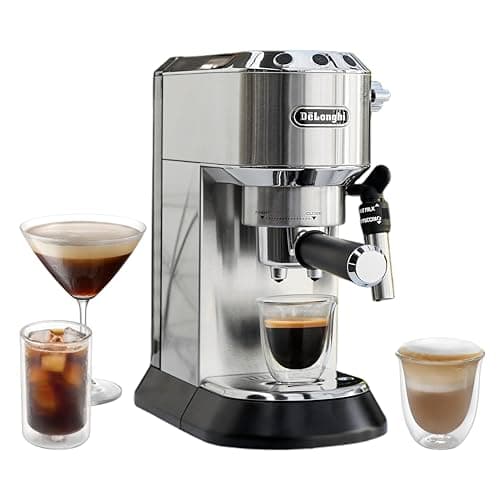
Real espresso on a tight budget is possible — you just have to spend the money in the right place. The machines below all pull a genuine pressurized shot (or, in one honest case, make excellent pod coffee), and each is the strongest pick for a specific buyer: the person who wants the most complete little machine, the person testing the waters as cheaply as possible, the person who wants metal not plastic, the person willing to reach the ceiling of the budget, the person who wants a lever with no cord, and the person who just wants a button.
Our overall pick is the De'Longhi Dedica Deluxe: it heats fast, has a real manual wand, and takes up barely six inches of counter. But before you spend a cent on the machine, read the next section — because at this price, where the money goes matters more than which machine you choose.
Start here: the grinder matters more than the machine
For espresso, the grinder changes what ends up in the cup more than the machine does. Espresso is brewed by forcing hot water through a tightly packed puck at roughly 9 barof pressure, and that only works if the grind is fine, even and adjustable in tiny steps. A machine cannot rescue an inconsistent grind — but a good grinder makes a cheap machine punch far above its price.
So the advice nobody on a budget wants to hear: do not put every dollar into the machine. A modest machine paired with a real burr grinder beats a slightly nicer machine fed by a cheap blade grinder, every single time. Start with our best grinders for espresso guide, and if you have a little more room, our best espresso machines under $500 guide shows what the next tier buys you.
How we picked
We do not run a test lab, and we do not pretend to. Every machine here was evaluated against its published manufacturer specifications, the design details that decide how it performs and how forgiving it is, and verified owner feedback — our full approach is on the methodology page. For machines at the bottom of the price ladder specifically, we weighted:
- Does it make real espresso?A pump machine forcing water through a puck at about 9 bar is doing espresso; a centrifugal pod machine is doing something else. Both can belong here, but you should know which you are buying.
- Basket type. A pressurized (dual-wall) basket is forgiving while you learn but caps quality; a non-pressurized basket rewards a good grind. We say plainly which each machine uses.
- Heat-up and steam.A thermoblock or ThermoJet heater is ready in seconds, and a manual wand lets you make milk drinks — the two features that decide daily livability.
- Build and honest value— plastic versus stainless, and whether the machine leaves room in the budget for the grinder that actually decides the shot.
At a glance
The field side by side. Tap any "view" button for the live Amazon price; the number shown at checkout is the one that applies.
| Machine | Basket / type | Milk | Best for | Price |
|---|---|---|---|---|
| De'Longhi Dedica | Pressurized | Manual wand | Overall compact | $249.00Buy |
| De'Longhi Stilosa | Pressurized | Manual wand | Budget | $149.95Buy |
| Casabrews 3700 | Pressurized | Manual wand | Value stainless | $99.99Buy |
| Breville Bambino | 54mm (both baskets) | Manual wand | Stretch pick | $299.95Buy |
| Flair 49 Pro | 49mm lever | None | Manual, off-grid | $359.00Buy |
| Nespresso Vertuo Next | Pods (centrifusion) | None | Pod convenience | $125.99Buy |
Prices shown are from Amazon as of October 17, 2026 and change often — the button always goes to the current listing. Some links may earn us a commission at no extra cost to you.
Best overall compact: De'Longhi Dedica Deluxe (EC685)
The Dedica is the machine we point most budget buyers toward because it does the most for the least fuss. At just six inches wideit fits anywhere, it heats fast via a thermoblock rather than a slow boiler, and it has a genuine manual frothing wand so milk drinks are on the table. It runs a forgiving pressurized basket and a 15-bar pump — a complete little espresso setup rather than a novelty.
| Width | ~6 in (very compact) |
|---|---|
| Portafilter | Pressurized basket |
| Boiler | Thermoblock (fast heat-up) |
| Pump pressure | 15 bar |
| Milk | Manual frothing wand |
| Water tank | ~35 oz / 1 L |
What we like: genuinely tiny, quick to heat, and the most rounded package at the price — real shots, real steam, small footprint. The honest downsides: the narrow body means a small drip tray and a slightly fiddly wand, and the pressurized basket caps how far you can push quality once your technique improves. Buy it for the footprint and the completeness, not for a high ceiling.
Best budget: De'Longhi Stilosa (EC260)
The Stilosa is the cheapest honest way to find out whether home espresso is your thing. It uses a pressurized basketthat forces crema even from supermarket pre-ground, a 15-bar pump and a manual wand — no bells, but it makes real, hot espresso for the price of a few bags of specialty beans. It is the lowest-risk toe in the water here.
| Portafilter | Pressurized basket |
|---|---|
| Pump pressure | 15 bar |
| Milk | Manual steam/frothing wand |
| Water tank | ~34 oz / 1 L |
| Body | Plastic with stainless accents |
What we like: the lowest cost of entry to the hobby, and surprisingly capable with a decent grind. The downsides: the pressurized basket masks grind quality (great early, a ceiling later), the plastic build feels its price, and temperature control is basic. A perfect first step, not a forever machine — and a natural pairing with a cheap grinder you upgrade once you are hooked.
Best value stainless: Casabrews 3700
The Casabrews 3700 is the lowest-cost stainless machine we'd actually recommend. For close to the price of the plastic Stilosa you get a metal body, a 20-bar pump, a steam wand and a pressure gauge — a lot of machine for very little money, if you go in with realistic expectations about a value-brand appliance.
| Pump | 20-bar (pressurized basket) |
|---|---|
| Milk | Manual steam wand |
| Gauge | Pressure gauge included |
| Body | Stainless steel |
| Water tank | ~34 oz / 1 L |
What we like: the most machine-per-dollar here and a real metal build that looks well above its price. The downsides: quality control varies unit to unit, the 20-bar figure is marketing (9 bar at the puck is what matters), and the pressurized basket is forgiving but limiting. A great low-risk starter that happens to look the part, not an heirloom.
Best to stretch for: Breville Bambino (BES450)
The Bambino sits right at the top of this budget, so treat it as the reach pick: if you can stretch to the ceiling of the range, it is the one machine here you are least likely to outgrow. Its ThermoJet heater is ready in about three seconds, it runs a real 54mm portafilterwith low-pressure pre-infusion, and — crucially — it ships with both pressurized and non-pressurized baskets, so it grows with your grinder in a way nothing else on this page can. We cover it in full in our Breville Bambino review, and it's our overall winner in the best under $500 guide.
| Portafilter | 54mm (pressurized + non-pressurized baskets) |
|---|---|
| Boiler | ThermoJet (fast heat-up, ~3s) |
| Pump pressure | 15 bar (9 bar at the puck) |
| Pre-infusion | Yes (low-pressure) |
| Milk | Manual steam wand |
| Water tank | 47 oz / 1.4 L |
| Footprint | ~7.7 in wide |
What we like: fast, consistent, compact, and the only machine here with a real path to specialty-level shots once you add a proper grinder. The honest downsides: it is the priciest option on this page — genuinely at the ceiling of the budget — the single thermocoil means you brew then steam, and the manual wand has a learning curve. If you have to choose between the Bambino on a blade grinder or the Dedica on a burr grinder, take the Dedica and the burr grinder.
Best manual: Flair 49 Pro
If you want real espresso with no electricity at all, the Flair 49 Pro is the pick. It is a manual lever press: you boil water in a kettle, pour it in, and generate the pressure yourself by pulling the lever. In return you get an all-stainless brew path, a live pressure gauge, and a 49mm portafilter that ships with both a bottomless and a pressurized basket — enough to run a normal 18g double the way a countertop machine would. See our full best manual espresso machines guide for how it compares to other levers.
| Type | Manual lever press (no electricity) |
|---|---|
| Portafilter | 49mm, bottomless + pressurized baskets |
| Dose | 12-20 g |
| Brew pressure | 6-9 bar, integrated gauge |
| Water capacity | 90 ml (yield up to 55 ml) |
| Brew path | All stainless steel; redwood portafilter handle |
| Weight / size | 7 lb; 13.5 x 7.5 x 11 in |
| Warranty | 5-year limited |
What we like: the gauge plus the bottomless basket make this the most teachable machine here, there is almost nothing to break, and it needs no descaling and no outlet. The honest cons: it does not steam milk (you would add a separate milk frother), it demands a good grinder and a kettle, and at seven pounds it is a countertop machine, not a travel one. This is a skill purchase, not a convenience one — but the shot control rivals machines several times the price.
Best pod convenience: Nespresso Vertuo Next
Let's be honest up front: the Vertuo Next is not a manual espresso machine, and it does not pull a pressurized shot the way everything above it does. It is a pod machine that reads a barcode on each capsule and uses Centrifusion— spinning the capsule up to 7,000 rotations per minute — to brew. It belongs here for one reason: if what you actually want is one-button coffee with zero skill and zero mess, nothing else on this page comes close. For the wider pod picture, see our best Nespresso machines guide.
| Type | Capsule machine (Nespresso Vertuo, Centrifusion) |
|---|---|
| Cup sizes | 6: Espresso (1.35 oz), Double Espresso (2.7 oz), Coffee (5/8/12 oz), Carafe (18 oz) |
| Extraction | Spins capsule up to 7,000 rpm |
| Connectivity | Bluetooth + Wi-Fi, automatic software updates |
| Water tank | ~37 oz / 1.1 L |
| Build | 54% recycled plastics |
| Dimensions | 5.6 x 16.9 x 12.4 in |
What we like: genuinely one-touch, a wide range of cup sizes from a short shot to a full carafe, quick heat-up, and a tidy footprint. The honest cons: it locks you into proprietary Vertuo pods, so the per-cup cost keeps adding up long after purchase; the "espresso" it makes is pod coffee with crema, not a real 9-bar shot; and there is no steam wand, so milk drinks need a separate frother. Buy it for effortlessness, not for espresso in the strict sense.
Pressurized vs non-pressurized baskets
The single most important thing to understand at this price is the basket, because most budget machines ship with a pressurized one and it quietly shapes everything about the shot.
A pressurized (dual-wall) baskethas a tiny outlet hole that creates back-pressure for you. It forces a thick crema regardless of your grind, which makes it forgiving — you can pull a decent-looking shot with a cheap grinder or even supermarket pre-ground on day one. The Dedica, Stilosa and Casabrews all use one, and that is exactly why they are easy to recommend to a nervous first-timer. The catch: because the basket, not your coffee, is creating the resistance, it hides grind quality. Dial in a better grinder and the shot barely changes, so your ceiling is low.
A non-pressurized basketis just a fine mesh — the resistance comes from your puck, so a fine, even, well-tamped grind is what makes the shot work. It is far less forgiving early on, but it rewards a good grinder with genuinely better espresso. The Bambino is the only machine here that includes both, which is a big part of why it is the one to stretch for: you start pressurized while you learn, then switch to the non-pressurized basket as your grinder and technique improve. The Flair 49 Pro also ships with both.
How to choose on a tight budget
Strip away the marketing and the decision comes down to a few questions.
Do you want real espresso or just easy coffee? Five of these machines force water through a puck to make a genuine pressurized shot; the Vertuo Next spins a pod. If a one-button routine matters more than the craft, buy the pod machine and skip the grinder entirely. If you want espresso in the real sense, pick one of the pump or lever machines and budget for a grinder.
How much do you want to grow?If this is a test drive, the Stilosa or Casabrews get you pulling shots for the least money. If you suspect the hobby will stick, stretch to the Bambino for its non-pressurized baskets, or go fully manual with the Flair 49 Pro — both have a real ceiling. The Dedica sits in the middle: complete and compact, but pressurized-only.
Do you want milk drinks?The Dedica, Stilosa, Casabrews and Bambino all have a manual steam wand, so lattes and cappuccinos are possible with practice. The Flair and the Vertuo Next do not — for those you would add a separate milk frother.
And, again, the grinder.Whatever you pick, pair it with a real burr grinder and keep it inside your overall budget — start with our best espresso grinders. On a pressurized basket you can begin cheap and upgrade; on the Bambino's non-pressurized basket or the Flair's lever, the grinder decides the shot from day one.
The bottom line
For most people on a tight budget, the De'Longhi Dedica Deluxeis the smartest buy — small, fast, and the most complete package, with real steam and real shots. Testing the waters as cheaply as possible? The De'Longhi Stilosa. Want metal not plastic for barely more? The Casabrews 3700. If you can reach the ceiling of the budget and want a machine you won't outgrow, stretch for the Breville Bambino. Want real espresso with no cord? The Flair 49 Pro. And if you just want a button, the Nespresso Vertuo Nextmakes effortless pod coffee — just know it is not espresso in the strict sense. Whichever you choose, remember the rule that outranks the machine: put real money into the grinder.
Frequently asked questions
What is the best espresso machine under $300?
For most people, the De'Longhi Dedica Deluxe (EC685). It's only about six inches wide, heats fast via a thermoblock, has a genuine manual steam wand for milk drinks, and pulls real pressurized shots — the most complete package at the price. If you can stretch to the top of the budget, the Breville Bambino is the one to grow into because it includes non-pressurized baskets; if you want the cheapest way in, the De'Longhi Stilosa makes real espresso for the price of a few bags of beans.
Can you make real espresso for under $300?
Yes. Machines like the De'Longhi Dedica, Stilosa and Casabrews 3700 run a 15-20 bar pump that delivers roughly 9 bar at the puck, which is genuine espresso pressure, and the Flair 49 Pro reaches the same range by hand with no electricity at all. The catch is that budget machines usually ship with pressurized baskets that are forgiving but cap ultimate quality, and every one of them depends on a decent burr grinder to shine.
Should I spend more on the machine or the grinder?
Give the grinder real money, not the leftovers. Espresso depends on a fine, even, adjustable grind, and no machine can compensate for an inconsistent one. A modest machine with a good burr grinder beats a pricier machine fed by a cheap blade grinder every time — so budget for the machine and grinder together rather than spending your whole number on the machine.
Is the Nespresso Vertuo Next a real espresso machine?
Not in the strict sense. The Vertuo Next is a pod machine that spins each capsule at up to 7,000 rpm using Centrifusion technology, rather than forcing water through a puck at 9 bar the way a pump or lever machine does. It makes convenient pod coffee with crema across six cup sizes, but it isn't real espresso, it locks you into proprietary Vertuo pods, and it has no steam wand for milk.
What's the difference between a pressurized and non-pressurized basket?
A pressurized (dual-wall) basket creates back-pressure for you, forcing crema regardless of grind — forgiving for beginners but it hides grind quality and limits how good the shot can get. A non-pressurized basket relies on your puck for resistance, so it demands a good grind but rewards it with better espresso. The Dedica, Stilosa and Casabrews are pressurized; the Breville Bambino and Flair 49 Pro include both, which is why they have a higher ceiling.
Sources
- De'Longhi — Dedica (EC685) & Stilosa (EC260) specifications
- Breville — Bambino (BES450) specifications
- Flair Espresso — Flair 49 Pro product page and specifications
- Breville / Nespresso — Vertuo Next (BNV520) specifications
- Nespresso — Vertuo Next machine page
- National Coffee Association — home brewing basics
Keep reading
Buying your first setup?
See how we pick — compiled specs, cost-per-shot math, and honest trade-offs — then dig into the guides. No fake test lab, no rankings for hire.