Single Review
De'Longhi Stilosa (EC260) Review
The cheapest honest way into home espresso. A real 15-bar pump and a forgiving pressurized basket in a compact plastic body. A genuine first step, not a machine you grow into far. Here's the honest breakdown.
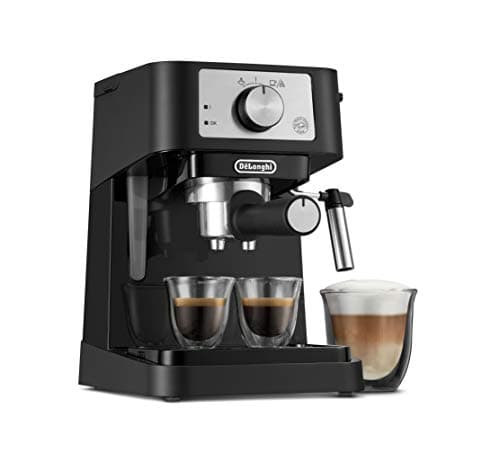
The cheapest honest entry into home espresso — a real 15-bar pump and a forgiving pressurized basket in a plastic body — perfect as a first step, but a machine you'll outgrow rather than grow into.
- Best for
- First-time buyers who want the lowest-risk, lowest-cost way to find out whether home espresso is for them
- Price context
- The budget pick — about the cheapest real pump espresso machine worth buying
The De'Longhi Stilosa (EC260)is the cheapest machine we'd point anyone toward who wants to find out, honestly and for very little money, whether making espresso at home is for them. It is not trying to be a machine you keep for a decade. It is a real 15-bar pump espresso maker with a forgiving pressurized basket and a panarello steam wand, wrapped in a compact plastic body that costs about the same as a few bags of specialty beans. Set your expectations at "a genuine first step" rather than "a machine I'll grow into," and the Stilosa is one of the most sensible purchases in home coffee: the lowest-risk way to try the hobby.
A note on honesty first: we don't run a test lab. This review compiles De'Longhi's published specifications, cross-checks them against verified owner feedback, and does the reasoning — the same method we use on every product, described on our methodology page. We haven't put the Stilosa on a bench; what follows is what the design and the numbers tell you, honestly framed, including where this machine deliberately stops.
Who the Stilosa is for
The Stilosa is for the curious first-timer. If you have been drinking cafe espresso and wondering whether you could make something like it at home — but you are not ready to spend real money on a hobby you might not stick with — this is the machine that answers the question for the least outlay. It pulls a genuine pressurized shot, it froths milk for a cappuccino, and if you decide home espresso isn't your thing, you have risked very little. For a lot of people it is the perfect toe in the water, and it is our budget pick in both the best espresso machine for beginners and best espresso machine under $300 guides.
It is the wrong machine for someone who already knows they are serious. If you are confident this hobby will stick, you will bump into the Stilosa's ceiling faster than you'd like, and the money is better spent on a machine with a higher ceiling and a real grinder from day one. The Stilosa is a starting line, not a destination — and that is exactly what makes it good at its job, provided you buy it for what it is. Plenty of owners also keep it around as a second machine long after they upgrade — parked in an office, a guest kitchen or a camper — because a cheap, simple machine that reliably makes a hot shot never really stops being useful.
What the specs say
The spec sheet is short, and that is the point. The Stilosa runs a 15-bar pump, which is genuine espresso pressure — water is forced through the coffee the way it is in a cafe machine, not spun or dripped. It uses a pressurized (dual-wall) basket, which has a tiny outlet hole that creates back-pressure for you and forces a thick crema regardless of your grind. Milk is handled by a manual panarello wand— a frothing sleeve that pulls in air to make foam for cappuccinos. The body is mostly plastic with stainless accents, and the water tank holds around 34 oz / 1 L.
| Portafilter | Pressurized basket |
|---|---|
| Pump pressure | 15 bar |
| Milk | Manual panarello steam/frothing wand |
| Water tank | ~34 oz / 1 L |
| Body | Plastic with stainless accents |
Just as important is what is not on the sheet. There is no PID temperature controller and no pre-infusion, so temperature stability is basic and the machine doesn't gently wet the puck before full pressure the way pricier models do. There is no non-pressurized basket in the box, so you cannot switch to the setup that rewards a good grind. None of that is a flaw for a machine at this price — it is simply the line De'Longhi drew to hit the budget, and knowing where the line is tells you exactly what you are getting.
What it's like to live with
Day to day, the Stilosa is refreshingly simple. There is not much to configure and not much to go wrong: you fill the tank, load the pressurized basket, pull a shot, and froth milk with the panarello if you want a cappuccino. The pressurized basket is genuinely forgiving— because the basket, not your coffee, creates the resistance, you can get a decent-looking, crema-topped shot even with supermarket pre-ground on your first morning. For someone learning the very basics of dosing, tamping and timing a shot, that forgiveness is a feature, and it pairs naturally with our how to pull an espresso shotguide. Because the machine asks so little of you, most first-timers are pulling a drinkable shot within a session or two — which is exactly the early confidence a first machine should give.
The honest frictions are the ones you'd expect at this price. The plastic build feels light and inexpensive next to a metal machine. The drip tray is thinand fills quickly. And because there is no PID, temperature can drift a little between shots, so a busy morning of back-to-back drinks isn't its strong suit. The panarello wand froths milk perfectly well for a foamy cappuccino, but it aerates rather than giving you the fine control a bare wand does — more on that below. None of these are dealbreakers for a first machine; they are the reasons it is a first machine.
The pressurized ceiling — the one thing to understand
The single most important thing to understand about the Stilosa is its ceiling, and it comes down to two design choices. First, the pressurized basket. Because it creates the back-pressure for you, it hides grind quality: buy a better grinder and dial in a finer, more even grind, and the shot barely changes, because the basket — not your puck — is doing the work. That makes it forgiving early on and limiting later. There is no non-pressurized basket included to switch to, so you cannot unlock the setup that rewards a great grind.
Second, the panarello wand. It froths milk by pulling in air through a sleeve, which reliably makes foam — but it gives you little of the fine, moment-to-moment control a bare steam wand offers, so smooth, glossy microfoam for latte art is largely out of reach. Together these mean the Stilosa has a real, and relatively low, ceiling: it is excellent at getting you started and modest at taking you further. That is not a criticism — it is the honest shape of a budget machine, and the reason we call it a first step rather than a forever machine.
If the phrase "pressurized basket" is new to you, it is worth understanding properly before you spend anything else on this machine: pressurized vs non-pressurized portafilter explains how the restrictor creates the back-pressure, why the crema it produces behaves differently from real crema, and what has to be in place before a single-wall basket is worth fitting on any machine.
Alternatives worth considering
If you want the same low-cost entry but would rather have metal than plastic, the closest rival is the CASABREWS 3700: a stainless body with a steam wand and a pressure gauge for close to the same money. It shares the Stilosa's pressurized-basket ceiling, but it looks and feels a step up — our Stilosa vs CASABREWS 3700 comparison works through that trade row by row, including why the 20 bar on the box changes nothing. If you are shopping strictly at the very bottom of the market, our best espresso machine under $200 guide lines up the Stilosa against everything in that bracket.
If you already suspect this hobby will stick, consider spending a little more up front. A machine that includes a non-pressurized basket gives you somewhere to grow, and the wider budget field is covered in our best espresso machine under $300 and best for beginners guides. The rule is simple: if you want the cheapest way to try espresso, the Stilosa is hard to beat; if you want the cheapest way to keep making it well, buy a little more machine and a real grinder.
Staying with the brand? Our best De'Longhi espresso machine guide decodes the whole lineup above the Stilosa — Dedica, La Specialista, Magnifica and Rivelia — and explains which step up actually changes the coffee rather than just the convenience. If the shortlist is already down to two, Stilosa vs Dedica Deluxe is the head-to-head.
Verdict
The De'Longhi Stilosa does exactly one thing and does it honestly: it gets you making real espresso at home for about the least money possible. The 15-bar pump pulls a genuine shot, the pressurized basket is forgiving enough to succeed with on day one, and the panarello wand froths milk for a cappuccino — all in a compact package with almost nothing to go wrong. The trade-offs are equally honest: a plastic build, basic temperature control, a thin drip tray, and a low ceiling set by the pressurized basket and the panarello wand. Buy it as a first step to find out whether home espresso is for you and it is a smart, low-risk purchase. Buy it expecting a machine you'll grow into for years, and you'll want more sooner than you think. For the right buyer, at the right expectations, it is the best few dollars you can spend to start.
What we liked
- The cheapest honest way into real home espresso — a genuine 15-bar pressurized shot
- Pressurized (dual-wall) basket forces crema from almost any grind, so it's very forgiving to learn on
- Panarello wand froths milk for cappuccinos without needing a separate frother
- Compact and light — easy to fit on a small counter and easy to store
- Simple, with very little to go wrong
What gave us pause
- Pressurized basket masks grind quality and caps how good the shot can get
- The panarello froths milk but doesn't give the microfoam control a bare wand does
- Mostly plastic build feels its price
- No PID and no pre-infusion — temperature stability is basic
- Thin drip tray fills quickly
- A genuine entry point, not a machine you grow into far
Frequently asked questions
Does the De'Longhi Stilosa make real espresso?
Yes. The Stilosa runs a genuine 15-bar pump that forces hot water through a packed puck, which is real espresso pressure — not the spun or dripped coffee a pod machine makes. It ships with a pressurized (dual-wall) basket that forces crema from almost any grind, so it's forgiving to learn on. The catch is that the pressurized basket caps quality, so it makes good beginner shots rather than specialty-level ones.
Is the De'Longhi Stilosa good for beginners?
It's one of the best first machines for the money precisely because it's simple and forgiving. The pressurized basket lets you pull a decent, crema-topped shot even with pre-ground coffee while you learn dosing, tamping and timing, and the panarello wand froths milk for cappuccinos. It's the lowest-risk way to find out if home espresso is for you — a genuine entry point rather than a machine you grow into far.
Can the Stilosa make lattes and cappuccinos?
Yes, with a caveat. The Stilosa has a manual panarello wand that pulls in air to froth milk, so it makes foamy cappuccinos well. But a panarello aerates rather than giving you fine control, so the smooth, glossy microfoam needed for latte art is largely out of reach. For frothy milk drinks it's fine; for cafe-grade microfoam you'd want a machine with a bare steam wand.
Do I still need a grinder with the De'Longhi Stilosa?
You'll get better results with one, but the pressurized basket is unusually forgiving of grind quality, so you can start with pre-ground coffee or a cheaper grinder and upgrade later. Just know that because the basket creates the pressure, a better grinder won't transform the shot on this machine the way it would on a non-pressurized basket. The grinder is the investment you carry forward to your next machine.
Is the De'Longhi Stilosa worth it?
It's worth it if you want the cheapest honest way to try home espresso and you accept it as a first step, not a forever machine. You get a real 15-bar pump, a forgiving pressurized basket and a milk wand for very little money. If you already know you're serious about espresso, spending a bit more on a machine with a non-pressurized basket — plus a real grinder — is the better long-term buy.
Sources
Keep reading
Buying your first setup?
See how we pick — compiled specs, cost-per-shot math, and honest trade-offs — then dig into the guides. No fake test lab, no rankings for hire.