Single Review
CASABREWS 3700 Espresso Machine Review
The budget machine that looks like it cost far more. A stainless body, a 20-bar pump, a steam wand and a pressure gauge for very little money. Here's the honest breakdown of what that buys you and where it stops.
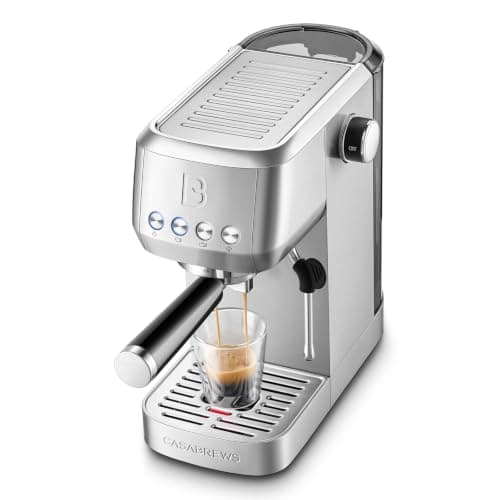
The 'looks premium, costs little' budget pick — a stainless body, a 20-bar pump, a steam wand and a gauge for very little money — as long as you add a real grinder and keep your expectations realistic.
- Best for
- Budget buyers who want a stainless machine that looks the part for the least money, and are happy to add a grinder
- Price context
- A budget pick — one of the lowest-cost stainless machines worth recommending
The CASABREWS 3700pulls off a trick most budget machines can't: it looks like it cost far more than it did. For close to the price of the plastic entry machines, you get a stainless steel body, a 20-bar pump, a manual steam wand and a pressure gaugeon the front — a lot of machine, and a lot of visual polish, for very little money. It is the "looks premium, costs little" pick of the budget field. The honest job of this review is to tell you what that stainless shell actually delivers, and where a machine at this price inevitably stops, so you buy it for the right reasons.
A note on honesty first: we don't run a test lab. This review compiles CASABREWS's published specifications, cross-checks them against verified owner feedback, and does the reasoning — the same method we use on every product, described on our methodology page. We haven't put the 3700 on a bench with a pressure transducer; what follows is what the design and the numbers tell you, honestly framed, including the marketing you should mentally discount.
Who the CASABREWS 3700 is for
The 3700 is for the budget buyer who wants their first espresso machine to looklike a real espresso machine — metal, not plastic, with a gauge on the front — without paying for the badge. If you want the lowest-risk way into the hobby but the idea of a lightweight plastic box puts you off, this is the machine that scratches that itch for very little money. It is the best machine-per-dollar of the entry field, and it is our value-stainless pick in both the best espresso machine for beginners and best espresso machine under $300guides. For anyone who's been put off by how toy-like the cheapest machines can feel, that reassuring metal-and-gauge presence on the counter is a genuine part of what you're paying for, and it's the 3700's single biggest draw.
It is the wrong machine for someone who wants to chase specialty-level shots or a machine to keep for a decade. The stainless shell is real, but the internals are a budget appliance: the ceiling is set by a pressurized basket and basic temperature control, and quality can vary unit to unit. If you already know you're serious, spend a little more on a machine with a higher ceiling and put real money into a grinder. The 3700 is a low-risk, good-looking starting point — excellent at that, and honest about the rest.
What the specs say
The 3700's spec sheet leads with a big number: a 20-bar pump. It runs a pressurized (dual-wall) basketthat creates back-pressure for you and forces crema regardless of your grind, so it's forgiving to learn on. Milk is handled by a manual steam wand, and unusually for the price there's a pressure gauge on the front to watch the shot build. The stainless steel body is the headline feel, the water tank holds around 34 oz / 1 L and is removable, which makes refilling and cleaning easy.
| Pump | 20-bar (pressurized basket) |
|---|---|
| Milk | Manual steam wand |
| Gauge | Pressure gauge included |
| Body | Stainless steel |
| Water tank | ~34 oz / 1 L (removable) |
One number needs context, because it is the most misunderstood spec in budget espresso: the 20-bar pump is marketing. Espresso is extracted at around 9 bar at the puck, not 20 — the higher figure is the pump's maximum rating, not the pressure your coffee actually sees, and a 20-bar machine is not "better" than a 15-bar one for that reason. What's also worth noting is what's absent: there's no PIDtemperature controller, so temperature stability is basic, and there's no non-pressurized basket in the box to switch to. Knowing that keeps your expectations calibrated to what this machine really is.
What it's like to live with
The best part of living with the 3700 is that it doesn't feel like a budget machine on the counter. The stainless body has real heft and a tidy look, the gauge gives you something to read while a shot pulls, and the removable tank makes daily refills painless. The pressurized basket is genuinely forgiving: because the basket, not your coffee, creates the resistance, you can pull a good-looking, crema-topped shot even with pre-ground on your first morning, which pairs well with our how to pull an espresso shot guide. The steam wand is capable enough to froth milk for a cappuccino once you get a feel for it.
The honest frictions are the ones a budget price buys. The thermoblock heats fast but temperature stability is basic without a PID, so shots can drift a little on a busy morning. The steam wand works but is not commercial-grade— it makes foam reliably rather than the effortless, glossy microfoam of a better machine. And because this is a value-brand appliance, quality control varies unit to unit; most owners get a good one, but the consistency of a premium brand isn't part of the deal. None of these are dealbreakers for a first machine — they are the reasons it costs what it does. Owners who treat it gently, descale it on schedule and feed it a decent grind tend to be the happiest; the ones who expect cafe consistency from an entry appliance are the ones who come away disappointed.
The honest limits — what the stainless shell can't fix
A metal body doesn't change what happens inside the basket, and the 3700's ceiling comes from the same place as every budget machine: the pressurized basket. Because it manufactures the back-pressure for you, it hides grind quality — dial in a finer, more even grind on a better grinder and the shot barely changes, because the basket is doing the work rather than your puck. There is no non-pressurized basket included to switch to, so you cannot unlock the setup that rewards a great grind. That makes the 3700 forgiving early and limiting later.
The other limit is temperature. Without a PID, the machine can't hold a rock-steady brew temperature the way a pricier model does, which shows up most when you're pulling several shots in a row. Together, the pressurized basket and basic temperature control set a real, relatively low ceiling: the 3700 is very good at getting you started and looking great doing it, and modest at taking you to specialty-level espresso. That's not a knock — it's the honest shape of a machine at this price, and the reason we call it a stylish first step rather than an heirloom.
Alternatives worth considering
The most direct rival is the plastic machine the 3700 undercuts on looks: the De'Longhi Stilosa. It costs about the same, runs a similar pressurized basket and a panarello wand, and comes from a long-established brand — but it's plastic where the 3700 is stainless, so the choice largely comes down to whether you value the metal body and gauge or the brand pedigree — our Stilosa vs CASABREWS 3700 comparison sets the two out side by side. If you're shopping strictly at the very bottom of the market, our best espresso machine under $200 guide lines the 3700 up against everything in that bracket.
If you suspect the hobby will stick, it's worth spending a little more up front on a machine with a non-pressurized basketso you have somewhere to grow — the wider budget field is covered in our best espresso machine under $300 and best for beginnersguides. The rule doesn't change: the 3700 is a great-looking, low-risk way to try espresso; a machine with a higher ceiling plus a real grinder is the way to keep making it well.
Verdict
The CASABREWS 3700 is the budget machine that punches above its looks. A stainless body, a 20-bar pump, a steam wand and a pressure gauge for close to entry-level money is a genuinely good deal, and for a lot of first-time buyers the fact that it looks and feels like a real espresso machine is worth as much as the shot itself. Just go in clear-eyed: the 20-bar figure is marketing (9 bar at the puck is what matters), the pressurized basket and basic temperature control cap the ceiling, the wand is capable but not commercial-grade, quality can vary unit to unit, and it still needs a real grinder to shine. Buy it as a stylish, low-risk starting point and it's the most machine-per-dollar here. Buy it expecting specialty-level espresso and you'll want more — but you'll have paid very little to find that out.
What we liked
- Stainless steel body that looks well above its price
- 20-bar pump and pressurized basket make a forgiving, crema-topped shot
- A capable steam wand plus a pressure gauge — both unusual at this price
- Removable water tank makes refills and cleaning easy
- The most machine-per-dollar of the budget entry machines
What gave us pause
- Pressurized (dual-wall) basket hides grind quality and caps the ceiling
- Thermoblock temperature stability is basic — no PID
- The steam wand is capable but not commercial-grade
- Quality control can vary unit to unit
- The 20-bar figure is marketing — 9 bar at the puck is what matters — and it still needs a real grinder to shine
Frequently asked questions
Is the CASABREWS 3700 a real espresso machine?
Yes. The 3700 runs a real pump that forces hot water through a packed puck, which is genuine espresso — not the spun or dripped coffee a pod machine makes. It ships with a pressurized (dual-wall) basket that forces crema from almost any grind, so it's forgiving to learn on. The stainless body and pressure gauge make it look the part, but it's a budget machine, so it makes good beginner shots rather than specialty-level ones.
Does the CASABREWS 3700's 20-bar pump make better espresso?
No. The 20-bar figure is the pump's maximum rating, not the pressure your coffee actually sees. Espresso is extracted at around 9 bar at the puck, so a 20-bar machine isn't 'better' than a 15-bar one for that reason — the number is marketing. What actually decides your shot is the grind and the basket, which is why the 3700 still needs a real grinder to perform.
Can the CASABREWS 3700 make lattes and cappuccinos?
Yes. The 3700 has a manual steam wand that froths milk for cappuccinos and lattes once you get a feel for it. It's capable rather than commercial-grade, so it makes reliable foam rather than the effortless, glossy microfoam of a higher-end machine, but for everyday milk drinks at home it does the job — no separate frother required.
Do I need a grinder with the CASABREWS 3700?
For its best results, yes. The pressurized basket is forgiving, so you can start with pre-ground coffee or a cheaper grinder and upgrade later — but because the basket creates the pressure, a better grinder won't transform the shot on this machine the way it would on a non-pressurized basket. The grinder is still the investment that decides espresso quality and the one you carry forward to your next machine.
Is the CASABREWS 3700 worth it?
It's worth it if you want a stainless machine that looks well above its price for the least money, and you accept it as a stylish first step rather than a forever machine. You get a metal body, a 20-bar pump, a steam wand and a gauge for close to entry-level cost. If you're already serious about espresso, a machine with a non-pressurized basket plus a real grinder is the better long-term buy.
Sources
Keep reading
Buying your first setup?
See how we pick — compiled specs, cost-per-shot math, and honest trade-offs — then dig into the guides. No fake test lab, no rankings for hire.