Head to Head
De'Longhi Stilosa vs CASABREWS 3700
The two cheapest real espresso machines most people consider, and the comparison is almost entirely about what you can trust in the marketing. One has a brand with decades of parts behind it; the other has a stainless body and a pressure gauge for the same money.
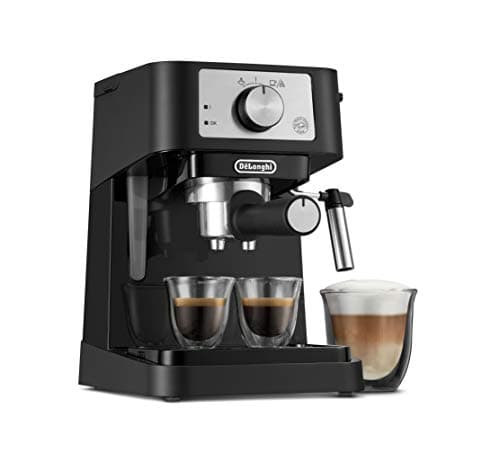
Buy the De'Longhi Stilosa if you want the safest version of spending the least, and the CASABREWS 3700 if the stainless body and pressure gauge matter more to you than brand longevity does. Both are pressurized-basket pump machines at the floor of the market, and the thing almost every comparison gets wrong is the pump rating: the Stilosa's 15 barand the CASABREWS's 20 bar describe what the pump can generate unrestricted, not what reaches your coffee, and both extract at roughly 9 bar through the puck. The honest differences are build material, included features, and how long you can get parts.
If you can stretch past both, the Dedica Deluxeis the first machine in the range that is not designed down to a floor price — and the single best use of another $100 at this level is not a better machine at all. It is a grinder.
The short answer
- Most first-time buyers: the Stilosa. De'Longhi has decades of parts, service and documentation behind it, and at this price the thing most likely to end your espresso hobby is a machine you cannot fix.
- Want it to look like a café machine: the CASABREWS 3700. Stainless body, pressure gauge, same money.
- Making mostly milk drinks:either, with a slight edge to the CASABREWS for its plain steam wand over the Stilosa's panarello, which aerates milk rather than texturing it.
- Intending to learn real espresso: neither. Save for a non-pressurized machine; see best espresso machines for beginners.
Specs side by side
| Spec | De'Longhi Stilosa (EC260) | CASABREWS 3700 |
|---|---|---|
| Basket type | Pressurized (single + double filters) | Pressurized |
| Pump rating | 15 bar | 20 bar |
| Boiler | Stainless steel | Not published as a boiler type |
| Milk | Manual panarello steam/frothing wand | Manual steam wand |
| Pressure gauge | No | Yes |
| Body | Plastic with stainless accents | Stainless steel |
| Water tank | ~34 oz / 1 L | ~34 oz / 1 L (removable) |
| Dimensions | 13.5" W x 8.07" D x 11.22" H | Not published in a form we can cite |
| Weight | 9.48 lb | Not published in a form we can cite |
| Built-in grinder | No | No |
| Machine | Current price |
|---|---|
| De'Longhi Stilosa (EC260) | $99.95Buy |
| CASABREWS 3700 Essential | $99.99Buy |
| De'Longhi Dedica Deluxe (EC685) | $249.00Buy |
Prices shown are from Amazon as of October 10, 2026 and change often — the button always goes to the current listing. Some links may earn us a commission at no extra cost to you.
Two rows read "not published in a form we can cite" deliberately. CASABREWS does not publish a boiler specification or dimensions and weight in documentation we are willing to quote as the manufacturer's, and retailer listings disagree with each other. We would rather leave a gap than fill it with a number we cannot stand behind.
15 bar vs 20 bar: what the number means
Nothing you can taste. This is the single most effective piece of marketing at the bottom of the espresso market, and it is worth understanding before it decides your purchase.
A bar rating describes the maximum pressure the pump can generate with nothing in the way. Espresso is extracted at around 9 barat the puck, which is the figure the whole craft is built around — and on a machine with a pressurized basket, the restrictor hole under the basket is what sets the pressure the coffee actually sees. A 20-bar pump pushing through the same restrictor does not produce a better shot than a 15-bar pump pushing through it; it produces the same shot with more headroom in the pump. Our 9 bar vs 15 bar guide works through the mechanism in full.
The CASABREWS gauge is worth the same caveat: it reads pump pressure, not basket pressure, so treat it as a relative indicator that something is happening rather than a measurement of your extraction. It is still genuinely useful as a feedback device — you learn what a normal needle position looks like and notice when it is wrong — but it is not a brew-pressure gauge.
The ceiling both machines share
Both the Stilosa and the CASABREWS 3700 use a pressurized basket, and that is the most important line on this page. A pressurized basket generates crema mechanically: water is forced through a single small restrictor hole, which produces foam from grounds that would not otherwise make any. The upside is that it is forgiving — a coarse, uneven, supermarket-ground coffee will still produce something that looks like espresso. The downside is that it is a ceiling, not a setting: improving your grind and your puck prep stops paying off at a certain point, because the restrictor is in charge.
That matters for buyers at this price because it reframes the upgrade path. You do not grow into either of these machines; you grow out of them. Our pressurized vs non-pressurized portafilter guide explains how to tell which basket you have and what each one does, and best espresso machines under $200 ranks the whole bracket these two sit in.
One practical consequence: do not spend heavily on a grinder for either machine. Our best grinder for a De'Longhiguide splits its picks on exactly this point — on a pressurized basket a filter-range burr grinder is a huge upgrade over pre-ground and the returns flatten quickly after that.
The case for the De'Longhi Stilosa (EC260)
Who it is for: the first-time buyer who wants the lowest-risk entry into home espresso and would rather have a brand with a parts channel than a feature list.
The Stilosa is the cheapest machine we would call an honest first espresso machine. A real 15-bar pump, a stainless steel boiler, single and double pressurized filters, and a panarello frothing wand, in a plastic body with stainless accents that weighs 9.48 lb. What you are actually buying is De'Longhi: decades of manuals, spare parts, seals and service history for a machine class that gets thrown away rather than repaired by most of its competitors.
| Portafilter | Pressurized basket (single + double filters) |
|---|---|
| Boiler | Stainless steel |
| Pump pressure | 15 bar |
| Milk | Manual panarello steam/frothing wand |
| Water tank | ~34 oz / 1 L |
| Dimensions | 13.5 in W x 8.07 in D x 11.22 in H |
| Weight | 9.48 lb |
| Body | Plastic with stainless accents |
What we like: the lowest honest price of entry, a stainless boiler rather than an unspecified heater, a brand you can still buy a gasket for in five years, and a compact footprint. The honest cons: the body is plastic and feels it next to the CASABREWS. The panarello wand aerates milk rather than texturing it, so it makes stiff foam easily and proper latte microfoam with difficulty. There is no pressure gauge and no non-pressurized basket to graduate to. And the pressurized basket is a hard ceiling.
Our De'Longhi Stilosa review has the full breakdown, and Stilosa vs Dedica covers the next step up inside the same brand.
The case for the CASABREWS 3700
Who it is for: the buyer who wants the most apparent machine for the money and is comfortable with a newer brand.
The CASABREWS 3700 is the machine that looks like it cost several times what it did. A stainless steel body, a 20-bar pump, a manual steam wand, a pressure gauge on the front and a removable ~34 oz / 1 L tank. On a kitchen counter it reads as a serious piece of equipment, and for a lot of buyers at this price that is a legitimate part of the purchase.
| Pump | 20-bar (pressurized basket) |
|---|---|
| Milk | Manual steam wand |
| Gauge | Pressure gauge included |
| Body | Stainless steel |
| Water tank | ~34 oz / 1 L (removable) |
What we like: a metal body at a plastic price, a plain steam wand that textures milk better than a panarello does with practice, a gauge that gives you feedback the Stilosa cannot, and a removable tank that is easier to refill. The honest cons: the 20-bar rating is marketing, not capability— it is still a pressurized basket extracting at roughly 9 bar through the puck. The gauge reads pump pressure, not basket pressure. CASABREWS is a newer brand with a shorter parts and service history than De'Longhi's, which is the real trade you are making. And the same pressurized ceiling applies.
Our CASABREWS 3700 review covers it in detail.
If you can stretch: De'Longhi Dedica Deluxe (EC685)
Who it is for: the buyer whose counter is narrow, or who would rather spend once than twice.
The Dedica is the first machine here designed to a specification rather than a price. A 51mm portafilter with 1-cup and 2-cup filters, thermoblock heating instead of a boiler, a 15-bar pump, Automatic Flow Stop, a cup warmer and a 20-minute auto shut-off, all in a metal body about 6 inches wide and roughly 12 lb.
| Portafilter | 51mm (1-cup and 2-cup filters, E.S.E. pod capable) |
|---|---|
| Heating | Thermoblock |
| Pump pressure | 15 bar |
| Milk | Premium Adjustable manual frother |
| Water tank | 35 oz, removable |
| Width | About 6 in |
| Weight | ~12 lb |
| Extras | Automatic Flow Stop, cup warmer, double drip tray, 20-min auto shut-off |
What we like: a genuinely small footprint, thermoblock heating that gets to temperature fast, a metal body, and a feature set that stops feeling like a compromise. The honest cons: it costs roughly double the Stilosa, the tank is modest and sits at the back which makes refills awkward under a low cabinet, and the 51mm basketis smaller than the 54mm and 58mm standards so the tamper and accessory market for it is thinner — check our portafilter size guide before buying any.
Bambino vs Dedica is the comparison most people make one tier up from this page.
Where the money should actually go
A closing point that applies to both machines equally. If your total budget is, say, $250, the best espresso you can build for it is not the best machine $250 buys. It is one of these two machines plus a burr grinder and fresh beans, because at this price the grind and the bean age are doing far more to your cup than any feature on either box.
- A burr grinder— even a filter-range one, because a pressurized basket does not need espresso-fine. See best grinder for a De'Longhi and do I need a grinder for espresso.
- Fresh whole beans with a roast date, from best coffee beans for espresso.
- A 0.1 g scale, eventually — do I need a scale for espresso makes the case, and it is weaker on a pressurized basket than on an open one.
And if what you actually want is to learn espresso properly rather than make a passable cappuccino cheaply, skip both and read our espresso machine buying guide first. Saving three more months for a non-pressurized machine is, for the right buyer, a far better decision than either machine on this page.
Frequently asked questions
Is the CASABREWS 3700 better than the De'Longhi Stilosa?
It depends on what you weight. The CASABREWS has a stainless steel body and a pressure gauge at the same price point, which makes it feel like more machine. The Stilosa has a stainless boiler and, more importantly, De'Longhi's decades of parts, manuals and service behind it - which at the bottom of this market is the difference between a machine you repair and a machine you replace. Both use pressurized baskets, so neither makes meaningfully better espresso than the other.
Does a 20 bar pump make better espresso than a 15 bar pump?
No. A bar rating is the maximum pressure the pump can generate unrestricted, not the pressure that reaches the coffee. Espresso is extracted at around 9 bar at the puck, and on a machine with a pressurized basket the restrictor hole under the basket sets the pressure regardless of the pump's headline figure. A 20-bar pump and a 15-bar pump pushing through the same pressurized basket produce the same shot.
Do the Stilosa and CASABREWS 3700 both use pressurized baskets?
Yes, and it is the most important thing they have in common. A pressurized basket makes crema mechanically by forcing water through a single restrictor hole, which is forgiving of coarse or stale grounds and also caps how good the shot can get. Neither machine has a non-pressurized basket to graduate to, so you grow out of them rather than into them.
Which one is better for lattes and cappuccinos?
The CASABREWS has a slight edge, because it uses a plain manual steam wand while the Stilosa uses a panarello. A panarello injects air through a sleeve, which makes stiff cappuccino-style foam easily and proper latte microfoam with difficulty; a bare wand is harder to learn and capable of better texture. Our how to steam milk guide covers the technique either one needs.
Is the CASABREWS pressure gauge useful?
Somewhat. It reads pump pressure rather than the pressure at the basket, so it is not a measurement of your extraction. As a feedback device it is genuinely helpful - you learn what the needle normally does and notice when something is wrong - but do not buy the machine expecting to dial shots in by it.
Should I buy a grinder for a Stilosa or CASABREWS 3700?
Yes, but not an expensive one. A pressurized basket does not need an espresso-fine grind because the restrictor supplies the pressure, so a filter-range burr grinder is a large upgrade over pre-ground coffee and the returns flatten quickly after that. Put the saved money into fresh whole beans with a printed roast date, which at this price level changes the cup more than anything else you can buy.
Sources
- De'Longhi - Stilosa (EC260) product specifications (15-bar pump, stainless steel boiler, pressurized single and double filters, panarello wand, ~1 L tank, dimensions and weight)
- De'Longhi - Dedica Deluxe (EC685) product specifications (51mm portafilter, thermoblock, 15-bar pump, Automatic Flow Stop, 35 oz removable tank, ~6 in width)
- CASABREWS - 3700 Essential product information (20-bar pump, stainless steel body, manual steam wand, pressure gauge, removable ~1 L tank)
- Specialty Coffee Association - espresso brewing standards (~9 bar extraction)
- National Coffee Association - how to brew coffee
Keep reading
Buying your first setup?
See how we pick — compiled specs, cost-per-shot math, and honest trade-offs — then dig into the guides. No fake test lab, no rankings for hire.