Buying Guide
The Best Grinder for a Gaggia Classic Pro in 2026
The Gaggia Classic is a 58mm commercial-basket machine with nothing to hide a bad grind behind, so the grinder is not an accessory — it is half the purchase. Five picks ranked on adjustment resolution and burr size.
For most Gaggia Classic owners the answer is the Eureka Mignon Notte, because stepless adjustment is the spec that matters on this machine and the Notte is the cheapest grinder that genuinely has it. The Classic Pro and Evo Pro use a 58mm commercial portafilter with non-pressurized baskets, which means there is no restrictor plate generating crema mechanically and nothing standing between your grind and the cup. If the budget is tighter, the Baratza Encore ESP is the cheapest electric we trust to dial a Classic in and it ships with a 58mm portafilter adapter. If you want the most grinder available before you reach four figures, the DF64 Gen 2.
This page exists separately from our best grinder for a Brevilleguide because the answer is genuinely different. Breville's Bambino line uses a 54mm basket and Breville's Barista machines have a grinder built in; a Gaggia has a 58mm basket, no grinder of its own, and a mod community that assumes you brought a serious one. Our best grinders for espressoguide ranks the field without reference to a machine — this page sizes it to one.
Why the Classic needs a real grinder
Because of what Gaggia left out. The Classic Pro is a single-boiler, 58mm, rocker-switch machine built around a ~1425 W heating element and a 15-bar vibratory pump, with a brass-free simplicity that makes it the most moddable machine in its price class. Our Gaggia Classic Pro review is blunt about the consequence: it is the least plug-and-play machine in its bracket and only shines with a proper burr grinder, which you must buy separately.
The mechanism is worth understanding before you spend. Espresso needs the puck to resist water hard enough for the pump to build pressure, and that resistance comes almost entirely from grind fineness and evenness. A pressurized basket — the kind on a De'Longhi Stilosa— fakes that resistance with a restrictor hole, which is forgiving of a cheap grinder and also caps how good the shot can get. A Gaggia's open basket does the opposite: it rewards a good grinder without limit and punishes a bad one immediately. Our pressurized vs non-pressurized portafilter guide works through that trade in full.
What fits a 58mm Gaggia
Every grinder on this page works with a Gaggia, but the dosing ergonomics differ and that is worth knowing before you buy:
- Hopper grinders that dose into the portafilter(Eureka Mignon Notte) are designed around holding the basket under the spout. Eureka's fork accommodates a 58mm portafilter directly.
- Single-dose grinders(DF64 Gen 2) grind into a catch cup you then tip into the basket, so portafilter width is irrelevant — and a 58mm basket is wide enough that pouring from a cup is tidy.
- Hand grinders (1Zpresso J-Ultra, Timemore C3 ESP) grind into their own jar. Fitment is a non-issue; the jar capacity against your dose is what matters.
- The Baratza Encore ESP is the interesting case: it ships with a 54mm dosing cup and a 58mm portafilter adapter, so hands-free dosing straight into a Gaggia basket is supported out of the box.
Accessories are a separate question and the 58mm standard is the good news there — every café-standard tamper, basket and distribution tool fits. Our portafilter size guide covers sizing, and best bottomless portafilters includes a 58mm option made for the Classic family.
How we ranked these
On published specifications and manufacturer documentation, not on lab tests we did not run — units we claim to have tested: zero. For a 58mm non-pressurized machine that means:
- Adjustment resolution first. Stepless, or microns per step where it is published. On an open basket this is the spec that decides whether you can land a shot or only step over it.
- Burr size and type. Bigger burrs cut more uniformly at the same RPM, and flat burrs are generally the clarity choice; see flat vs conical.
- Retention.How much coffee stays inside between doses, because an 18 g dose contaminated with yesterday's grounds is not an 18 g dose of today's beans.
At a glance
| Grinder | Type | Burrs | Adjustment | Price |
|---|---|---|---|---|
| Baratza Encore ESP | Electric, hopper | 40mm M2 conical | 40 stepped (~20 microns espresso) | $199.95Buy |
| Eureka Mignon Notte | Electric, hopper | 50mm flat | Stepless micrometric | $299.00Buy |
| DF64 Gen 2 | Electric, single dose | 64mm flat | Stepless | $389.00Buy |
| 1Zpresso J-Ultra | Hand | 48mm conical | 8 microns per click | $199.00Buy |
| Timemore Chestnut C3 ESP | Hand | 38mm conical | 0.0233mm per click | $99.00Buy |
Prices shown are from Amazon as of October 10, 2026 and change often — the button always goes to the current listing. Some links may earn us a commission at no extra cost to you.
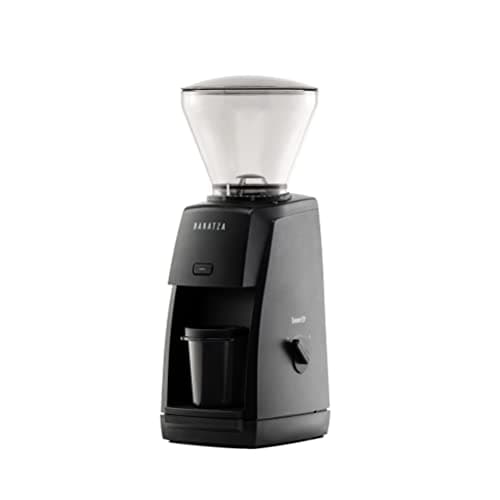
Best entry point: Baratza Encore ESP
Who it is for: the Gaggia owner who wants a real espresso grinder, hands-free dosing into a 58mm basket, and the lowest electric price that is not a false economy.
The Encore ESP is the Encore platform re-geared for espresso, and that re-gearing is the whole product. Baratza splits its 40 stepped settings into an espresso half at roughly 20 microns per step and a filter half at roughly 90 microns per step, so the fine control sits where espresso needs it. For a Gaggia specifically, the box matters too: it includes a 54mm dosing cup and a 58mm portafilter adapter, so you can grind straight into the Classic's basket.
| Burrs | 40mm M2 conical (steel, user-replaceable) |
|---|---|
| Grind settings | 40 stepped (1-20 espresso, 21-40 filter) |
| Espresso step size | ~20 microns per step |
| Filter step size | ~90 microns per step |
| Motor | DC, ~550 RPM, ~70W |
| Bean hopper | 8 oz / 230 g |
| Included | 54mm dosing cup + 58mm portafilter adapter |
What we like: genuine espresso-range resolution at the bottom of the market, a 58mm adapter in the box, Baratza's repairable design and US parts channel, and a filter half that still covers pour over on the weekend. The honest cons: 20 microns per step is a step, and on an open 58mm basket there will be days when the shot you want sits between two of them — that is precisely what stepless buys you further up this page. It is hopper-fed, so retention applies and you purge when you change beans. And the plastic body is plainly built to a price.
Our Baratza Encore ESP review covers it in full, and Encore vs Encore ESP explains why the plain Encore is not a substitute here.
Best overall for a Gaggia Classic: Eureka Mignon Notte
Who it is for: the Classic owner who wants to stop fighting steps and start dialing shots in, without going up to single-dose workflow prices.
The Notte is the cheapest grinder here we would call genuinely stepless. 50mm flat steel burrs and a stepless micrometric knob in a hand-assembled Italian metal chassis, fed from a compact 150 g hopper, with press-the-portafilter dosing that suits a 58mm basket. Stepless is the point: instead of choosing between two settings, you move the dial a hair and the shot moves a hair, which is the difference between dialing in and guessing.
| Burrs | 50mm flat (steel) |
|---|---|
| Adjustment | Stepless (micrometric knob) |
| Hopper | 150 g / ~5.5 oz |
| Dosing | Manual (press portafilter to grind) |
| Grind range | Espresso through pour over, tuned for espresso |
| Build | Metal case, hand-assembled in Italy |
What we like: stepless flat-burr espresso at the lowest price we know of, a properly built metal body, burrs that come out for cleaning without losing your setting, and a footprint small enough to sit beside a Classic. The honest cons: dosing is manual, so you hold the portafilter and watch the grounds rather than walking away. It has no sound dampening, so it is louder than Eureka's Silent System models. The 150 g hopper needs refilling often if you pull several doubles a day, and like every hopper grinder it holds grounds between doses. It is also an espresso-leaning grinder — capable of coarser work, but not the one to buy if French press is your main brew.
Our Eureka Mignon Notte review goes deeper, and best espresso grinders under $500 ranks it against the rest of that bracket.
Best upgrade: DF64 Gen 2
Who it is for: the Gaggia owner who has decided espresso is the hobby and wants the biggest burrs and the cleanest dose they can get for the money.
The DF64 Gen 2 is the most grinder in this bracket and the gap is mostly the burrs. 64mm flat stainless burrs spun by a 250W motor at ~1400 RPM, stepless adjustment, and a plasma generator in the exit chute that kills the static flat burrs are otherwise notorious for. It is a true single-doser: you weigh beans into the 50 g bellows hopper and what comes out is what you put in, with under 0.1 g of retentionon the manufacturer's figure.
| Burrs | 64mm flat (stainless steel) |
|---|---|
| Adjustment | Stepless |
| Motor | 250W, ~1400 RPM |
| Dosing | Single dose (50 g bellows hopper) |
| Retention | Under 0.1 g (manufacturer figure) |
| Static control | Plasma generator (ionizer) |
| Size / weight | 10" D x 5.2" W x 12" H, ~15 lb |
What we like: the biggest burrs here, stepless control fine enough that dialing in becomes pleasant, retention low enough to stop being a variable, and a burr upgrade path years from now. The honest cons: single dosing is a slower morning than a hopper — weigh, pour, puff the bellows — and at roughly 15 lb and 12 inches tall it needs real counter space under a cabinet. Stepless also means there is no number to return to, so write your setting down when you change beans. And the DF64 is sold under several brand names by different distributors, so warranty and support quality vary by seller in a way Baratza's and Eureka's do not.
If the single-dose workflow is the appeal, our best single-dose grinders guide covers the wider field.
Best hand grinder: 1Zpresso J-Ultra
Who it is for: the one-or-two-shots-a-day Classic owner who would rather put the money into burrs than into a motor.
The finest numbered adjustment on this page belongs to a hand grinder. The J-Ultra uses a 48mm titanium-coated stainless conical burr with heptagonal cutting geometry and an external ring giving 100 clicks per rotation at 8 microns per click, across five rotations for 500 clicks of total range. Eight microns is finer than any electric here offers in a discrete step, and because the ring is external you can return to a number exactly.
| Type | Manual (hand) grinder |
|---|---|
| Burrs | 48mm conical, titanium-coated stainless (heptagonal) |
| Adjustment | External ring, 100 clicks/rotation, 8 microns per click |
| Total range | 500 clicks across 5 rotations |
| Capacity | 35-40 g |
| Weight | 670 g (1.5 lb) |
| Included | Cleaning brush, blower, case for the foldable handle |
What we like: the best numbered resolution here, near-zero retention by design, a capacity that covers two doubles, no power needed, and a price that leaves most of a grinder budget intact. The honest cons: espresso-fine grinding is the hardest work a hand grinder does — budget the better part of a minute of cranking per double, every morning. It is a single-user proposition: if two people want shots at once, or you are pulling four in a row for guests, an electric wins the day-to-day.
Our best hand grinders guide compares it against the rest of the manual field, including the cheaper 1Zpresso J.
Best budget pick: Timemore Chestnut C3 ESP
Who it is for: the Gaggia owner whose machine already took the budget and who needs espresso-capable grinding now rather than in six months.
The C3 ESP exists because Timemore built a second dial for the same grinder. The ESP dial moves 0.0233mm per click across 30 clicks against 0.0833mm across 12 clickson the standard C3 — roughly 3.6 times finer, which is the difference between landing inside the espresso window and stepping over it. For the cheapest thing on this page, that is a remarkable specification.
| Type | Manual (hand) grinder |
|---|---|
| Burrs | 38mm S2C660 conical, SUS420 stainless, CNC-machined |
| Adjustment | Internal dial, 30 clicks per rotation, 0.0233mm per click |
| Standard C3 dial, for contrast | 12 clicks per rotation, 0.0833mm per click |
| Capacity | 20 g per Timemore's C3-series page; several retailers list 25 g |
| Body | Aluminum alloy and stainless steel, no plastic internals |
| Handle | Fixed, 159mm |
| Weight | ~430 g |
What we like: real espresso resolution for the least money, an all-metal build at a price where plastic is normal, and a 20 g capacity that matches a standard double dose in one grind. The honest cons: the dial is internal, so changing grind means reaching under the burrs rather than turning a ring — tolerable when you are dialed in, tedious while you are not. Capacity is tight against a Gaggia's 18–20 g basket. And it is hand cranking, at the finest setting a hand grinder gets asked for.
Our Chestnut C3 ESP review has the model decoder, and Encore ESP vs C3 ESP puts it head to head with the entry electric above.
How to split machine and grinder money
The Gaggia Classic sits in an awkward spot: it is cheap enough that people buy it as a first machine and serious enough that it needs a grinder most first machines do not. A workable rule on this machine specifically is to spend at least as much on the grinder as on the machine, and more if you can. That is not a slogan — it follows from the open basket. A pressurized-basket machine hides grind error; the Classic broadcasts it.
- Smallest sensible spend: the Timemore Chestnut C3 ESP, with the understanding that you are paying in cranking.
- Cheapest electric worth owning: the Baratza Encore ESP, 58mm adapter included.
- The pick most Classic owners should make: the Eureka Mignon Notte, for stepless.
- If espresso is the hobby: the DF64 Gen 2.
- Low volume, high standards, no motor: the 1Zpresso J-Ultra.
Then spend the small money well. A 0.1 g espresso scale and a WDT tool do more for a Gaggia shot than any further machine upgrade, and how to pull an espresso shot plus how to tamp espresso cover the technique the open basket now rewards. If you are still choosing the machine itself, Gaggia Classic Pro vs Breville Bambino Plus and Gaggia Classic Pro vs Rancilio Silvia cover the two decisions people actually face.
Frequently asked questions
What is the best grinder for a Gaggia Classic Pro?
The Eureka Mignon Notte for most owners. It is the cheapest grinder we know of with genuinely stepless micrometric adjustment, which is the specification that matters on a 58mm non-pressurized basket, and it pairs 50mm flat burrs with press-the-portafilter dosing. If the budget is tighter, the Baratza Encore ESP is the cheapest electric we trust to dial a Classic in, and it ships with a 58mm portafilter adapter.
Do I need a special grinder for a Gaggia Classic?
You need an espresso-capable grinder, not a Gaggia-specific one. The Classic uses a 58mm commercial portafilter with non-pressurized baskets, so there is no restrictor plate to generate crema mechanically - the puck's resistance comes entirely from your grind. Filter grinders like the standard Baratza Encore cannot get fine enough, and Baratza says so; you want stepless adjustment or espresso-range micro-steps.
Will a Baratza Encore work with a Gaggia Classic?
No, and Baratza is explicit about it - the plain Encore is not fine enough for true espresso. Its published range is roughly 250 to 1200 microns, which is a filter range. The Encore ESP is the version built for espresso: the same 40mm platform re-geared into roughly 20-micron espresso steps, with a 54mm dosing cup and a 58mm portafilter adapter in the box.
How much should I spend on a grinder for a Gaggia Classic?
At least as much as the machine cost, and more if you can. The Classic's open 58mm basket rewards a better grinder without limit, where a pressurized-basket machine would hide the difference. In practice the useful tiers are a hand grinder with an espresso dial at the bottom, the Baratza Encore ESP as the cheapest electric worth owning, the Eureka Mignon Notte for stepless adjustment, and a 64mm flat-burr single doser like the DF64 Gen 2 above that.
Can I use a hand grinder with a Gaggia Classic?
Yes, and two on this page out-resolve the entry electrics. The 1Zpresso J-Ultra adjusts in 8-micron clicks on an external numbered ring and the Timemore Chestnut C3 ESP in 0.0233mm clicks. The trade is effort: espresso-fine is the hardest work a hand grinder does, so budget close to a minute of cranking per double, and expect it to be a one-person solution rather than a household one.
Does a Gaggia Classic Evo Pro need a different grinder from the Classic Pro?
No. Both use the same 58mm commercial portafilter and the same single-boiler, 15-bar pump layout, so the grinder requirement is identical. The Evo Pro's changes are to the machine - brewing group and valve detail - not to the basket diameter or the fact that there is nothing to mask a bad grind.
Sources
- Gaggia - Classic Pro / Classic Evo Pro product specifications (58mm commercial portafilter, single boiler, ~1425 W element, 15-bar vibratory pump)
- Baratza - Encore ESP product specifications (40 settings split 1-20 espresso / 21-40 filter, ~20 and ~90 micron step sizes, 230 g hopper, 54mm dosing cup and 58mm portafilter adapter)
- Eureka - Mignon Notte product specifications (50mm flat burrs, stepless micrometric adjustment, 150 g hopper)
- DF64 - Gen 2 grinder specifications (64mm flat burrs, stepless adjustment, 250W motor, bellows single dosing, retention figure, plasma ionizer)
- 1Zpresso - J-Ultra specifications (48mm titanium-coated heptagonal conical burrs, external ring 100 clicks/rotation at 8 microns, 500-click range)
- Timemore - official Chestnut C3 series specifications (38mm S2C660 burrs, 12-click standard dial vs 30-click ESP dial, mm per click, capacity)
- Specialty Coffee Association - brewing and extraction standards
Keep reading
Buying your first setup?
See how we pick — compiled specs, cost-per-shot math, and honest trade-offs — then dig into the guides. No fake test lab, no rankings for hire.