Comparison
Gaggia Classic Pro vs Breville Bambino Plus
Two machines that cost almost exactly the same and disagree about everything. One steams the milk for you; the other hands you a 58mm commercial portafilter and expects you to learn. Here is which one fits your kitchen.
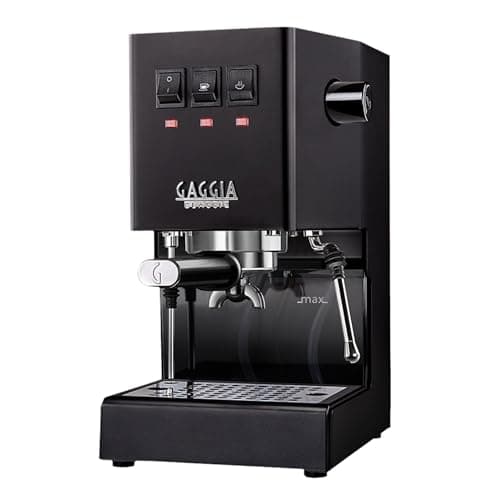
This is the most genuinely difficult fork in entry-level espresso, because the two machines land at effectively the same price and then spend that money on completely different things. The Breville Bambino Plus puts it into automation: an automatic steam wand that textures milk for you, digital PID temperature control, and a boiler that is ready in three seconds. The Gaggia Classic Evo Pro puts it into metal and standards: a solid steel housing made in Italy, the 58mm commercial portafilter, and a machine you can open up and repair a decade from now.
Neither is the "better" machine in the abstract, and anyone who tells you otherwise is selling something. What follows is the honest breakdown — starting with the one difference that decides this for most people before any of the others matter.
The short answer
Buy the Breville Bambino Plus if you mainly drink milk drinks and do not want steaming milk to be a skill you have to acquire. Its automatic wand hits a set temperature and texture on its own, it heats in about three seconds, and its PID is fitted at the factory rather than added later. Buy the Gaggia Classic Evo Proif you want to learn espresso properly on the café-standard 58mm platform, and you would rather own one repairable metal machine for ten years than a faster sealed appliance today.
In one line: the Bambino Plus removes the skill, the Gaggia teaches it. Both make genuinely good espresso at around 9 bar. The question is whether you want a barista or want to become one.
Same money, opposite bets
Price is what makes this comparison interesting. These two are usually separated by single-digit dollars, so you cannot resolve it the way you resolve most gear questions — by deciding what you can afford. You have to decide what the money should buy.
Breville's bet: spend it on the hard parts.Breville looked at what makes beginners quit — waiting for warm-up, scorching or under-texturing milk, and inconsistent brew temperature — and bought all three problems off with engineering. The ThermoJet heater reaches extraction temperature in about three seconds. Digital temperature regulation (PID) delivers water at the right temperature without you thinking about it. And the automatic steam wand handles the single hardest manual skill in home espresso. It is a machine designed to make you succeed on day one.
Gaggia's bet: spend it on the machine itself. Gaggia put the money into material and standards instead of automation. You get a solid steel housing, made in Italy, a stainless steel 58mm commercial portafilter, a commercial three-way solenoid valve, and a simple rocker-switch machine with very little to go wrong and almost nothing that cannot be replaced. It asks you to wait five to ten minutes for the boiler and to learn the steam wand yourself. In exchange you get the platform that café equipment is built around, and the deepest modification community of any home espresso machine.
The milk question decides it
If you take your espresso black, skip ahead — this section barely matters and the Gaggia gets much more attractive. If you drink cappuccinos, lattes or flat whites, this is the whole comparison.
The Bambino Plus steams for you. Its automatic steam wand lets you set milk temperature and texture and then runs the cycle itself, shutting off when it gets there. Breville quotes three temperature settings and three texture levels, so you can dial in thin latte milk or stiffer cappuccino foam and get the same result every morning without developing an ear for the pitch of the steam. It also auto-purges the heating system after steaming, so the next espresso is not pulled through an over-hot thermocoil. For a household where several people make drinks, or where you simply do not want a learning project attached to breakfast, this is worth real money.
The Gaggia makes you steam.The Classic Evo Pro has a redesigned, commercial-style manual wand. It textures milk well for the class — it behaves much more like a café wand than the panarello-style frothing aids on cheaper machines — but it does exactly what you tell it and nothing more. Expect to spend a week or two producing mediocre foam, and expect to be genuinely good at it after a month. The skill transfers to any machine you ever own afterwards, which is the real argument for learning it.
Be honest with yourself here rather than aspirational. Plenty of people buy the manual wand intending to learn, never do, and drink worse milk drinks for years than the automatic machine would have given them on day one. Equally, plenty of people find that steaming milk is the most satisfying part of the ritual. Both are legitimate — but it is the single question you should answer before you look at any other spec. If you want to see what good technique involves first, our how to steam milk guide walks through it.
The other real differences
Once the milk question is settled, four more differences are worth understanding — plus one place where these machines quietly agree.
Portafilter: 54mm vs 58mm. The Bambino Plus uses Breville's 54mm portafilter with a 19 g dose, backed by a strong but Breville-specific ecosystem of baskets and accessories. The Gaggia uses the 58mm commercial standard, which means every basket, tamper, distribution tool and bottomless portafilter made for professional equipment simply fits. For most drinkers 54mm is entirely sufficient; if you expect to keep upgrading accessories for years, 58mm ties you to nothing proprietary. Our tamper guide covers getting the size right either way.
Temperature control: factory PID vs a popular mod. This is an underrated gap. The Bambino Plus ships with digital temperature regulation (PID)as standard, so brew temperature is held steady without any input from you. The Gaggia Classic Evo Pro uses a conventional thermostat; stable temperature comes from letting it heat-soak properly, and adding a PID controller is one of the most common aftermarket upgrades owners make. The Gaggia can get there — it just is not there out of the box.
Heat-up: three seconds vs five to ten minutes.The most visible daily difference. The Bambino Plus's ThermoJet system reaches extraction temperature in about three seconds, so you can walk up to a cold machine and brew. The Gaggia's uncoated aluminium boiler needs roughly five to ten minutes, and genuinely benefits from longer — most owners switch it on and let it soak while they grind and prep. On a rushed weekday this is the difference between using the machine and not bothering.
Build and repairability.The Bambino Plus is a compact 1560 W appliance about 7.7 inches wide — superb while it works, but essentially sealed. The Gaggia is a solid steel, Italian-built machine assembled from standard serviceable parts, and it is famous for being repaired rather than replaced. It is also the enthusiast's canvas: PID kits, better baskets, bottomless portafilters and pressure adjustments are all documented and reversible. If a component fails in year seven, the Gaggia is the one you can realistically keep running.
Where they agree. Both deliver about 9 bar at the puck, which is the pressure espresso actually wants, and both fit a three-way solenoid valvethat dumps pressure the moment the pump stops — a drier puck, a clean knock-out and no portafilter sneeze. That valve is a genuinely premium feature at this price and neither machine should be criticised for the other's sake here. The Bambino Plus additionally offers low-pressure pre-infusion, which the Gaggia does not do on its own.
At a glance
The two side by side, then the full spec sheet for each. Tap a price row for the live Amazon number — the price shown at checkout is the one that applies.
| Dimension | Breville Bambino Plus | Gaggia Classic Evo Pro |
|---|---|---|
| Milk | Automatic wand (3 temps, 3 textures) | Manual commercial-style wand |
| Portafilter | 54mm (19 g dose) | 58mm commercial standard |
| Temperature | Digital PID from the factory | Thermostat (PID is a common mod) |
| Heat-up | ~3 seconds (ThermoJet) | ~5-10 min (single boiler) |
| Pre-infusion | Yes (low-pressure) | No (not stock) |
| 3-way solenoid | Yes | Yes (commercial) |
| Build | Compact sealed appliance, ~7.7 in wide | Solid steel, made in Italy, repairable |
| Best for | Milk drinks with zero skill | Learning properly, keeping for a decade |
Breville Bambino Plus (BES500)— the automation pick. It buys away the three things that defeat beginners: warm-up time, milk technique and temperature drift. Full write-up in our Breville Bambino Plus review.
| Portafilter | 54mm (19 g dose) |
|---|---|
| Boiler | ThermoJet (~3s to extraction temp) |
| Temperature | Digital temperature regulation (PID) |
| Pump pressure | 15 bar (9 bar at the puck) |
| Pre-infusion | Yes (low-pressure) |
| Milk | Automatic steam wand (3 temps, 3 textures) + manual mode |
| 3-way solenoid | Yes |
| Water tank | 64 oz / 1.9 L |
| Power | 1560 W, 110-120 V |
| Footprint | ~7.7 in wide |
Gaggia Classic Evo Pro— the buy-once pick. A metal, 58mm, Italian-built machine you can service and modify, at the cost of a warm-up wait and learning the wand yourself. Full write-up in our Gaggia Classic Evo Pro review.
| Portafilter | Stainless steel 58mm commercial |
|---|---|
| Boiler | Uncoated aluminium boiler |
| Extraction | 9 bar espresso extractions |
| Heating element | ~1425 W |
| Milk | Manual steam wand (commercial-style) |
| 3-way solenoid | Yes (commercial) |
| Controls | Rocker switches |
| Build | Solid steel housing, made in Italy |
| Heat-up | ~5-10 min to temperature |
Who each is for
Buy the Breville Bambino Plus if milk drinks are the point. The automatic wand gives you repeatable microfoam without a learning curve, the three-second heat-up means it gets used on weekday mornings rather than admired on weekends, and the factory PID keeps brew temperature honest while you are still learning everything else. It is also the right call for a small kitchen and for a household where more than one person makes drinks. You can compare it directly with its cheaper sibling in our Bambino vs Bambino Plus comparison.
Buy the Gaggia Classic Evo Pro ifyou want the craft. The 58mm commercial platform, the steel build and the repair-and-mod ecosystem give it a ceiling and a lifespan the Bambino Plus is not trying to match — you can learn on it stock, add a PID and better baskets as your technique improves, and still be pulling shots on it in ten years. It suits the person who finds the ritual itself enjoyable, drinks more espresso than milk, and would rather wait ten minutes for a machine that lasts. It is covered in full in our Gaggia Classic Evo Pro review, and it sits in context against the wider field in best espresso machines under $500.
If you are still unsure, the useful tie-breaker is not a spec — it is your honest answer to "do I want a hobby, or do I want coffee?" Both answers are fine. Only one of them is worth waiting ten minutes for. And if the Bambino Plus's automation appeals but the price does not, the base Bambino covers the same ground with a manual wand — see Gaggia Classic vs Breville Bambino for that version of the fork. Committed to 58mm and willing to spend more? Compare the Gaggia with its long-standing rival in Gaggia Classic Pro vs Rancilio Silvia.
The verdict
At the same money these machines answer different questions, so the winner is whichever question is yours. For milk drinkers, households sharing a machine, and anyone who wants espresso to be a five-minute morning routine rather than a project, the Breville Bambino Plusis the better buy — the automatic wand and factory PID are genuinely valuable and you may never outgrow it. For black-coffee drinkers, tinkerers and anyone buying for the next decade rather than the next month, the Gaggia Classic Evo Prois the better buy, and its 58mm steel platform will still be relevant long after this year's appliances are not. Whichever you pick, put real money into the grinder — it will change your coffee more than the choice you just agonised over.
Frequently asked questions
Is the Gaggia Classic Evo Pro or the Breville Bambino Plus better?
Neither is better overall — they cost about the same and spend it differently. The Bambino Plus buys automation: an automatic steam wand with three temperature and three texture settings, factory PID temperature control, and a three-second heat-up. The Gaggia buys build and standards: a solid steel Italian-made body, a 58mm commercial portafilter, and a machine you can repair and modify for a decade. Choose the Bambino Plus for milk drinks with no learning curve; choose the Gaggia to learn espresso properly and keep the machine long-term.
Does the Gaggia Classic Evo Pro have a PID?
Not from the factory. It uses a conventional thermostat, so stable brew temperature comes from letting the machine heat-soak properly before pulling a shot. Adding a PID controller is one of the most common and best-documented aftermarket modifications for the Classic. The Breville Bambino Plus, by contrast, includes digital temperature regulation (PID) as standard.
Can the Bambino Plus really steam milk automatically?
Yes. Its automatic steam wand lets you select a milk temperature and a texture level, then runs the steaming cycle and stops on its own, so you get repeatable microfoam without learning to steam by ear. Breville quotes three temperature settings and three texture levels, and the machine auto-purges the heating system afterwards so the next espresso is not over-hot. A manual mode is also available if you want to steam yourself.
Is 58mm better than 54mm for a first espresso machine?
It is more future-proof rather than better in the cup. 58mm is the commercial cafe standard, so the Gaggia accepts essentially any basket, tamper, distribution tool or bottomless portafilter made for professional equipment. Breville's 54mm has a strong ecosystem of its own but is specific to Breville. For most people 54mm is more than good enough; 58mm matters if you expect to keep buying accessories and upgrading for years.
Do I need a separate grinder for either machine?
Yes. Neither the Gaggia Classic Evo Pro nor the Breville Bambino Plus has a built-in grinder, and espresso depends on a fine, even, adjustable grind that pre-ground coffee cannot supply. Budget for a dedicated burr grinder alongside whichever machine you choose — a modest machine with a good grinder beats a better machine fed by a cheap one every time.
Sources
Keep reading
Buying your first setup?
See how we pick — compiled specs, cost-per-shot math, and honest trade-offs — then dig into the guides. No fake test lab, no rankings for hire.