Comparison
Gaggia Classic Pro vs Rancilio Silvia
The two classic 58mm starter machines, separated by roughly double the price. Both are manual, both need temperature surfing, both last for years. Here is what the extra money actually buys.
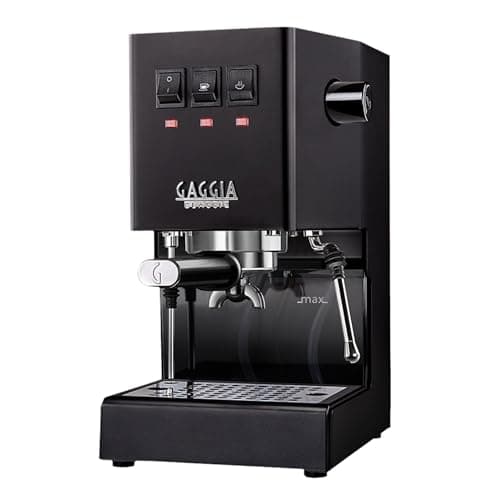
Unlike most machine comparisons, this one is not a clash of philosophies. The Gaggia Classic Evo Pro and the Rancilio Silvia want exactly the same things: a 58mm commercial portafilter, a single boiler, a manual steam wand, no screen, no automation, and an owner willing to learn. They are the two machines that have defined the serious-beginner category for two decades.
The difference is money. The Silvia typically costs roughly doublethe Gaggia, and the honest question is not "which is better" — on paper the Silvia is the more substantial machine — but whether the extra buys you enough. For a lot of people it does not, and this guide is about being straight with you regarding when it does.
The short answer
Buy the Gaggia Classic Evo Proif you want the 58mm platform for the least money. It gets you the commercial portafilter size, a solid steel Italian-built body, a three-way solenoid valve and the largest modding community in home espresso, for around half the Silvia's price. For the overwhelming majority of home drinkers this is the correct purchase, and the money you save belongs in the grinder.
Buy the Rancilio Silvia if thermal stability and commercial hardware matter to you specifically: a brass boiler, a commercial-grade group head, a chrome-plated brass 58mm portafilter with the same handle design as Rancilio's commercial machines, and roughly 30 lbs of machine holding all that heat steady. It is the heavier, more serious piece of equipment — it just is not twice as good in the cup.
Same family, different budget
It is worth being clear about how much these two agree on, because most of the internet argument about them is noise. Both machines give you:
The 58mm commercial standard, so every basket, tamper, distribution tool and bottomless portafilter made for professional equipment fits either one. A single boiler, meaning you brew and then steam rather than doing both at once. A manual steam wand you have to learn. A three-way solenoid valve that dumps pressure the instant the pump stops, giving a dry puck and a clean knock-out. A 15-bar vibratory pump in both cases. And no PID from the factory on either machine, so both ask you to manage brew temperature yourself.
That shared list is most of what defines the experience of owning either. If you are choosing between these two, you have already decided what kind of espresso owner you want to be — the only open question is how much metal you want to pay for.
Brass boiler vs aluminium
This is the substantive engineering difference and the main thing the extra money buys.
The Silvia uses a brass boiler of roughly 12 fl oz, paired with a commercial-grade group headthat Rancilio specifically markets for heat stability. Brass holds and releases heat more evenly than aluminium, and the heavy group head acts as a thermal flywheel — once the machine is genuinely up to temperature, it stays there better through a shot and recovers more predictably between shots. Combined with a ~30 lb machine weight, the Silvia is simply carrying more thermal mass than anything else near its price.
The Gaggia uses an uncoated aluminium boiler with a ~1425 W element. Aluminium heats faster and costs less, but it holds temperature less steadily, which is a large part of why the PID modification is so popular on this machine. In practice the Gaggia reaches a usable temperature quicker; the Silvia holds a good one better.
Do not overstate this. Both machines produce excellent espresso in competent hands, and grind quality, dose and technique will move your cup far more than boiler metallurgy will. The brass boiler is a real advantage, but it is a refinement — it is not the difference between good and bad coffee.
The other real differences
Portafilter material and feel. Both are 58mm, but the Silvia's is chrome-plated brasswith the ergonomic handle design carried over from Rancilio's commercial machines — noticeably heavier in the hand and better at holding heat between shots. The Gaggia's is stainless steel and perfectly good. This is a tactile difference more than a functional one, but it is one of the things people notice immediately when they use both.
Steam wand.The Silvia's wand is fully articulating with an insulated grip and a professional steaming knob for fine pressure control — it moves through a genuinely commercial range of motion and is one of the best manual wands at any home price. The Gaggia Classic Evo Pro's redesigned commercial-style wand is a real step up from cheaper machines and textures milk well, but the Silvia's is the better tool. Both demand that you learn; our how to steam milk guide covers the technique.
Water tank and body. The Silvia carries a larger tank at around 74 fl oz, built into an iron frame with stainless steel side panels, and draws roughly 993 W. The Gaggia is the lighter, more compact machine with a solid steel housing made in Italy. If counter space is tight, the Gaggia is easier to live with; if you want the machine to feel immovable, the Silvia does.
The mod ecosystem.Both machines are modded, but the Gaggia Classic's community is the larger and better-documented of the two, and its parts are cheaper. PID kits, basket upgrades, bottomless portafilters and pressure adjustments are all thoroughly covered. The Silvia has a healthy scene of its own — PID kits are common — but if tinkering is a major part of the appeal, the Gaggia is the friendlier and less expensive canvas.
Price context. The Silvia sits in the same bracket as machines with dual boilers or factory PIDs, which is the strongest argument against it. Before committing, it is worth seeing what else that money buys in our best espresso machines under $1000 guide.
At a glance
The two side by side, then the full spec sheet for each. Tap a price row for the live Amazon number — the price shown at checkout is the one that applies.
| Dimension | Gaggia Classic Evo Pro | Rancilio Silvia |
|---|---|---|
| Portafilter | 58mm stainless steel | 58mm chrome-plated brass |
| Boiler | Uncoated aluminium | Brass, ~12 fl oz |
| Group head | Standard | Commercial-grade (heat stability) |
| Steam wand | Manual, commercial-style | Manual, fully articulating + steam knob |
| PID | No (popular mod) | No (popular mod) |
| 3-way solenoid | Yes (commercial) | Yes (automatic) |
| Water tank | Standard reservoir | ~74 fl oz |
| Body | Solid steel, made in Italy | Iron frame, steel panels, ~30 lbs |
| Best for | The 58mm platform for less | Thermal stability and commercial hardware |
Gaggia Classic Evo Pro— the value pick, and the right answer for most people. It buys you onto the 58mm commercial platform for roughly half the Silvia's price, leaving budget for the grinder that will actually change your coffee. Full write-up in our Gaggia Classic Evo Pro review.
| Portafilter | Stainless steel 58mm commercial |
|---|---|
| Boiler | Uncoated aluminium boiler |
| Extraction | 9 bar espresso extractions |
| Heating element | ~1425 W |
| Pump | 15-bar vibratory |
| Milk | Manual steam wand (commercial-style) |
| 3-way solenoid | Yes (commercial) |
| Controls | Rocker switches |
| Build | Solid steel housing, made in Italy |
| Heat-up | ~5-10 min to temperature |
Rancilio Silvia— the heavier, more thermally stable machine, with commercial hardware carried down from Rancilio's café equipment. Worth it if stability and build are what you are buying, not if you still need a grinder.
| Portafilter | 58mm chrome-plated brass (commercial handle) |
|---|---|
| Boiler | Brass, ~12 fl oz |
| Group head | Commercial-grade (heat stability) |
| Pump | Vibration pump, 15 bar max |
| Milk | Fully articulating commercial wand + steam knob |
| 3-way solenoid | Yes (automatic) |
| PID | Not fitted as standard |
| Water tank | ~74 fl oz |
| Power | ~993 W, 110-120 V |
| Build | Iron frame, stainless steel side panels (~30 lbs) |
Who each is for
Buy the Gaggia Classic Evo Pro ifyou are assembling your first serious setup. It delivers the thing that actually matters at this level — the 58mm commercial platform in a repairable metal machine — at a price that leaves room for a real grinder, and it has the deepest upgrade path in home espresso if you later want a PID or better baskets. It is also simply easier to live with: lighter, more compact, faster to warm, cheaper to fix. See where it sits against the field in best espresso machines under $500.
Buy the Rancilio Silvia ifyou already own a good grinder, you know you want a manual 58mm machine, and thermal stability is the specific thing you are paying for. The brass boiler, commercial group head and heavier brass portafilter make it the more consistent machine once it is properly heat-soaked, and it is built like equipment rather than an appliance. It is the right call for someone upgrading deliberately — not for someone buying their first machine and hoping the price tag will do the work.
And a third answer worth considering:at the Silvia's price, machines with a factory PID or dual boilers enter the picture, which solves the temperature problem outright instead of asking you to surf or mod around it. If consistency is your goal rather than commercial hardware specifically, look hard at our best espresso machines under $1000 guide before committing.
The verdict
For most people, most of the time, the Gaggia Classic Evo Prois the smarter buy. It gets you everything that defines this category — 58mm, metal, manual, repairable, moddable — for roughly half the money, and the difference belongs in a grinder, where it will do far more for your coffee than a brass boiler would. The Rancilio Silviais genuinely the better-built machine, with real thermal advantages from its brass boiler and commercial group head, and it earns its reputation — but it earns it for the person who already has the grinder sorted and is deliberately buying stability and hardware. Neither will make good espresso on its own. Both will, with a decent grinder and a month of practice.
Frequently asked questions
Is the Rancilio Silvia worth twice the price of the Gaggia Classic?
For most home drinkers, no. Both machines share the things that define the category — a 58mm commercial portafilter, a single boiler, a manual steam wand, a three-way solenoid valve and no factory PID. The Silvia adds a brass boiler, a commercial-grade group head, a heavier chrome-plated brass portafilter and a larger tank, which give it better thermal stability once heat-soaked. That is a real refinement, but it is not twice the coffee. If you do not yet own a good grinder, buy the Gaggia and put the difference into the grinder.
Do the Gaggia Classic Evo Pro and Rancilio Silvia have a PID?
Neither has a PID fitted as standard. Both use conventional thermostat control, so brew temperature drifts with the boiler's heating cycle and owners either 'temperature surf' — timing the shot relative to the heating light — or fit an aftermarket PID kit. PID kits are widely available for both machines, and the modification is one of the most common upgrades owners make to either.
Which has the better steam wand, the Silvia or the Gaggia Classic?
The Rancilio Silvia. Its wand fully articulates, has an insulated grip and uses a professional steaming knob for fine pressure control, giving it a genuinely commercial range of motion. The Gaggia Classic Evo Pro's redesigned commercial-style wand is a real improvement over cheaper machines and textures milk well for the class, but the Silvia's is the better tool. Both are manual, so both require you to learn to steam.
Are the Gaggia Classic and Rancilio Silvia good for beginners?
They suit a committed beginner rather than a casual one. Both are manual machines with no PID, no pre-infusion, no shot timer and no pressure gauge, and both need proper heat-soaking before the shot plus a wait between brewing and steaming. If you want to learn espresso as a craft they are excellent platforms with long lifespans. If you want good coffee with minimal learning, a machine with a factory PID and an automatic steam wand will make you happier.
Do both machines use the same 58mm accessories?
Yes. Both are built on the 58mm commercial standard, so baskets, tampers, distribution tools and bottomless portafilters made for professional equipment fit either machine. The portafilters themselves differ in material — the Silvia's is chrome-plated brass with a commercial handle design, the Gaggia's is stainless steel — but the 58mm basket and accessory ecosystem is shared.
Sources
Keep reading
Buying your first setup?
See how we pick — compiled specs, cost-per-shot math, and honest trade-offs — then dig into the guides. No fake test lab, no rankings for hire.