Comparison
Gaggia Classic vs Breville Bambino: Which First Machine?
The classic beginner fork: a metal 58mm machine you keep for a decade, or a tiny ThermoJet one that heats in seconds. Here's how the Gaggia Classic Evo Pro and Breville Bambino actually differ — and who each is for.
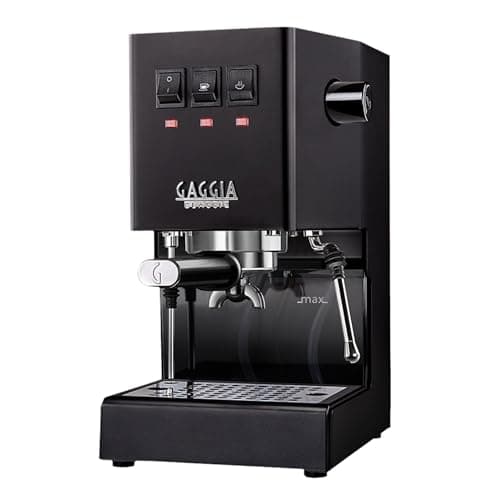
Almost every first-time espresso buyer ends up at the same fork in the road: the Breville Bambino or the Gaggia Classic Evo Pro. They land at a similar entry-to-mid price, they're both aimed at people making the jump from a pod machine to real espresso, and they're the two names you'll see recommended over and over. But they represent almost opposite ideas about what a first machine should be.
The Bambino is the conveniencepick: a tiny ThermoJet machine that heats in about three seconds, runs a 54mm portafilter, and is forgiving and plug-and-play enough that you're pulling drinkable shots on day one. The Gaggia is the longevitypick: a metal, 58mm commercial-portafilter machine you can repair, mod and keep for a decade — but one that heats slowly and asks more of you. Below is the honest breakdown, then who each is really for.
The short answer
Choose the Breville Bambinoif you want the fastest, smallest, most forgiving way into real espresso — three-second heat-up, a compact body that fits any counter, and a low learning curve. Choose the Gaggia Classic Evo Proif you suspect this is going to become a genuine hobby and you'd rather buy once: a rugged, repairable metal machine on the café-standard 58mm platform, with a mod community that keeps it relevant for years. In one line, it's convenience versus a higher ceiling and longer life— and the right answer depends entirely on which of those you value more.
Two philosophies
Breville Bambino: fast, small, forgiving. Breville took the fast heater and pre-infusion from its bigger machines, shrank the whole thing to the size of a toaster, and made it as painless as real espresso gets. The ThermoJetboiler is ready in about three seconds, so there's no warm-up ritual killing your morning; the 54mm portafilter ships with a forgiving pressurized basket alongside a non-pressurized one; and low-pressure pre-infusion quietly improves your extraction without you doing anything. The pitch is simple: remove the friction that makes beginners give up, and get out of the way.
Gaggia Classic Evo Pro: metal, repairable, buy-once.The Gaggia Classic is a legend for the opposite reason. It's a largely stainless, single-boiler machine built on the 58mm commercial portafilter— the exact size a café uses — driven by simple rocker switches with very little to go wrong. It heats more slowly and it asks you to learn its rhythm, but in return you get a machine that's genuinely serviceable rather than disposable, plugs into an effectively unlimited accessory ecosystem, and has the deepest modding community of any home machine. It's built to be kept.
The real differences
Both machines make real, 9-bar espresso, and both need a proper grinder to shine (more on that below). Where they genuinely diverge comes down to five things.
Portafilter: 54mm vs 58mm. The Bambino uses a 54mm portafilter with its own strong, well-supported ecosystem of baskets, tampers and bottomless portafilters. The Gaggia uses the 58mmcommercial standard — the same size as café machines — so every tamper, basket and accessory ever made for a pro setup simply fits. Neither is "wrong," but 58mm ties you to nothing proprietary and is the platform serious hobbyists gravitate to. 54mm is more than good enough; 58mm is future-proof.
Heat-up speed.This is the most visible day-to-day gap. The Bambino's ThermoJet system is ready in about three seconds— you can walk up cold and brew. The Gaggia's single aluminum boiler takes roughly five to ten minutes to come to temperature; most owners just switch it on and let it warm while they grind and prep. If your mornings are rushed, that difference matters a lot. If you're happy to build a small routine around it, it fades into the background.
Build and repairability.The Bambino is compact and lightweight (about 11 lbs) and is essentially a sealed appliance — brilliant while it works, but not something you open up and fix. The Gaggia is largely stainless steel, built from standard serviceable parts, and is famous for being repairable rather than disposable. If a component fails years down the line, the Gaggia is the one you can realistically keep running.
The mod ecosystem.No home machine has a modding culture like the Gaggia Classic. Because it's simple, metal and built from standard parts, it's become the enthusiast's canvas: the 9-bar OPV mod(adjusting the over-pressure valve so the pump delivers espresso's ideal ~9 bar instead of the stock 15), a PID controllerfor precise, stable brew temperature, better baskets and a bottomless portafilter. None are required — it pulls good shots stock — but the upgrade path is real, documented and reversible. The Bambino's "upgrades" are basically better baskets and accessories; there's no equivalent tinkering ceiling.
The milk wand. Both use a manual steam wand, so both ask you to learn to steam microfoam yourself — a skill worth having. The Gaggia Classic Evo Pro's redesigned, commercial-style wand textures milk well for the class and feels closest to a café. The Bambino's single thermocoil means you brew then steam, which is a beat slower for back-to-back milk drinks. (If you want the machine to steam foryou, that's a different product entirely — the automatic-wand Bambino Plus, covered in our best for beginners guide.)
At a glance
The two side by side, then the full spec sheet for each. Tap a price row for the live Amazon number — the price shown at checkout is the one that applies.
| Dimension | Breville Bambino | Gaggia Classic Evo Pro |
|---|---|---|
| Portafilter | 54mm (own ecosystem) | 58mm (commercial standard) |
| Heat-up | ~3 seconds (ThermoJet) | ~5-10 min (single boiler) |
| Build | Compact, lightweight (~11 lbs) | Largely stainless, repairable |
| Milk | Manual steam wand | Manual commercial-style wand |
| Learning curve | Forgiving, plug-and-play | Hands-on, rewards effort |
| Upgrade path | Baskets & accessories | 9-bar OPV, PID, endless mods |
| Best for | Speed, size, ease | Longevity, ceiling, tinkering |
Breville Bambino (BES450)— the convenience pick. Fast, tiny and forgiving, it's the machine we point most first-timers toward when speed and footprint matter most. Full write-up in our Breville Bambino review.
| Portafilter | 54mm (pressurized + non-pressurized baskets) |
|---|---|
| Boiler | ThermoJet (heats in ~3 seconds) |
| Pump pressure | 15 bar (9 bar at the puck) |
| Pre-infusion | Yes (low-pressure) |
| Milk | Manual steam wand |
| Water tank | 47 oz / 1.4 L |
| Footprint | ~7.7 in wide (~11 lbs) |
Gaggia Classic Evo Pro— the buy-once pick. A metal, 58mm machine you can repair, mod and keep for a decade, at the cost of slower heat-up and a little more effort. Full write-up in our Gaggia Classic Evo Pro review.
| Portafilter | 58mm (commercial standard) |
|---|---|
| Boiler | Single aluminum boiler |
| Heating element | ~1425 W |
| Pump pressure | 15 bar (mod to ~9 bar common) |
| Milk | Manual steam wand (commercial-style) |
| Build | Largely stainless, repairable & moddable |
| Heat-up | ~5-10 min to temperature |
Who each is for
Buy the Breville Bambino ifyou want the lowest-friction start possible. It suits small kitchens, rushed mornings, and anyone who wants real espresso without a machine that dominates the counter or a routine that demands patience. The three-second heat-up and forgiving included basket mean you'll actually use it every day, and it makes espresso good enough that most people never feel the need to upgrade. It's the pick if the barrier you're worried about is getting started and sticking with it. See where it lands against the whole field in our best under $500 guide.
Buy the Gaggia Classic Evo Pro ifyou already sense this is going to be a real hobby and you'd rather not buy twice. The 58mm platform, the metal build and the mod ecosystem give it a ceiling and a lifespan the Bambino can't match — you can learn on it stock, then add a PID and a 9-bar mod as your technique grows, and still be using the same machine in ten years. It rewards the person who finds the ritual itself enjoyable and doesn't mind waiting a few minutes for warm-up. It's covered head-to-toe in our Gaggia Classic Evo Pro review.
And the rule that outranks both machines: for espresso, the grinder changes what's in the cup more than the machine does. Neither has a built-in grinder, so budget for a real burr grinder alongside whichever you pick — start with our best grinders for espresso guide. A modest machine with a good grinder beats a better machine fed by a cheap one, every time.
The verdict
Neither machine is better in the abstract — they answer different questions. If you want the fastest, smallest, most forgiving route into espresso and you value convenience over everything, the Breville Bambinois the smarter buy, and you may never outgrow it. If you're buying for the long haul — a repairable, café-standard machine you can tinker with and keep for a decade — the Gaggia Classic Evo Prois the one, and its slower heat-up is a fair price for a higher ceiling and a longer life. Be honest about whether you're optimizing for the first six months or the next ten years, put real money into the grinder either way, and you'll be happy with whichever side of the fork you take.
Frequently asked questions
Is the Gaggia Classic Evo Pro or the Breville Bambino better for a beginner?
It depends on the kind of beginner you are. The Breville Bambino is more forgiving and plug-and-play: it heats in about three seconds, is tiny, and ships with a forgiving pressurized basket, so you're making drinkable espresso on day one. The Gaggia Classic Evo Pro is a rugged 58mm metal machine you can grow into and keep for years, but it heats slowly (5-10 minutes) and asks more of you. Pick the Bambino for the easiest start; pick the Gaggia if you want to buy once and grow into the hobby.
Why does the Gaggia use a 58mm portafilter and the Bambino a 54mm?
58mm is the commercial café standard, so the Gaggia plugs into an effectively unlimited world of standard baskets, tampers and bottomless portafilters — nothing about it is proprietary. Breville's 54mm has its own strong, well-supported ecosystem but is unique to Breville. For most people 54mm is more than enough; hobbyists who want café-standard accessories and long-term flexibility tend to prefer 58mm.
How much faster is the Breville Bambino to heat up?
Significantly. The Bambino's ThermoJet system is ready in about three seconds, so you can walk up to a cold machine and brew. The Gaggia Classic Evo Pro uses a single aluminum boiler that takes roughly five to ten minutes to reach temperature, so most owners switch it on and let it warm while they grind. If rushed mornings are your concern, the Bambino's speed is its biggest everyday advantage.
Can you mod the Breville Bambino like the Gaggia Classic?
Not really. The Gaggia Classic is famous for its modding culture — the 9-bar OPV mod, adding a PID for stable temperature, better baskets and bottomless portafilters — because it's simple, metal and built from standard, serviceable parts. The Bambino is a compact, largely sealed appliance; you can add better baskets and accessories, but there's no equivalent repair-and-upgrade path. If tinkering is part of the appeal, the Gaggia is the machine.
Do either the Gaggia or the Bambino come with a grinder?
No — neither the Gaggia Classic Evo Pro nor the Breville Bambino has a built-in grinder, and espresso quality depends heavily on a fine, even, adjustable grind. Budget for a dedicated burr grinder alongside whichever machine you choose; a good grinder matters more to the cup than the machine does. See our best grinders for espresso guide to pair one.
Sources
Keep reading
Buying your first setup?
See how we pick — compiled specs, cost-per-shot math, and honest trade-offs — then dig into the guides. No fake test lab, no rankings for hire.