Head to Head
Baratza Encore ESP vs Timemore Chestnut C3 ESP
The two grinders most people choose between when they start pulling espresso. One has a motor; the other has a finer dial and costs a fraction as much. The honest comparison, spec by spec.
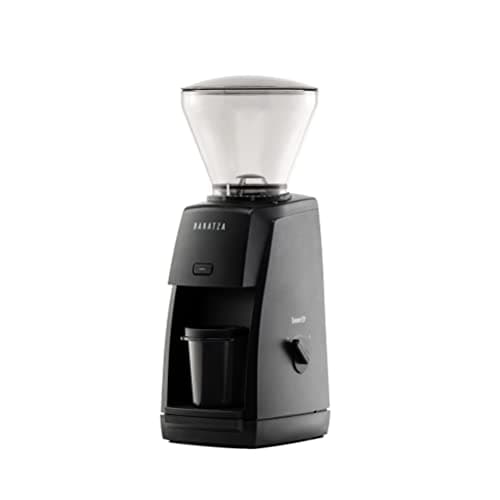
Buy the Baratza Encore ESP if you make more than one or two drinks a day; buy the Timemore Chestnut C3 ESP if you do not, because it adjusts finer and costs roughly a third as much. That is the whole decision, and it is a workflow question rather than a quality one. The Encore ESP gives you 40mm M2 conical burrs, roughly 20 microns per espresso step, a 230 g hopper and a US parts channel. The C3 ESP gives you 38mm conical burrs on a 30-click dial at 0.0233mm per click— about 23 microns, a comparable step from a grinder you turn by hand.
Both genuinely reach espresso fineness, which is not true of most grinders at their prices, and both are regular picks on our best grinders for espresso and best espresso grinders under $200 guides. This page is the head-to-head.
Side by side
| Spec | Baratza Encore ESP | Timemore Chestnut C3 ESP |
|---|---|---|
| Type | Electric, hopper-fed | Manual (hand) grinder |
| Burrs | 40mm M2 conical, steel, user-replaceable | 38mm S2C660 conical, SUS420 stainless, CNC-machined |
| Adjustment | 40 stepped settings (1-20 espresso, 21-40 filter) | Internal dial, 30 clicks per rotation |
| Published step size | ~20 microns (espresso) / ~90 microns (filter) | 0.0233mm per click (~23 microns) |
| Capacity | 8 oz / 230 g hopper, 5 oz / 142 g grounds bin | 20 g per Timemore (several retailers list 25 g) |
| Motor | DC, ~550 RPM, ~70W | None - hand crank |
| Weight | ~7 lb | ~430 g |
| Build | Plastic body, replaceable burrs and parts | Aluminum alloy and stainless, no plastic internals |
| In the box | 54mm dosing cup + 58mm portafilter adapter | Grinder, brush, pouch (varies by seller) |
| Price | $199.95Buy | $68.00Buy |
Prices shown are from Amazon as of October 5, 2026 and change often — the button always goes to the current listing. Some links may earn us a commission at no extra cost to you.
The dial: who actually adjusts finer
This is the comparison's surprise. On published figures the hand grinder has the finer step.
Baratza splits the Encore ESP's 40 settings deliberately: settings 1–20 are the espresso range at roughly 20 microns per step, and 21–40 are the filter range at roughly 90 microns per step. That is the design decision that makes it an espresso grinder rather than a plain Encore — fine control where espresso needs it, broad strokes where filter does.
Timemore publishes the C3 ESP dial at 30 clicks per rotation at 0.0233mm per click, against 12 clicks at 0.0833mm on the standard C3 dial. Roughly 23 microns per click puts it in the same territory as the Baratza's espresso range from a grinder that costs a fraction as much.
The Encore ESP case: it is the one you will actually use
Who it is for: households pulling multiple shots a day, anyone making milk drinks for more than one person, and anyone who wants the grinder to be furniture rather than a task.
The Encore ESP is the Encore platform re-geared for espresso: 40mm M2 conical burrs, a slow ~550 RPM DC motor at around 70W, a 230 g hopper and a 142 g grounds bin. Crucially it ships with a 54mm dosing cup and a 58mm portafilter adapter, so grinding straight into a basket works out of the box.
| Burrs | 40mm M2 conical (steel, user-replaceable) |
|---|---|
| Grind settings | 40 stepped (1-20 espresso, 21-40 filter) |
| Espresso step size | ~20 microns per step |
| Filter step size | ~90 microns per step |
| Motor | DC, ~550 RPM, ~70W |
| Bean hopper | 8 oz / 230 g |
| Grounds bin | 5 oz / 142 g |
| Included | 54mm dosing cup + 58mm portafilter adapter |
| Weight | ~7 lb |
What we like:it removes effort from the process entirely, the burrs and parts are user-replaceable through Baratza's US channel, the slow motor keeps grounds cool, and it covers filter coffee as a genuine second job.
The honest cons.It costs roughly three times the C3 ESP. It is hopper-fed, so there is real retention and switching beans means purging through the old ones — our single-dose grinder guide covers the alternative. The body is plastic and feels it. And stepped adjustment means that if your target sits between two clicks, there is nowhere to go.
Our full Encore ESP review has the long-form case, and Encore vs Encore ESP explains why the cheaper Encore cannot do this job.
The C3 ESP case: more precision per dollar than anything near it
Who it is for: one or two espressos a day, a tight budget, a small kitchen, or a second grinder that travels.
The C3 ESP is an all-metal hand grinder: 38mm S2C660 conical burrs in SUS420 stainless, CNC-machined and spike-to-cut, on a dual-bearing shaft, in an aluminum and stainless body with no plastic internals. Timemore lists the capacity at 20 g, with several retailers listing 25 g — either way, a double shot in one go. The handle is fixed at 159mm; the foldable handle belongs to the ESP Pro, not this model.
| Type | Manual (hand) grinder |
|---|---|
| Burrs | 38mm S2C660 conical, SUS420 stainless, spike-to-cut, CNC-machined |
| Adjustment | Internal dial beneath the burrs - 30 clicks per rotation, 0.0233mm per click |
| Standard C3 dial, for contrast | 12 clicks per rotation, 0.0833mm per click |
| Capacity | 20 g per Timemore's own C3-series page; several retailers list 25 g |
| Body | Aluminum alloy and stainless steel, silicone base, no plastic internals |
| Handle | Fixed, 159mm |
| Weight | ~430 g |
What we like: the finest published click of the two, a build with no plastic in the grind path at a price where plastic is the norm, no power requirement, and nothing to fail electrically.
The honest cons.Espresso-fine grounds are hard work by hand — expect real effort for a double, and expect it to get old if you make four drinks a day. The dial is internal, under the burrs, so changing grind is a deliberate operation rather than turning a ring. Capacity is one double shot, so a round of drinks means repeated grinds. And the burr set is smaller than the Baratza's, which shows up as time rather than quality.
Our full Chestnut C3 ESP review goes deeper on the dial arithmetic and the model family.
Workflow is the real decider
Strip away the specs and the question is: how many drinks do you make, and when?
- One espresso, most mornings. The C3 ESP, comfortably. Thirty to sixty seconds of cranking is a ritual, not a chore, and you keep the money.
- Two drinks, one of them with milk. Either works. Lean Baratza if the second drink is for somebody else who is waiting.
- Three or more, or a household that all drinks coffee. The Encore ESP. Hand grinding four doubles before work is how a grinder ends up in a cupboard.
- You also brew filter coffee.The Encore ESP — its filter range with ~90 micron steps is a real second mode, where the C3 ESP is tuned toward the fine end.
Whichever you pick, weigh the dose. Both grinders are precise enough that dose weight becomes the next variable worth controlling — see do I need a scale for espresso and best coffee scales.
Which C3 are you buying? The model names are a trap
Timemore sells several near-identical-looking grinders and only some of them are espresso grinders. Before you buy:
- C3 ESP— the 30-click, 0.0233mm espresso dial, fixed 159mm handle. This page's grinder.
- C3 ESP Pro— same published espresso dial, foldable handle.
- C3S / C3S Pro — not ESP models. These carry the coarser 12-click dial at 0.0833mm per click, which is roughly 83 microns a step. Espresso lives in a band narrower than that.
- C5 ESP Pro— a newer, more expensive tier, not this grinder.
If the listing does not say ESP, it is not the grinder in this comparison. Our best hand grinders guide covers the wider field with the same caution.
A third option: 1Zpresso J-Ultra
Who it is for: the buyer who wants a hand grinder and is not prepared to compromise on adjustment or capacity.
The J-Ultra sits between these two on price and above both on adjustment: 48mm titanium-coated conical burrs on an external ring that moves 8 microns per click across 100 clicks per rotation, with a 35–40 g capacity. That is a finer discrete step than either grinder above, and the dial is on the outside where you can reach it.
| Type | Manual (hand) grinder |
|---|---|
| Burrs | 48mm titanium-coated conical |
| Adjustment | External ring, 100 clicks per rotation at 8 microns per click |
| Capacity | 35-40 g |
| Use | Espresso through filter |
The honest cons. It costs substantially more than the C3 ESP and approaches the Encore ESP, so you are paying hand-grinder prices for electric-grinder money without getting a motor. Larger burrs mean more to turn. And it is still a hand grinder, so the household-volume objection applies exactly as before.
Verdict
- Most households: Baratza Encore ESP. Not because it grinds better, but because a motor is the difference between a grinder you use and a grinder you resent.
- Solo drinker or tight budget: Timemore Chestnut C3 ESP. A finer published click, an all-metal build and roughly a third of the price. Check the listing says ESP.
- Hand grinding, no compromises: 1Zpresso J-Ultra. Finer again, bigger burrs, external dial.
- Neither, if you also want stepless electric: step up a bracket. Our best espresso grinders under $500 covers where stepless adjustment and 50mm+ flat burrs begin.
One last point that applies to both: the grinder changes the cup more than the machine does. If you are choosing between spending here or on the machine, spend here. Our best grinders for Breville machines guide covers fitment if you already own the machine, and best espresso setup puts complete kits together.
Frequently asked questions
Baratza Encore ESP or Timemore C3 ESP - which should I buy?
The Encore ESP if you make more than one or two drinks a day, because it is electric and hopper-fed; the Timemore Chestnut C3 ESP if you do not, because it publishes a finer adjustment step (0.0233mm per click) than the Baratza's roughly 20-micron espresso steps and costs about a third as much. Both genuinely reach espresso fineness, which is the bar most grinders at these prices fail.
Does the Timemore C3 ESP really adjust finer than the Encore ESP?
On published figures, yes - marginally. Timemore lists the ESP dial at 30 clicks per rotation at 0.0233mm per click, about 23 microns; Baratza lists roughly 20 microns per step across the Encore ESP's espresso range of settings 1-20. They are in the same territory, which is the point: the hand grinder is not the compromise on this spec.
Is hand grinding espresso too much work?
For one or two doubles a day, no - expect thirty to sixty seconds of real effort per dose. For three or more, or for a household where everyone drinks coffee, it becomes the reason the grinder ends up in a cupboard. That is the single best argument for the electric Encore ESP, and it has nothing to do with grind quality.
What is the difference between the C3 ESP and the C3S?
The dial. The C3 ESP uses the 30-click espresso dial at 0.0233mm per click; the C3S and C3S Pro use the standard 12-click dial at 0.0833mm per click, which is roughly 83 microns a step. Espresso lives in a band narrower than that, so a C3S is not an espresso grinder. If the listing does not say ESP, it is the wrong model.
Can the Encore ESP do filter coffee too?
Yes, and that is a real advantage over the C3 ESP. Baratza splits the Encore ESP's 40 settings into an espresso range (1-20, roughly 20 microns per step) and a filter range (21-40, roughly 90 microns per step), so one grinder covers both with appropriate resolution for each. The C3 ESP is geared toward the fine end.
Which one has better burrs?
The Encore ESP's are larger - 40mm M2 conical steel against the C3 ESP's 38mm S2C660 SUS420 stainless. Larger burrs mostly buy speed and cooler running for a given dose rather than a categorically better grind. The C3 ESP's advantage is build: all-metal with no plastic in the grind path, at a far lower price.
Sources
- Baratza - Encore ESP product specifications (40mm M2 conical burrs, 40 settings split 1-20 espresso and 21-40 filter, ~20 and ~90 micron step sizes, 230 g hopper, 142 g grounds bin, 54mm dosing cup and 58mm portafilter adapter)
- Timemore - official Chestnut C3 series specifications (38mm S2C660 burrs, 12-click standard dial at 0.0833mm vs 30-click ESP dial at 0.0233mm, capacity, dual-bearing shaft)
- Sigma Coffee - Timemore Chestnut C3 ESP published specification (38mm SUS420 S2C660 burrs, 430 g net weight, 147 x 52 mm, 25 g capacity, 159mm fixed handle)
- 1Zpresso - J-Ultra specifications (48mm coated conical burr, 100 clicks per rotation at 8 microns, 35-40 g capacity)
- Amazon product listings for the Encore ESP, Chestnut C3 ESP and J-Ultra - model identity and current availability
- Specialty Coffee Association - grind, extraction and particle distribution fundamentals
Keep reading
Buying your first setup?
See how we pick — compiled specs, cost-per-shot math, and honest trade-offs — then dig into the guides. No fake test lab, no rankings for hire.