Buying Guide
The Best Precision Espresso Baskets in 2026
The filter basket that came with your machine is the cheapest part of it. A precision basket is a published hole pattern instead of an unpublished one - here is which one fits your portafilter, and what it can and cannot do for your shots.
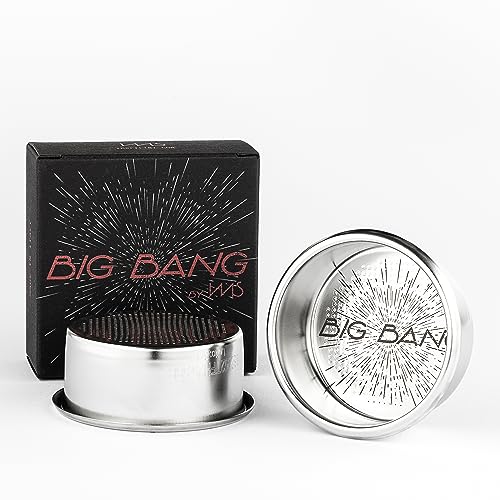
The verdict first. For a 58mm machine— a Gaggia Classic, a Rancilio Silvia, anything on the commercial E61 standard — buy the IMS Big Bang 58mm in 18–20 g, because IMS is the only maker here that publishes its hole spacing, hole diameter and hole count model by model. For a Breville or Sage machine, which is 54mm, buy the IMS Precision 54mm 18–22 g (B62.52TH28E) — that is also the budget pick, the cheapest basket on this page and still a published spec sheet rather than a guess. If you pull shots into a bottomless portafilter, take the ridgeless IMS Baristapro Nanotech instead.
One honest caveat up front, because it decides whether this is a purchase worth making at all: a basket is a plate with holes in it. It cannot grind more evenly, it cannot level a puck, and it will not rescue a shot that is channeling because the grind is wrong. What a precision basket does is remove one unknown — the hole field — from a shot that has several. If the grinder is the unknown, spend the money there first; our coffee grinder buying guide is the better page to be reading.
What makes a basket "precision"
"Precision" is not a regulated term, so it is worth being specific about what the better baskets actually have that a stock one does not. IMS — the Italian filter maker that supplies a great many machine brands and sells under its own name and as BaristaPro — publishes the following for its competition perforations, and this is the clearest published description of the difference anywhere:
- A stated hole diameter. IMS perforations are 0.30mm, which the company describes as its balance between holding back unwanted solids and letting a full-bodied shot through.
- A stated hole pattern and count. IMS names four: N (2.00mm spacing, rectangular layout, up to 481 holes), E (1.73mm spacing, hexagonal, up to 715 holes), M (1.50mm, rectangular, up to 641 holes) and BB — Big Bang, where spacing starts at 1.5mm in the center and increases toward the edge, up to 585 holes. The first three sit inside a maximum perforated diameter of 49mm, the M pattern inside 44mm.
- Hole geometry, not just hole size.IMS states the holes are circular with a conical cross-section, and that "the inner surface of IMS perforations is polished and has no corners or burrs". A burr at the exit of a hole is a place for a jet to form.
- A published dose range, by roast. IMS gives capacity by basket height and roast level rather than one number, because light roasts occupy more volume per gram than dark ones.
The basket that shipped with your machine has none of those figures published. That is the whole upgrade: not a promise of better coffee, but a part whose specification you can read.
How we chose these
Six baskets, assessed on their makers' and listings' published specifications and on whether a home owner can buy the right one without guesswork. We weighted:
- Published hole specification.A stated hole diameter and pattern beats "high precision" in a product title. Every pick here publishes at least a hole diameter.
- Fitment you can check before buying. Basket diameter, basket height and the machines a listing names. A basket that does not seat properly in your portafilter is a refund, not an upgrade.
- Dose honesty.A basket sold as "18 g" should hold 18 g of your coffee with headroom for the screen and the shower. We preferred baskets that publish a range or a per-roast table.
- Ridged or ridgeless, stated. Standard portafilters hold the basket with a spring clip and want a ridged basket; many naked portafilters and some aftermarket ones prefer ridgeless. This is the single most common wrong purchase in the category.
- Currently listed and purchasable. Every basket here was verified as a live, in-stock listing before it was written up, and each carries a live price below.
At a glance
The six side by side, by portafilter size and dose. Tap any button for the live Amazon price; the number shown at checkout is the one that applies.
| Basket | Fits | Dose | Rim | Hole spec (published) | Price |
|---|---|---|---|---|---|
| IMS Big Bang 58mm | 58mm portafilters | 18-20 g | Ridged | 0.30mm, BB graduated spacing, up to 585 holes | $25.90Buy |
| IMS Precision 54mm (B62.52TH28E) | 54mm Breville / Sage | 18-22 g | Ridged | 0.30mm, E hexagonal, 583 holes | $15.88Buy |
| IMS Baristapro Nanotech 58mm | 58mm, naked portafilters | 18 g | Ridgeless | 0.30mm, Nanotech-coated | $36.92Buy |
| Normcore 58mm High Extraction | 58mm portafilters | 18 g | Ridged | 0.28mm, 0.8mm plate | $35.99Buy |
| Normcore 54mm High Extraction | 54mm Breville / Sage | 18 g | Ridged | 0.8mm plate | $34.99Buy |
| MHW-3BOMBER 58mm (FB5628) | 58mm portafilters | 18 g | Ridged | Double-layer stainless | $23.99Buy |
Prices shown are from Amazon as of November 8, 2026 and change often — the button always goes to the current listing. Some links may earn us a commission at no extra cost to you.
Best overall for 58mm: IMS Big Bang (18-20 g)
Who it is for:anyone with a 58mm machine — Gaggia Classic Pro or Evo, Rancilio Silvia, any E61 group — who wants the most completely documented basket they can buy for the money.
The Big Bang is on top because of what IMS publishes about it rather than any claim about taste. Its perforation is the one pattern in the IMS range where hole spacing is not uniform: it starts at 1.5mm in the center of the plate and widens toward the rim, up to 585 holes inside a 49mm perforated area. Every hole is the same 0.30mm circular, conically sectioned, polished and burr-freehole IMS uses across the competition line. The 18–20 g, 23.5mm-tall version is the one that suits the doses most home 58mm machines are set up for.
| Portafilter size | 58mm |
|---|---|
| Dose (per listing) | 18-20 g, double |
| Basket height | 23.5mm |
| Hole diameter | 0.30mm (IMS competition perforation) |
| Hole pattern | BB - spacing from 1.5mm at center, increasing to the rim |
| Hole count | Up to 585, within a 49mm perforated diameter |
| Rim | Ridged |
Honest cons: IMS publishes no tolerance figure for any of this, so "precision" stays a description of the design and not a measured guarantee; the graduated spacing is the Big Bang's whole selling point and we could not verify a controlled trial showing it beats the uniform E pattern in the cup; and it is a ridged basket, so if you have a naked portafilter that wants ridgeless, this is the wrong one. Check your portafilter before you order — our portafilter size guide shows how to measure yours in about thirty seconds.
Budget pick and best for Breville: IMS Precision 54mm (18-22 g)
Who it is for:Breville and Sage owners — Bambino, Bambino Plus, Barista Express, Barista Pro, Barista Touch, Impress, Infuser — and anyone who wants the cheapest real upgrade on this page.
This is the budget pick, and it is the budget pick because it is the least expensive basket here, not because it is a compromise: it is an IMS competition basket with the same published perforation as the 58mm picks. IMS's own spec sheet for the code on the listing, B62.52TH28E, gives a 62.5mm border diameter over a 54mm body, a 28mm height, 583 holes in the hexagonal E pattern inside a 44mm perforated area, and 0.30mm holes. It also publishes a dose table by roast — 18/22 g for a dark roast, 18.5/22.5 g for a medium, 20/23 g for a light — which is a more useful number than a single figure, because light roasts take up more room per gram.
| Portafilter size | 54mm (Breville / Sage) |
|---|---|
| IMS code | B62.52TH28E |
| Border / body diameter | 62.5mm border, 54mm body |
| Basket height | 28mm |
| Dose (IMS table) | Dark 18/22 g; medium 18.5/22.5 g; light 20/23 g |
| Hole diameter / count | 0.30mm, 583 holes (E hexagonal), 44mm perforated area |
| Tamper diameter | 53 / 53.4mm |
| Role here | Budget pick |
Honest cons: the listing states plainly that it does not fit the Breville JET models, so check yours. Its 28mm height is taller than some stock Breville baskets, and on a few machines a tall basket plus a thick puck screenplus a generous dose leaves too little headroom — if the screen marks the puck deeply, dose down a gram rather than forcing it. And IMS does not name the base material on its spec page; it publishes the finishing process (electropolishing, wet vibrofinishing, pickling) but not the steel grade.
Best for a bottomless portafilter: IMS Baristapro Nanotech 58mm (18 g)
Who it is for: anyone diagnosing their puck prep through a bottomless portafilter, where a ridgeless basket and a clean-releasing surface both earn their keep.
Two things separate this one. It is ridgeless, which is what a naked portafilter generally wants — no retaining ridge interrupting the underside you are watching. And it carries IMS's Nanotech coating, which IMS describes as a quartz-nanotechnology surface treatment whose non-stick properties make a spent puck easier to knock out and the basket easier to clean; IMS also states the coating is antibacterial. On a basket you are inspecting after every shot, a puck that releases in one piece is a real daily convenience.
| Portafilter size | 58mm |
|---|---|
| Dose (per listing) | 18 g, double |
| Rim | Ridgeless |
| Hole diameter | 0.30mm (IMS competition perforation) |
| Coating | Nanotech - quartz nanotechnology, non-stick, antibacterial (IMS) |
| Best paired with | A bottomless portafilter |
Honest cons: it is the most expensive basket here, and the coating is the reason — IMS makes no claim that it changes extraction, only that it releases and cleans more easily. Coated baskets also need more care: retailers selling them advise hand washing with non-abrasive cleaners, and IMS publishes no detergent-compatibility statement at all, so we would keep it out of a backflush with cleaning detergent rather than assume the coating survives it. Finally, ridgeless is a feature only if your portafilter suits it — in a standard spring-clip portafilter a ridgeless basket can lift out with the puck.
Best complete kit: Normcore 58mm Precision High Extraction (18 g)
Who it is for: someone upgrading the whole business end of a 58mm machine in one purchase rather than three.
Normcore's listing publishes a 0.8mm plate thickness and a 0.28mm hole diameter for an 18 g basket, and ships it with a 58.5mm puck screen and 200 paper filters. That bundle is the reason it is here: the screen and the papers are the two things people buy next anyway, and buying them together costs less than buying them separately. The 0.28mm figure is marginally finer than IMS's published 0.30mm, which we report as a published difference and nothing more — we have no evidence that 0.02mm is detectable in a cup.
| Portafilter size | 58mm |
|---|---|
| Dose | 18 g |
| Plate thickness | 0.8mm (per listing) |
| Hole diameter | 0.28mm (per listing) |
| In the box | Basket, 58.5mm puck screen, 200 x 58mm paper filters |
| Rim | Ridged |
Honest cons: the specification comes from the retail listing rather than a published manufacturer spec sheet, which is a weaker source than IMS's own documentation, and there is no hole count or pattern given at all. The paper filters are a consumable you may decide you do not want. And a 22 g version of the same basket exists, so check you are ordering the dose you actually pull.
Best 54mm kit: Normcore 54mm Precision High Extraction (18 g)
Who it is for: a Breville or Sage owner who wants the basket, the screen and the papers in one order instead of the basket alone.
The same idea, sized for 54mm: an 18 g basket in a stated 0.8mm stainless plate, bundled with a 53.3mm puck screen and 200 paper filters, and listed as fitting Breville and Sage machines. It sits above our budget IMS 54mm pick on price, and the reason to pay the difference is the bundle, not the basket — if you only want the basket, the IMS is the better-documented buy.
| Portafilter size | 54mm (Breville / Sage) |
|---|---|
| Dose | 18 g |
| Plate thickness | 0.8mm stainless (per listing) |
| In the box | Basket, 53.3mm puck screen, 200 paper filters |
| Rim | Ridged |
| Role here | One-order upgrade for 54mm machines |
Honest cons: no hole diameter, hole count or pattern is published for the 54mm version, which is exactly the information this category is supposed to be selling; and as with any 54mm basket, confirm your machine is not one of the Breville models that takes a different basket before you order.
Best mid-price ridged 58mm: MHW-3BOMBER (18 g, FB5628)
Who it is for: a 58mm owner who wants a ridged precision basket that simply drops into a standard spring-clip portafilter, at less than the IMS Baristapro costs.
MHW-3BOMBER is already on our shortlists for puck screens, WDT tools and knock boxes, and this is the same proposition applied to a basket: a double-layer stainless, ridged, 18 g basket listed as fitting most 58mm portafilters. The ridge is the practical point — in a stock portafilter it is held by the spring clip exactly the way the original basket was, so the swap is genuinely a drop-in.
| Portafilter size | 58mm |
|---|---|
| Dose | 18 g |
| Construction | Double-layer stainless steel (per listing) |
| Rim | Ridged |
| Model | FB5628 |
Honest cons: this is the thinnest specification on the page — the listing gives no hole diameter, no hole count and no pattern, so you are buying the brand's general reputation for tool quality rather than a published perforation. If a documented hole field is the reason you are on this page, buy the IMS instead. It is also ridged only, so it is no use to a naked portafilter that needs ridgeless.
Get the size and the dose right first
Three checks, in this order, and the purchase is almost impossible to get wrong.
1. Portafilter diameter.Most machines on the commercial standard are 58mm. Most Breville and Sage machines are 54mm. Many De'Longhi machines are 51mm — and every basket on this page is 58mm or 54mm, so a 51mm machine is not served here. Measure across the inside of the portafilter rather than trusting a spec sheet you read once; the portafilter size guide walks through it.
2. Pressurized or not. If your machine came with a pressurizedbasket — the kind with a single pin-hole exit underneath, used on most entry-level machines — a precision basket is a different kind of part, and swapping to one means your shots now depend entirely on your grind. That is the upgrade, but it is a change in how the machine behaves, not an accessory. Read pressurized vs non-pressurized portafilters before you order.
3. Dose, then headroom. Buy the basket for the dose you actually pull, not the dose you aspire to. Our guide to how many grams make a double shot covers the arithmetic; the practical rule afterwards is that the puck needs a few millimeters of clearance to the shower screen, and a taller basket plus a puck screen eats that clearance quickly.
What a precision basket will not fix
A basket changes the exit side of the puck. Almost every espresso problem people hope to fix with one is on the entry side.
Channeling. A uniform hole field removes one possible cause and leaves the common ones in place: uneven distribution, an unlevel tamp, clumpy grounds, too fine a grind against too much pressure. The tools that address those are a WDT tool and a technique fix — see espresso channeling and how to tamp.
A bad grinder. If your grind distribution is wide, no basket narrows it. This is the single most common misallocation of money in home espresso, and the order of spending that actually works is grinder, then prep tools, then baskets and screens.
Sour or bitter shots. Those are extraction problems, decided by grind, dose, ratio and temperature. Start with why is my espresso sour or why is my espresso bitter— a basket is not the variable.
The bottom line
Buy on fitment first and documentation second. On a 58mm machine the IMS Big Bang 18–20 g is the most thoroughly published basket you can put in a standard portafilter. On a Breville or Sage, the IMS Precision 54mm B62.52TH28Eis both the right size and the cheapest thing here — the budget pick, and the one most readers of this page should buy. Shooting into a naked portafilter, go ridgeless with the IMS Baristapro Nanotech. Want the screen and papers in the same box, take the matching Normcorekit in your size. And if your grinder is the weak link, close this page and spend the money there instead — that is the upgrade that changes the cup.
Frequently asked questions
What is the best precision espresso basket?
For a 58mm portafilter, the IMS Big Bang in 18-20 g - IMS publishes the hole diameter (0.30mm), the hole pattern (spacing from 1.5mm at the center widening to the rim), the hole count (up to 585) and the perforated diameter (49mm), which no other maker here matches. For a 54mm Breville or Sage machine, the IMS Precision B62.52TH28E 18-22 g is the right size and the cheapest basket on our list, so it is also our budget pick. For a bottomless portafilter, choose the ridgeless IMS Baristapro Nanotech 58mm.
Does a precision basket actually improve espresso?
It removes one unknown rather than guaranteeing a better cup. A precision basket gives you a stated hole diameter, a stated hole pattern and, per IMS, holes that are polished and free of burrs - a burr at a hole exit is somewhere a jet can form. We could not verify any controlled trial showing a measured cup-quality improvement from swapping a stock basket for a precision one, and we do not claim one. If your shots are channeling or tasting wrong, the grinder and your puck prep are far more likely causes.
What size filter basket do I need, 58mm or 54mm?
Match the basket to your portafilter, not your machine brand. Machines on the commercial standard take 58mm; most Breville and Sage machines take 54mm; many De'Longhi machines are 51mm, which none of the baskets on this page fits. Measure across the inside of your portafilter to be certain - our portafilter size guide covers 51mm, 54mm and 58mm and how to check in about thirty seconds.
Should I buy a ridged or ridgeless basket?
Ridged for a standard portafilter, which holds the basket with a spring clip that seats against the ridge - that is a straight drop-in replacement. Ridgeless for most bottomless or naked portafilters, where nothing should interrupt the underside you are watching. Fitting a ridgeless basket in a spring-clip portafilter risks the basket lifting out with the puck when you knock it, so this is worth getting right before you order.
What is the IMS Nanotech coating?
IMS describes Nanotech (also called Nanoquartz on some of its pages) as a coating applied using quartz nanotechnology, whose high non-stick properties make a spent coffee puck easier to remove and the basket easier to clean, and which IMS also states is antibacterial. IMS makes no claim that it changes extraction. Note that IMS publishes no detergent-compatibility statement for it, and retailers selling coated parts advise hand washing with non-abrasive cleaners, so we would keep a coated basket out of a backflush with cleaning detergent.
Do I need a puck screen as well as a precision basket?
They are separate parts solving separate problems - a puck screen sits on top of the coffee and keeps the shower screen cleaner, while the basket is underneath the coffee. You do not need both, and if you buy both, watch your headroom: a tall basket plus a thick screen plus a generous dose can leave the puck pressing hard against the shower. Two of our picks, the Normcore kits, include a matching screen in the box.
Will a precision basket fit my pressurized portafilter machine?
A precision basket is not a pressurized basket. Pressurized baskets have a single small exit hole that creates artificial pressure so that an imprecise grind still produces crema; a precision basket relies entirely on your grind and your puck prep. Swapping to one on an entry-level machine is a real upgrade, but it changes how the machine behaves and it will expose a grinder that was being covered for. Our pressurized vs non-pressurized portafilter guide explains the difference first.
Sources
- IMS (imsfiltri.com) - competition filter baskets guide: hole diameter 0.30mm, N/E/M/BB hole patterns and counts, conical polished burr-free perforations, Nanotech quartz coating, 250-350 micron standard filtering
- IMS - B62.52TH28E filter basket specification: 62.5mm border / 54mm body, 28mm height, 583 E holes, 0.30mm holes, 44mm perforated area, dose table by roast, finishing process
- IMS - B702TFH24NT Nanotech filter basket specification (Nanoquartz coating and competition relaminated finishing nomenclature)
- Amazon listing - IMS Big Bang Precision Filter Basket 58mm, 18-20 g, h23.5
- Amazon listing - IMS Precision 18-22 g filter basket B62.52TH28E for 54mm Breville / Sage (JET models excluded)
- Amazon listing - IMS 58mm 18 g Baristapro Nanotech Precision Ridgeless Espresso Basket
- Amazon listing - Normcore 58mm Precision High Extraction Basket 18 g (0.8mm thickness, 0.28mm hole diameter, puck screen and 200 paper filters included)
- Amazon listing - Normcore 54mm Precision High Extraction Filter Basket 18 g (0.8mm stainless, 53.3mm puck screen and 200 paper filters included)
- Amazon listing - MHW-3BOMBER 58mm Espresso Filter Basket 18 g, double-layer stainless, ridged, FB5628
Keep reading
Buying your first setup?
See how we pick — compiled specs, cost-per-shot math, and honest trade-offs — then dig into the guides. No fake test lab, no rankings for hire.