Buying Guide
The Best Espresso Knock Boxes in 2026
A knock box is the simplest tool on the bench and one of the most used — here are five picked on the things that actually matter: a padded, replaceable knock bar, a sturdy build, the right capacity and a base that stays put.
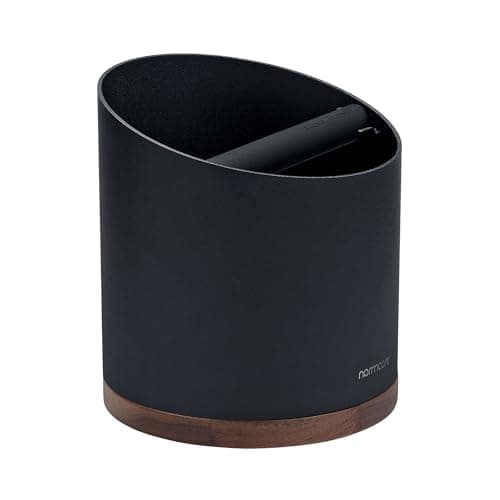
A knock box is the least glamorous thing on an espresso bench and one of the most used. Every shot leaves a compacted disc of spent grounds — the puck— wedged in the portafilter, and a knock box is where you strike it out: a sturdy bin with a padded bar across the middle that you rap the portafilter against so the puck drops cleanly away. Do it into the trash and you fling grounds everywhere; do it into the sink and you eventually clog the drain — and on most home machines the puck is damp rather than dry, which makes both worse (see why is my espresso puck wet). A proper knock box makes puck disposal a one-second, no-mess reflex, and if you're pulling shots daily it quietly becomes one of the most reached-for tools you own.
It's simple, but not all of them are good. What separates a knock box you love from one that rattles across the counter comes down to a few unglamorous details: a well-padded, replaceable knock bar, a build sturdy enough to take thousands of strikes, the right capacity for how you brew, and a non-slip basethat doesn't walk away when you hit it. Our overall pick is the Normcore Espresso Knock Box 1L, but the best one for you depends on your machine, your counter space and whether you single-dose — so we've picked five, one for each kind of setup.
How we picked
We don't run a test lab, and we don't pretend to. Every box here was evaluated against its published manufacturer specifications, the design details that decide whether it's pleasant to live with, and verified owner feedback — our full approach is on the methodology page. A knock box has fewer moving parts than almost anything else in espresso, which means the details it does have matter more. For knock boxes specifically, we weighted:
- The knock bar.This is the part your portafilter actually hits, thousands of times. It should be well-padded — rubber or silicone over a metal core — to absorb shock, protect the portafilter's finish and keep the noise down. Crucially, it should be removable and replaceable, because the bar wears before the box does.
- Build and materials. Stainless steel takes repeated strikes without denting or rusting and cleans up easily; a tough ABS body can be a smart, cheaper compromise if the bar and base are done right.
- Capacity for how you brew. One or two shots a day needs far less volume than a household of milk-drink fans. We note pucks-held so you can match the box to your routine.
- A non-slip base.A rubber or silicone foot keeps the box planted when you knock — the difference between a clean strike and chasing a sliding box across the counter.
- Form factor. A countertop bin suits most people; a low under-grinder drawer is the neat answer for single-dose setups where the box lives beneath the grinder.
What makes a good knock box
Spend a week with a bad knock box and you learn exactly what a good one gets right. Here's what to look for before you spend anything.
A padded, replaceable knock bar.The bar is the heart of the tool. A bare metal bar transmits the shock straight into your portafilter and clangs like a hammer; a bar wrapped in rubber or silicone cushions the blow, muffles the sound and spares the portafilter's edge. And because the bar is the one part that genuinely wears out, you want it to unscrew and lift out— both so you can clean underneath it, where old grounds collect, and so you can replace it years down the line instead of the whole box. Every box we recommend has a removable bar.
A build that shrugs off the strike.You're hitting this thing hard, often, for years. Stainless steel is the default for good reason — it doesn't dent, doesn't rust and wipes clean. A well-made ABS body earns its place at a lower price if the bar and base are quality, but flimsy plastic bins crack at the mounting point where the bar bolts in. Look for a solid feel and, ideally, a design that comes apart for cleaning.
The right capacity.This is the spec people get wrong in both directions. Too small and you're emptying it mid-session; too big and it hogs the counter and lets grounds sit and go stale. One to two shots a day is happy with a compact box or a drawer; a busy household or a weekend-batch habit wants a full liter or more. Spent grounds are best emptied daily either way, so "bigger" is not automatically "better."
A base that stays put.None of the above matters if the box skates away when you knock. A rubber or silicone non-slip base is the small feature that makes the whole thing feel solid — you strike, the puck drops, the box hasn't moved. A knock box is one piece of a larger prep kit; it pairs naturally with a good tamper and WDT tool for the front end of the shot and a coffee scale for dialing in your dose.
At a glance
The field side by side. Tap any "view" button for the live Amazon price; the number shown at checkout is the one that applies.
| Knock box | Build | Capacity | Best for | Price |
|---|---|---|---|---|
| Normcore 1L | Stainless + walnut base | 1 L (20-25 pucks) | Best overall | $56.69Buy |
| MHW-3BOMBER 1.2L | ABS + SUS304 bar | 1.2 L (~15 pucks) | Best value | $27.99Buy |
| Breville Knock Box 20 | Brushed stainless | 20 pucks | Breville owners | $43.95Buy |
| Rattleware with Bar | All stainless | 6 x 5.5 x 4 in | Commercial classic | $28.08Buy |
| Normcore Knock Box Drawer | 304 stainless drawer | Under-grinder | Single-dose | $76.99Buy |
Prices shown are from Amazon as of October 17, 2026 and change often — the button always goes to the current listing. Some links may earn us a commission at no extra cost to you.
Best overall: Normcore Espresso Knock Box 1L
The Normcore is the box we'd point most home baristas toward because it gets every fundamental right without asking you to think about it. It's a 1L stainless bin that holds a listed 20-25 pucks— a full day or more for most homes — sitting on a solid walnut non-slip basethat both looks the part on a nice setup and keeps the box planted when you strike. The knock bar is padded and removable, so it absorbs the blow, stays quiet and lifts out for cleaning. It's the same fit-and-finish that runs through Normcore's wider prep range, which is why the brand keeps showing up across our puck-prep picks.
| Capacity | 1 L (holds 20-25 pucks) |
|---|---|
| Body | Stainless steel |
| Base | Solid walnut, non-slip |
| Knock bar | Padded, removable |
| Form factor | Countertop bin |
What we like: a genuinely sturdy build, a capacity that suits daily home use, a quiet removable bar, and a walnut base that's as stable as it is handsome. The honest downsides: it's a countertop bin, so it takes up space a drawer wouldn't, and the walnut-and-stainless finish puts it above the cheapest boxes on price. For most people pulling shots every day, it's the easy, no-regrets choice.
Best value: MHW-3BOMBER 1.2L Knock Box
The MHW-3BOMBER proves you don't need to spend much to get the details that matter. For close to the price of a bag of specialty beans you get a 1.2L box (rated for around 15 pucks) with the two things budget boxes usually skimp on: a properly padded knock bar and a base that stays put. The bar is SUS304 stainless steel wrapped in a thick silicone coating that cushions the strike and protects your portafilter, and it's removablefor cleaning. The body is a tough, waterproof ABS rather than metal — the compromise that keeps the price down — and the bottom is a non-slip silicone mat. A slanted edge helps stop grounds bouncing back out.
| Capacity | 1.2 L (up to ~15 pucks) |
|---|---|
| Body | Eco-friendly ABS (waterproof) |
| Knock bar | SUS304 with silicone coating, removable |
| Base | Non-slip silicone mat |
| Size / weight | ~12.5 x 12.5 x 13 cm, ~435 g |
What we like: it nails the padded, removable bar and the non-slip base at a budget price, and the silicone-coated lever is genuinely quiet. The downsides: an ABS body doesn't feel as bombproof as stainless and won't take abuse forever, and the compact square footprint holds fewer pucks than the Normcore. For a first knock box, or a second one for another station, it's the smart-money pick.
Best for Breville owners: Breville Knock Box 20
If your machine is a Breville, the Knock Box 20 (model BEA502BSS) is the natural companion. It's a brushed-stainless box rated to hold 20 pucks, styled to match the Bambino, Barista Express and the rest of the range so it looks like it belongs next to the machine rather than bolted on. The knock bar is removable for cleaning the inner vessel, the base has an anti-slip rubber grip, and unlike most boxes here it's dishwasher-safe— a small convenience that adds up. It suits the Breville crowd especially well; if you're still choosing a machine, start with our best espresso machines for beginners guide.
| Model | BEA502BSS |
|---|---|
| Capacity | Up to 20 pucks |
| Body | Brushed stainless steel |
| Knock bar | Removable |
| Base | Anti-slip rubber grip |
| Cleaning | Dishwasher-safe |
What we like: a clean brushed-stainless look that matches Breville machines, a removable bar, a non-slip base and dishwasher-safe convenience. The downsides: it's a mid-range price for what is still a simple box, and the styling is the main reason to pick it over a cheaper option — the fundamentals aren't unique. If you own a Breville and like a matched setup, it's the obvious buy.
Best heavy-duty commercial classic: Rattleware Espresso Knock Box with Bar
The Rattleware is the box that's been on cafe counters for years, and it earns the "buy once" label. It's an all-stainless-steel box measuring 6 x 5.5 x 4 inches— compact on the counter but built to commercial standards, with a rubber knock barthat absorbs the shock and protects your portafilter through thousands of strikes. There's no styling flourish and no walnut here; this is a plain, tough, food-service-grade tool designed to be knocked into hard, wiped out and used again tomorrow. For a busy household or anyone who wants the last knock box they'll buy, its durability is the whole pitch.
| Dimensions | 6 x 5.5 x 4 in |
|---|---|
| Body | All stainless steel |
| Knock bar | Rubber (shock-absorbing) |
| Grade | Commercial / food-service |
| Form factor | Compact countertop box |
What we like: heavy-gauge stainless that shrugs off abuse, a proven rubber bar, and a small footprint that still feels indestructible. The honest downsides: it's purely functional — no non-slip walnut base, no matched styling — and the compact size means it fills faster than a 1L bin, so it wants emptying a little more often. If you value longevity over looks, nothing here outlasts it.
Best under-grinder drawer for single-dose setups: Normcore Knock Box Drawer
If you single-dose — weighing each shot's beans into the grinder one at a time — a traditional bin is often the wrong shape. The Normcore Knock Box Drawer is a low, wide 304-stainless drawer designed to sit flush under your grinder, so the box lives in otherwise-dead space instead of eating counter. You slide it out, tap the puck against the inner bar, and slide it back in one motion. The knock bar is shock-absorbing and removable, the base is non-slip, and a walnut handlefinishes it off. The compact size is sized for popular single-dose grinders like the Niche Zero and Fellow Ode — the kind of setup covered in our best grinders for espresso guide.
| Body | 304 stainless steel |
|---|---|
| Form factor | Under-grinder pull-out drawer |
| Fits | Compact grinders (Niche Zero, Fellow Ode) |
| Knock bar | Shock-absorbing, removable |
| Handle / base | Walnut handle, non-slip base |
What we like: it reclaims the space under the grinder, keeps the bench tidy, and shares the same quality bar and non-slip base as Normcore's countertop box. The downsides: it only makes sense if you have a grinder to tuck it beneath, its low profile holds fewer pucks than a tall bin, and you should confirm your grinder's footprint against the drawer size before buying (a Small suits the most compact grinders, a Larger fits standard ones). For a clean single-dose station, nothing else on this list matches it.
Countertop capacity vs under-grinder drawer
The one real fork in this category isn't brand — it's shape. Almost every knock box is either a countertop bin or an under-grinder drawer, and which suits you depends entirely on how your bench is laid out.
A countertop bin(the Normcore 1L, MHW-3BOMBER, Breville and Rattleware here) is the default and the more flexible choice. It sits wherever you want, holds more — a full liter of pucks in the Normcore's case — and works no matter what grinder you own or whether you grind straight into the portafilter. The trade is that it occupies real estate, and a tall bin needs room around it to swing the portafilter in.
An under-grinder drawer(the Normcore Knock Box Drawer) trades capacity for a tidier bench. Because it lives in the gap beneath the grinder, it costs you no extra counter space at all — ideal for the single-doseworkflow where you dose one shot's worth of beans at a time and knock the puck out right there at the grinder. The catch is that its low profile holds fewer pucks and it only works if you have a grinder to slide it under, with a footprint that matches. If you brew one or two shots a day at a single-dose station, the drawer is the elegant answer; if you brew a lot, or want maximum flexibility, take the bin.
How to choose
Strip it back and picking a knock box comes down to four quick questions.
Bin or drawer?If you single-dose and have space under the grinder, a drawer keeps the bench clean. Otherwise a countertop bin is more flexible and holds more. Decide the shape first — it narrows the field faster than anything else.
How much capacity do you actually need? Match it to your routine, not to the biggest number. One or two shots a day is fine with a compact box or a drawer; a milk-drink household or a batch habit wants a full liter or more. Remember spent grounds are best emptied daily regardless, so oversizing just wastes counter space.
Is the knock bar padded and replaceable?This is the part that decides how the box feels and how long it lasts. You want rubber or silicone over metal, and a bar that unscrews so you can clean under it and swap it later. Every box we recommend clears this bar; plenty of cheap ones don't.
Does the base stay put?A non-slip rubber or silicone base is non-negotiable — it's the difference between a clean strike and a box sliding into the backsplash. A knock box is the back end of your shot routine; the front end is dialing in the grind and prepping the puck, which our how to pull an espresso shot guide walks through step by step.
The bottom line
A knock box is a small purchase that you'll touch every single time you pull a shot, so the details are worth getting right. For most people, the Normcore Espresso Knock Box 1L is the smartest buy — sturdy, quiet, well-sized and stable on its walnut base. Want the same essentials for less? The MHW-3BOMBER 1.2L is the value pick. Own a Breville and like a matched bench? The Breville Knock Box 20. Want a box you'll never replace? The commercial Rattleware. And if you single-dose, the Normcore Knock Box Drawer tucks the whole job under your grinder. Whichever you pick, look for the same three things: a padded, replaceable bar, a build that takes the strike, and a base that stays put.
Frequently asked questions
What is the best espresso knock box?
For most home baristas, the Normcore Espresso Knock Box 1L. It holds a listed 20-25 pucks in a sturdy stainless bin, sits on a non-slip walnut base, and has a padded, removable knock bar that stays quiet and lifts out for cleaning. If you want the same essentials for less, the MHW-3BOMBER 1.2L is the value pick; if you single-dose, the Normcore Knock Box Drawer slides under the grinder.
What size knock box do I need?
Match it to how much you brew, not the biggest number. One or two shots a day is happy with a compact box or an under-grinder drawer; a household of milk-drink fans or a weekend-batch habit wants a full liter or more, like the Normcore 1L (20-25 pucks) or the MHW-3BOMBER 1.2L. Spent grounds are best emptied daily either way, so an oversized box just takes up counter space.
Why does the knock bar matter on a knock box?
The knock bar is the part your portafilter strikes thousands of times, so it decides how the box feels and how long it lasts. A bar padded with rubber or silicone over a metal core absorbs the shock, keeps the noise down and protects the portafilter's edge. It should also be removable so you can clean underneath it and replace it later, since the bar wears out before the box does.
Can I put a knock box under my grinder?
Yes, if you use an under-grinder drawer like the Normcore Knock Box Drawer. It's a low 304-stainless drawer that sits flush beneath the grinder and pulls out to knock the puck, which suits single-dose setups with grinders like the Niche Zero or Fellow Ode. Check that the drawer's footprint fits your grinder first — a compact size suits small grinders, a larger size fits standard ones.
Should I knock my espresso puck into the trash instead of buying a knock box?
You can, but a compacted, wet puck tends to fling grounds when you strike a trash can, and knocking into the sink eventually clogs the drain. A dedicated knock box gives you a padded bar and a stable, non-slip base so the puck drops cleanly in one tap with no mess. It's an inexpensive tool that makes puck disposal a one-second reflex.
Sources
- Normcore — Espresso Knock Box 1L product listing (capacity, materials, non-slip walnut base)
- MHW-3BOMBER — 1.2L Knock Box product page (ABS body, SUS304 silicone bar, capacity)
- Breville — the Knock Box 20 (BEA502BSS) specifications
- Rattleware — Stainless Steel Espresso Knock Box with Bar, 6 x 5.5 x 4 in
- Normcore — Espresso Knock Box Drawer product page (304 stainless, under-grinder sizing)
Keep reading
Buying your first setup?
See how we pick — compiled specs, cost-per-shot math, and honest trade-offs — then dig into the guides. No fake test lab, no rankings for hire.