Guide
Why Is My Espresso Puck Wet?
Most of the time, a wet puck is your machine's plumbing rather than your technique — and the single fact that explains it is whether your machine has a three-way solenoid valve. Here is how to tell the normal wet puck from the one that is telling you something.
A wet espresso puck is normal on most home machines, and it is not a sign that you did anything wrong. The deciding factor is whether your machine has a three-way solenoid valve: if it does, the valve dumps the pressure out to a drain after the shot and you get a dry, cohesive puck. If it does not — which covers most entry and mid-range pump machines — the pressure bleeds back up through the coffee, pulling water with it, and the puck is wet. Same shot, same technique, different plumbing.
What you should look at is not whether the puck is wet, but how it is wet. A damp puck that holds its shape is fine. A soupy puck sitting under standing water usually means your dose is too small for the basket. A puck with craters or a hole through it means channeling, which is a real problem with a real fix.
The short answer
| What you see | What it means | Action |
|---|---|---|
| Damp, holds its shape, knocks out in one piece | Normal on a machine with no 3-way valve | Nothing |
| Dry, firm, slight screen imprint | Normal on a machine with a 3-way valve | Nothing |
| Standing water on top, puck is mush | Under-dosed for the basket, or too coarse | Weigh the dose; go up a gram |
| Craters, holes or pitting | Channeling | WDT and level the bed |
| Puck sticks to the shower screen | Over-dosed, or screen needs cleaning | Down a gram; clean the screen |
| Puck splits in half as it comes out | Usually harmless; often over-wet plus low dose | Weigh the dose |
The three-way solenoid valve, which explains most of it
When an espresso shot ends, there is still pressure in the brew group pressing down on the puck. Something has to release it. Machines handle that in one of two ways:
- With a three-way solenoid valve.The valve routes the residual pressure and water out to a drain or drip tray the instant the pump stops. The puck gets no extra water and the group depressurises immediately, so the puck is dry and firm, and the portafilter does not "sneeze" when you unlock it.
- Without one. The pressure has nowhere to go but back up through the path it came from, which means through the coffee. Water in the group and in the lines sits on the puck and soaks in. You get a wet puck and often a hiss or spray when you unlock the portafilter.
This is a documented hardware difference rather than a mystery, and the Breville range makes it unusually easy to see. The Bambino Plus has a three-way solenoid and produces a drier puck; the base Bambino does not and produces a wetter one. Nothing about the shot quality differs because of it. Our best Breville espresso machines guide lists the valve on a model-by-model basis.
What a normal puck looks like
On a machine with no three-way valve, aim for this and stop worrying:
- Damp but cohesive. It should hold together as a disc when you knock it out, not fall apart into slurry.
- Flat on top, with no standing pool of water.
- Either no screen mark or a faint kiss of one. A faint mark means your headspace is about right.
- No holes, craters or pits on either face.
If it looks like that, nothing is wrong. Chasing a dry puck on a machine with no solenoid is chasing a hardware feature you do not have, and the techniques people reach for to achieve it — over-dosing, grinding much finer — make the shot worse rather than better.
When a wet puck is telling you something
Three patterns are worth acting on, and they are easy to tell apart.
Soupy puck with standing water: dose and headspace
If the puck is more mud than disc and there is visible water sitting on it, the usual cause is too little coffee for the basket. Headspace — the gap between the tamped puck and the shower screen — is a volume that fills with water during and after the shot. Too much of it and the water has nowhere to be except on top of your coffee.
Under-dosing has a second consequence that matters more than the mess: with a large void above it, the puck can lift and crack under pressure, which channels the shot. So a soupy puck often arrives alongside a fast, thin, sour shot. Both symptoms have the same fix.
Weigh the dose and match it to the basket. A standard 58mm double basket is usually around 18 g; smaller 54mm and 51mm baskets take less. Our how many grams for a double shot guide has the doses by basket size and the ten-minute method for finding your own basket's number from the screen imprint.
A secondary cause worth checking if the dose is right: a grind that is too coarse lets water through fast and leaves a loose, wet bed behind. If the shot is also running quick, grind finer before you touch the dose again.
Cratered or holed puck: channeling
A crater is a record of where the water went. A hole punched through the centre, pitting across the face, or a deep groove at the edge all mean water found a low-resistance path and raced through it instead of soaking the whole bed. That is channeling, and unlike a wet puck it genuinely damages the shot — it makes espresso taste bitter and sour at the same time, because part of the puck is over-extracted and part is barely touched.
The causes, in the order they usually turn out to be: grind clumps, uneven distribution, a tilted tamp, and a dose that does not match the basket. Our espresso channeling guide works through each one and the fix, and the headline fix is a WDT tool— ten seconds of stirring the grounds in the basket with fine needles before you tamp.
Puck sticks to the shower screen
If the puck comes out attached to the screen rather than the basket, or you have to scrape it off, you are probably over-dosed: the puck is swelling into the screen when you lock in, which also disturbs the bed and can cause edge channeling. Drop the dose by a gram and check the imprint again.
The other cause is a dirty or scaled shower screen. Old coffee oils make the screen tacky and distribute water unevenly, which is a channeling cause in its own right. How to clean an espresso machine covers removing and soaking the screen, and how to descalecovers the mineral half of the job — a different chemical for a different problem.
What to change, in order
- Find out whether your machine has a three-way solenoid valve. The manual will say, and so will the presence of a backflush procedure. If it does not, a damp puck is the expected result and you can stop here.
- Weigh your dose on a 0.1 g scale and match it to your basket. This fixes soupy pucks, sticking pucks and a surprising share of channeling.
- Check the screen imprint by locking in and immediately removing the portafilter without running water. Faint mark = right. Clear mark = down a gram. No mark and a deep gap = up a gram.
- Add WDT if the puck shows craters or holes. Ten seconds, cheap tool, biggest single improvement available to most home setups.
- Clean the screen if the puck sticks or the shot pulls unevenly in the same place every time.
- Stop chasing a dry puck.If steps 1–5 are right and the puck is still damp, that is your machine's plumbing and the shot is unaffected.
The full shot routine that these steps sit inside is in how to pull an espresso shot, and how to tamp espresso covers the tamp specifically.
What actually helps
Three things, and only one of them is about the puck being wet. The first two are diagnostic; the third is the practical answer to getting a damp puck out of the basket without redecorating the kitchen.
| Tool | What it solves | Price |
|---|---|---|
| Weightman Espresso Scale | Dose you have never actually measured | $13.99Buy |
| 58mm bottomless portafilter | Not knowing whether you are channeling | $29.99Buy |
| Normcore Espresso Knock Box 1L | Wet pucks that will not knock out cleanly | $56.69Buy |
Prices shown are from Amazon as of October 10, 2026 and change often — the button always goes to the current listing. Some links may earn us a commission at no extra cost to you.
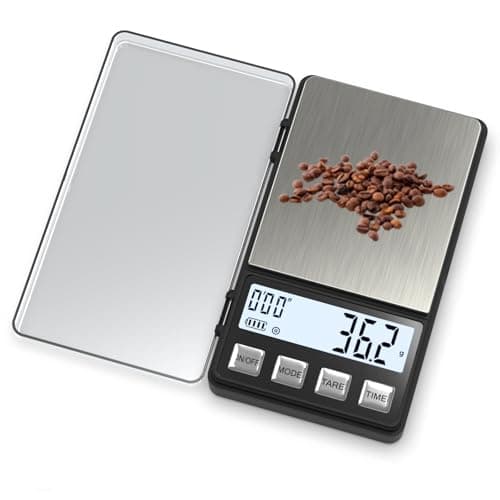
A 0.1 g scale: Weightman Espresso Scale
Who it is for: anyone whose puck is soupy, sticking, or inconsistent, and who has never weighed a dose.
| Precision | 0.1 g |
|---|---|
| Timer | Built-in |
| Flow rate | No |
| Size | Small (fits under a portafilter) |
| Power | USB rechargeable, auto-off |
What we like: it turns dose from a guess into a number, it is small enough to live on a drip tray, and it is the cheapest way to fix the most common cause of a bad-looking puck. The honest cons: build and response speed match the price rather than beating it, there is no flow-rate display, and the auto-off can cut out mid-routine while you are still prepping.
Our best coffee scales guide ranks the field, and do I need a scale for espresso makes the case.
A bottomless portafilter: the diagnosis
Who it is for: the 58mm machine owner who cannot tell whether the puck is wet because of plumbing or because of channeling.
| Type | Bottomless (naked) portafilter |
|---|---|
| Size | 58mm |
| Includes | Double basket, wood handle |
| Job | Show the underside of the puck during extraction |
What we like: it answers the question directly — an even extraction weeps across the whole puck face and converges, while channeling fires a visible jet or spray — and it makes the machine easier to clean with no spouts to clog. The honest cons: it sprays when you channel, so expect coffee on the counter while you learn; it only pours one cup; and fitment is specific, so check our portafilter size guidefirst — 54mm Breville machines need a different part.
Our best bottomless portafilters guide covers both the 54mm and 58mm options.
A knock box: Normcore Espresso Knock Box 1L
Who it is for: everyone with a wet puck, which on most machines is everyone.
| Capacity | 1 L (holds 20-25 pucks) |
|---|---|
| Body | Stainless steel |
| Base | Solid walnut, non-slip |
| Knock bar | Padded, removable |
| Form factor | Countertop bin |
What we like: a padded bar and a stable non-slip base turn puck disposal into a one-tap reflex, which genuinely matters with a damp puck — knocking a wet puck against a bin flings grounds, and knocking it into the sink eventually clogs the drain. The build is sturdy and the capacity suits daily home use. The honest cons: it is a countertop bin, so it takes space a drawer model would not, and the walnut-and-stainless finish puts it above the cheapest boxes on price.
Our best knock boxes guide covers the cheaper and drawer-mounted alternatives.
Frequently asked questions
Why is my espresso puck wet?
Usually because your machine has no three-way solenoid valve. When the shot ends there is still pressure in the brew group, and a three-way valve dumps it out to a drain, leaving a dry puck. Without one, the pressure bleeds back up through the coffee and the water in the group soaks into the puck. It is a hardware difference, not a technique error, and it does not affect the quality of the shot you just pulled.
Is a wet espresso puck bad?
Not in itself. A puck that is damp but holds its shape as a disc, with no standing water and no craters, is completely normal on a machine without a three-way solenoid valve. What matters is how it is wet: standing water with a mushy puck usually means the dose is too small for the basket, and craters or holes mean channeling, which does damage the shot.
Why is my espresso puck soupy with water on top?
Almost always an under-dosed basket. The gap between the tamped puck and the shower screen - the headspace - is a volume that fills with water, and too much of it leaves water sitting on your coffee. Worse, a large void lets the puck lift and crack under pressure, which channels the shot. Weigh the dose on a 0.1 gram scale and match it to your basket; a grind that is too coarse is the secondary cause.
How do I get a dry espresso puck?
On a machine without a three-way solenoid valve, you largely cannot, and chasing it does more harm than good - the usual tricks, over-dosing and grinding much finer, make the shot worse. Get the dose right so the puck is cohesive rather than soupy, and accept damp. A machine with a three-way valve, like Breville's Bambino Plus rather than the base Bambino, produces a dry puck by design.
Why does my espresso puck stick to the shower screen?
Usually an over-dose: the puck swells into the screen when you lock the portafilter in, which also disturbs the bed. Drop the dose by a gram and check the imprint - lock in, immediately take the portafilter back out without running water, and look for a faint mark rather than a clear one. The other cause is a dirty screen, where old coffee oils make it tacky and distribute water unevenly.
What is a three-way solenoid valve on an espresso machine?
A valve that routes residual pressure and water out of the brew group to a drain when the shot ends, instead of letting it bleed back through the coffee. Two consequences follow: the puck comes out dry and the portafilter does not spray when you unlock it, and the machine can be backflushed, because water has a route backwards through the group. Machines without the valve cannot be backflushed and are cleaned by soaking the screen and baskets instead.
Does a wet puck mean my grind is too coarse?
It can be, but check the dose first. A too-coarse grind lets water through quickly and leaves a loose, wet bed - and it will also make the shot run fast and taste sour and thin, so the two symptoms travel together. If the shot time is in the normal 25 to 30 second range and only the puck looks wet, grind is not your problem.
Sources
- Breville - Bambino (BES450) and Bambino Plus (BES500) product specifications and instruction books (three-way solenoid valve presence by model, puck dryness, portafilter sneeze)
- Specialty Coffee Association - espresso brewing and extraction standards
- National Coffee Association - Espresso brewing guidance
- Normcore - Espresso Knock Box 1L product specifications (1 L capacity, stainless body, walnut base, padded removable bar)
Keep reading
Buying your first setup?
See how we pick — compiled specs, cost-per-shot math, and honest trade-offs — then dig into the guides. No fake test lab, no rankings for hire.