Buying Guide
The Best Breville Espresso Machine: The Whole Lineup, Decoded
Breville sells six machines that look alike, cost wildly different money and are named almost identically. Here is what each model actually adds, which one is right for you, and where every single one of them compromises.
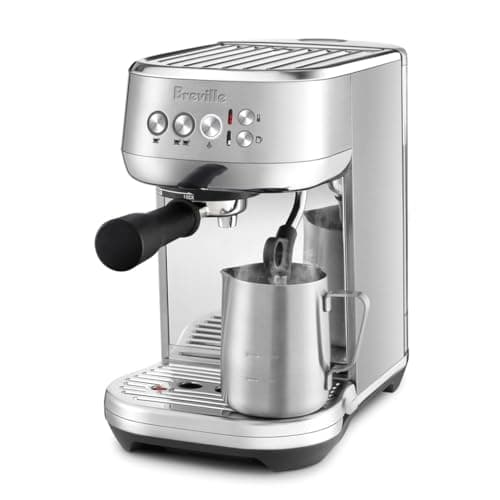
Breville is the default answer to "what espresso machine should I buy?" in most American kitchens, and the reason is not marketing. The company solved a specific problem better than anyone: it put a real 54mm portafilter, PID temperature control and a genuine steam wand into machines that a first-time owner can actually live with. Almost every model below makes espresso that would have needed a prosumer machine fifteen years ago.
The problem is the catalog. Bambino, Bambino Plus, Barista Express, Barista Express Impress, Barista Pro, Barista Touch, Barista Touch Impress— seven names, four of them nearly identical, spanning a price range of roughly four to one. Nothing in the naming tells you which one grinds, which one tamps, or which one steams the milk for you. This page fixes that. Every machine here was checked as currently listed and purchasable before we wrote it up, every spec comes from Breville's own documentation or the live listing, and every pick carries its honest downsides — because all six of them have some.
What Breville's model names actually mean
Learn four words and the whole lineup resolves into a straight line. Breville's names are modular: the family tells you whether there is a grinder inside, and the suffixes tell you which steps the machine takes off your hands.
- Bambino = no grinder. A compact semi-automatic that brews and steams. You buy a grinder separately. This is the small, cheap end of the range.
- Barista = grinder built in. A conical burr grinder lives in the top of the machine and dispenses straight into the portafilter. Bigger, heavier, more expensive.
- Plus / Touch = the machine handles the milk. An automatic steam wand textures milk to a temperature and texture you set, instead of you doing it by hand.
- Impress = the machine handles the dose and the tamp. Breville's Impress Puck System measures the coffee, corrects the next dose if the last one was off, and tamps with a lever at a consistent pressure.
- Pro = the fast heater and a screen. A ThermoJet element in place of the older ThermoCoil, plus an LCD showing grind and extraction progress.
Read the four steps of making an espresso drink — grind, dose and tamp, brew, milk — and the lineup is simply how many of them you are paying the machine to do. The Bambino does one; the Barista Touch Impress does all four.
How we judged
We rank on published manufacturer specifications and the live product listings, not on lab tests we did not run — machines we claim to have personally tested: zero. We would rather say that plainly than dress borrowed opinions up as first-hand testing. What we do instead is weight the specifications that are objectively verifiable and that genuinely change either the cup or the daily routine.
- The brew path is nearly identical, so it ranks nothing. Every machine here uses a 54mm portafilter, a 15 bar Italian pump that delivers about 9 bar at the puck, low-pressure pre-infusion and PID temperature control. The espresso a Bambino makes and the espresso a Barista Touch Impress makes are, mechanically, the same espresso. Anyone telling you the expensive Breville pulls a better shot is selling something.
- Heater type. ThermoJet reaches brew temperature in about three seconds and switches between espresso and steam instantly. ThermoCoil is the older, slower system that needs a warm-up before the first shot. This is the single biggest difference in what daily ownership feels like.
- Grinder, and how many settings it has. Built-in or not, and if built in, whether it steps in 16, 25 or 30 increments. More steps means finer control when you are dialing in a new bag.
- Milk system. Manual wand (most control, needs practice) versus automatic wand (repeatable microfoam, no skill). For most households milk is the majority of drinks made, so this decides daily satisfaction more than shot quality does.
- What it asks of you. Counter and cabinet clearance, tank size, whether you need to buy a grinder, and how much of the routine you have to learn.
One number we deliberately ignore: the pump bar rating. Every machine on this page advertises 15 bar, which is the pump's maximum and not the pressure at the coffee. Espresso is brewed at roughly 9 bar at the puck, and all six achieve it, so the figure ranks nothing.
At a glance
The whole lineup in one table, cheapest first. Read it left to right and you are watching money buy steps of the process, not better espresso.
| Machine | Grinder | Dose & tamp | Heater | Milk | Price |
|---|---|---|---|---|---|
| Bambino (BES450) | Separate | You | ThermoJet (~3s) | Manual wand | $299.95Buy |
| Bambino Plus (BES500) | Separate | You | ThermoJet (~3s) | Automatic wand | $499.95Buy |
| Barista Express (BES870XL) | Built in, 16 settings | You | ThermoCoil + PID | Manual wand | $689.99Buy |
| Barista Express Impress (BES876) | Built in, 25 settings | Assisted | ThermoCoil + PID | Manual wand | $799.95Buy |
| Barista Pro (BES878) | Built in, 30 settings | You | ThermoJet (~3s) | Manual wand | $849.95Buy |
| Barista Touch Impress (BES881) | Built in, 30 settings | Assisted | ThermoJet (~3s) | Automatic (Auto MilQ) | $1,440.00Buy |
Prices shown are from Amazon as of Sep 18, 2026 and change often — the button always goes to the current listing. Some links may earn us a commission at no extra cost to you.
Best Breville for most people: Bambino Plus (BES500)
The Bambino Plus is the pick for the largest number of households, and the reason is that it solves the step people actually fail at. Espresso is learnable in a fortnight; milk is where beginners quietly give up. This machine textures it for you with an automatic steam wand offering three temperature and three texture settings, delivering repeatable microfoam with no practice, and it keeps a full manual mode for the day you want to learn by hand.
Underneath the milk automation it is a proper semi-automatic. The ThermoJet heater reaches brew temperature in about three seconds, which is the difference between a weekday shot happening and not happening. A real 54mm portafilter with low-pressure pre-infusion means it responds to grind and dose the way an espresso machine should, and a 3-way solenoid valve drops a drier puck and stops the portafilter sneezing when you unlock it.
| Portafilter | 54mm (dual + single wall filter baskets) |
|---|---|
| Boiler | ThermoJet (~3s heat-up) |
| Pump pressure | 15 bar (9 bar at the puck) |
| Pre-infusion | Yes (low-pressure) |
| Milk | Automatic + manual steam (3 temps, 3 textures) |
| 3-way solenoid | Yes (drier puck, no portafilter sneeze) |
| Water tank | 64 oz / 1.9 L |
| Grinder | None — buy separately |
The honest cons.There is no grinder, and this machine is only as good as the one you pair it with, so budget for it from the start rather than discovering it later. The single thermocoil means you brew and then steam, never both at once, which shows the moment you are making drinks for four people. The automatic wand, for all its consistency, gives up the moment-to-moment control a practiced hand keeps. And it costs meaningfully more than the base Bambino whose espresso is identical — you are paying purely for milk automation.
Our full Bambino Plus review goes deeper, and Bambino vs Bambino Plus settles whether the milk automation is worth the step up for you specifically.
Cheapest way into a real Breville: Bambino (BES450)
The base Bambino is the most under-rated machine Breville makes. It shares the identical brew pathwith the Bambino Plus — same ThermoJet heater, same 54mm portafilter, same 15 bar pump at roughly 9 bar on the puck, same low-pressure pre-infusion — and it makes exactly the same espresso for meaningfully less money. Everything you give up sits on the milk side and in the tank.
It is also genuinely tiny, at well under eight inches wide, which makes it the Breville that fits on a counter already holding a kettle and a grinder. If your drinking is mostly espresso, americanos or the occasional hand-steamed flat white, this is the machine that leaves the most money in your grinder budget — and on this site that is always the right trade.
| Portafilter | 54mm (pressurized + non-pressurized baskets) |
|---|---|
| Boiler | ThermoJet (~3s heat-up) |
| Pump pressure | 15 bar (9 bar at the puck) |
| Pre-infusion | Yes (low-pressure) |
| Milk | Manual steam wand |
| 3-way solenoid | No (wetter puck) |
| Water tank | 47 oz / 1.4 L |
| Dimensions | ~7.7 x 12.6 x 12.2 in |
The honest cons. The manual wand is a real skill and it will take you weeks of bad foam to get right. There is no 3-way solenoid, so the puck comes out wetter and knocking out is messier. The 47 oz tank is small enough that a weekend of guests means refills. And, like the Plus, it needs a separate grinder before it makes a single decent shot.
Best all-in-one with a grinder: Barista Express (BES870XL)
The Barista Express is the machine that taught a generation of Americans to pull a shot, and it is still the sensible default if you want one purchase and one footprint. An integrated stainless conical burr grinder with 16 settings dispenses on demand straight into the portafilter, a ThermoCoil boiler under PID control holds brew temperature, and a manual steam wand handles the milk. Beans go in the top, coffee comes out the bottom, and nothing else has to live on your counter.
It is also the cheapest way to get a grinder and a machine together from a brand with a real parts channel. That matters more than it sounds: a grinder bought separately at this price is usually a compromise, and Breville's is calibrated to the machine it feeds.
| Type | Semi-automatic, all-in-one (integrated grinder) |
|---|---|
| Grinder | Stainless conical burr — 16 grind settings, dose control |
| Bean hopper | 1/2 lb (about 250 g), sealed |
| Portafilter | 54mm (single & dual wall baskets) |
| Boiler | ThermoCoil with PID temperature control |
| Pump pressure | 15 bar (9 bar at the puck) |
| Pre-infusion | Low-pressure pre-infusion |
| Milk | Manual steam wand |
| Water tank | 67 oz / 2 L (removable) |
The honest cons.The ThermoCoil needs a genuine warm-up, so this is not a three-second machine like the Bambino or the Pro — on a weekday that gap is noticeable. Sixteen grind settings is the coarsest adjustment in the lineup and light roasts can land between steps. You still dose and tamp entirely by hand, which is where most beginners' inconsistency comes from. And the built-in grinder cannot be upgraded independently: if it fails, the whole machine goes in for service.
Our full Barista Express review covers the grinder in detail, and Barista Express vs Bambino works out whether the built-in grinder is the right call for your counter.
Best for consistency without technique: Barista Express Impress (BES876)
The Impress is the Barista Express with the two steps beginners get wrong taken away. Its intelligent dosing system calculates the dose, and Auto Dose Correct adjusts the next one if the last was off. Then an assisted tamping lever applies a consistent 10 kg of pressure with a 7-degree "barista twist" finish, producing a level, polished puck every time instead of whatever your wrist managed that morning.
That is a bigger deal than it sounds. An uneven tamp is the most common cause of channeling, and channeling is the most common cause of a sour, thin, disappointing shot. Breville also stepped the grinder up to 25 settings and the tank to a genuinely large 2 L. If you want reliably good coffee without spending a month learning puck prep, this is the most sensible machine Breville makes.
| Type | Semi-automatic, all-in-one (integrated grinder) |
|---|---|
| Grinder | Integrated conical burr — 25 grind settings |
| Dosing | Intelligent dosing + Auto Dose Correct |
| Tamping | Assisted lever — 10 kg, 7-degree twist finish |
| Portafilter | 54mm stainless steel |
| Boiler | ThermoCoil, 200°F with PID control |
| Pump pressure | 15 bar Italian pump (9 bar extraction) |
| Milk | Manual steam wand |
| Bean hopper / tank | 250 g / 2 L |
The honest cons.It keeps the slower ThermoCoil heater, so you pay a premium over the Barista Express and still wait for warm-up — the Barista Pro is the model that fixes that, not this one. The assisted tamp is a mechanism, and mechanisms are things that can wear or jam. It is one of the taller machines here, so measure your cabinet clearance before ordering. And the milk is still entirely on you.
Best for a busy household: Barista Pro (BES878)
The Barista Pro is the Barista Express rebuilt around speed. It drops the ThermoCoil for the ThermoJet heating system, which reaches extraction temperature in about three secondsand switches from espresso to steam instantly — no waiting for the boiler to change modes between the shot and the milk. On a weekday morning with three people wanting drinks, that single change is worth more than every other upgrade in the lineup combined.
It also carries the best grinder Breville puts in a Barista Express-class machine: Baratza European Precision Burrs with 30 grind settings, which is genuinely fine adjustment, plus digital PID temperature regulation to within ±2°C and an LCD that animates grind and extraction progress so you can see what the machine is doing rather than guessing.
| Type | Semi-automatic, all-in-one (integrated grinder) |
|---|---|
| Grinder | Baratza European Precision Burrs — 30 grind settings |
| Portafilter | 54mm |
| Boiler | ThermoJet — extraction temperature in ~3 seconds |
| Temperature control | Digital PID, ±2°C |
| Pump pressure | 15 bar Italian pump (9 bar extraction) |
| Pre-infusion | Low-pressure pre-infusion |
| Milk | Manual steam wand |
| Interface | LCD with grind & extraction progress |
| Bean hopper / tank | 1/2 lb / 67 oz |
| Power | 1680 W, 120 V |
The honest cons.You do all the puck prep yourself — there is no assisted dose or tamp here, so the Impress beats it on consistency even though it costs less. The milk is manual, so a household that mainly drinks lattes may be happier spending the same money on a Bambino Plus plus a good standalone grinder. And it is a large, heavy appliance that will own a meaningful stretch of counter.
If those three — Express, Pro and Impress — are your shortlist, our dedicated Barista Express vs Pro vs Impress comparison puts them side by side on the only three specs that differ, and works through each head-to-head pairing in turn.
Best fully guided machine: Barista Touch Impress (BES881)
The Barista Touch Impress is everything Breville knows how to do, in one box. It has the Impress Puck System for assisted dosing and tamping, the Baratza European Precision Burrs with 30 grind settings, the three-second ThermoJet heater, and Auto MilQ hands-free microfoam with 8 texture levels, an adjustable milk temperature from 104°F to 167°F, and dedicated settings for soy, almond and oat milk — the only machine here that acknowledges alternative milks behave differently under steam. A color touchscreen walks you through grind, brew and milk, with 13 cafe presets and up to 6 saved custom drinks.
You still hold a real 54mm portafilter, so it feels like making the drink. The machine simply removes the parts that go wrong. For a household where several people want different drinks and nobody wants to learn, nothing else in the lineup comes close.
| Type | Guided semi-automatic, all-in-one |
|---|---|
| Grinder | Baratza European Precision Burrs — 30 grind settings |
| Dosing / tamping | Impress Puck System (assisted) |
| Portafilter | 54mm stainless steel |
| Boiler | ThermoJet — optimum temperature in ~3 seconds |
| Milk | Auto MilQ — 8 texture levels, 104–167°F, alt-milk settings |
| Interface | Touchscreen — 13 presets, up to 6 custom drinks |
| Dimensions | 16.3 x 13.8 x 13.3 in (W x D x H) |
The honest cons.It is by a wide margin the most expensive machine here, and the espresso it pulls is the same espresso a Bambino pulls — you are buying convenience, not cup quality. Every automated step is one more thing that can need service, and none of it is user-repairable the way a Gaggia's parts are. It is physically large. And if you enjoy the ritual of making coffee, this machine quietly removes most of it.
A cheaper way to get the touchscreen. The older Barista Touch (BES880) is still sold and typically costs considerably less. It keeps the touchscreen, the automatic steam wand, the ThermoJet heater, the 30 grind settings and the 54mm portafilter; what it lacks is the Impress assisted dosing and tamping, and the alternative-milk settings. If the guided touchscreen and hands-free milk are what you want, and you are happy tamping by hand, it is the better value of the two.
The grinder question, which decides two of these six
Half this lineup includes a grinder and half does not, and that single fact should drive your decision more than the price does. For espresso, the grinder changes what is in the cup more than the machine does, because the puck's resistance is what lets the pump build pressure at all. An uneven grind channels water, and no machine at any price can fix that.
So the real comparison is never "Bambino Plus versus Barista Express." It is Bambino Plus plus a standalone grinder versus Barista Express with its built-in one— and once you total it honestly, the two routes land closer together than the shelf prices suggest.
- Built-in wins on counter space, a single purchase, one plug, and a grinder tuned to the machine.
- Separate wins on grind quality per dollar at the top end, the ability to upgrade one half without the other, and the fact that a grinder fault does not take your espresso machine out of service for weeks.
If you go the separate route, our best coffee grinders for espresso guide is the next page to read, and best espresso grinder under $200 covers the bracket most Bambino buyers land in. If you would rather keep it to one box, our best espresso machines with a built-in grinder guide compares Breville's all-in-ones against the rest of the market.
Where every Breville compromises
We would not be much use to you if this page only listed what Breville does well. Four limitations apply across the entire lineup, and they are the reason some buyers should look elsewhere.
- 54mm, not 58mm.Breville standardized on a 54mm portafilter. It works, and the accessory ecosystem is now large, but the commercial standard is 58mm — that is what precision baskets, distribution tools and most aftermarket parts are built around first. If you expect to go deep into the hobby, a 58mm machine such as the Gaggia Classic Evo Pro opens more doors. Our bottomless portafilter guide covers what fits which.
- Single thermoblock, so you brew then steam. No machine in this lineup can brew and steam simultaneously. That is fine for one or two drinks and slow when you are making four.
- Repairability is limited.These are appliances with sealed assemblies and electronics. Compared with a Gaggia or a Rancilio — machines a competent owner can strip with a screwdriver and keep alive for fifteen years — a Breville is something you send in for service.
- The upgrades are convenience, not quality. This is the important one. Moving up the range buys speed, consistency aids and automation. It does not buy a better shot. If your goal is the best possible espresso rather than the easiest possible espresso, the money is better spent on a modest machine and a serious grinder.
If those trade-offs give you pause, read Breville vs De'Longhifor the closest competitor — or the best De'Longhi espresso machine, which decodes that brand's lineup the same way this page does — and Gaggia Classic Pro vs Breville Bambino Plus for the 58mm alternative at the same money.
How to choose
Work through these in order and six machines become one.
- Do you already own a good burr grinder? Then buy a Bambino. Which one depends only on milk: Bambino Plus if you drink lattes and cappuccinos, Bambino if you mostly drink espresso or want to learn the wand.
- Do you want one box, and shots that come out the same every day? The Barista Express Impress. Assisted dosing and tamping remove the two steps beginners get wrong.
- Do you want one box, and speed for a busy kitchen? The Barista Pro. Three seconds to brew temperature, instant switch to steam.
- Do you want one box on the smallest sensible budget? The Barista Express. It is the oldest design here and still the value benchmark, as long as you can live with the warm-up.
- Do you want the machine to do all four steps, for several people, with no learning? The Barista Touch Impress — or the older Barista Touch if you will tamp by hand to save real money.
Whichever you land on, two things stay true across the whole range. The bar number on the box ranks nothing, and the grinder deserves a bigger share of your budget than feels natural. If you want the whole counter planned in one go, our complete home espresso setup guide pairs machines with grinders, scales and accessories by budget. If you are still deciding between brands, our best home espresso machines roundup covers the whole category with one pick per type of buyer. And once the machine arrives, how to pull an espresso shot and how to steam milk are the two pages that turn it into good coffee.
Frequently asked questions
What is the best Breville espresso machine?
For most households, the Breville Bambino Plus. It heats in about three seconds, uses a real 54mm portafilter with low-pressure pre-infusion, and its automatic steam wand textures milk to three temperatures and three textures so a good latte needs no practice — you just need to pair it with a proper burr grinder. If you want the grinder built in, the Barista Express Impress is the most sensible all-in-one because its assisted dosing and 10 kg assisted tamp remove the two steps beginners get wrong. If a busy kitchen needs speed instead, the Barista Pro's ThermoJet heater reaches brew temperature in about three seconds and switches to steam instantly.
What is the difference between the Breville Barista Express, Pro and Touch?
All three are all-in-one machines with a built-in conical burr grinder and a 54mm portafilter. The Barista Express is the original: a ThermoCoil boiler with PID, 16 grind settings and a manual steam wand, and it needs a warm-up. The Barista Pro swaps in the ThermoJet heater that reaches extraction temperature in about three seconds with an instant switch to steam, adds Baratza European Precision Burrs with 30 grind settings, digital PID to ±2°C and an LCD display — but you still dose, tamp and steam by hand. The Barista Touch adds a color touchscreen and an automatic steam wand that textures the milk for you.
What does 'Impress' mean on a Breville espresso machine?
Impress is Breville's name for its assisted puck-prep system. On the Barista Express Impress and the Barista Touch Impress, the machine calculates the dose, auto-corrects the next dose if the previous one was off, and then a lever tamps at a consistent 10 kg of pressure with a 7-degree twist finish. It exists because an uneven tamp is the most common cause of channeling, which is the most common cause of a sour, thin shot. It does not change the espresso the machine is capable of — it makes getting a good shot repeatable without technique.
Do the more expensive Breville machines make better espresso?
No, and this is the most useful thing to know about the lineup. Every machine here uses the same 54mm portafilter, the same 15 bar pump delivering about 9 bar at the puck, low-pressure pre-infusion and PID temperature control. Moving up the range buys speed, a built-in grinder, assisted dosing and tamping, and automatic milk — convenience, not cup quality. If your goal is the best possible shot rather than the easiest one, put the extra money into a better grinder instead.
Which Breville espresso machines have a built-in grinder?
The Barista family: the Barista Express, the Barista Express Impress, the Barista Pro, the Barista Touch and the Barista Touch Impress all have an integrated conical burr grinder. The Bambino and Bambino Plus do not — they are compact brew-and-steam machines and you must buy a grinder separately. As a rule, 'Bambino' means no grinder and 'Barista' means grinder included.
Do Breville espresso machines use 58mm portafilters?
No. Breville standardized on 54mm across this lineup, including the Bambino, Bambino Plus, Barista Express, Barista Express Impress, Barista Pro and Barista Touch models. The 54mm accessory market is now large, so bottomless portafilters, precision baskets and tampers are readily available. But 58mm is the commercial standard that most aftermarket espresso gear is designed around first, so if you expect to go deep into the hobby, a 58mm machine such as the Gaggia Classic Evo Pro gives you more room to grow.
Can a Breville espresso machine brew and steam at the same time?
No. Every machine in this lineup uses a single heating system, so you pull the shot and then steam the milk, never both at once. The ThermoJet models — the Bambino, Bambino Plus, Barista Pro and Barista Touch Impress — switch between the two almost instantly, which makes the limitation barely noticeable. The ThermoCoil models, the Barista Express and Barista Express Impress, need a moment to change over. Brewing and steaming simultaneously requires a dual-boiler or heat-exchanger machine, which is a different and more expensive class of equipment.
Sources
- Breville — the Barista Pro (BES878) product page: 30 grind settings, Baratza European Precision Burrs, ThermoJet heating, 15 bar Italian pump / 9 bar extraction, included accessories
- Breville — the Barista Express Impress (BES876) product page: 54mm portafilter, 25 grind settings, Thermocoil at 200°F with PID, 15 bar pump / 9 bar extraction
- Breville — the Barista Touch Impress (BES881) product page: 54mm portafilter, 30 grind settings, ThermoJet, Auto MilQ 8 texture levels and 104–167°F, touchscreen presets, dimensions
- Breville — the Barista Touch (BES880) product page: 54mm portafilter, 30 grind settings, ThermoJet 3-second heat-up, 15 bar Italian pump / 9 bar extraction, auto milk texturing
- Breville — the Bambino Plus (BES500) product page and specifications
- Breville — the Barista Express (BES870) product specifications
- Amazon listings (Creators API) — current availability, PID ±2°C, LCD interface, assisted tamping at 10 kg with 7-degree twist, hopper and tank capacities, wattage, for BES878, BES876, BES880 and BES881
- Specialty Coffee Association — espresso brewing standards
Keep reading
Buying your first setup?
See how we pick — compiled specs, cost-per-shot math, and honest trade-offs — then dig into the guides. No fake test lab, no rankings for hire.