Buying Guide
The Best Coffee Grinders Under $100 in 2026
A hundred dollars is the line where burrs become affordable and motors do not. Six grinders that sit under it on live prices, ranked honestly - including why the best grinder on this page has a handle instead of a plug.
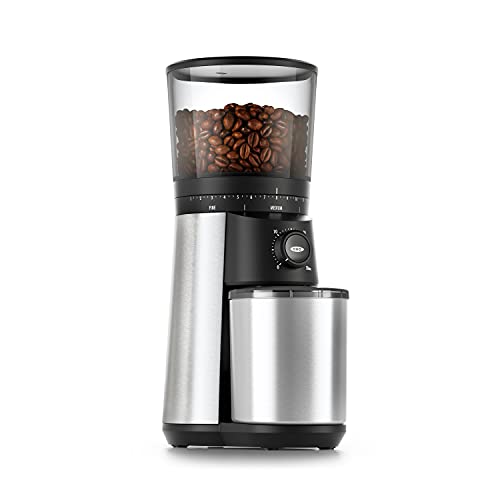
The verdict first, and it is not the one most buyers expect. Under a hundred dollars the best coffee grinder is the 1Zpresso Q— a hand grinder. At this budget a manual grinder spends nearly all of its cost on burrs and bearings, while an electric has to pay for a motor, a housing, a switch and a gearbox out of the same hundred dollars. If you want a plug rather than a handle, the OXO Brew Conical Burr Grinder is the electric worth buying, and the Bodum Bistro is the cheapest electric we would still recommend. If espresso is part of your week, only the Timemore Chestnut C3 ESP on this page truly adjusts finely enough for it. And the budget pick is the Hario Mini-Slim Plus, the cheapest thing here that is genuinely a burr grinder.
Every price on this page comes from the live price layer, with the as-of date under the table. A grinder earns a slot only if it sits under $100 on the current capture.
What $100 buys
It buys burrs instead of blades, which is the entire point of the page. A blade grinder is a propeller in a cup: it chops, so a single batch comes out as boulders and dust at the same time. Every brewer you own will then under-extract the boulders and over-extract the dust, and no amount of care with water temperature or ratio can fix it. Burrs crush beans between two shaped surfaces set to a fixed gap, which is what people mean by an even grind. Our burr vs blade comparison lays out the mechanics.
It buys a motor or it buys burr quality — not both. This is the honest arithmetic of the budget. Strip a hundred-dollar electric grinder down and a large share of the cost is the motor, gear train, housing and switchgear. Strip a hundred-dollar hand grinder down and what is left is a burr set, a steel shaft, two bearings and a body. That is why the manual grinders on this page out-grind the electric ones, and it is why the same pattern holds right up to about the $200 mark covered on our best coffee grinders under $200 page.
It buys stepped adjustment, not stepless. Everything here clicks between discrete settings. That is perfectly adequate for filter brewing, where a click either side rarely ruins a cup, and it is the main constraint for espresso, where it can. Stepless dials and flat burrs start well above this band.
What it does not buy:a built-in scale, a single-dose electric workflow with near-zero retention, a quiet motor, or large burrs. Burr diameters here run around 38mm on the Timemores and 35mm on the Bodum — against 40mm and up once you spend more. Smaller burrs grind more slowly and heat the coffee a little more on long batches; they do not automatically grind worse.
How we picked
Every grinder here has a live retail listing we can price, and is assessed against its published specifications — burr type, material and diameter, adjustment mechanism and resolution, capacity, body materials and serviceability. Our full approach is on the methodology page; we do not run a test lab and we do not pretend to. For this band we weighted four things in order: whether the grind is genuinely even, how much of the brewing range the grinder covers, whether the adjustment is repeatable enough to write a setting down, and whether the thing can be taken apart and cleaned.
We also applied one hard filter. A number of products sold under $100 use the word "burr" in the listing title while shipping a blade or a single rotating plate. Nothing on this page is one of those — every pick has a published conical burr specification from the manufacturer or the retailer spec sheet.
At a glance
The six under the line. Tap any button for the live Amazon price; the number shown at checkout is the one that applies.
| Grinder | Type | Burrs | Adjustment | Best for | Price |
|---|---|---|---|---|---|
| 1Zpresso Q | Manual | Heptagonal conical, steel | Stepped, external dial | Best overall | $79.20Buy |
| OXO Brew Conical Burr | Electric, hopper | Stainless conical | 15 settings + microsettings | Best electric | $98.98Buy |
| Timemore Chestnut C3 ESP | Manual | 38mm S2C stainless | ~23 microns per click | Espresso | $68.00Buy |
| Bodum Bistro | Electric, hopper | 35mm stainless conical | 12 settings, preset timer | Cheapest electric | $79.95Buy |
| Timemore Chestnut C2S | Manual | 38mm S2C stainless | Stepped, internal dial | Best value | $60.00Buy |
| Hario Mini-Slim Plus | Manual | Conical ceramic | Stepped, under the burr | Budget pick | $38.50Buy |
Prices shown are from Amazon as of November 19, 2026 and change often — the button always goes to the current listing. Some links may earn us a commission at no extra cost to you.
Best overall under $100: 1Zpresso Q
Who it is for: the one-or-two-cup-a-day drinker who wants the best grind this budget can produce, and anyone who takes coffee gear on a plane.
The Q is the smallest grinder 1Zpresso makes and the reason it tops this page is that nothing with a motor at this price grinds as evenly. It uses heptagonal stainless conical burrs — a seven-sided cutting geometry that bites the bean rather than spinning it — on a steel shaft with a foldable handleand a body small enough to pack. Capacity is modest at roughly 15–20 g, which is one filter dose or one double shot, and that is exactly what it is designed around: you grind what you are about to brew, so almost nothing stays behind in the grinder. We cover the category properly in the best hand grinders, and it is the grinder we pack in our travel coffee kit.
The honest cons.It is a manual grinder, so every dose costs you a minute of cranking, and it is the wrong tool for a household making four drinks before work. The small capacity means a large French press batch is two or three fills. Its adjustment is stepped and coarser than the C3 ESP's, so it is a filter grinder that can approach espresso rather than an espresso grinder. And 1Zpresso's numbering is confusing: the Q, Q Air and Q2 variants differ, so check the model on the listing you buy.
Best electric under $100: OXO Brew Conical Burr Grinder
Who it is for: the drinker who wants to push a button in the morning, not turn a handle, and who brews drip, pour over or French press rather than espresso.
This is the electric that justifies its place on a page where hand grinders win on grind quality, because convenience is a real feature and this one is well executed. Stainless steel conical burrs, 15 grind settings with additional microsettings between them covering fine drip through coarse cold brew, a UV-blocking hopper holding up to 3/4 lb (12 oz) of beans, and a one-touch start whose timer remembers your last setting— so your daily dose is a single press with nothing to weigh. The grounds container is designed to cut static, which matters more than it sounds at this price.
| Type | Electric, hopper-fed |
|---|---|
| Burrs | Stainless steel conical |
| Settings | 15 grind settings plus microsettings (per OXO) |
| Range | Fine for espresso through coarse for French press and cold brew (per OXO) |
| Hopper | UV-blocking, up to 3/4 lb / 12 oz of beans (per OXO) |
| Dosing | One-touch start with timer that recalls the last setting |
| Burr diameter | Not published by OXO |
| Microns per step | Not published by OXO |
The honest cons.OXO publishes neither a burr diameter nor a micron-per-step figure, which is why we rank it below the hand grinders on grind quality rather than above them on specs. A published review at Coffeeness found grind consistency weak at the coarse end and was reluctant to recommend it for French press on that basis — we have not run that comparison ourselves, so we pass the finding on rather than endorse or dismiss it. The hopper-and-timer workflow is repeatable rather than accurate: a timed dose drifts as beans age and settle. And OXO sells several similar-looking grinders at different setting counts — the Compact has fewer settings and the scale model has many more — so buy by model name, not by photograph.
Best if espresso is in the mix: Timemore Chestnut C3 ESP
Who it is for: the owner of an entry pump machine who needs a grinder that can actually find the right setting for a shot, on the smallest budget that works.
The C3 ESP is on this page for one specification. Its internal dial sits beneath the burrs and moves 0.0233mm — about 23 microns — per click, 30 clicks per rotation, where the standard C3 moves 0.0833mm (about 83 microns) in 12 clicks per rotation. That is roughly three and a half times finer, and fine adjustment is the whole difference between espresso you can dial in and espresso you can only approximate. The burrs are 38mm S2C660 CNC-machined SUS420 stainless conical, the body is aluminum alloy and stainless with no plastic internals, and the shaft is dual-bearing. It is the grinder we pair with the cheapest machines in our complete espresso setup guide.
The honest cons.Grinding 18 g fine by hand takes real effort and about a minute, every single time, and it is a poor fit for a household pulling several shots back to back. Capacity is small — Timemore's own C3-series page says 20 g while several retailers list 25 g, which is a discrepancy worth knowing rather than a figure to trust. And the fixed 159mm handle does not fold; the foldable handle belongs to the ESP Pro, not this model. Our full Timemore Chestnut C3 ESP review goes through the whole specification.
Cheapest electric worth buying: Bodum Bistro
Who it is for: the buyer who wants a motor for as little as possible and is brewing filter coffee rather than espresso.
The Bistro has been sold for years and the specification explains why it survives at this price: stainless steel conical burrs of about 35mm diameter(per retailer specification sheets rather than Bodum's own page), 12 stepped grind settings, a preset timer so the same dose repeats, a bean hopper rated to about 220 g, a roughly 160 W motor, and a borosilicate glass grounds catcher whose job is to stop static flinging grounds across the counter when you lift it out. For drip and press coffee it is a straightforward, honest machine.
| Type | Electric, hopper-fed |
|---|---|
| Burrs | Stainless steel conical, ~35mm (retailer spec sheets) |
| Settings | 12 stepped |
| Dosing | Preset timer |
| Hopper | Up to ~220 g of beans |
| Grounds catcher | Borosilicate glass, static-reducing |
| Motor | ~160 W (retailer listings) |
The honest cons.Twelve settings is coarse adjustment — the gaps between clicks are wide, so there will be coffees whose right setting sits between two of them, and the finest setting is not an espresso setting. Bodum does not publish a micron-per-step figure. The plastic housing is not the build quality of the metal hand grinders here, and regional SKUs differ, so check the model number against the listing. Treat it as the cheapest way to stop using a blade grinder, not as a grinder you will keep forever.
Best value hand grinder: Timemore Chestnut C2S
Who it is for:the filter-coffee drinker who wants most of the C3 ESP's burr quality without paying for the espresso dial.
The C2S is the Chestnut line's entry point and it shares the thing that matters: a 38mm stainless steel conical burr in the same S2C family as the C3 series, in a full metal body with double-bearing positioningthat keeps the shaft from wandering — the single biggest cause of uneven grind in cheap hand grinders. The Amazon listing specifies a 25 g capacity, which is one generous filter dose. For pour over, AeroPress and French press it will grind as evenly as anything on this page and it is the cheapest metal-bodied grinder here.
The honest cons.The adjustment is noticeably coarser than the C3 ESP's — retailers list the C2S at around 12 clicks per rotation against the ESP's 30 — so it is a filter grinder, not an espresso grinder, and we would not buy it for a pump machine. Timemore does not publish a micron-per-step figure for this model, and the settings count varies between retailer listings, so the only figure we treat as solid is the burr. Capacity is small for a big press batch, and like every manual grinder it costs you a minute of effort per dose.
Budget pick: Hario Mini-Slim Plus
Who it is for: the drinker upgrading away from a blade grinder for the least money that still counts as an upgrade.
The Mini-Slim Plus is named as the budget pick because it does the job rather than approximates it. It uses conical ceramic burrs in a slim plastic body, the grind is set by a stepped adjustment nut beneath the burr reached by lifting the hopper out, and the burrs come apart for washing— a real advantage, because ceramic does not mind water and steel does. It is small, light and costs a fraction of everything else here.
The honest cons.Ceramic burrs are harder than steel but more brittle; they stay sharp a long time and chip if a stone goes through them. The plastic body flexes compared with the metal Timemores, and the adjustment under the burr is fiddly to change often, so this is a grinder you set for one brew method and leave. Capacity is the gap in its published data: Hario does not state a figure on the US listing and retailer and review sources disagree — roughly 24 g in one review and about 40 g on another retailer page — so we are not going to pick one and present it as fact. And it is slower than the Timemores on a fine grind.
What to avoid under $100
Anything sold as a "burr" grinder with no burr specification. This is the most common trap in the bracket. If the listing will not say whether the burrs are conical or flat and what they are made of, assume the answer is unflattering.
Blade grinders, including the expensive ones. A $40 blade grinder and a $15 blade grinder produce the same problem. The money is better spent on the cheapest burr grinder on this page.
Buying an electric for espresso at this price. No hopper-fed electric under $100 adjusts finely enough to dial in a shot. If espresso is the goal, the C3 ESP by hand is the honest answer, and the best espresso grinders under $200 is the right page once the budget stretches.
Pre-ground coffee as a substitute. Ground coffee goes stale within days of being opened, which is why the grinder is the highest-leverage purchase in a coffee setup. Our how to store coffee beans guide covers what happens after you grind, and the coffee grinder buying guide runs the seven decisions in order if you want to think the whole purchase through.
The bottom line
Best grind under $100, full stop? 1Zpresso Q. Want a button instead of a handle? OXO Brew Conical Burr. Own an espresso machine? Timemore Chestnut C3 ESP. Cheapest electric worth owning? Bodum Bistro. Best metal hand grinder for the money? Timemore Chestnut C2S. Spending as little as possible and still upgrading? Hario Mini-Slim Plus.
Whichever you choose, the step from a blade grinder to any of these is the single biggest improvement available to your coffee — bigger than a better brewer, bigger than better water, and bigger than almost anything else you can buy for a hundred dollars. Then dial it in with the grind size chart. Still choosing the machine too? Our best espresso machines under $700 page costs out the machine-plus-grinder route against the all-in-ones, and holds money back for exactly the grinders on this page.
Frequently asked questions
What is the best coffee grinder under $100?
The 1Zpresso Q, which is a hand grinder. At this budget a manual grinder puts nearly all of its cost into heptagonal steel conical burrs, bearings and a steel shaft, while an electric has to pay for a motor and housing out of the same money - so the manual grinds more evenly. If you want an electric, the OXO Brew Conical Burr Grinder is the one worth buying, with stainless conical burrs, 15 settings plus microsettings and a one-touch timer. Prices come from the live price layer with the as-of date shown.
Can you get a good electric burr grinder for under $100?
Yes, but with clear limits. The OXO Brew Conical Burr Grinder and the Bodum Bistro both use genuine stainless conical burrs and both will transform filter coffee compared with a blade grinder. Neither publishes a burr diameter or a micron-per-step figure, both are stepped rather than stepless, and neither adjusts finely enough for espresso. Treat them as good filter grinders at a fair price, not as all-rounders.
Is a hand grinder better than an electric grinder under $100?
On grind quality, usually yes - and the gap is widest at exactly this price. A hand grinder has no motor to pay for, so the budget goes into the burr set and bearings. The cost is about a minute of cranking per dose and poor suitability for a household making several drinks at once. If convenience matters more to you than the last increment of evenness, buy the electric and do not feel bad about it.
Can a coffee grinder under $100 make espresso?
One on this page can: the Timemore Chestnut C3 ESP, whose internal dial moves about 23 microns per click over 30 clicks per rotation. That resolution is what lets you actually find the setting a shot needs. The standard hand grinders and both electrics here adjust in much wider steps, so they will grind fine but not finely enough to dial in espresso repeatably.
Are ceramic burrs worse than steel burrs?
They are different, not simply worse. Ceramic is harder than steel so it holds an edge longer, and it can be washed in water without rusting - which is why the Hario Mini-Slim Plus burrs come apart for cleaning. Ceramic is also more brittle, so a stone in a bag of beans can chip it, and ceramic burrs are usually found in cheaper bodies with more flex. For filter coffee at the bottom of this budget, ceramic is a perfectly reasonable buy.
How much should I spend on a grinder if my machine cost more than the grinder?
If you are making espresso, the usual advice is to spend at least as much on the grinder as on the machine, because grind consistency changes the cup more than the machine does. For filter coffee the ratio is gentler - any burr grinder on this page is enough to get good results out of a pour over, AeroPress or French press. The mistake is pairing an expensive brewer with pre-ground coffee or a blade grinder.
Sources
- OXO - Brew Conical Burr Coffee Grinder product page: 15 grind settings plus microsettings, stainless steel conical burrs, UV-blocking hopper holding up to 3/4 lb (12 oz) of beans, one-touch start with timer
- Coffeeness - OXO coffee grinder review: published finding that grind consistency is weak at the coarse end (cited on the page as an attributed third-party finding, not our own test)
- Whole Latte Love - Bodum Bistro burr grinder specification table: stainless conical burrs, 35mm burr diameter, stepped adjustment, 11 oz borosilicate glass catcher
- Bodum Bistro retailer specifications (Walmart, Ace Hardware): 12 grind settings, bean hopper up to 220 g, ~160 W motor, preset timer
- Timemore - Chestnut C3 series specifications: 38mm S2C660 CNC-machined SUS420 stainless conical burrs, internal dial at 0.0233mm per click over 30 clicks per rotation on the ESP (0.0833mm over 12 clicks on the standard C3), 20 g stated capacity
- Slow Pour Supply - Timemore Chestnut C series model comparison: C2S and C3 burr platform and settings-count differences
- 1Zpresso - Q series specifications: heptagonal stainless conical burrs, foldable handle, compact travel body
- Hario - Mini-Slim Plus ceramic coffee mill: conical ceramic burrs, stepped adjustment beneath the burr, washable burr assembly (capacity not published on the US listing; retailer and review figures disagree and are reported as such on the page)
- Amazon listings (Creators API) - live availability, current prices and brand/model title verification for every ASIN on this page before publication
Keep reading
Buying your first setup?
See how we pick — compiled specs, cost-per-shot math, and honest trade-offs — then dig into the guides. No fake test lab, no rankings for hire.