Comparison
Semi-Automatic vs Super-Automatic Espresso Machine
This is the first decision, and it is not about price - the two types overlap heavily on cost. It is about who makes the coffee. A semi-automatic hands you four variables and the ceiling that comes with them. A super-automatic takes all four away and gives you a button. Here is how to tell which one you want.
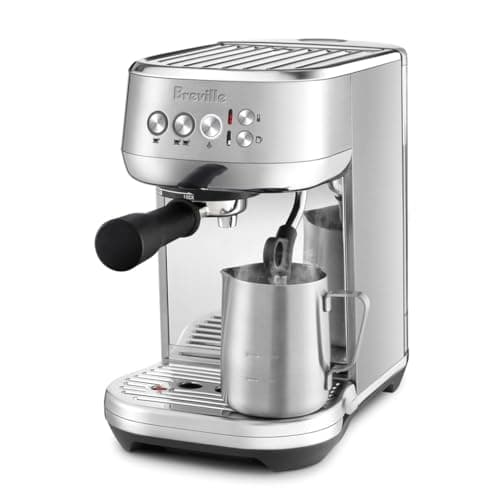
Most espresso buying advice starts with a budget. This decision does not work that way, because the two machine types overlap almost completely on price — you can spend the same money on either, and the money is not what separates them. What separates them is a single question: do you want to make the coffee, or do you want the coffee made?
A semi-automatic machine gives you a portafilter and controls the water. You control the dose, the grind, the tamp and when the shot stops. A super-automatic— also sold as bean-to-cup or fully automatic — grinds, doses, tamps, brews and usually froths, from beans in a hopper to a drink in a cup, at one button press. There is no portafilter and there is nothing for you to adjust mid-shot.
Both make real espresso from fresh beans. Neither is a pod machine — if that is the comparison you are actually making, read espresso machine vs Nespresso instead. This page is for the person who has decided on fresh beans and now has to pick an architecture.
What the two words actually mean
The terminology is genuinely confusing because the industry uses four words for three things.
Manual machines have no pump: you generate the brew pressure with a lever or a plunger. Flair and Cafelat Robot sit here, and our best manual espresso machines guide covers them. They are a different hobby.
Semi-automaticmachines have a pump and a portafilter. You press a button, the pump runs, and you press it again to stop — so the machine controls pressure and temperature while you control everything about the coffee. The Breville Bambino, Gaggia Classic Pro, Rancilio Silvia and De'Longhi Dedica are all semi-automatics, and so is a Barista Express— a built-in grinder does not change the category, which is the single most common misunderstanding here.
Automaticis technically a semi-automatic with a volumetric shot timer that stops the pump for you. Almost nobody shops for this distinction, and most machines sold as “automatic” in the home market are actually super-automatics.
Super-automatic machines are sealed appliances. Beans go in a hopper, a built-in grinder doses into an internal brew group, the machine tamps and brews, and the puck drops into a waste bin. You choose a drink from a menu. The De'Longhi Magnifica Evo, Philips 3200 and Gaggia Magenta Prestige are all super-automatics, and our best super-automatic roundup ranks the field within that type.
The four variables, and who holds them
Espresso is governed by a small number of variables. Which type of machine you buy decides whether you hold them or the machine does.
Dose.On a semi-auto you weigh the coffee — typically 18 to 20 g for a double, as our double-shot dose guide explains — and a gram either way changes the shot. On a super-auto the dose is set by the machine, usually with a coarse “strength” selector that moves it within a narrow internal range you cannot see.
Grind.This is the big one. A semi-auto needs a grinder capable of espresso-fine adjustment, and the quality of that grinder sets the ceiling of everything the machine can do — which is why the honest answer to do I need a grinder for espresso is yes, and why our espresso grinder guidematters more than our machine guides. Super-automatics include a grinder with a stepped adjustment — 12 settings on the Philips 3200, 13 on the Magnifica Evo — which is enough to compensate for a different bean and not enough to chase a shot.
Distribution and tamp. On a semi-auto this is a skill you learn, with tools: a WDT tool, a level tamper, optionally a puck screen to keep the group head clean. It is also the number-one cause of bad home espresso, as our channeling guide covers. On a super-auto it does not exist: the machine tamps internally, identically, every time. That is a real advantage and a real ceiling in the same sentence.
Time and volume.A semi-auto shot is something you watch and stop — you learn to read it, and a scale under the cup turns that into a repeatable ratio. A super-auto pours a programmed volume. Consistent, and not something you can taste your way into improving.
At a glance
| Semi-automatic | Super-automatic | |
|---|---|---|
| Portafilter | Yes - 54mm or 58mm, full accessory ecosystem | None - sealed internal brew group |
| Grinder | Separate purchase (or built in, as on the Barista Express) | Always included, stepped adjustment |
| Who doses and tamps | You | The machine, identically every time |
| Shot control | Dose, grind, tamp, time - all yours | Strength and volume presets |
| Cup ceiling | As high as your grinder and technique allow | Good and consistent; capped by design |
| Time per drink | 2-4 minutes including prep | Under a minute, unattended |
| Milk | Manual wand, or automatic wand on some models | Manual wand, auto carafe or tube-free carafe |
| Daily cleaning | Wipe the wand, knock the puck, rinse the basket | Run the rinse cycle, wash the milk carafe, empty the puck bin |
| Deeper maintenance | Backflush, descale, replaceable gaskets and baskets | Clean or replace the brew group, descale, water filter |
| Upgrade path | Better grinder, better basket, bottomless portafilter | Essentially none - it is an appliance |
| Machine | Type | Why it is here | Price |
|---|---|---|---|
| Breville Bambino Plus | Semi-automatic | Easiest entry to a real portafilter; automatic milk texturing | $485.00Buy |
| Breville Barista Express | Semi-automatic | Semi-auto with the grinder already in the box | $499.95Buy |
| Philips 3200 LatteGo | Super-automatic | Best balance of drinks and genuinely easy milk cleaning | $526.50Buy |
| De'Longhi Magnifica Evo | Super-automatic | Lowest sensible price for real bean-to-cup | $785.99Buy |
| Gaggia Magenta Prestige | Super-automatic | One-touch cappuccinos from an integrated carafe | $859.55Buy |
Prices shown are from Amazon as of November 6, 2026 and change often — the button always goes to the current listing. Some links may earn us a commission at no extra cost to you.
What each one really costs
The sticker price misleads in one direction only, and it is worth being precise about why. A super-automatic price is complete: grinder, brew group and milk system are all inside the box. A bare semi-automatic price is not, because a semi-auto without an espresso-capable grinder cannot make espresso at all — it can only make a bad, fast, sour drink from pre-ground coffee.
So the honest comparison is super-auto price against semi-auto price plus grinder, and the grinder is not a rounding error: a capable entry espresso grinder sits in the same bracket as a budget semi-auto machine. Our under-$200 and under-$300 grinder roundups are where that money goes, and the true cost of home espresso works the whole figure through including beans and accessories.
Done properly, the two sides land much closer together than the shelf suggests. The Bambino Plus plus a grinder is roughly Philips 3200 money. A Barista Express, with its grinder already integrated, is directly comparable to a mid-range super-auto and is the single most useful machine to hold in your head when weighing this decision, because it is the one that removes cost from the argument entirely. That is also why our best espresso machines with a built-in grinder guide exists.
Where the two genuinely diverge is at the top. Above a certain point a semi-auto buys you better brew-water stability, better steam and better parts; a super-auto at the same price mostly buys you more drink presets and a nicer screen. If your budget is large and your interest in the process is small, that is not a problem — but it is worth knowing which of the two curves you are climbing.
Milk: four different systems, not two
Milk is where most buyers actually make this decision, and splitting it by machine type is too crude. There are four systems in play.
A manual steam wand(most semi-automatics; the Barista Express; the base trim of the Magnifica Evo). You texture the milk yourself, which is a skill — our how to steam milkguide is the thirty-minute version — and once learned it is the only system that makes genuine latte-art microfoam. It is also the fastest to clean: purge, wipe, done.
An automatic steam wand (the Bambino Plusand its relatives). Still a wand, still a jug, but the machine controls temperature and texture — three temperatures and three textures on the Bambino Plus — and it keeps a full manual mode underneath. This is the best of both and is the main reason the Bambino Plus, rather than the plain Bambino, is the semi-auto we most often point milk drinkers at.
An integrated milk carafe(Gaggia Magenta Prestige, the LatteCrema trims of De'Longhi machines). One touch, no jug, no skill — and tubes and a chamber that must be cleaned diligently every day. Skip it for a week and you will know.
A tube-free carafe (Philips LatteGo). A two-part carafe with no tubes at all, which snaps apart and rinses in seconds. It is the answer to the single biggest complaint about super-automatic ownership, and it is why the Philips 3200 is the super-auto we recommend most often.
If latte art is your goal, a semi-auto with a wand is the only route — our best latte machines guide ranks on exactly that. If a hands-free cappuccino at 6:50 am is the goal, a carafe is the honest answer and a wand will frustrate you. And if your frother is separate, our milk frother guide and frother cleaning guide cover that path.
Time, throughput and what mornings feel like
Per drink, a super-auto wins outright.Button to cup is under a minute, unattended, and the second and third drinks are the same. A semi-auto shot is two to four minutes including grinding, dosing, distributing, tamping, pulling and steaming — and the second drink needs the whole sequence again.
For several drinks at once, the gap widens. Four different drinks for four people is a genuinely unpleasant job on a single-boiler semi-auto, because you are switching between brewing and steaming temperatures and re-prepping a basket each time. A super-auto just does it. This is the scenario where households regret buying for the hobby rather than the household, and it is the same reasoning behind our best espresso machine for an office guide.
Heat-up time is no longer a differentiator.Thermoblock semi-autos like the Bambino line are ready in a few seconds, which is as fast as any super-auto's warm-up and rinse cycle. If you read older advice claiming super-autos win on readiness, it predates this generation of heaters.
The part nobody mentions: the two feel completely different, and that matters more than the arithmetic. Some people find the semi-auto ritual the best five minutes of their day. Others find it a chore at 6 am on a Tuesday and will quietly stop using the machine. Be honest with yourself about which person you are, because an unused semi-auto is the most expensive espresso in this guide.
Cleaning and maintenance
Daily, a semi-auto is less work. Knock the puck out, rinse the basket, purge and wipe the steam wand. That is under a minute and there are no hidden parts.
Daily, a super-auto has more surfaces. The machine runs its own rinse cycles, but the milk system needs washing every day it is used, and the internal waste bin and drip tray need emptying every few days. Tube carafes are the chore; the tube-free LatteGo design exists specifically to reduce it.
Periodically, the jobs differ in kind. A semi-auto wants backflushing with detergent and descaling, and both are covered in how to clean an espresso machine and how to descale an espresso machine. A super-auto wants its brew group removed and rinsed — the Philips 3200, Magnifica Evo and Magenta Prestige all have removable brew groups, which is a specification worth insisting on — plus descaling and a water filter. Both types care about water: scale is the leading cause of death for either, which is why what water to use is one of the most useful pages on this site.
Repair, parts and upgrading
This is the axis most comparisons skip, and over ten years it may be the most important one.
A semi-automatic is a simple machine with a parts market. Gaskets, shower screens, baskets, portafilters and steam tips are standard sizes and widely sold — which is the whole reason 54mm and 58mm accessories exist as a category and why pages like our portafilter size guide and bottomless portafilter guide are useful. Machines like the Gaggia Classic Pro and Rancilio Silvia have decades-long service reputations precisely because of this.
A super-automatic is an appliance with a service department. The brew group is a replaceable module on better models, which genuinely helps, but there is no parts ecosystem and no upgrade path: you cannot fit a better grinder, a better basket or a better portafilter, because none of those are user-facing parts. When something outside the brew group fails, the question is repair cost versus replacement.
The upgrade point is the practical one. A semi-auto buyer who later wants better coffee buys a better grinder and keeps the machine — that is the single highest-return upgrade in home espresso, and the reason our under-$500 grinder roundup gets more traffic from existing owners than from new buyers. A super-auto buyer who wants better coffee buys a different machine.
If you want a semi-automatic
Two machines represent the type honestly at opposite ends of the “do I already own a grinder” question.
The Breville Bambino Plusis the easiest entry to a real portafilter: a 54mm basket, a ThermoJet heater ready in about three seconds, low-pressure pre-infusion, a three-way solenoid valve for a drier puck, and an automatic steam wand with three temperatures and three textures that also retains a full manual mode. It has no grinder, so budget for one — and because its basket is 54mm, our best grinder for a Breville machine guide is the one to read next.
The Breville Barista Expressis the one that removes the grinder question: an integrated stainless conical burr grinder with 16 settings and dose control, a sealed half-pound hopper, a ThermoCoil boiler with PID temperature control holding around 200°F / 93°C, a 15 bar pump delivering 9 bar at the puck, and a manual steam wand. It is the machine to compare a mid-range super-auto against, because it is a complete bean-to-cup system that still gives you all four variables.
Our best espresso machines for beginners and espresso machine buying guide rank the rest of the semi-auto field, and best home espresso setup is the complete shopping list if you are starting from nothing.
If you want a super-automatic
Three machines cover the type at three different milk systems, which is the axis that matters most once you have decided on bean-to-cup.
The Philips 3200 Series LatteGo is the default recommendation. A ceramic burr grinder with 12 grind settings, a removable brew group you can rinse under the tap, AquaClean filter compatibility, a roughly 1.8 L tank, and one-touch espresso, coffee, cappuccino, latte macchiato and americano. The tube-free two-part LatteGo carafe is the reason it wins: it removes the chore that makes people stop using super-automatics.
The De'Longhi Magnifica Evois the lowest sensible price for genuine bean-to-cup: a steel conical burr with 13 grind settings, a removable brew group, a 15 bar pump, and a choice of trims — a manual frother wand or a LatteCrema automatic carafe — so you pay only for the milk system you want. Check the trim carefully before you buy; the build is plasticky and the base trim's lattes are not one-touch. Our full Magnifica Evo review has the model-code detail.
The Gaggia Magenta Prestige is the one-touch milk pick: ceramic burrs, a color display, a removable brew group, a 15 bar pump, an integrated carafe that pours cappuccinos and lattes at a touch, and a dedicated lower-temperature iced-coffee program. The carafe needs more diligent cleaning than the LatteGo, which is the trade for pouring milk without a jug.
Our best super-automatic roundup ranks the wider field including premium models.
Which one should you buy?
Buy a semi-automatic if you want espresso to be something you do, you are willing to buy a real grinder, you want latte art eventually, or you expect to care more about coffee in two years than you do today. The ceiling is the reason, and the ceiling is high: the same machine keeps getting better as your grinder and technique improve.
Buy a super-automatic if you want a drink rather than a hobby, more than one person in the house will use it, the drinks ordered differ, or you know with certainty that you will not weigh coffee at 6 am. The floor is the reason, and the floor is genuinely good: real espresso from fresh beans at a button press, every time, with nobody needing to learn anything.
If you are torn, the tie-breaker is milk. Someone who wants hands-free cappuccinos should buy a super-automatic with a carafe and not look back. Someone who wants to pour a heart on a flat white should buy a semi-automatic with a wand, because no super-automatic will ever do that. Everything else about this decision is negotiable; that part is not.
And if the budget is tight, consider the third answer: a moka pot and a good burr grindermake a better cup than a cheap machine of either type, for less money — the case our moka pot vs espresso machine comparison sets out in full.
Frequently asked questions
What is the difference between a semi-automatic and a super-automatic espresso machine?
A semi-automatic has a portafilter: it controls pressure and temperature while you control the dose, the grind, the tamp and when the shot stops. A super-automatic is a sealed bean-to-cup appliance - beans go in a hopper, a built-in grinder doses into an internal brew group, the machine tamps and brews, and you pick a drink from a menu. Both make real espresso from fresh beans. The difference is who holds the variables.
Is a semi-automatic or super-automatic better for a beginner?
It depends entirely on which kind of beginner you are. A super-automatic has a much higher floor - the first drink it makes will be decent and so will the hundredth, with nothing to learn. A semi-automatic has a much higher ceiling but your first two weeks will produce some bad coffee while you learn grind and tamp. If you find that prospect appealing, buy the semi-auto; if it sounds like a chore, the super-auto is the honest recommendation and not a lesser choice.
Does a semi-automatic machine really need a separate grinder?
Yes, unless the grinder is built in. A semi-auto with pre-ground supermarket coffee cannot make good espresso - the grind is too coarse and too stale, and no amount of technique fixes it. That makes the fair price comparison semi-auto plus grinder against super-auto, and a capable entry espresso grinder costs about as much as a budget machine. Machines like the Breville Barista Express sidestep this by integrating a 16-setting conical burr grinder.
Can a super-automatic machine make latte art?
No, and this is the clearest dividing line in the whole comparison. Latte art requires you to texture milk yourself in a jug with a steam wand, controlling the microfoam, then pour it. A super-automatic's carafe dispenses already-frothed milk into the cup, so there is nothing to pour. If latte art is a goal, you need a machine with a steam wand - which means a semi-automatic, or a super-automatic trim sold with a manual wand instead of a carafe.
Which type is easier to clean?
A semi-automatic is less daily work: knock the puck out, rinse the basket, purge and wipe the steam wand. A super-automatic runs its own rinse cycles but adds a milk system that must be washed every day it is used, plus an internal puck bin and drip tray to empty. The tube-free Philips LatteGo carafe exists specifically to cut that chore down, and it is the main reason we recommend that machine most often within the type. Both need descaling, and on a super-auto you should insist on a removable brew group.
Do super-automatic machines make worse espresso?
They make more consistent espresso with a lower ceiling. The internal grinder has a stepped adjustment - 12 settings on the Philips 3200, 13 on the Magnifica Evo - which is enough to adapt to a different bean but not to chase a specific shot, and the dose and tamp are fixed by the machine. A competent user on a semi-auto with a good grinder will beat it; a novice on a semi-auto with a cheap grinder will not. Judge the type against your own likely behavior, not against an expert's.
Is a Breville Barista Express a semi-automatic or a super-automatic?
Semi-automatic. A built-in grinder does not make a machine super-automatic - the Barista Express still has a 54mm portafilter that you dose, distribute and tamp yourself, and you still start and stop the shot. That is the most common confusion in this category. A super-automatic has no portafilter at all.
Which type lasts longer?
A semi-automatic generally has the better long-term story, because it is a simple machine with a real parts market - gaskets, shower screens, baskets, portafilters and steam tips are standard sizes and widely sold, which is why machines like the Gaggia Classic Pro and Rancilio Silvia have decades-long service reputations. A super-automatic is an appliance: a removable brew group genuinely helps and is worth insisting on, but there is no parts ecosystem and no upgrade path. On either type, water is what decides the lifespan - scale kills more machines than wear does.
Sources
- Breville - Bambino Plus (BES500) published specifications (54mm portafilter with dual and single wall filters, ThermoJet heating system, 15 bar pump, low-pressure pre-infusion, automatic milk texturing at 3 temperatures and 3 textures plus manual steam mode, three-way solenoid valve, 64 oz / 1.9 L water tank)
- Breville - Barista Express (BES870XL) published specifications (integrated stainless conical burr grinder with 16 grind settings and dose control, 1/2 lb sealed bean hopper, 54mm stainless portafilter, ThermoCoil boiler with PID temperature control around 200F / 93C, 15 bar Italian pump delivering 9 bar at the puck, low-pressure pre-infusion, manual steam wand, 67 oz / 2 L removable tank, Razor dose trimming tool in the box)
- Philips - 3200 Series LatteGo (EP3241) published specifications (100% ceramic burr grinder with 12 grind settings, tube-free two-part LatteGo milk system, removable brew group, AquaClean filter compatibility, 5 coffee varieties one-touch, intuitive touch display, ~1.8 L water tank)
- De'Longhi - Magnifica Evo published specifications (steel conical burr grinder with 13 grind settings, removable brew group, 15 bar pump, one-touch recipes, manual frother wand and LatteCrema automatic milk carafe trims)
- Gaggia - Magenta Prestige published specifications (ceramic burrs, color TFT display, integrated one-touch milk carafe, removable brew group, 15 bar pump, dedicated lower-temperature iced coffee program)
- Amazon product listings for all five machines - model identity verified against brand and model in each listing title, availability confirmed In Stock and live prices captured
- Specialty Coffee Association - espresso extraction and brewing fundamentals
Keep reading
Buying your first setup?
See how we pick — compiled specs, cost-per-shot math, and honest trade-offs — then dig into the guides. No fake test lab, no rankings for hire.