Buying Guide
The Best Espresso Machine Brands in 2026
Brands are not better or worse so much as built around different promises. Seven that are worth your money, what each one is actually good at, and the single machine to buy from each - on live prices.
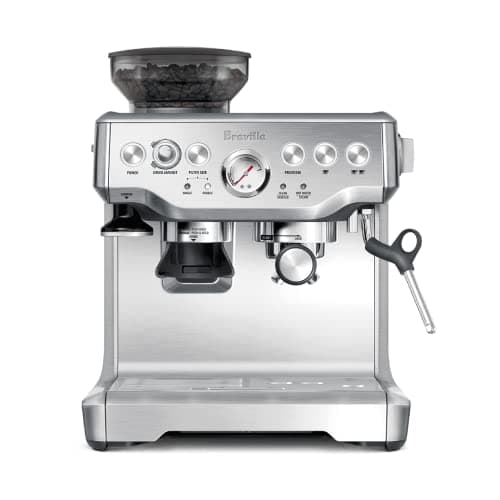
The verdict first. The best espresso machine brand for most buyers is Breville, and the machine to buy from it is the Barista Express— it is for the person who wants one appliance, a real grinder, PID temperature control and the deepest accessory ecosystem in home espresso. Gaggia is the brand to buy if you want a machine to keep and modify for a decade; Philips if the daily cleaning of a milk system is what worries you; Flair if you would rather own a tool than an appliance. And the budget pick is Nespresso's Vertuo Next, the cheapest machine here that genuinely does the job it claims.
Every price on this page comes from the live price layer, with the as-of date printed under the comparison table. One machine per brand, chosen as the model that best represents what the brand is actually for.
How to read a brand
A brand is a promise about which problem it solves.This is the most useful way to shop, because the machines themselves blur together on spec sheets. Breville's promise is integration: grinder, PID and wand in one box, with accessories for everything. De'Longhi's is breadth — it sells a $150 pump machine and a $1,000 bean-to-cup under one name. Gaggia's is longevity. Philips' is low maintenance. Ninja's is guidance. Flair's is mechanical simplicity. Nespresso's is nothing to learn.
Portafilter standard is the brand decision that follows you longest. Breville builds around 54mm; Gaggia around 58mm, the commercial standard; De'Longhi's slim machines use 51mm; Flair uses 49mm. The accessory world — tampers, baskets, puck screens, bottomless portafilters — is built around 58mm first and 54mm second. Our portafilter size guide explains what fits what, and it is worth reading before you commit to a brand.
Ignore the bar number on the box.Fifteen bar and twenty bar are pump ratings, not brewing pressures — espresso extracts at about nine bar at the puck, as 9 bar vs 15 bar explains. Every brand here prints a bigger number than it uses. It tells you nothing about which to buy.
How we picked
Every machine here has a live retail listing we can price and is assessed against its published specifications — machine type, portafilter size and basket, grinder (where fitted), heating system, milk system, maintenance requirements and build. Our full approach is on the methodology page; we do not run a test lab and we do not pretend to.
We included a brand only where we could name a specific machine we would recommend and verify a live listing for — a brand with nothing we would buy is not on this page regardless of reputation. Within each brand we chose the model that best expresses what the brand is for, not simply its most expensive machine. In order, we weighted: whether the brand has a coherent strength at all, the depth of its accessory and parts ecosystem, and how well its best machine executes the promise.
At a glance
Seven brands, one machine each. Tap any button for the live Amazon price; the number at checkout is the one that applies.
| Brand | The machine to buy | Type | What the brand is for | Price |
|---|---|---|---|---|
| Breville | Barista Express (BES870XL) | Semi-auto, 54mm, built-in grinder | Integration and accessories | $494.95Buy |
| De'Longhi | Magnifica Evo | Bean-to-cup super-automatic | Breadth at every price | $549.95Buy |
| Gaggia | Classic Evo Pro | Semi-auto, 58mm, no grinder | Longevity and modding | $501.89Buy |
| Philips | 3200 Series LatteGo | Bean-to-cup super-automatic | Least daily cleaning | $529.00Buy |
| Ninja | Luxe Cafe Premier (ES601) | Guided semi-auto, 3-in-1 | Removing beginner mistakes | $499.95Buy |
| Flair | Flair 49 Pro | Manual lever press | No electricity, nothing to break | $359.00Buy |
| Nespresso | Vertuo Next | Capsule machine | Nothing to learn, lowest price | $116.00Buy |
Prices shown are from Amazon as of November 22, 2026 and change often — the button always goes to the current listing. Some links may earn us a commission at no extra cost to you.
Breville: the default, and the one to buy is the Barista Express
Who the brand is for: buyers who want one appliance that does everything, and an accessory and support ecosystem large enough that nothing is hard to find.
Breville is the brand this site writes about most, and the reason is coherence: its machines share a 54mm portafilter platform with a huge accessory range, its ThermoJet and ThermoCoil heaters are genuinely differentiated, and the owner community is enormous. The Barista Express is the model that defines it — an integrated stainless conical burr grinder with 16 settings and dose control, a ThermoCoil boiler with PID temperature controlat around 200°F / 93°C, a manual steam wand, and a box that includes the Razor dose trimming tool, a dosing funnel, a tamper, a milk jug and a water filter.
| Grinder | Integrated stainless conical burr - 16 grind settings, dose control |
|---|---|
| Portafilter | 54mm stainless (single & dual wall baskets included) |
| Boiler | ThermoCoil with PID temperature control (~200F / 93C) |
| Pump pressure | 15 bar Italian pump (9 bar at the puck) |
| Milk | Manual steam wand |
| Water tank | 67 oz / 2 L (removable) |
| Dimensions | ~15.9 x 13.1 x 12.4 in (W x D x H) |
The honest cons. The single ThermoCoil means brew then steam. The built-in grinder is good, not class-leading, and it is locked to the machine— you cannot upgrade it alone, which is the structural argument against every all-in-one. It is large and heavy, and grinding into the portafilter can be messy and static-prone. Full detail in our Breville Barista Express review, and best Breville espresso machines covers the whole range.
De'Longhi: breadth, and the one to buy is the Magnifica Evo
Who the brand is for:buyers at either extreme — the cheapest honest pump machine, or one-touch bean-to-cup without paying premium money.
De'Longhi's strength is that it sells something sensible at nearly every price, from the Stilosa to a $1,000 bean-to-cup. The model that best represents it is the Magnifica Evo: the cheapest honest route into freshly ground, one-touch bean-to-cup espresso. A steel conical burr with 13 grind settings, one-touch espresso, coffee, long and doppio+, a removable brew group you rinse under the tap, and a choice of trims — a manual frother wand on the base model or a LatteCrema auto-milk carafe higher up — so you buy only the milk system you need.
| Type | Bean-to-cup super-automatic |
|---|---|
| Grinder | Steel conical burr (13 grind settings) |
| Milk | Manual frother wand (base trim); LatteCrema auto-milk carafe on higher trims |
| Drinks | One-touch espresso, coffee, long, doppio+ |
| Brew group | Removable (rinse under the tap) |
| Pump pressure | 15 bar |
The honest cons.The build is plasticky and feels like the budget machine it is. On the base trim the manual wand means lattes are not truly one-touch. The milk system needs diligent daily cleaning, especially the LatteCrema carafe. And it offers less cup control than a semi-auto — forgiving and consistent, not championship espresso. Note also that the trims are confusing (the ECAM29084SB and ECAM29043SB differ), so buy by model code. Full detail in our De'Longhi Magnifica Evo review, and best De'Longhi machines covers the range.
Gaggia: longevity, and the one to buy is the Classic Evo Pro
Who the brand is for: buyers who want a metal machine on the commercial standard that they can service, modify and keep.
Gaggia is the brand to buy when you intend to own one machine for a decade. The Classic Evo Pro has a 58mm commercial portafilter— so every cafe-standard basket, tamper and accessory fits — a single aluminum boiler with a ~1425 W element, a redesigned commercial-style steam wand, rocker-switch simplicity, and a largely stainless body that is genuinely repairable rather than disposable, with a deep parts supply and a very large mod community.
The honest cons. It takes five to ten minutesto reach temperature and the single boiler means brew then steam. It is the least plug-and-play machine in its price range: it rewards effort rather than handing you results. And it has no grinder, so budget for one — grinders for the Gaggia Classic covers the pairing. Full detail in our Gaggia Classic Pro review.
Philips: easy milk, and the one to buy is the 3200 LatteGo
Who the brand is for: households that want one-touch cappuccinos and lattes with the least daily cleaning of any automatic milk system.
Philips' coherent strength is maintenance, and the 3200 Series LatteGo is built around it. The LatteGo carafe is two parts with no tubes and is dishwasher safe, which removes the single biggest daily chore in the super-automatic category. Around it: 100% ceramic burrs adjustable in 12 steps with a published life claim of at least 20,000 cups, a fully removable brew group that rinses under the tap, and AquaClean filtration that Philips says removes the need to descale for up to 5,000 cups if the filter is changed as prompted.
| Type | Bean-to-cup super-automatic |
|---|---|
| Grinder | 100% ceramic burrs, adjustable in 12 steps |
| Milk system | LatteGo - two parts, no tubes, dishwasher safe |
| Drinks | 5 one-touch beverages |
| Brewing temperature | 90-98 C (Aroma Extract system, per Philips) |
| Water tank | 1.8 L / ~61 oz |
| Bean container | 275 g |
| Descaling | Not required for up to 5,000 cups with AquaClean changed as prompted |
| Brew group | Fully removable, rinses under the tap |
The honest cons.The drink menu is deliberately short at five beverages, and the espresso is consistent rather than excellent — this is a machine that trades peak cup quality for repeatability and low upkeep. You also get far less control than a semi-auto: no portafilter, no puck prep, no say in the shot. Full detail in our Philips 3200 LatteGo review, and best super-automatic machines ranks the category.
Ninja: guidance, and the one to buy is the Luxe Cafe Premier
Who the brand is for: beginners who would rather be guided than learn to dial in, and who want more than espresso from one appliance.
Ninja is the newest brand here and its promise is the clearest: remove the places beginners fail. The Luxe Cafe Premier (ES601) has a built-in conical burr grinder with 25 settings, a built-in scale for weight-based dosing— rare at any price and the fix for the most common beginner inconsistency — an assisted tamper, three brew temperatures for dark through light roasts, and a hands-free Dual Froth System that handles plant milks with a dedicated cold foam program. It also does drip coffee and cold brew.
| Modes | Espresso, drip coffee and cold brew (3-in-1) |
|---|---|
| Grinder | Built-in conical burr, 25 grind settings |
| Dosing | Built-in scale - weight-based dosing per drink |
| Tamping | Assisted tamper built into the machine |
| Milk | Dual Froth System - hands-free, dairy or plant-based |
| Froth presets | Steamed milk, thin froth, thick froth, cold foam |
| Brew temperatures | Three settings for dark through light roasts |
| Dimensions | 15.75 x 15.24 x 20.51 in (L x W x H) |
| Warranty | One (1) year limited |
The honest cons. It is large— over 20 inches tall and roughly 15 inches in both other directions, so it needs serious counter space and cabinet clearance. It is a generalist: a dedicated machine plus a dedicated grinder will beat it on espresso alone. The published warranty is one year, shorter than Breville's two. And the guidance that makes it easy also means you learn less about why a shot worked. Full detail in our Ninja Luxe Cafe review, and Ninja Luxe Cafe vs Breville Barista Express is the head-to-head.
Flair: no electricity, and the one to buy is the Flair 49 Pro
Who the brand is for:the drinker who wants espresso from a mechanism rather than an appliance — no pump, no boiler, no electronics to fail.
Flair is the brand for people who find every machine above a bit much. The 49 Pro is the one most people should buy if manual espresso is the goal rather than a novelty: Flair lists an all-stainless brew path— piston, cylinder and valve plunger — and the 49mm portafilter ships with both a bottomless and a pressurized basket, taking a 12–20 g dose, which is wide enough to run a normal 18 g double the way an electric machine would. The integrated 6–9 bar gauge makes it genuinely teachable, and the warranty is five years.
| Type | Manual lever press (no electricity) |
|---|---|
| Portafilter | 49mm, bottomless + pressurized baskets |
| Dose | 12-20 g |
| Brew pressure | 6-9 bar, integrated gauge |
| Water capacity | 90 ml (yield up to 55 ml) |
| Brew path | All stainless steel; redwood portafilter handle |
| Weight / size | 7 lb; 13.5 x 7.5 x 11 in |
| Warranty | 5-year limited |
The honest cons. There is no steam wand, so milk drinks need a separate milk frother. You boil your own water, the cylinder wants a preheat rinse, and every shot is a manual operation. 49mm is an unusual size with a thinner accessory ecosystem than 58mm. And at seven pounds it is a countertop machine, not a travel one. Our best manual espresso machines page ranks the lever category.
Budget pick - Nespresso: and the one to buy is the Vertuo Next
Who the brand is for: people who want coffee rather than a hobby, at the lowest purchase price of anything on this page.
Nespresso is the budget pick because the Vertuo Nextis the cheapest machine here and it does exactly what it promises. Five cup sizes — espresso, double espresso, Gran Lungo, Mug and a 14 oz Alto— each at one button press, because a barcode on the capsule rim sets the volume, temperature and spin rate for you. Capsule ejection is automatic, and the body is light and compact.
| Line | Vertuo (Nespresso barcoded pods) |
|---|---|
| Extraction | Centrifusion (spins capsule, reads barcode) |
| Cup sizes | Espresso, Double Espresso, Gran Lungo, Mug, Alto (14 oz) |
| Milk | None built in (add a frother) |
| Capsule ejection | Automatic into internal container |
| Build | Compact, lightweight, partly recycled plastic |
The honest cons — and they are about the brand, not the machine. Vertuo pods are barcoded, so Nespresso controls your coffee supplyand the third-party market is thin; the Original line has far more compatible capsules. There is no milk system. And the real cost is the capsules: one per cup, forever, which over a few years exceeds every machine on this page — the true cost of home espresso works the numbers. See best Nespresso machines under $200 for the band, and Nespresso alternatives if the lock-in is what bothers you.
The bottom line
Buy Brevilleif you want one appliance and the deepest ecosystem — the Barista Express is the default recommendation in home espresso for a reason. Buy Gaggia if you want 58mm, metal and a decade. Buy De'Longhi or Philips if you want bean-to-cup, and Philips specifically if the milk cleaning is what puts you off. Buy Ninja if you want to be guided and want drip and cold brew too. Buy Flair if you want a mechanism, and Nespresso if you want the lowest price and nothing to learn.
For a ranking that ignores badges entirely, see best home espresso machines; for the decision from scratch, our espresso machine buying guide; and for the two dominant brands in detail, Breville vs De'Longhi.
Frequently asked questions
What is the best espresso machine brand?
Breville, for most buyers - its machines share a 54mm platform with the deepest accessory range in home espresso, and the Barista Express packs a grinder, PID temperature control and a steam wand into one box. But brands are built around different promises: Gaggia for longevity on the 58mm commercial standard, Philips for the least milk-system cleaning, Flair for espresso with no electricity, Nespresso for the lowest price. Prices come from the live price layer with the as-of date shown.
Is Breville or De'Longhi better for espresso?
Breville, if you want a semi-automatic with a real portafilter and an accessory ecosystem - its 54mm platform and included tools (Razor trimmer, dosing funnel, tamper) are a more complete package. De'Longhi's strength is breadth: it sells the cheapest honest pump machine, the slimmest one, and good value bean-to-cup machines. If you want one-touch freshly ground coffee rather than puck prep, De'Longhi is the better brand to shop.
Which espresso machine brand lasts the longest?
Gaggia has the strongest case among the brands here. The Classic Evo Pro uses a 58mm commercial portafilter in a largely stainless body that is genuinely repairable, with a deep parts supply and a very large mod community behind it - owners upgrade these for years rather than replacing them. The trade-off is that it is the least plug-and-play machine in its price range and takes five to ten minutes to heat up.
What portafilter size should I look for when choosing a brand?
58mm gives the widest accessory choice, because it is the commercial standard - Gaggia builds there. Breville builds around 54mm, which has a large and well-supported ecosystem of its own. De'Longhi's slim machines use 51mm, where the aftermarket is noticeably thinner, and Flair uses 49mm. This is the brand decision that follows you longest, so read our portafilter size guide before committing.
Are more expensive espresso machine brands actually better?
Not reliably, because the brands are not solving the same problem. The cheapest machine on this page is a Nespresso, and for someone who wants coffee rather than a hobby it is the correct buy. A Flair 49 Pro costs a fraction of a bean-to-cup machine and makes better espresso in the right hands. Price tracks what a machine automates far more than how good the cup can be.
Which brand is best for a beginner?
Ninja, if you want to be guided - the Luxe Cafe Premier has a built-in grinder, a built-in scale for weight-based dosing, an assisted tamper and guided settings, which remove almost every beginner failure point. Breville is the better long-term brand if you would rather learn the craft, because the Bambino and Barista Express give you real control with a huge support community. Our best espresso machines for beginners page ranks the field.
Sources
- Breville - Barista Express (BES870XL) specifications: integrated stainless conical burr grinder with 16 settings and dose control, 54mm portafilter, ThermoCoil with PID (~200F / 93C), 15 bar pump, 67 oz tank, included Razor trimmer and accessories
- De'Longhi - Magnifica Evo specifications: bean-to-cup super-automatic, steel conical burr with 13 grind settings, removable brew group, 15 bar pump, manual frother and LatteCrema trim options
- Gaggia - Classic Evo Pro product page: 58mm commercial portafilter, single aluminum boiler, ~1425 W element, redesigned commercial-style steam wand, largely stainless repairable build
- Philips - 3200 Series LatteGo (EP3241) specifications: 100% ceramic burrs adjustable in 12 steps with a 20,000-cup life claim, two-part tube-free LatteGo carafe, 5 one-touch drinks, 90-98 C Aroma Extract brewing, 1.8 L tank, AquaClean descale-free claim up to 5,000 cups, removable brew group
- Ninja - Luxe Cafe Premier (ES601) specifications: espresso, drip and cold brew modes, built-in conical burr grinder with 25 settings, built-in scale for weight-based dosing, assisted tamper, Dual Froth System with four presets, published dimensions and 1-year limited warranty
- Flair Espresso - Flair 49 (Pro) specifications: all-stainless brew path, 49mm portafilter with bottomless and pressurized baskets, 12-20 g dose, 6-9 bar integrated gauge, 90 ml water capacity, 5-year limited warranty
- Nespresso - Vertuo Next product page: Centrifusion extraction, barcode-read capsules, five cup sizes through 14 oz Alto, automatic capsule ejection, recycled-content build
- Amazon listings (Creators API) - live availability, current prices and brand/model title verification for every ASIN on this page before publication
Keep reading
Buying your first setup?
See how we pick — compiled specs, cost-per-shot math, and honest trade-offs — then dig into the guides. No fake test lab, no rankings for hire.