Single Review
Bialetti Moka Express Review
The octagonal aluminum icon that made stovetop coffee a household ritual. It brews strong, concentrated coffee for very little money and lasts for decades — as long as you know it makes espresso-adjacent coffee, not true crema-topped espresso.
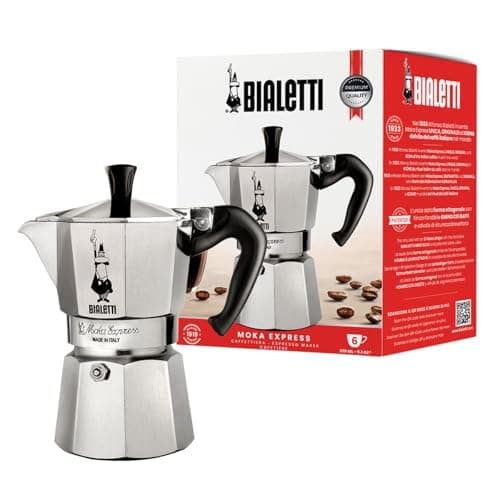
The definitive stovetop coffee maker — cheap, nearly indestructible and repairable forever — held back only by the honest fact that it brews concentrated coffee at 1-2 bar, not true 9-bar espresso, and can't sit on an induction hob.
- Best for
- Budget-minded drinkers who want strong, concentrated stovetop coffee for sipping straight, Americanos or milk drinks on a gas or electric cooktop
- Price context
- One of the cheapest ways to make genuinely strong coffee at home; you pay for a proven design and off-the-shelf spare parts, not versatility
The Bialetti Moka Expressis the coffee maker every other stovetop pot is measured against. Invented in 1933, its unmistakable octagonal aluminum body has sat on kitchen stoves for generations, and the design has barely changed because it barely needs to. Drop in water and coffee, put it on a burner, and a few minutes later you have a rich, concentrated, espresso-adjacent brew for a fraction of the price and fuss of an espresso machine. It is one of the best-value objects in all of coffee — provided you buy it understanding exactly what it does and, just as importantly, what it doesn't.
A note on honesty first: we don't run a lab. This review compiles Bialetti's published specifications, cross-checks them against verified owner feedback, and does the reasoning — the same method we use on every product, described on our methodology page. We have not put a pressure gauge on the Moka Express; what follows is what the design and the numbers tell you, framed as plainly as we can.
Who the Moka Express is for
The Moka Express is for the drinker who wants strong, concentrated coffee at home without buying a machine. If you like your coffee intense — sipped straight in a small cup, cut with hot water into an Americano, or pulled into a milk drink like a stovetop latte or cappuccino — this pot delivers exactly that, cheaply and reliably. It suits people who value simplicity: there is no electricity, no pods and no learning curve steeper than "watch the heat and pull it off in time." The 6-cup size is the everyday sweet spot for one or two drinkers, yielding roughly 9 oz of concentrated coffee. If you have read our best moka pot guide and want the default, proven pick rather than a stainless or crema-focused variant, this is the pot that guide points to first.
It is the wrong pot for two kinds of buyer. First, anyone who cooks on an induction cooktop: aluminum is not magnetic and simply will not heat on an induction hob without a separate adapter. Second, anyone expecting true café-style espresso with a thick layer of crema — a moka pot cannot produce that, and no technique will change it. We come back to why below, because it is the single most common misunderstanding about this pot.
What the specs say
The Moka Express is deliberately simple, and the spec sheet reflects it. The body is cast aluminum in the famous eight-sided octagonalshape — a form that is not just decorative. The facets help distribute heat around the base and give the pot its rigidity, and aluminum itself heats fast and evenly, which is a real advantage on a gas or electric burner. The trade-off is that aluminum is not induction-compatible, and it is soft enough that the dishwasher will dull and pit it over time.
| Material | Cast aluminum |
|---|---|
| Size | 6 espresso cups (~9 oz / 270 ml) |
| Design | Octagonal (8-sided), made in Italy |
| Induction-safe | No (aluminum) |
| Valve | Standard safety valve |
| Brew pressure | ~1-2 bar (concentrated coffee, not true espresso) |
| Care | Hand-wash only, no soap |
The rest of the sheet is about the brewing physics. A moka pot works by heating water in the bottom chamber until steam pressure pushes it up through the coffee bed and into the top. That pressure is only about 1–2 bar— enough to make a strong, concentrated coffee, but a long way short of the roughly 9 bar a real espresso machine uses to emulsify oils into crema. Every Moka Express also carries a standard safety valveon the inside wall of the base, which vents excess pressure if the pot is overfilled or the bed clogs; it has to stay clear to work, so you never fill water above it. On the size question, remember that moka "cups" are small espresso-size pours of roughly 1–2 oz each, not mugs — the 6-cup version totals about 9 oz, which is one large mug or two small ones. Pots brew best filled to their rated capacity, so buy for the amount you actually drink.
What it's like to live with
Three things define daily life with the Moka Express, and the first is how little it asks of you. The ritual is short and satisfying: fill the base with hot water up to the safety valve, fill the funnel basket with fine-medium coffee and level it off (never tamp — a loose bed is essential), screw the top on tightly, and set it on medium-low heat with the lid up. In a minute or two the coffee streams up into the top chamber. It is a hands-on, watch-it ritual rather than a press-a-button appliance, and for a lot of people that is exactly the appeal. If you want the full method, our how to use a moka pot guide walks through every step.
The second is that heat control is the whole game, and it is where the pot is least forgiving. Too high a flame scorches the grounds and rushes a sputtering, bitter extraction; leaving the pot on the burner past the first gurgle steam-brews the last of the water and turns the cup harsh. The fix is simple once you know it — brew on medium-low, watch the stream, and pull the pot off the heat the moment it turns pale and starts to hiss — but it is a genuine skill you have to learn, and it is the main reason a first attempt can taste burnt. Grind matters too: aim for a fine-medium, table-salt texture from a burr grinder, because a blade grinder's uneven dust-and-boulders mix muddies the cup.
The third is that it is built to last and cheap to keep going. There is nothing electronic to fail, and the two parts that do wear — the rubber gasket and the metal filter plate — are inexpensive consumables you can replace for pennies, so a well-kept Moka Express can run for decades. Care is minimal but non-negotiable: rinse all three parts with hot water after every use, skip the dish soap (it leaves a taste and strips the seasoned interior), never put an aluminum pot in the dishwasher, and store it disassembled and dry so the seal lasts. Do that and the pot rewards you; neglect it and rancid oils will spoil the flavor.
The crema caveat — read this first
This is the single most important thing to understand before you buy, and the one buyers get wrong most often: a moka pot is not an espresso machine.Marketing calls these "stovetop espresso makers," but the Moka Express brews at only about 1–2 bar of pressure, while real espresso is pulled at around 9 bar. That pressure difference is what emulsifies coffee oils into true crema, so a moka pot makes a strong, intense, espresso-adjacent coffee — excellent on its own, in an Americano or in milk drinks — but it will not give you the thick, persistent café-style crema on top. No grind, heat trick or technique changes that; it is physics, not a flaw in the pot.
This matters because a buyer expecting espresso will be disappointed, while a buyer who wants strong stovetop coffee will be delighted with the very same cup. Set your expectation correctly and the Moka Express is a joy. If a layer of crema really is the deal-breaker, read moka pot vs espresso machine before you spend a dime, and if you simply want to understand why brewed coffee and espresso are different drinks, our coffee vs espresso explainer lays it out.
Alternatives worth considering
If the Moka Express's aluminum body is the problem — because you cook on induction— the answer is a stainless steel pot with a magnetic base. The Bialetti Venus and the heavy 18/10 Cuisinox Roma both work on every cooktop including induction and glass-top ranges, and both are dishwasher-tolerant, at the cost of slightly slower, less even heating and a higher price. They sit alongside the Moka Express in our best moka pot roundup if you want to compare them directly.
If it is the lack of cremathat bothers you but you still love the simplicity of a stovetop pot, the Bialetti Brikka is the one variant designed to help: its weighted valve holds back the coffee until pressure builds a little higher, then releases it in a burst for a thicker, foamier pour — still not true espresso, but the closest a stovetop gets. And if you want a manual brew that trades intensity for clarity rather than chasing espresso at all, a pour over dripper or an AeroPress is a different pleasure entirely; our sibling AeroPress vs moka pot comparison weighs the two side by side. The rule is simple: match the brewer to the cup you actually want.
Verdict
The Bialetti Moka Express is a near-perfect example of a product that does one thing and does it brilliantly for almost nothing. The octagonal aluminum body heats fast and evenly, the coffee comes out strong and concentrated, the whole thing is nearly indestructible and endlessly repairable, and it has earned its place on kitchen stoves for nearly a century for good reason. The catches are honest and small if you know them going in: it brews at 1–2 bar so there is no true crema, it will not work on induction, it punishes too-high heat with bitterness, and it is hand-wash only. Buy it for strong stovetop coffee, Americanos and milk drinks and you will use it for years; buy it expecting café espresso and you will be let down. Go in clear-eyed about that trade-off and, for the right drinker, the Moka Express is one of the best-value pieces of coffee gear you can own.
What we liked
- Makes genuinely strong, concentrated, espresso-adjacent coffee for very little money
- Octagonal aluminum body heats fast and evenly on gas or electric
- Nearly indestructible and endlessly repairable — the gasket and filter plate are cheap consumables
- No electronics, no pods, nothing to break — a design in production since 1933
- Excellent base for Americanos and milk drinks like a stovetop latte or cappuccino
- The 6-cup size is the sweet spot for one or two drinkers
What gave us pause
- Brews at only ~1-2 bar, so it makes concentrated coffee — not true 9-bar espresso, and no real crema
- Aluminum is not induction-compatible; it needs a gas, electric or ceramic hob (or a hob adapter)
- Easy to over-extract and scorch if the heat is too high or you leave it on past the gurgle
- Hand-wash only, no dish soap — the dishwasher dulls and pits aluminum
Frequently asked questions
Is the Bialetti Moka Express real espresso?
No. The Moka Express brews at only about 1 to 2 bar of pressure, while real espresso is pulled at around 9 bar. That means it makes a strong, concentrated, espresso-adjacent coffee, but it won't produce true café-style crema. It's an excellent low-cost way to make intense coffee for sipping straight, Americanos or milk drinks — just not technically espresso.
Can I use the Bialetti Moka Express on an induction cooktop?
Not directly. The classic Moka Express is aluminum, which isn't magnetic, so it won't heat on an induction hob without a separate induction adapter plate. If you cook on induction, choose a stainless steel moka pot with a magnetic base — like the Bialetti Venus or Cuisinox Roma — instead.
Why is my Moka Express coffee bitter or burnt?
Almost always heat that's too high or leaving the pot on the burner too long. Brew on medium-low and pull it off the heat the moment the stream turns pale and starts to gurgle — everything after that is burnt, steam-brewed coffee. A grind that's too fine or tamped grounds also cause bitterness; keep the coffee fine-medium and the bed loose.
How do I clean and care for a Bialetti Moka Express?
Rinse all three parts with hot water after every use and let them air-dry fully before reassembling. Skip dish soap, which can leave a taste and strip the seasoned aluminum interior, and never put it in the dishwasher — it dulls and pits the metal. Check the rubber gasket and filter plate periodically and replace them when they harden or leak.
What size Bialetti Moka Express should I buy?
Buy for the amount you actually drink, because a moka pot brews best filled to its rated capacity. Remember moka 'cups' are small espresso-size pours of roughly 1 to 2 oz each, not mugs — the 6-cup version makes about 9 oz total, which is one large mug or two small ones, and it's the everyday sweet spot for one or two drinkers.
Sources
Keep reading
Buying your first setup?
See how we pick — compiled specs, cost-per-shot math, and honest trade-offs — then dig into the guides. No fake test lab, no rankings for hire.