Comparison
AeroPress vs Moka Pot: Which Should You Buy?
Two cheap ways to make strong coffee without a machine — and they could hardly be more different. Here's the honest breakdown of clean and versatile versus intense and traditional, and why neither one is true espresso.
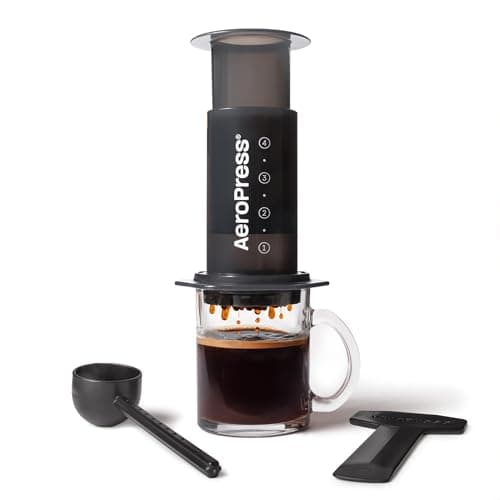
The AeroPress and the moka pot get cross-shopped for one reason: both are cheap, non-electric ways to make strong coffee without an espresso machine. That's where the similarity ends. The AeroPressis a plastic tube that steeps coffee briefly and pushes it through a paper filter with light hand pressure, giving a clean, low-bitterness, remarkably versatile cup — and it's near-unbreakable, so it travels anywhere. The Bialetti moka pot is a stovetop classic that forces hot water up through a bed of coffee to make an intense, concentrated brew with a heavier body, traditional to Italian kitchens and superb in milk. Two very different tools chasing the same goal from opposite ends.
A note on method first: we don't run a test lab. This comparison lines up both brewers' published specifications, cross-checks them against verified owner feedback, and does the reasoning — the same approach we describe on our methodology page. And one honest thing up top that applies to both: neither makes true espresso. Real espresso is pulled at around 9 bar; the AeroPress uses only light hand pressure and the moka pot brews at roughly 1–2 bar, so neither builds genuine crema. Both make excellent strong coffee — just not espresso. Here's where they overlap, where they split, and which one fits your morning.
The short answer
Buy the AeroPressif you want a clean, smooth, low-bitterness cup, you value versatility and easy cleanup, and you want a brewer that survives travel — it's the more forgiving, more adaptable tool, and it's almost impossible to break. Buy the moka potif you want a strong, intense, traditional brew with real body, you drink a lot of milk drinks, and you like a simple stovetop ritual with nothing to plug in — it makes a bolder, more concentrated coffee than the AeroPress and is a natural base for a latte or cappuccino at home. Clean and versatile versus intense and traditional — that's the decision in one sentence.
The real differences
Four differences separate these brewers, and together they explain why they suit such different drinkers.
1. How they brew. The AeroPress uses immersion plus light pressure: you steep grounds in hot water for a short time, cap it with a filter, and press the plunger to push the coffee through in seconds. The moka pot uses stovetop pressure: heat builds steam in the base that forces hot water up through a bed of coffee into the top chamber. One is a gentle push by hand; the other is driven by heat on the hob.
2. The cup. This is the biggest split. The AeroPress brews through a paper filter (a metal one is optional), which traps most of the oils and fines and gives a clean, smooth, notably low-bitterness cup closer to a pour over. The moka pot has no paper filter, so more oils and fine particles carry through for a heavier body and a stronger, more intense, more concentrated brew. Clean and delicate versus bold and full-bodied.
3. Versatility and travel.The AeroPress is the more flexible tool: you can vary steep time, temperature, grind and even swap paper for metal to change the cup, and because it's near-unbreakable plasticit's the natural pick for travel, the office or camping. The moka pot is a one-trick classic— it makes its strong stovetop coffee and does it well — and being aluminum it's more of a fixture at home than a carry-along.
4. Milk and strength. The moka pot's intense, concentrated output is a natural base for milk drinks— it stands up to steamed or frothed milk in a way a gentler brew can't, which is exactly why it's a fixture in Italian kitchens. The AeroPress can make a strong shot too, but its cleaner, lighter body is better suited to drinking black or as a smooth Americano. If milk is your morning, the moka pot has the edge.
| Method | AeroPress: immersion + light pressure | Moka: stovetop pressure (~1-2 bar) |
|---|---|
| Filter | AeroPress: paper (metal optional) | Moka: none (heavier body) |
| Cup | AeroPress: clean, low-bitterness | Moka: strong, intense, concentrated |
| Travel | AeroPress: near-unbreakable, packable | Moka: home fixture, aluminum |
| Milk drinks | AeroPress: good | Moka: excellent (bold base) |
At a glance
The two side by side. Tap a "view" button for the live Amazon price — the number shown at checkout is the one that applies.
| Feature | AeroPress Original | Bialetti Moka Express |
|---|---|---|
| Method | Immersion + light pressure | Stovetop, ~1-2 bar |
| Filter | Paper (metal optional) | None (metal plate only) |
| Cup character | Clean, smooth, low bitterness | Strong, intense, full body |
| Material | Polypropylene | Aluminum (octagonal) |
| Capacity | 10 oz (1-2 cups / up to 3 shots) | 6 cups (~9 oz) |
| Best for | Clean cup, travel, versatility | Strong coffee, milk drinks, tradition |
| Real espresso? | No (light pressure) | No (~1-2 bar) |
| Check price | $39.95Buy | $52.00Buy |
Prices shown are from Amazon as of October 17, 2026 and change often — the button always goes to the current listing. Some links may earn us a commission at no extra cost to you.
Who each is for
Buy the AeroPress ifyou want a clean, smooth, low-bitterness cup and a brewer that's forgiving, versatile and almost impossible to break. It brews in a minute or two, cleans up in seconds, takes paper or metal filters, and packs down to travel anywhere hot water exists. New to it? Our how to use an AeroPressguide walks through the method. The honest cons: it makes only one to two cups per press, it doesn't give you the heavy, intense body some people love, and it isn't real espresso — it's a clean, strong, espresso-style cup, not a crema-topped shot.
| Method | Immersion + light hand pressure |
|---|---|
| Material | Polypropylene |
| Chamber capacity | 10 oz / ~296 ml |
| Yield | 1-2 cups (up to 3 espresso-style shots) |
| Filter | Paper micro-filter (metal optional) |
| Grind | Medium-fine |
| Brew time | ~1-2 minutes |
Buy the Bialetti Moka Express ifyou want a strong, intense, traditional cup and you drink a lot of milk drinks. Its concentrated, full-bodied output is the natural base for a home latte or cappuccino, it's dirt cheap and repairable forever, and the stovetop ritual is part of the appeal — nothing to plug in. The honest cons: it won't work on an induction cooktop (the aluminum body isn't magnetic), aluminum should be hand-washed rather than put in the dishwasher, and — like the AeroPress — it makes intense coffee, not true crema-topped espresso. For the full breakdown of the classic pot, see our Bialetti Moka Express review.
| Material | Aluminum |
|---|---|
| Size | 6 espresso cups (~9 oz / 270 ml) |
| Pressure | ~1-2 bar (stovetop) |
| Induction-safe | No (aluminum) |
| Valve | Standard safety valve |
| Design | Octagonal, made in Italy |
The verdict
These are two different tools for two different tastes. If you want a clean, smooth, low-bitterness cup, maximum versatility and something that travels almost unbreakably, the AeroPress is the pick — it's the more forgiving, more adaptable brewer. If you want a strong, intense, traditional coffee with real body, especially as the base for milk drinks, the Bialetti moka potis the one — nothing else this cheap makes a cup that bold. Neither is a substitute for a real espresso machine, but both are among the best value in coffee. Decide whether you want clean and versatile or intense and traditional, and the choice makes itself.
Want to dig deeper first? See the full lineups in our best AeroPress and best moka pot guides, compare the AeroPress with another immersion classic in AeroPress vs French press, and read the full Bialetti Moka Express review.
Frequently asked questions
What is the difference between an AeroPress and a moka pot?
They make strong coffee in opposite ways. The AeroPress steeps coffee briefly and pushes it through a paper filter with light hand pressure, giving a clean, smooth, low-bitterness cup closer to a pour over, and it's near-unbreakable so it travels well. The Bialetti moka pot uses stovetop pressure (about 1-2 bar) to force water up through a bed of coffee, and with no paper filter it makes a stronger, more concentrated, fuller-bodied brew that's a great base for milk drinks. Clean and versatile versus intense and traditional.
Does the AeroPress or moka pot make real espresso?
Neither. Real espresso is pulled at around 9 bar of pressure, which is what builds true crema. The AeroPress applies only light hand pressure and the moka pot reaches only about 1-2 bar, so neither can produce genuine espresso or real crema. Both make a strong, concentrated, espresso-style coffee that works well black, as an Americano, or as the base for a milk drink — just not technically espresso.
Which makes a stronger cup, the AeroPress or the moka pot?
The moka pot makes the more intense, concentrated cup. Because it has no paper filter, more oils and fine particles carry through, giving a heavier body and a bolder, stronger brew. The AeroPress uses a paper filter that traps most of the oils and fines, so its cup is cleaner, smoother and lower in bitterness — strong, but lighter-bodied than the moka pot.
Which is better for milk drinks like lattes, the AeroPress or moka pot?
The moka pot has the edge. Its strong, concentrated, full-bodied coffee stands up to steamed or frothed milk the way a bolder base needs to, which is why it's a fixture in Italian kitchens for home lattes and cappuccinos. The AeroPress can make a strong shot for milk too, but its cleaner, lighter body is better suited to drinking black or as a smooth Americano.
Which is easier to use and travel with, the AeroPress or the moka pot?
The AeroPress. It's made of near-unbreakable plastic, brews in a minute or two with just hot water, cleans up in seconds, and packs down small — ideal for travel, the office or camping. The moka pot needs a stovetop, its aluminum body should be hand-washed, and the classic won't work on induction cooktops, so it's more of a home fixture than a carry-along.
Sources
Keep reading
Buying your first setup?
See how we pick — compiled specs, cost-per-shot math, and honest trade-offs — then dig into the guides. No fake test lab, no rankings for hire.